 Archives
Multimedia
Donate
About
Sign In
Archives
Multimedia
Donate
About
Sign In



 Kevin Barrett



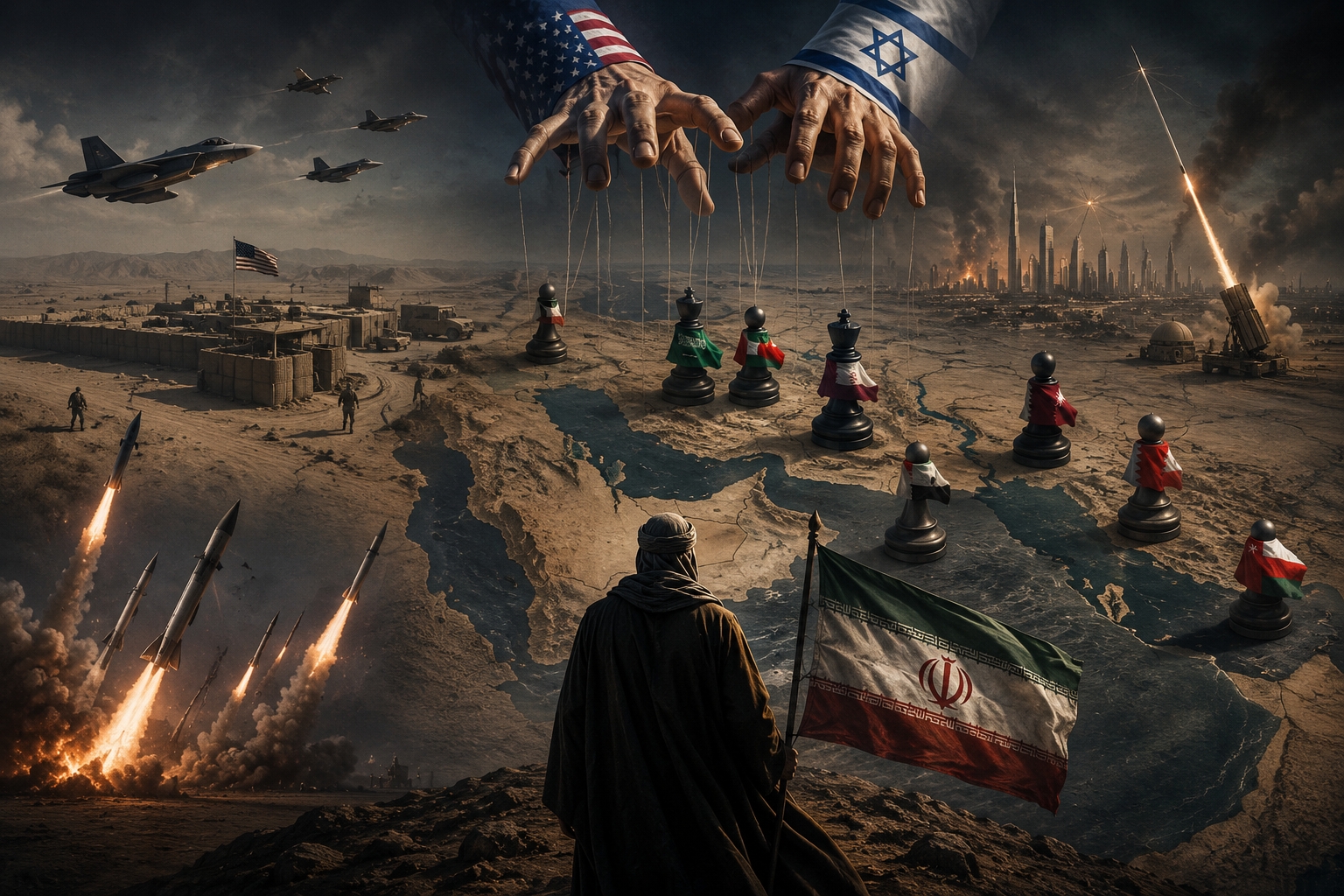
Since the 1979 Islamic Revolution, the United States has refused to accept the reality of the Islamic Republic of Iran. The US has launched repeated regime change attempts, paid for numerous terrorist attacks that have killed thousands of Iranians, engaged in incessant economic warfare featuring draconian sanctions, and even sponsored three major wars of aggression: the 1980s US-backed Iraqi invasion of Iran, the June 2025 12-day war, and the current 2026 war.
Until 2026, America’s economic and intermittently kinetic war against Islamic Iran was mired in perpetual stalemate. Though the US never came close to overthrowing the Islamic Republic and reinstalling a puppet dictatorship, the containment policy was a partial success: Iran never managed to export anti-imperialist anti-zionist Islamic Republicanism as a model for other countries in the region, nor was it able to fully emerge as the economic powerhouse of West Asia.
But as of mid-2026, the long stalemate has been broken. And the victor is clearly the Islamic Republic of Iran.
Anyone who doubts that Iran has roundly defeated the United States and its genocidal zionist partner must not have read the Memorandum of Understanding (MOU) that forms the basis for the two months of negotiations that are supposed to produce a permanent deal by mid-August. The MOU implements an “immediate and permanent termination of military operations on all fronts” in the region (naming Lebanon and implying Palestine).
It commits both sides to complete non-interference in each other’s internal affairs, ending 46 years of US subversion. It leaves the Strait of Hormuz under Iranian control. It forces the US to pay reparations consisting of “$300 billion for the reconstruction and economic development of the Islamic Republic of Iran.”
It mandates that the US “terminate all types of sanctions against the Islamic Republic of Iran.” It requires the US to release all of Iran’s frozen funds. Iran’s only “concession” consists of reiterating its long-standing commitment to not build any nuclear weapons!
The MOU is essentially the same terms of surrender that Iran forced on the United States in April. Back then, its provisions seemed to favor Iran so lopsidedly that the Americans felt compelled to return to war to save face, slapping a blockade on Iranian shipping that made the “ceasefire” turn into ten weeks of intermittent skirmishes.
But in mid-June 2026, the Americans backed down. The reason was obvious: Economic catastrophe was immanent due to Iran’s closure of the Strait of Hormuz. As Trump said, speaking on June 15 at the G7 summit in France: “We run out of reserves at about four weeks. You know, there are reserves all over the world, and we would really run out, and there’ll be a time when you wouldn’t be able to get it. It would be bedlam.”
Paralyzing the economy of the entire world—starting with the US’s most important vassal states in Europe, East Asia, and the Persian Gulf region—is not an acceptable option for any American policymaker. The US has one overriding imperative: The Strait of Hormuz must re-open! But despite its gargantuan and exorbitantly-priced military, the Americans have no viable military option for reopening the Strait.
Iran knows where it has laid mines, and any attempt at finding and removing them under fire would result in American ships being sunk. Even the most US-optimistic scenario for opening the Strait militarily would take months if not years, meaning that it would be happening simultaneously with a global economic meltdown pushing American gas prices past $10 a gallon.
Military experts agree that mere naval action probably wouldn’t suffice. The only way the US could realistically envision opening the Strait and keeping it open would require a massive land invasion and occupation of Iran, entailing the use of 500,000 to a million ground troops. The casualties would be enormous, the political price unpayable, and ultimate victory far from assured. So that option is a complete non-starter.
The upshot is that by taking permanent control of the Strait, Iran has effectively won the war. The US is going to have to pay Iran’s asking price to get the oil and fertilizer flowing again. And that price entails the US ending all anti-Iran actions, retreating from the region and muzzling its zionist mad dog.
But the mad dog will undoubtedly resist muzzling. As I write this on June 23, Israel refuses to withdraw from Lebanon, as the MOU requires, and continues its genocide in Palestine. It is unclear whether Trump has the wherewithal and will to assert US control over the pestilential zionist entity.
Some believe Israel threatens Trump with Epstein-style blackmail material. If Israel continues to sabotage the agreement, and the US doesn’t forcibly restrain the genocidal lunatics of Tel Aviv, the deal will come undone, leading to the mother of all economic catastrophes.
Israel probably wouldn’t mind that, because it would offer propitious circumstances for efforts to drag the US into all-out war on Iran, complete with a ground invasion of up to a million troops. Such a huge war would be unimaginable, absent some gigantic false flag provocation—which Israel, the probable main author of 9/11, might feel itself capable of supplying.
But such catastrophic scenarios are presumably less likely than the less-alarming and more obvious one: Iran collects its winnings and emerges as a regional co-hegemon, a key player in the new regional security architecture involving Turkiye, Pakistan, Egypt, and the Gulf States.
The Israelis are right that such a development not only threatens their efforts to create Greater Israel, but even raise serious questions about whether, in a decade or two, there will be any Israel at all.
And the Israelis have no-one to blame but themselves. Intransigent, genocidal, the most congenitally murderous, criminal, and destabilizing country in modern history, they have made themselves so hated, in the region and throughout the world, that the withdrawal of their protector, the United States, will leave them surrounded by countries that no longer have any reason to tolerate their genocidal existence.
But it isn’t just West Asia that will find itself transformed by Iran’s defeat of the US-Israeli axis of genocide. The Strait of Hormuz has become the epicenter of a geopolitical earthquake whose tremors will be felt across the planet.
From now on it will be Iran and its junior partner Oman, not the US, that provide security for Persian Gulf oil. That will lead regional countries, starting with Saudi Arabia and Qatar, to ask themselves: “Why are we paying heavy tribute to the US when not only can it not protect us, but its bases on our territory have become a liability not an asset?”
As the Gulf countries decouple from the US empire, their oil trade will gradually (or not-so-gradually) shift out of dollars, eroding America’s “exorbitant privilege” of printing unlimited currency and forcing other countries to accept it.
The loss of perhaps one-third of the dollar’s purchasing power will force the US to stop spending more on its military than the next eight countries combined. It will remove the US from its post-World War II role as the world’s self-appointed policeman, and force the closing of many or most of America’s 800 military bases in Europe, Asia, Africa, and Oceana. The much-hyped multipolar world will become a manifest reality.
Islamic Iran will emerge from almost half a century of isolation and sanctions as the clear leader of the Muslim world. As the western empire’s knife is removed from the throat of Islamic countries, Muslims will find themselves free to experiment with explicitly Islamic forms of government, as Iran has.
That development could eventually produce an anti-usury Muslim economic bloc that works with public-banking-driven China to consign the west’s privately-owned fiat currency usury banking system to the proverbial dustbin of history.

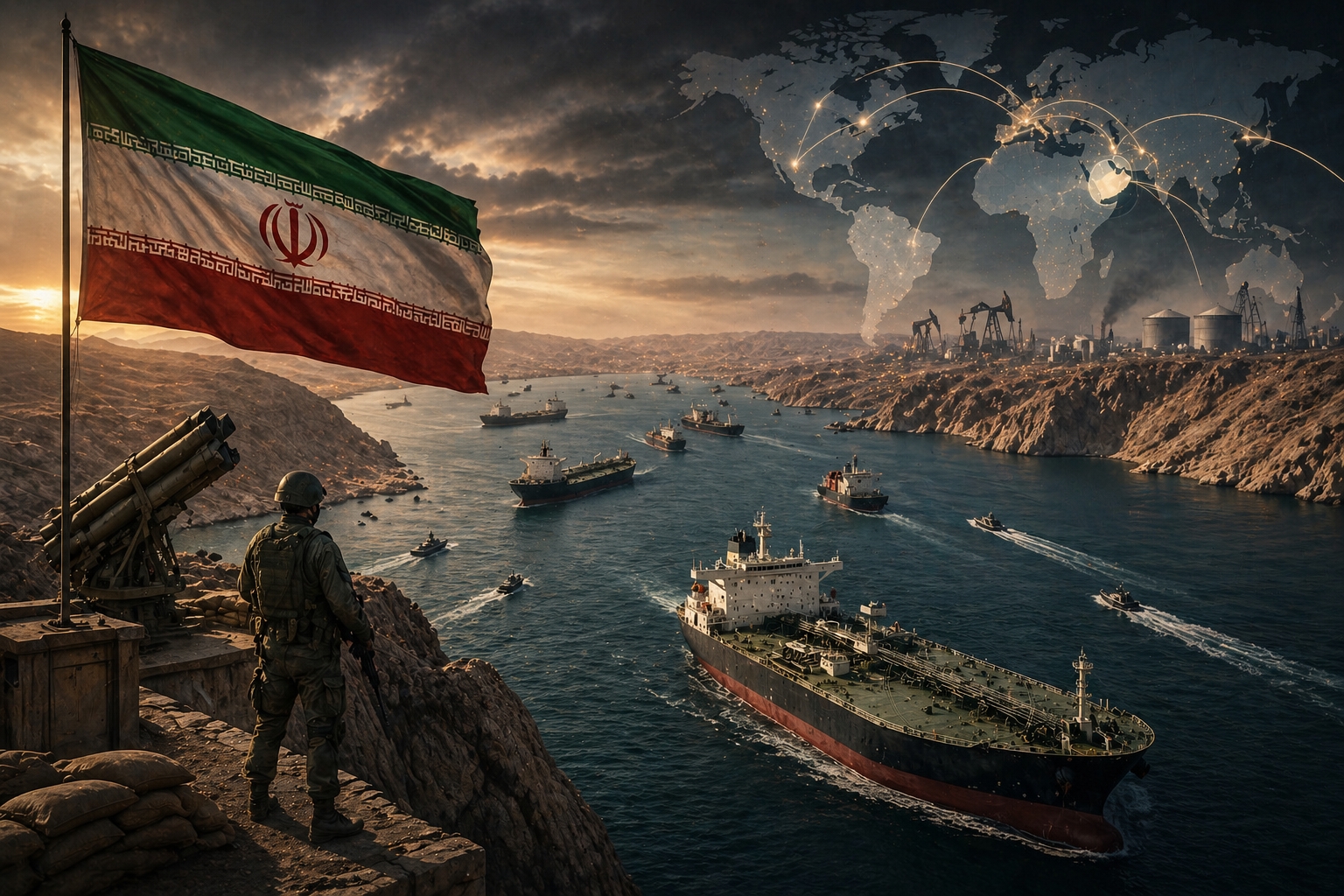
Iran’s control of the vital Strait of Hormuz and its geography give it an advantage that its enemies—the US and zionist Israel—cannot ...
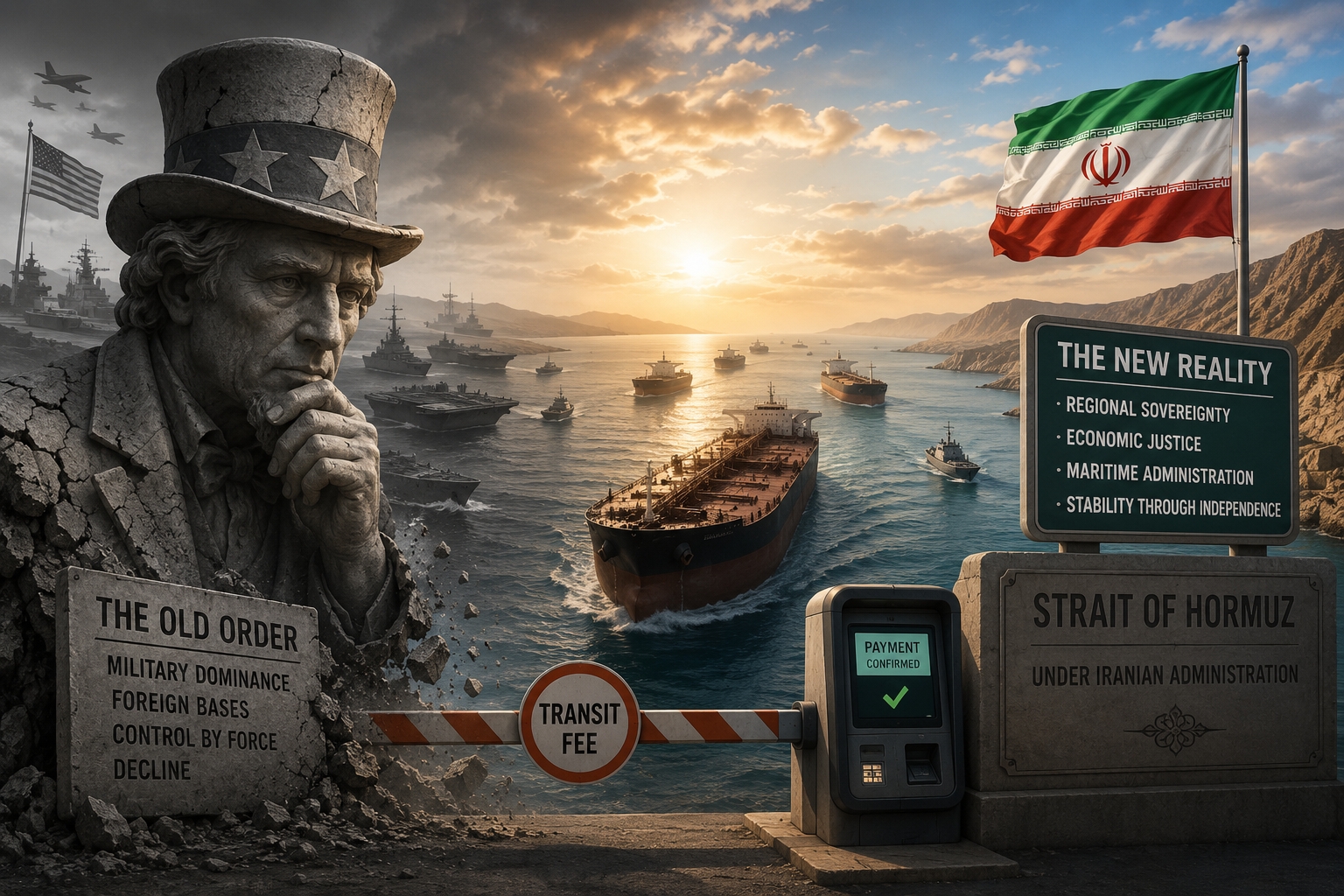
A prolonged closure of the Strait of Hormuz will bring down the US colossus. Disruption in energy supplies will have a global impact that we...
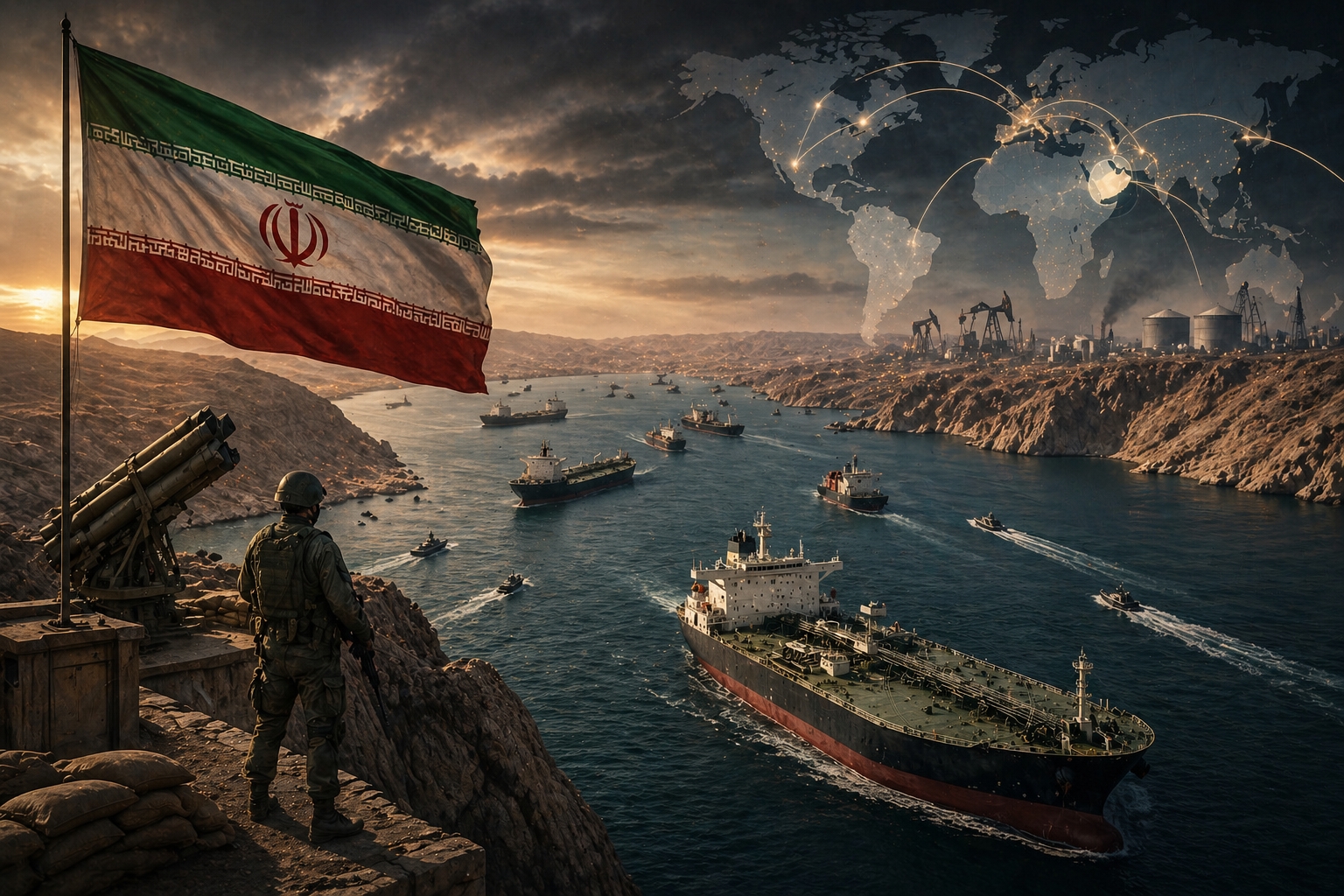
Attacks on oil tankers and vessels in the Strait of Hormuz can be traced to the “tanker war” between 1981-1988. The western-Arabian-Comm...
Islamic Iran has the longest coastline along the Strait of Hormuz. The US lies thousands of miles away yet it wants to control it. Under wha...