 Archives
Multimedia
Donate
About
Sign In
Archives
Multimedia
Donate
About
Sign In



 Omar Ahmed


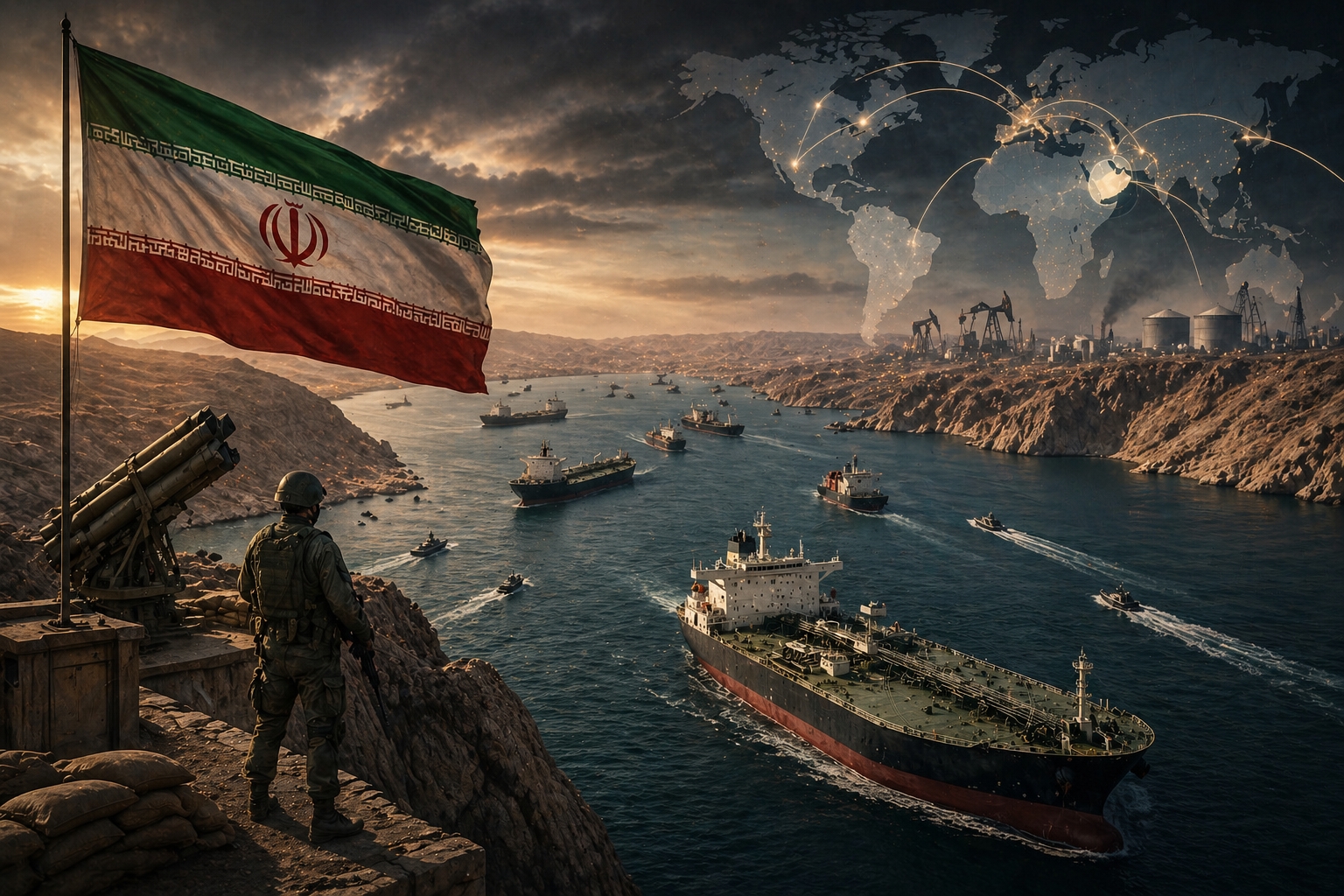
The Strait of Hormuz needs no introduction. It is one of the most important arteries in global trade, carrying 20% of the oil and gas exports that keep economies running.
For all the destruction Iran has suffered as a consequence of the US-zionist aggression, the Islamic Republic still holds one decisive advantage: geography.
For nearly five decades, Tehran avoided using the Strait of Hormuz as a weapon. It expanded its regional networks, developed its military capabilities under sanctions, and built the leverage to threaten the global economy without ever fully exercising it.
That changed in 2026.
Hostilities are far from over. The military confrontation may have slowed, but the conflict has shifted into negotiation rooms, naval blockades, and diplomatic maneuvering.
Trump’s decision to extend the Pakistan-brokered ceasefire with Iran has delayed another round of direct confrontation, but it has not changed the central reality: Tehran still holds the power to disrupt global energy markets on a scale no other state can match.
Hormuz becomes Iran’s strongest card
The years 2025 and 2026 proved critical for Iran.
The zionist entity’s military assault on Iran in June 2025 ended with the assassination of senior Iranian officials and the degradation of Iranian air defense systems. Much of the same unfolded during 2026’s Operation Epic Fury, only on a much larger scale.
After more than 10,000 sorties, Iran’s naval and air forces sustained significant damaged. Missile defense units also suffered losses. Claims of widespread degradation of Iran’s military capabilities have been amplified in western reporting. In reality, Iran’s defense doctrine has never relied on conventional air power. Its aging fleet was not central to its war strategy.
While many internal security personnel were martyred, along with senior figures including the Supreme Leader, Ayatullah Seyyed Ali Khamenei, these losses did not alter the overall structure of Iran’s deterrence posture.
This was precisely the kind of war Iran had spent decades preparing to fight.
Having exhausted much of its conventional military power during the Iraqi-imposed war and years of sanctions, Iran rebuilt its armed forces around asymmetric warfare. Ballistic missile technology became central to that strategy, developed and refined domestically through sustained scientific and military investment despite decades of external pressure.
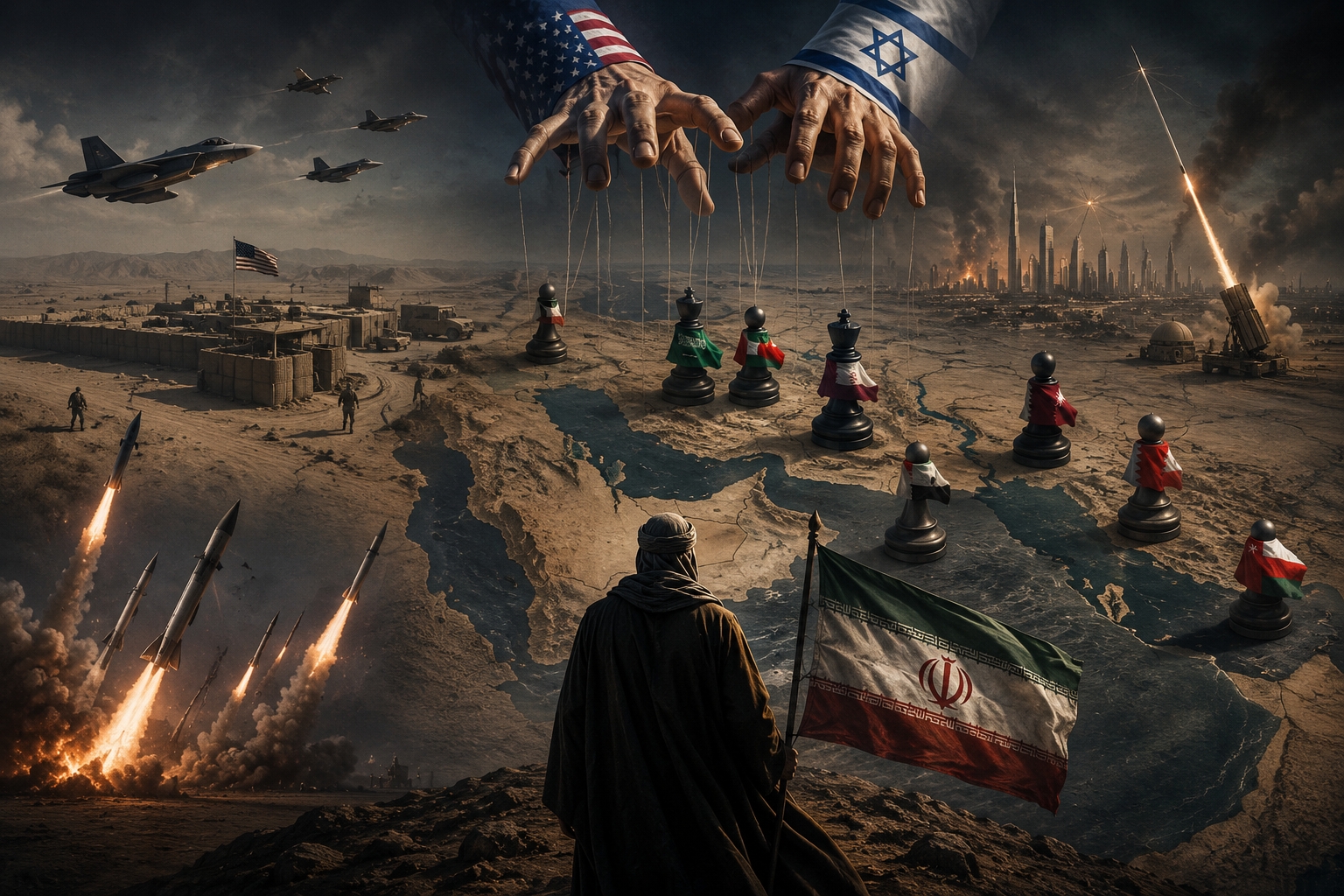
The continued use of US military bases in Gulf Cooperation Council (GCC) states for operations against Iran handed Tehran the justification it needed for escalation.
The first step was always going to be the Strait of Hormuz.
US and zionist forces have struggled to suppress Iranian units deploying drones and short-range missiles against vessels attempting to pass without authorization. Traffic has reportedly been shut completely for ships linked to the US, the occupation state and their aligned states hostile to Iran. Other vessels have been allowed to pass after paying regulated transit fees.
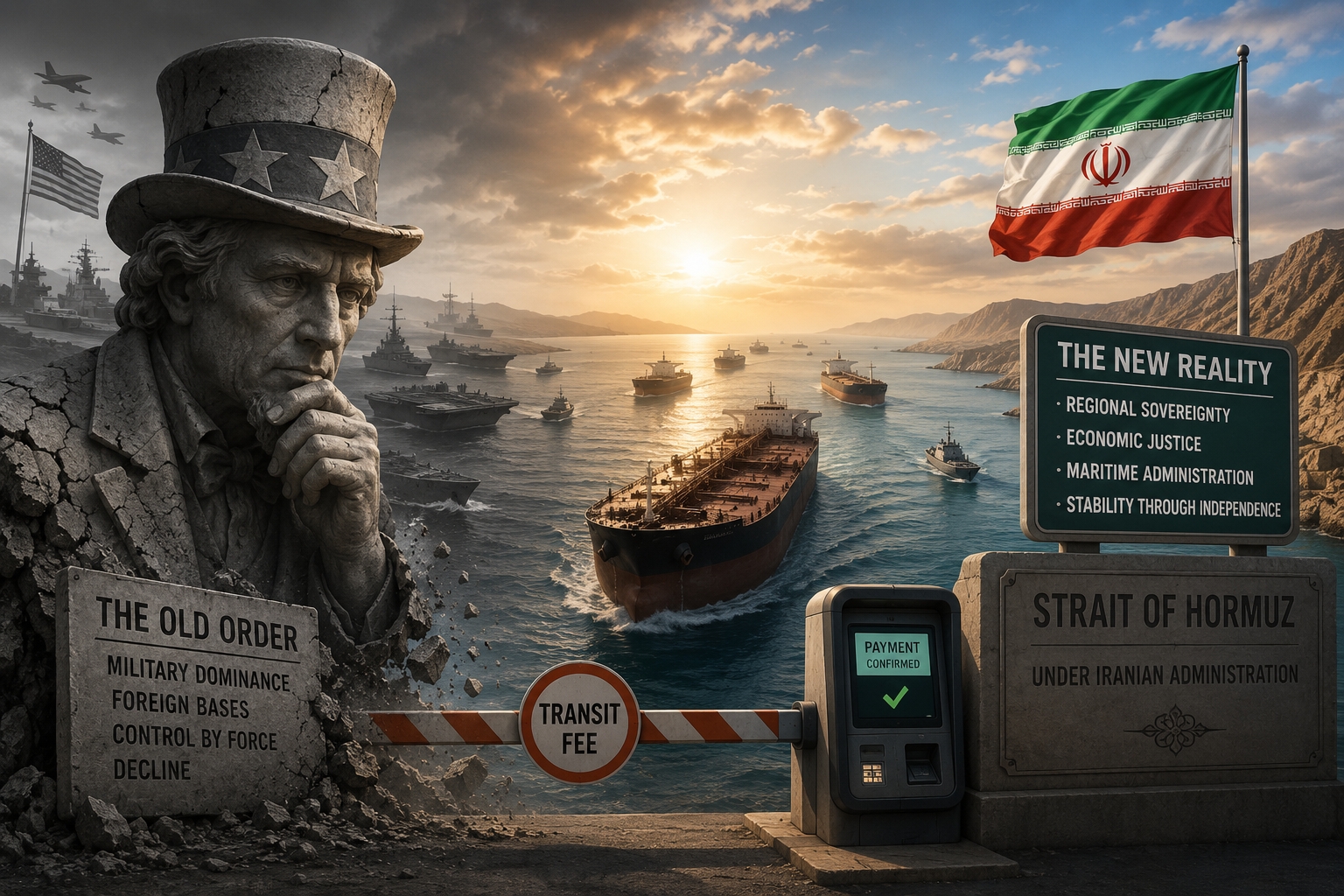
Like Egypt and Panama, which collect tolls for passage through their canals, as well as the US and Canada that charge for ships passing through the St Lawrence Seaway, Iran has begun treating Hormuz as a chokepoint it can regulate. Sea mines have further tightened control.
Once Tehran activated the Hormuz leverage, the entire war calculation changed. Trump began facing mockery for turning the reopening of the strait into a war objective, despite the fact that it had remained open before US-zionist aggression.
Iran’s threat was clear. If Washington escalated further, Tehran would strike the infrastructure that keeps Gulf economies running.
Before April 7, Iranian strikes reportedly targeted major oil and gas infrastructure across the GCC. These included the Ras Laffan LNG facility in Qatar, the Ras Tanura refinery in Saudi Arabia, and the Mina al-Ahmadi refinery in Kuwait.
The strike on Ras Laffan alone reportedly crippled a major portion of global fertilizer production, causing an estimated $26 billion in damage.
Iran also threatened wider attacks on infrastructure such as the King Fahd Causeway linking Saudi Arabia and Bahrain.
Despite the damage Iran sustained, that threat was judged serious enough to force a pause in the fighting.
Geography remains Tehran’s shield
Iran’s geography continues to work in its favor.
The country’s mountains and rugged terrain support its defense doctrine, allowing it to build underground missile complexes across vast areas of the country.
The missile city near Yazd has attracted particular attention as a heavily fortified underground site, even after repeated bombardment by the Israeli military.
The Strait of Hormuz itself is only about 40 kilometers wide at its narrowest point. That allows Iranian missile launchers, drones, and naval units to strike vessels from deep inside Iranian territory.
Fast attack boats operated by the naval arm of the Islamic Revolutionary Guard Corps (IRGC) also remain a major threat.
At the time of writing, the US had still not launched a full naval operation to seize control of the Strait of Hormuz.
The reason is obvious.
The strait is a narrow chokepoint filled with sea mines, fast attack boats, ballistic missiles, and low-flying drones. Any US attempt to force its way through would risk heavy losses.
A second round of fighting could see Washington commit much greater force to try to break Iran’s hold over the waterway, although this is unlikely as top US military commanders have opposed any such misadventures.
Commercial shipping patterns also complicate any military operation.
Ship tracking data shows thousands of vessels backed up in and around the Strait of Hormuz. Any major clash would risk massive collateral damage and could push oil prices above $200 a barrel.
Until the blockade, Iran continued exporting oil to customers.
Higher energy prices gave Tehran an emergency economic lifeline. Iran has also developed cryptocurrency infrastructure that allows it to receive and convert payments outside the formal western-controlled banking system.
That revenue helps sustain both the Iranian state and members of the Axis of Resistance.
Russia and China also retain routes to support Iran through the Caspian Sea and Central Asia.
Iran’s Caspian coastline remains beyond the reach of most US military operations, even if the zionist entity has attempted to strike supply routes.
Despite this, the possibility of renewed confrontation exists.
Ceasefire extension does not end the crisis
The US navy has responded to Iran’s closure of Hormuz with a blockade of its own.
Washington is trying to restrict Iranian cargo ships while also preventing passage for vessels that have paid tolls to the IRGC naval forces.
Those measures are designed to increase pressure during negotiations.
During the initial round of talks in Pakistan (April 11), both sides presented demands the other found unacceptable. Iran came to the talks only after the US had accepted its 10-point plan as the basis for discussion. Iran had rejected the US 15-point plan.
Tehran wants to maintain its uranium enrichment program, preserve support for the Axis of Resistance, and secure war reparations.
Washington wants Iran to surrender its enriched uranium stockpile, permanently limit enrichment, curb its ballistic missile program, and halt support for resistance movements across the region, notably Lebanon’s Hizbullah.
Trump’s decision to extend the ceasefire has bought negotiators more time, but it has not resolved the deeper disagreements. The naval blockade remains in place, Iran has resumed pressure in Hormuz, and neither side appears willing to concede on the core issues.
The pressure of war has been accompanied by western claims that Supreme Leader Mojtaba Khamenei plays a limited role in day-to-day decision-making, leaving the political establishment under strain. These narratives serve a familiar purpose by projecting fragmentation in Tehran while downplaying the extent of US and Israeli setbacks.
For Iran’s support base, surrendering enriched uranium or abandoning Hizbullah would be viewed as a humiliating defeat.
That is one reason Tehran briefly reopened the Strait of Hormuz following the announcement of a ceasefire in Lebanon – a move tied to its own conditions for de-escalation. It reimposed restrictions after Washington blockaded Iranian ports and shipping that Tehran views as violation of the ceasefire agreement.
The clock is still ticking.
Iran’s economy has faced sustained pressure over decades of sanctions and conflict. Claims that it is on the verge of collapse have circulated widely in western reporting, but these overlook the resilience Iran has demonstrated under prolonged economic warfare, including its ability to adapt, sustain production, and maintain core state functions despite external pressure.
Flight tracking data and naval movements through the Suez Canal continue to suggest that preparations for another round of military action may already be underway. Any such escalation, however, would carry significant political risks for Washington, particularly in a sensitive midterm election year.
The threat to Gulf infrastructure is once again on the table. The question is no longer whether Iran can disrupt the global economy; it already has.
The question is whether Washington is prepared to absorb the losses and international backlash that would come with trying to break Iran’s geographic advantage by force.
Oil prices moving above $200 a barrel is no longer an unrealistic scenario.
Alternative routes, such as Saudi Arabia’s East-West pipeline, cannot replace the Strait of Hormuz. Many countries have already drawn on strategic reserves, and a prolonged conflict threatens to trigger a wider goods crisis alongside an energy crisis.


That Islamic Iran won the war—convincingly—against the US and Israel is confirmed by the MoU. Iran can now sell its oil and related prod...
A prolonged closure of the Strait of Hormuz will bring down the US colossus. Disruption in energy supplies will have a global impact that we...
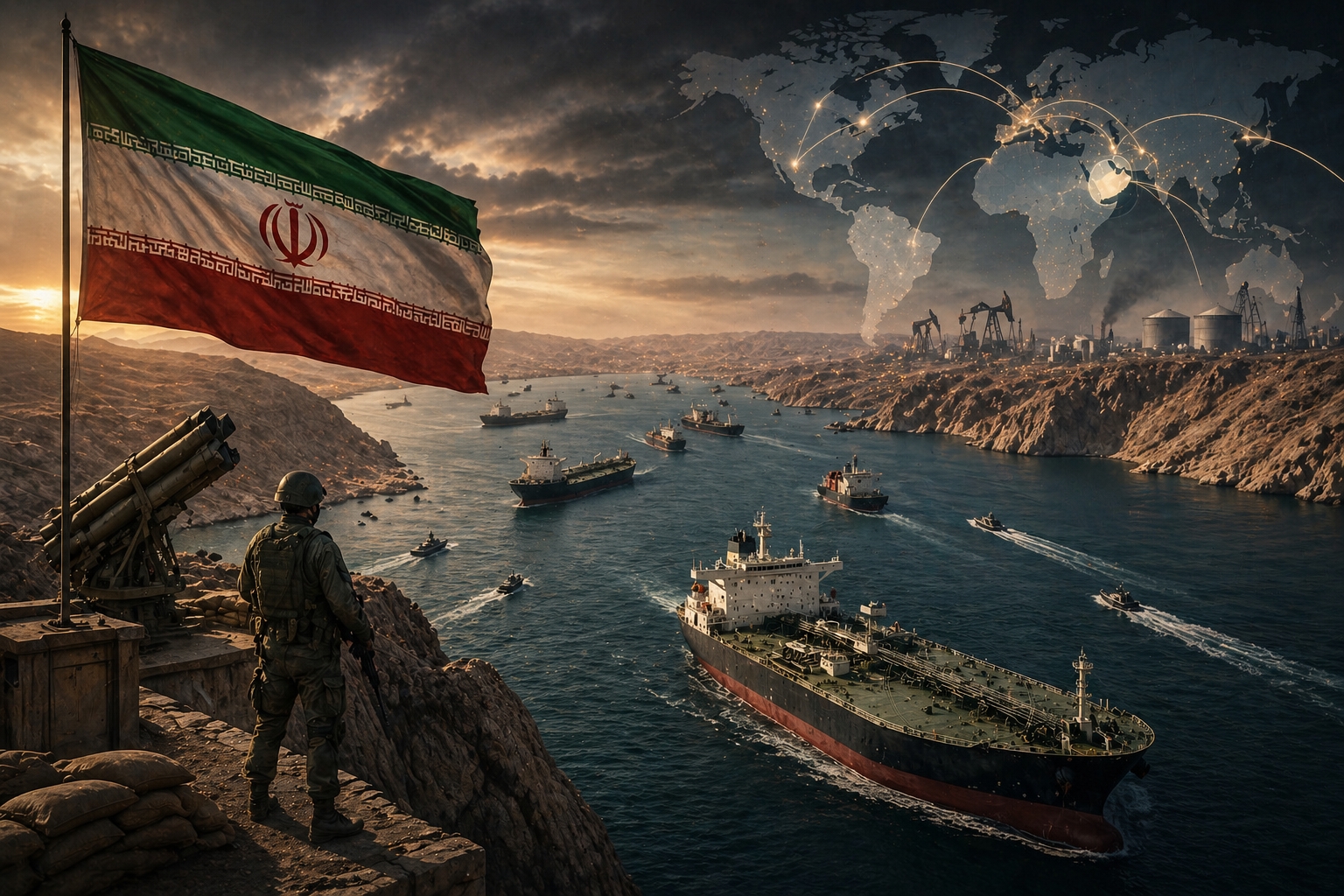
Attacks on oil tankers and vessels in the Strait of Hormuz can be traced to the “tanker war” between 1981-1988. The western-Arabian-Comm...
Islamic Iran has the longest coastline along the Strait of Hormuz. The US lies thousands of miles away yet it wants to control it. Under wha...