 Archives
Multimedia
Donate
About
Sign In
Archives
Multimedia
Donate
About
Sign In



 Omar Ahmed



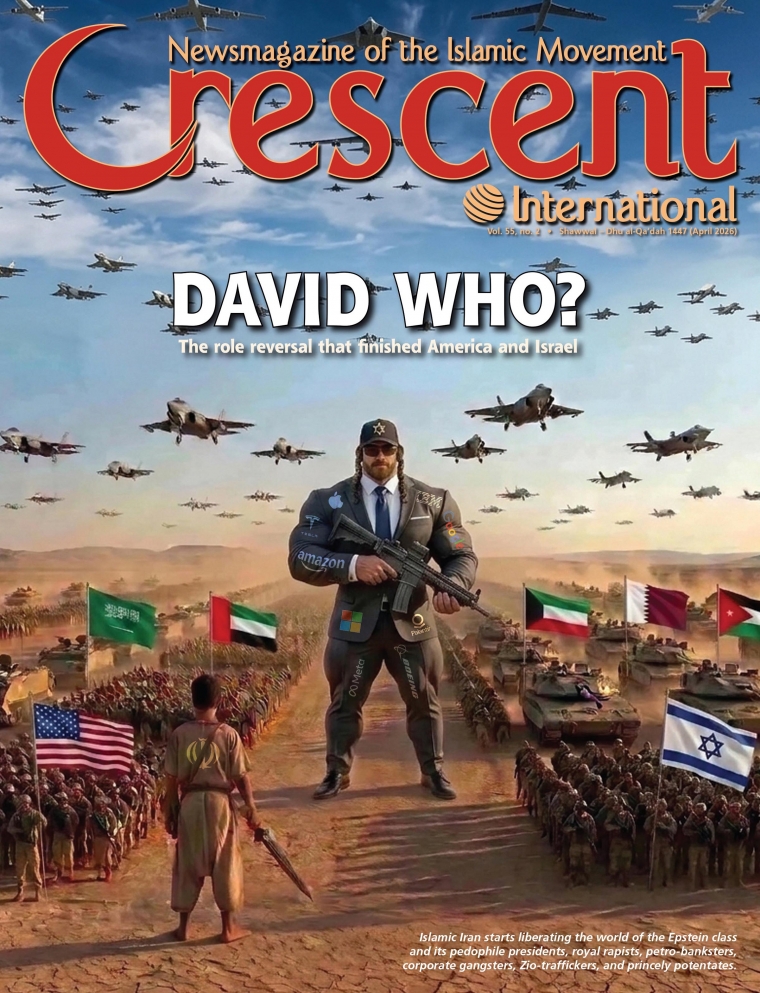
America’s Operation Epic Fury has triggered Iran’s retaliatory campaign under Operation True Promise 4. The strategy of using military assets stationed in West Asian states to strike Iranian installations has been met with a level of Iranian precision that the US and zionist entity sides appeared not to have anticipated.
It was not long before almost every Gulf Cooperation Council (GCC) state along the line of confrontation began witnessing Iranian missiles landing on their territory, striking American military assets. As the war escalates, infrastructure projects have also come under attack.
Constraints are now being felt acutely across the Persian Gulf, whose export-dependent economies rely heavily on the Strait of Hormuz. Whatever the eventual outcome, Iran’s strategy appears to be yielding results. Yet the situation demands a deeper examination.
The Iranian shock
Iran’s geostrategic configuration revolves around the Axis of Resistance. At its peak, this network included Iraq’s Popular Mobilization Forces formed to fight ISIS, Syria, Hizbullah in Lebanon, Hamas in Palestine, and the Ansarallah movement in Yemen. The “revolution” in Syria, has led to the loss of this crucial nexus between Tehran and Beirut.
This structure represents an asymmetric threat to the interests of the zionist entity and the US in the region, effectively reshaping the battlefield. Iran has not sought to confront the occupation state and Washington through conventional parity in advanced air and naval capabilities. Instead, it has pursued a strategy designed to make war prohibitively costly for its adversaries, both diplomatically and economically.
Since the establishment of the Islamic Republic in 1979 and the subsequent reorientation of Iran’s foreign policy, an asymmetric approach has been viewed as the most viable path for Iranian war planning.
Repeated economic sanctions imposed on the Islamic Republic limited access to advanced war-fighting technologies and complicated the maintenance of US-origin military equipment inherited from the Pahlavi era. Conversely, any large-scale US war plan against Iran would inevitably require logistical cooperation from the zionist entity, Jordan, and the GCC states.
Iran’s response lay in developing one of the largest stockpiles of conventional ballistic missiles in the world. While Iranian missile technology has drawn upon Russian, Chinese, and North Korean expertise, it has been refined and advanced through sustained indigenous innovation.
Educational institutions, industrial networks, and support systems tied to the ballistic missile program were expanded under direct state supervision. The program’s effectiveness was demonstrated when Iran unveiled the Fattah-1 hypersonic missile in 2023, marking a major technological milestone achieved largely through domestic development.
Parallel investments were made in drone warfare, with the Shahed series emerging as low-cost precision weapons capable of striking high-value targets with sustained frequency.
Despite tensions between Iran’s resistance network and Gulf monarchies, Tehran has often maintained pragmatic relations with individual GCC states. Oman which was unscathed by Iran’s response (Tehran had dismissed accusations it was behind attacks on infrastructure sites of the sultanate as false flags), has played a leading role in diplomatic efforts to avert the war, owing to its long-standing neutrality.
The UAE has reportedly facilitated certain mechanisms enabling Iran to mitigate sanctions pressure, while relations with Qatar expanded through cooperation in hydrocarbon development and export infrastructure. The shared South Pars gas field stands as a prominent example of this interdependence.
Across its military doctrine and force structure, Iran has sought to minimize its own costs while ensuring that any attempt to confront it would impose staggering economic and political burdens on its adversaries. Current events reflect the practical application of this doctrine.
The targeting accuracy of Iranian missiles and drones has proven unexpectedly high, particularly in strikes against US-linked installations across the region.
Reports have also suggested the possible involvement of Russian and Chinese intelligence assistance, enhancing Iran’s capacity to inflict strategic-level damage on the American military presence.
Moreover, the prolonged use of costly US missile defense systems such as THAAD — with each interceptor estimated at up to $15 million—against comparatively cheaper Iranian ballistic missiles like the Khorramshahr-4 and Sejjil intensifies financial strain on Washington over time.
Investments lost, region in turmoil
Iranian strikes have not been limited to radar systems and their supporting components. In subsequent waves of attacks, US diplomatic installations, command centers such as the NSA facility in Bahrain, and petrochemical refinery complexes were also targeted. In both the UAE and Bahrain, Shahed drones struck locations in residential areas, reportedly aimed at sites frequented by US military personnel.
The underestimation of Iran’s ballistic missile capabilities and its ability to mobilize its resistance network has resulted in initial strategic equipment losses for the US estimated at around $2 billion.
This figure does not account for damage to diplomatic missions and defensive infrastructure in Iraq, where resistance activity has been particularly effective. Many of the installations targeted form the backbone of the missile defense architecture protecting Washington’s Arab allies and the zionist entity itself.
Among the facilities affected are the AN/FPS-132 early warning radar at Al Udeid Air Base in Qatar, AN/TPY-2 radar components at Muwaffaq Salti Air Base in Jordan, and the AN/FPS-117 radar near Al Qaisuma Airport in Saudi Arabia. The occupation state, the principal strategic target of Iranian missile capabilities, quickly felt the consequences. With radar coverage degraded, the interval between detection, warning sirens, and civilian shelter directives has been significantly reduced.
The erosion of reliable early warning systems has the potential to undermine public morale inside the zionist entity, particularly as authorities move to criminalize the dissemination of footage showing missile impacts and damage locations. Previous phases of pragmatic engagement between Iran and certain GCC states have also contributed to growing doubts regarding the broader American war strategy.
Since early March, officials from several GCC governments have voiced dissatisfaction with the reality that US-initiated hostilities have resulted in Iranian retaliatory strikes on their own territory. Although such dissent is unlikely to reshape foreign policy overnight, the presence of influential voices advocating de-escalation represents an important internal dynamic.
In geopolitical terms, this constitutes a potential “off-ramp,” offering a pathway toward reducing tensions. For the GCC states, de-escalation is ultimately tied to the restoration of economic stability.
This episode also follows closely on the heels of tensions between Saudi Arabia and the UAE over Yemen, culminating in the rapid collapse of Abu Dhabi’s military initiative in the Yemeni civil war in December 2025.
Both states continue to compete indirectly across proxy theatres such as Sudan and Libya. Any further deterioration in their relationship in the context of the Iran confrontation would present an additional strategic challenge for Washington.
Keeping it together
The US has repeatedly sought to reassure its regional puppets. Military responses have been intensified, including the deployment of additional THAAD interceptor systems from South Korea. Expertise in counter-drone operations, reportedly involving Ukrainian specialists, has also been introduced. Nevertheless, such measures provide only limited comfort to states still exposed to Iranian missile strikes.
Bahrain remains one of the most likely focal points of Iranian retaliation. Its Shia Muslim majority, many with historical ties to Iran, has experienced recurrent unrest against the ruling Khalifa dynasty. Memories of the uprisings of 1996 and 2011 remain vivid, and intensified attacks on Bahraini infrastructure and US military facilities have coincided with renewed, albeit brief, protests.
Bahrain’s rulers responded swiftly, arresting dozens and restoring order. Yet the broader situation remains fragile. Disruptions in the Strait of Hormuz continue to threaten Bahrain’s economic stability, making the issue a matter of strategic concern for Saudi Arabia, which views Bahrain as a vital ally whose security must be preserved.
Iranian retaliatory strikes on Qatar — particularly targeting the Ras Laffan LNG complex — risk triggering acute gas supply shortages in markets heavily dependent on Qatari exports.
By mid-March, Iran’s target list had expanded to include strategic sites in the UAE. Some assessments suggest that the Emirates has faced the highest volume of attacks, with approximately 1,600 drones and 300 missiles launched toward Emirati territory at the time of writing.
Major targets have included Jebel Ali Port, Dubai International Airport, and the Fujairah oil fields. The implications of such strikes for both the GCC and the US are self-evident.
Russia, long regarded as Washington’s principal geopolitical rival, has derived significant economic gains from the crisis. The partial closure of the Strait of Hormuz forced many US allies to increase hydrocarbon purchases from Russian suppliers.
During the first half of March alone, Russia reportedly earned around 7.7 billion euros from oil, gas, and coal exports, averaging approximately 513 million euros per day. This represented a roughly 14 percent increase in daily oil revenues compared with February, driven largely by sustained demand from India and China.
Beijng, meanwhile, has closely observed the unfolding conflict. Recent restructuring within the leadership of the People’s Liberation Army saw experienced generals replaced by a new generation of commanders.
While this initially appeared risky, modern warfare—shaped by drones, cyber capabilities, and asymmetric strategies—demands fresh thinking. Reconstruction of damaged American military infrastructure, particularly radar systems, is also likely to require rare earth minerals, over which China maintains substantial control. This provides Beijing with valuable leverage in a period of heightened global tension.
Despite daily US and zionist entity air operations targeting hundreds of Iranian positions, the Iranian political system shows little sign of imminent collapse or capitulation. Against considerable odds, Iran’s long-standing strategy of resilience and cost imposition appears to be achieving its intended effect.


By allowing military bases of the enemies of Islam on their lands to attack Muslims is a betrayal of the fundamental principle of Islam. If ...

The six member-states of the Gulf Corporation Council (GCC) signed a defence pact on December 31, pledging themselves to come to each otherâ...
The armies of Arabian dictators have joined the US and its allies in war games in Jordan. Forces from nine Arabian countries are involved. T...
Developments in the region are not helping the illegitimate rulers in the Muslim East (aka the Middle East). They were expected to meet US P...