 Archives
Multimedia
Donate
About
Sign In
Archives
Multimedia
Donate
About
Sign In



 Brecht Jonkers


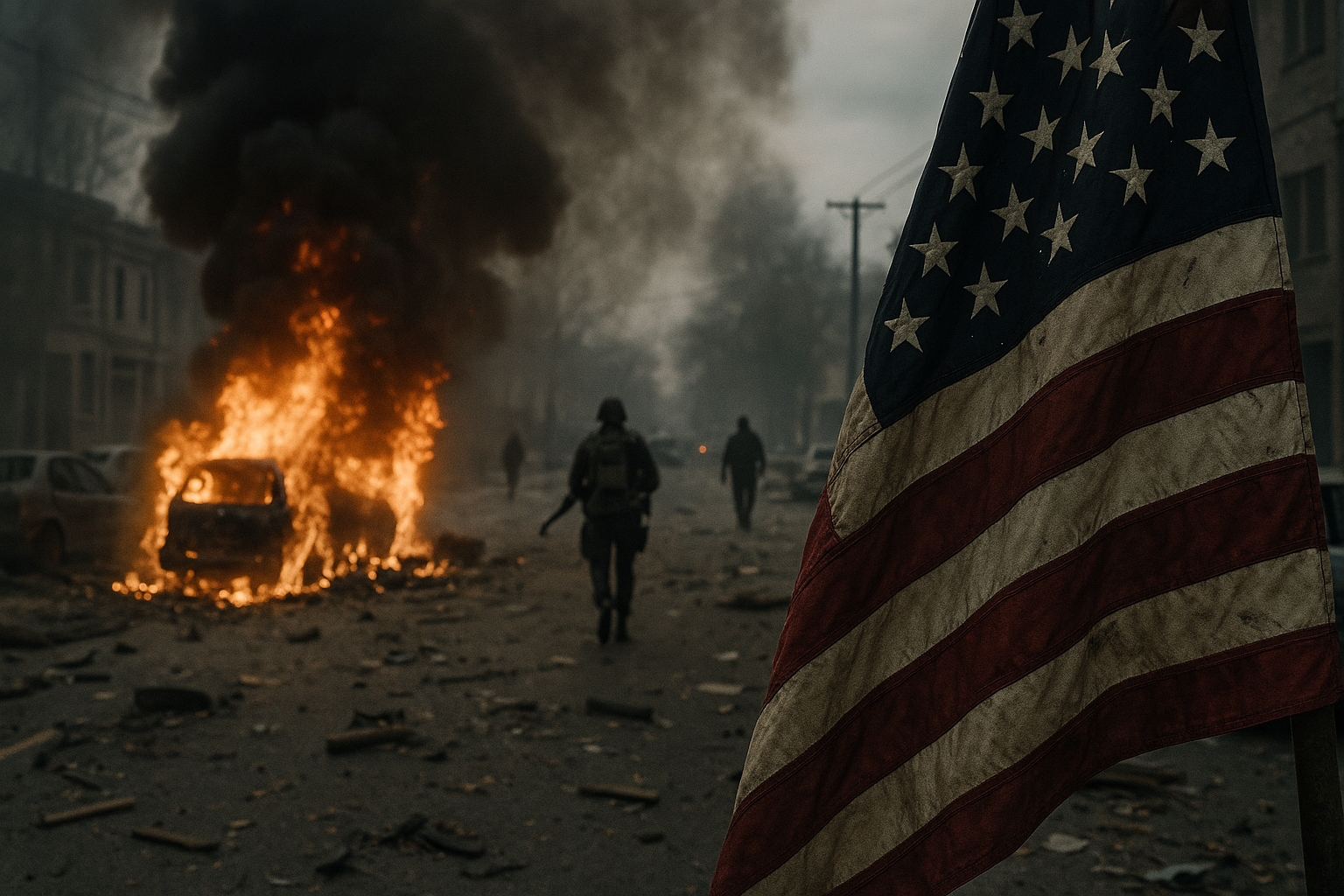
The decision by the US regime to go to war against the Islamic Republic of Iran, especially during the month of Ramadan, will go down in history as a clear-cut example of imperial hubris, arrogance and overstretch. And, much like the haughty and self-applauding rule of the Pharaoh and the overconfident sinfulness of Sodom and Gomorrah, it will only serve to speed up consigning the Empire into the dustbin of history.
What Trump promised was a “quick and easy” regime change operation that was planned to last a few weeks at most. This is akin to the eerily familiar memory of Saudi Arabia vowing to defeat Yemen in a matter of a mere six weeks back in 2015, a war that at this moment has hit its 11th anniversary.
What Trump has actually delivered, however, is an Iran more united than ever, the Strait of Hormuz completely under Iranian control and off bounds to any servants of zion, the global petroleum market in disarray, widespread destruction and discontent among the US-allied monarchies in the Persian Gulf, and an economic downturn that is going to hold most of the west and its satellite states in a firm grip for years to come.
Far from the Islqmic government in Tehran collapsing under US bombs and being replaced by a puppet regime resulting from a typical US-backed colour “revolution”, the legacy of the Islamic Revolution has achieved an elevated level of national cohesion. The Iranian people, and much of the world, understand that this is a fundamental conflict waged on an eschatological level: a clear-cut war between good and evil.
Political differences between factions within Iran have been set aside, and even former participants in anti-government protests of the past months have now joined the million-man rallies in support of Iran’s defence. Moreover, decades of political propaganda demonising the Islamic Republic have become undone in a matter of weeks as Iran’s soft war capabilities have done marvellous work exposing, on social media and through grassroots journalism, the inner workings of the zionist clique.
With the war of aggression against Iran coming on the heels of shattering revelations regarding the zionist pedophile operation run by the Epstein cabal, public distrust of the American regime is at an all-time high. Major figures within the establishment such as Joe Kent resigning as head of the National Counterterrorism Center in protest, or the likes of political philosopher John Mearsheimer stating that the US has “already lost” the war against Iran, are high-level slaps in the face of US imperialist propaganda that would have been unthinkable at the height of the “War on Terror” craze 20 years ago. Bit by bit, people in the west are waking up to the truth behind zionist lies they have been spoon fed since birth.
The US has had to resort to calling on its satellite states for help, like a feudal suzerein summoning its vassals when the going gets tough. The humiliation was made worse when none of the bannermen rallied around the flag, as the entirety of NATO, aside from Britain, refused the call outright. Even among the normally loyal Arab monarchies in the Persian Gulf, discontent is brewing with the actions of Washington and the lack of coordination with its presumed allies.
Iran has repeatedly stressed that it has no direct feud with any of the countries in the Persian Gulf region. It is targeting exclusively the military bases used by the US-zionist enemy. It has done this with surgical precision and efficiency: every single one of the 17 US military bases Iran identified in the West Asian region have been rendered inoperable. As a result, the entire strategic basis of the US military presence in the Persian Gulf, the work of over three decades, has been rendered null and void in mere weeks.
It should by now be expected that the Arab monarchies will eventually demand the full and official departure of US troops from their territories. This really is not far fetched, since most of these bases are a recent phenomena. With the exception of Bahrain, where the US took over the British colonial bases following the country’s independence, all US bases in the region date to the 1990s, when the First Gulf War atmosphere resulted in a rapid increase in military bases.
Only after the US pivot to the Arab world beginning in 1991, did the Persian Gulf area take center-stage in American foreign policy, caused both by its unquenchable thirst for cheap petroleum and by the growing neoconservative-zionist influence in Washington.
Demanding the end of direct military deployment in countries such as Qatar would be a reasonable ask. Especially since it would end Iranian missile and drone strikes on these kingdoms almost immediately. It is simply inconceivable that this thought has not crossed the minds of the Arabian rulers, especially since the very survival of the monarchies may be at stake if their direct involvement in this war continues. Trump has shown, with his usual lack of tact, that the US sees the Arab states as little more than convenient real estate for military use, and will do nothing to actually defend them as would befit either an ally or a proper suzerain.
The importance of the departure of US troops from the Persian Gulf cannot be overstated. It would effectively scuttle the core US military doctrine of strategic bombing, in a way that Iran already has achieved militarily by knocking the US bases out of commission.
For all the pomp and circumstance surrounding US military posturing, warfare is always bound by hard material reality. While US strategic bombers can reach Iran from bases such as Diego Garcia or even within the United States itself, the situation is far more complicated for fighter-bombers and accompanying aircraft that in the past were based around the Persian Gulf. With the incapacitation of virtually every US base in the region, the US now has to rely on aircraft carriers as its sole reliable source for rapid-response aviation.
After all, US forces had to vacate Afghanistan years ago, and have all but fled Iraq due to the ceaseless resistance of the Popular Mobilization Forces. So naval aircraft remain the sole reliable option.
Notably, at this moment there is only one single aircraft carrier, the USS Abraham Lincoln, which has been assigned for combat operations against the Islamic Republic. The USS Gerald Ford was dedicated to the operation, but has since been moved to Split in Croatia for repairs following an alleged “laundry room fire”. The limitation to only one single vessel is peculiar, considering that the US Navy boasts of no fewer than 11 operational aircraft carriers at all times.
The US has started to redeploy military equipment away from East Asia towards the Persian Gulf, such as its recent removal of missile systems from South Korea showed. However, it will still face the fact that without its previously operational bases, this will have minimal impact.
It is noteworthy that Iran has no territorial demands regarding the Gulf monarchies, not even towards Bahrain which was Iranian territory prior to 1971. Contrary to what ongoing zionist and Wahhabi rhetoric may claim, Iran is not and has never been a threat to either the existence or the territorial integrity of any of the countries surrounding the Persian Gulf.
While some fanciful desires have been expressed by netizens regarding Iranian expansion or punitive expeditions against the Khaleeji states, Iran has never entertained these notions. If anything, the main threat to the monarchies’ political systems is likely to come from the fact that the twin pillars of guaranteed US military support and unimpeded inflow of petroleum dollars are being undermined. Cutting dependence on the US and forging a sovereign path forward may prove to be the most reliable way to ensure political stability. This has been proven by Oman, for example.
As in the famous story of “The Emperor’s New Clothes”, it takes but one brave soul with the common sense and audacity to point out that the emperor is, in fact, naked. Once this one man speaks up, the charade is over and the truth is laid bare for all the world to see.
Iran has proved itself to be one brave soul in the world today. The garments of the imperator, which in our time go by such names as the Iron Dome, the US military, the petrodollar and the “rules-based order”, have turned out to be nothing but commonly accepted delusions. The missiles and drones of the Islamic Revolutionary Guards Corps have demolished the smokescreen masquerading the inherent weakness of US-zionist hegemony.
The war is still far from over, despite the continued and increasingly desperate attempts by Trump to sue for peace. Iran has repeatedly repudiated these pleas. The terms of a peace deal will be set entirely by Iran, as the victor of this war that will go down in history as a major humiliation for the US empire.
Whatever developments emerge in the coming months, it is certain that West Asia will never be the same again.


The US has dozens of military bases in West Asia from where it has launched attacks against the Islamic Republic of Iran. In self-defence, I...

The US maintains more than 750 military bases worldwide. There are also a string of bases all around Islamic Iran with the specific aim of d...