 Archives
Multimedia
Donate
About
Sign In
Archives
Multimedia
Donate
About
Sign In



 Muslim Mahmood


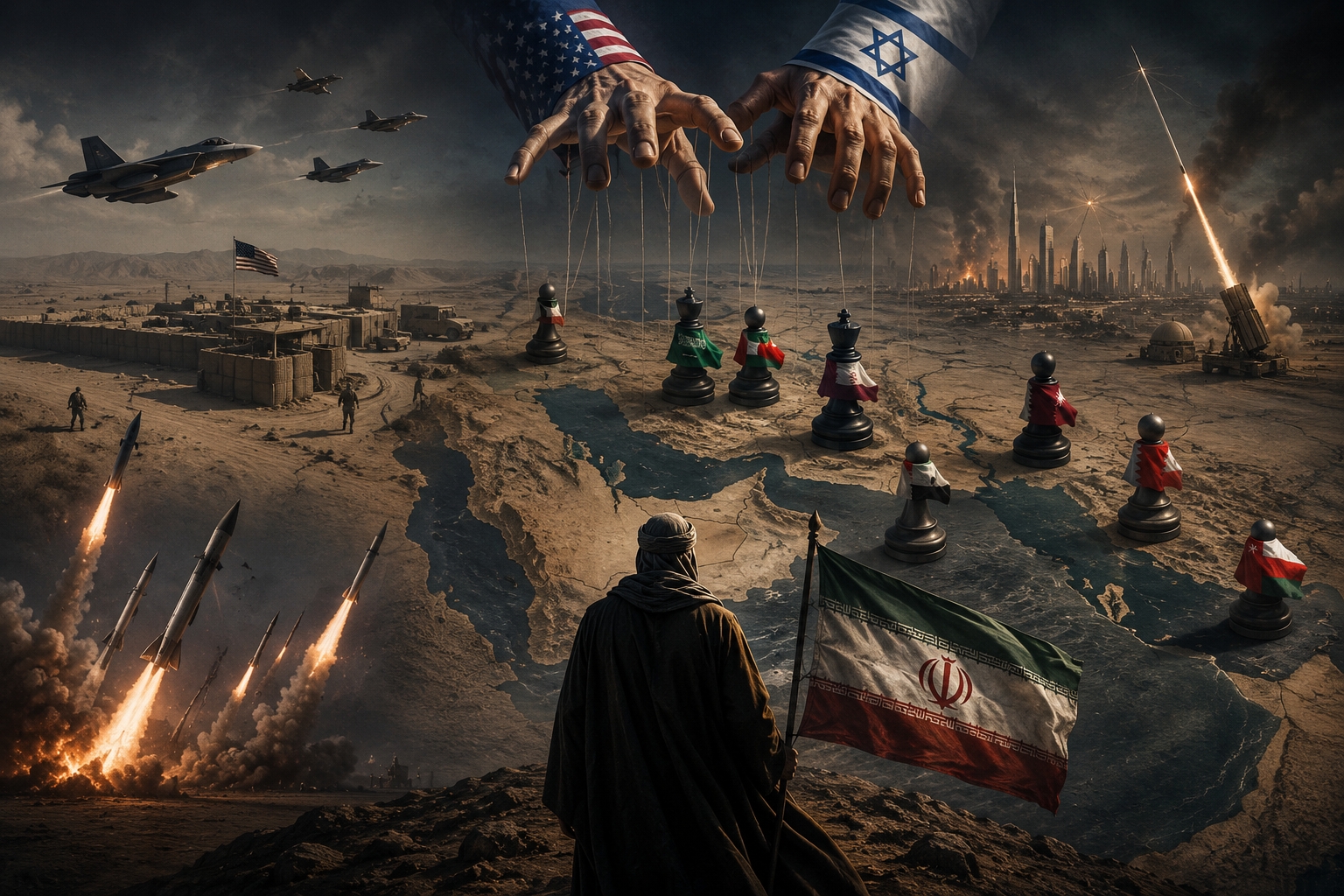
By May 2026, the fight over the Strait of Hormuz had migrated from missile ranges and mine-clearing helicopters into a subtler theater: competing legal memoranda. On May 4, Iran's Islamic Revolutionary Guard Corps issued a map extending its claimed zone of authority across a stretch of the strait that reached into Omani and Emirati territorial waters, and days later Iran established what it called the Persian Gulf Strait Authority to authorize and regulate transit. Neither move was accidental, and neither was merely rhetorical — both were attempts to convert a temporary wartime disruption into a permanent shift in who gets to say what “passage” through Hormuz actually means.
The underlying dispute long predates 2026. Iran and the United States are not parties to the 1982 UN Convention on the Law of the Sea, and each has spent decades reading that gap to its own advantage. Washington argues that the convention's regime of “transit passage” — continuous, expeditious movement for commercial vessels, warships, and aircraft alike, unencumbered by a coastal state's discretion — has hardened into binding customary law that applies whether or not a state has ratified the treaty. Iran counters that transit passage was a negotiated bargain internal to UNCLOS itself, available only to states that signed on to the whole package, and that in its absence the older, narrower customary standard of “innocent passage” governs — a standard under which a coastal state retains real discretion to judge whether a given vessel's passage is harmless, and to bar it if not. Oman, which ratified the convention and jointly administers the strait's traffic-separation scheme with Iran, occupies an uncomfortable middle position: bound by transit-passage rules it accepted in law, but leaned on by both Washington and Tehran to bend its practice toward one interpretation or the other. Legal scholarship has increasingly converged on the view that the modern law of straits was built for exactly this scenario — to prevent a single bordering state from converting a chokepoint into a discretionary tollbooth — and that the balance of that law runs against Iran's broader claims, even if particular questions, like whether transit passage binds non-parties at all, remain genuinely contested among specialists.
What makes 2026 more than an academic dispute is that Iran did not stop at asserting innocent passage. Its stated conditions for a final settlement have included formal international recognition of Iranian sovereignty over the strait and a permanent toll regime — reportedly split with Oman — administered through the same Revolutionary Guard command structure that had spent the preceding months attacking tankers. Iran's foreign ministry has invoked precedents such as Turkey's Montreux Convention authority over the Bosphorus and Dardanelles, and Egypt's toll-collecting authority over the Suez Canal, as models for what it wants at Hormuz. The comparison does not hold on its own terms — Montreux is a multilateral treaty Turkey negotiated and every relevant power signed, and the Suez Canal is an artificial waterway built and owned outright by Egypt, not a natural strait shared with a second sovereign coastline. The International Maritime Organization has said explicitly that no international agreement permits a coastal state to charge for transit through a strait used for international navigation, warning that an Iranian toll would set a precedent other chokepoint states — from the Bab el-Mandeb to the Strait of Malacca — would have every incentive to copy.
The Coalition That Could Not Quite Form
Diplomatically, the crisis produced an unusual split among Iran's traditional external partners. Russia and China vetoed a Bahraini-drafted UN Security Council resolution in April that would have condemned Iranian attacks on shipping and called for coordinated international efforts to defend transit — a veto consistent with Iran's own decision to grant unimpeded passage to Chinese, Russian, Indian, Iraqi, and Pakistani vessels while continuing to obstruct ships associated with the United States, Israel, or their allies. That selective enforcement is itself legally significant: a coastal state permitted to regulate passage for genuine safety reasons is not permitted, under the transit-passage framework Washington invokes, to discriminate among flags based on political alignment — which is precisely what both the Iranian and American blockades, in their different ways, ended up doing to each other's associated shipping.
Into that vacuum stepped a European initiative distinct from both Washington's naval posture and Beijing and Moscow's Security Council obstruction. Britain and France hosted two conferences on reopening Hormuz through 2026, gathering a joint statement from 38 countries expressing readiness to help secure passage and condemning attacks on commercial shipping, and by mid-April had committed to building a defensive mission once a durable ceasefire took hold — the UK offering autonomous mine-hunting equipment, counter-drone systems, Typhoon jets, and naval vessels including HMS Dragon, France contributing its Charles de Gaulle carrier group. Iran's response was blunt: any such deployment into the strait would draw what Tehran called a decisive and immediate response, a warning consistent with the same underlying claim — that whatever the text of UNCLOS says about transit passage, the practical reality of the strait's narrowest kilometers running through Iranian and Omani territorial waters gives Tehran a veto that lawyers in London and The Hague cannot write around.
Oman, for its part, has tried to hold a position that satisfies neither patron. Washington has threatened to sanction Muscat if it facilitates any Iranian toll mechanism — a threat Iran's foreign ministry denounced as an attempt to coerce an independent state in violation of the UN Charter — even as Oman itself proposed, in June, a service-fee framework of its own for shipping companies using the strait, distinct from and calculated to preempt the IRGC's tolling scheme. That a state whose entire post-1979 foreign policy has been built on quiet mediation between Washington and Tehran found itself simultaneously threatened by one and instrumentalized in the other's rhetoric is, in miniature, the position every small Gulf state has occupied throughout this crisis: geographically indispensable, politically expendable.
What the Strait Teaches About Power
Read across five centuries — Portuguese blockade, Safavid-English expulsion, three centuries of quiet, twentieth-century oil discovery, the tanker war's failed closures, a war game Iran won on paper in 2002, and now a year in which the strait has been closed, reopened, blockaded, tolled, and legally contested nearly simultaneously — the throughline is not that any single power has ever definitively controlled the Strait of Hormuz. It is that every power operating near it has had to reckon with the fact that no one else can either, not durably, not without cost disproportionate to the gain. Portugal held it for a century through naval supremacy alone and still lost it to a coalition it could not out-position. The United States has spent nearly four decades asserting a freedom-of-navigation doctrine it has never had to test against a determined, technologically modern Iranian denial effort for longer than a few months at a stretch. Iran has spent the same four decades demonstrating that it can disrupt the strait credibly enough to move the global oil price, while never demonstrating that it can hold it closed long enough to convert that disruption into a durable settlement on its own terms.
That asymmetry — real coercive power, but not enough to compel outright victory, on every side — is what has produced 2026's peculiar rhythm of ceasefires signed and broken within days, closures declared by one Iranian institution and denied by another within the same news cycle, and a toll regime that exists in practice for the handful of vessels that have paid it while remaining, in the judgment of nearly every state that is not Iran, illegal on its face. It is tempting, watching that rhythm, to conclude that the strait's legal status will eventually be settled by whichever side outlasts the other militarily. The history argued against that conclusion in 1622, when Portugal's naval supremacy proved insufficient against a land-and-sea coalition it never fully anticipated; it argued against it again in 1988, when eight years of tanker attacks failed to close the strait or force a favorable peace on either belligerent; and it is arguing against it now, as Gulf oil producers who bear no responsibility for the war between Iran, Israel, and the Trump regime absorb losses measured in hundreds of stranded tankers, while their own sovereignty over the outcome remains, as it has for five hundred years, distinctly secondary to the ambitions of whoever currently holds the coastline.

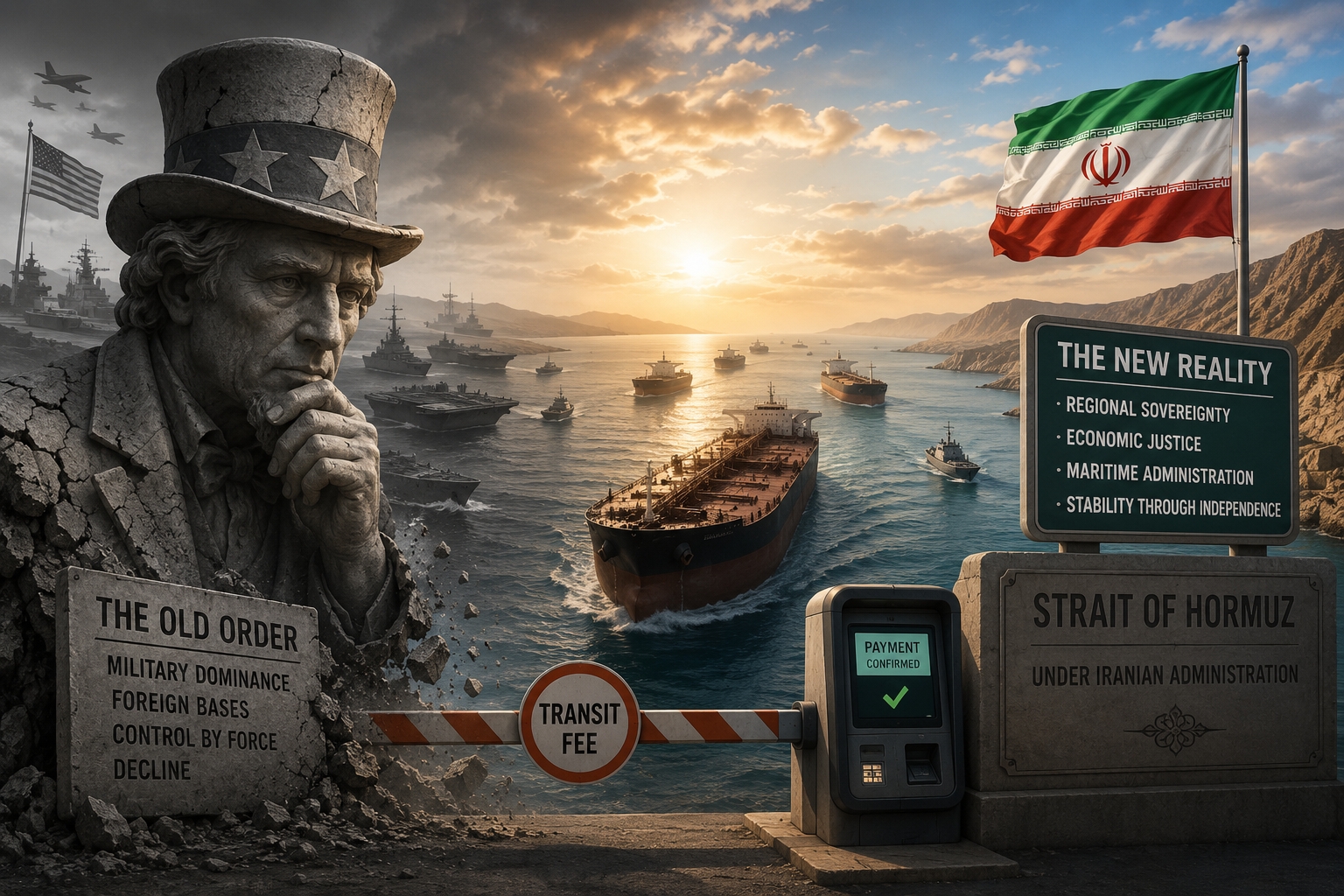
A prolonged closure of the Strait of Hormuz will bring down the US colossus. Disruption in energy supplies will have a global impact that we...
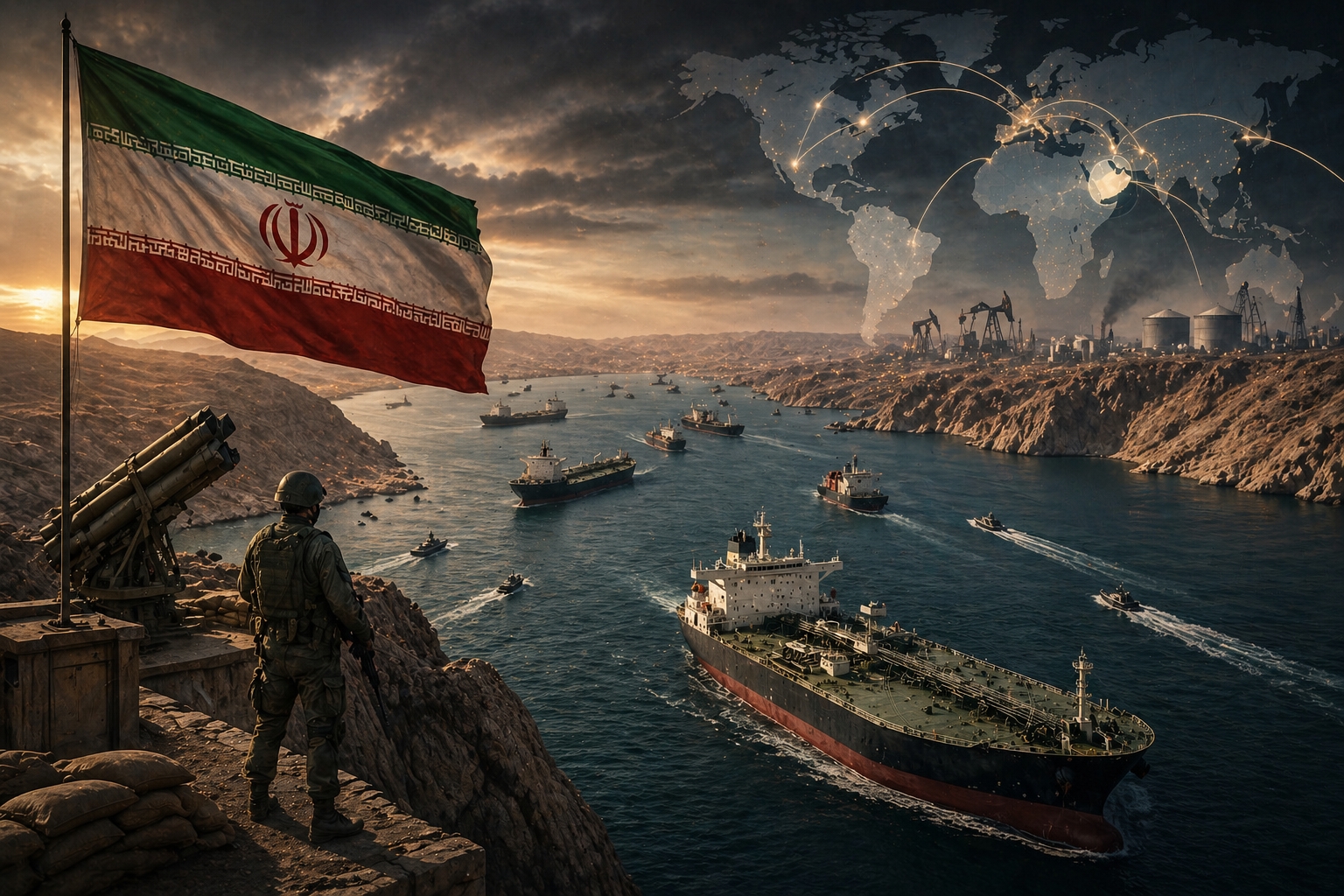
Attacks on oil tankers and vessels in the Strait of Hormuz can be traced to the “tanker war” between 1981-1988. The western-Arabian-Comm...
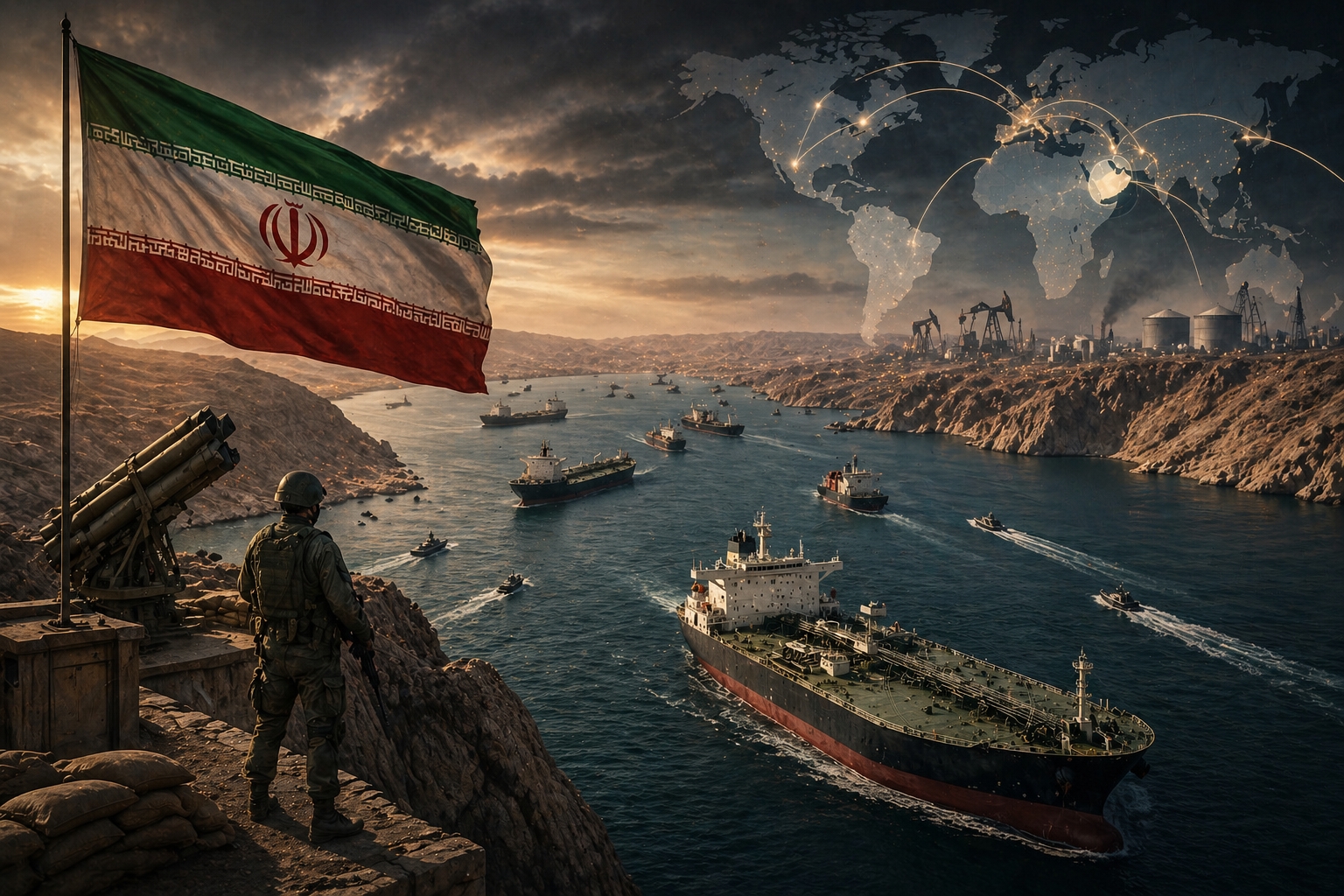
The Strait of Hormuz has become an important weapon in Islamic Iran’s hand vis-à-vis its enemies. On the surface, it now controls tanker ...

By controlling shipping through the Strait of Hormuz, the Islamic Republic has Trump by the throat. Oil prices and, therefore, prices of foo...