 Archives
Multimedia
Donate
About
Sign In
Archives
Multimedia
Donate
About
Sign In



 Muslim Mahmood


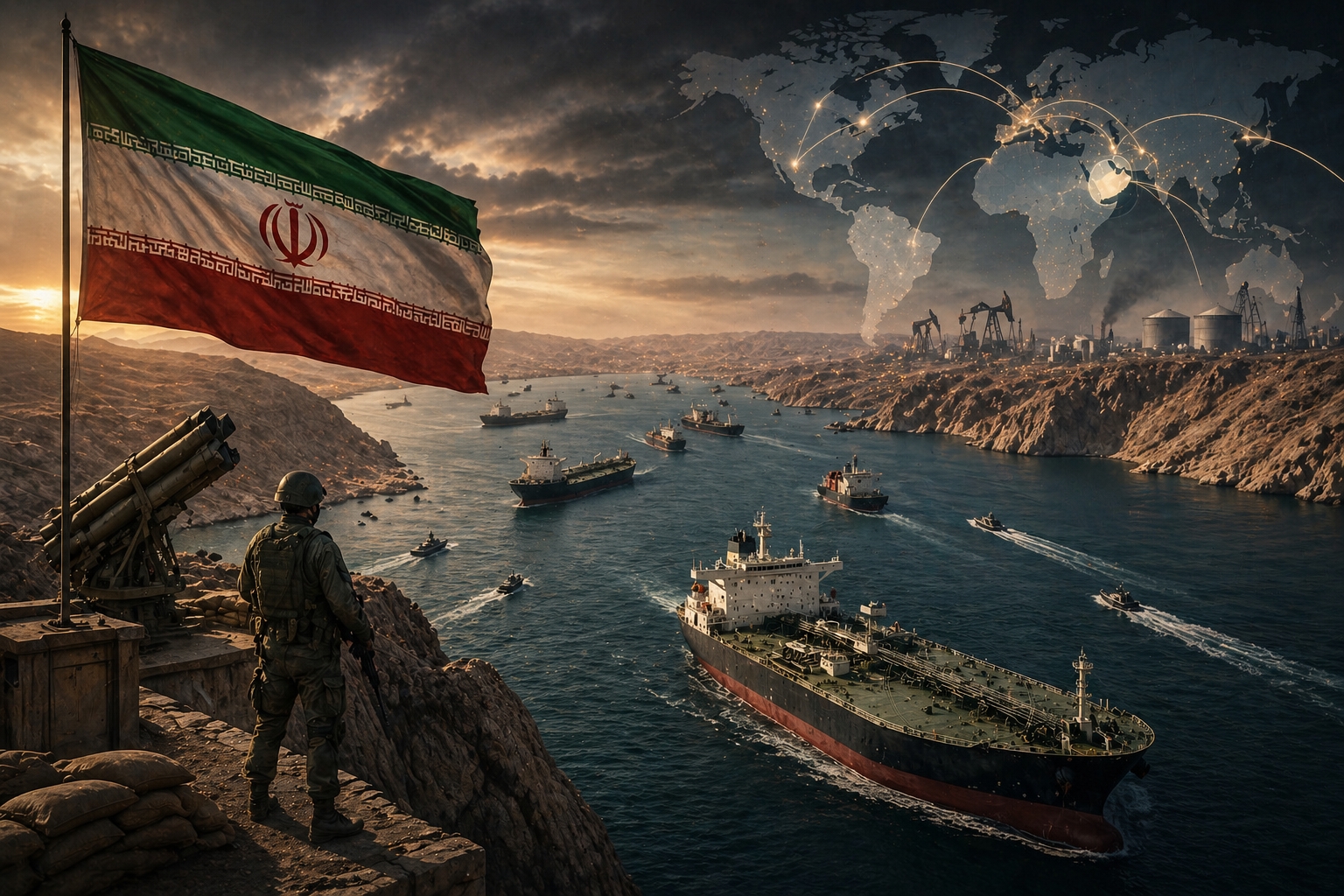
The template for everything that has followed in 2026 was set between 1981 and 1988, in a conflict that rarely gets the standalone attention it deserves: the “tanker war” fought inside the wider Iraqi-imposed war on Iran. Baghdad opened it, striking Iranian shipping and the Kharg Island oil terminal in an effort to provoke Tehran into closing the strait outright and drawing in outside powers against it.
Iraq’s aim was to provoke Iran into retaliating with extreme measures such as closing the Strait of Hormuz. This would have provided the pretext for direct foreign military intervention. The United States had repeatedly threatened to intervene if the strait were shut. Tehran did not take the bait, at least not in the way Baghdad hoped. Over eight years, Iraq carried out 283 attacks on merchant shipping and Iran 168, killing more than 400 civilian seamen combined — and yet, as historian and analyst assessments of the period have since concluded, the campaigns never managed to disrupt more than a small fraction of shipping traffic in the Gulf, and the strait itself was never closed.
That outcome mattered more than the body count. It taught planners in Washington, Tehran, and the Gulf capitals a lesson that has shaped every subsequent standoff: an economically dependent Iran has historically had as much to lose from closing the strait as anyone downstream of it, since its own oil exports move through the same channel. That calculation is precisely what Kuwait, Saudi Arabia, and the Reagan administration were leaning on in 1987 when Kuwait proposed reflagging its tankers under the American flag so U.S. warships could legally escort them — Operation Earnest Will — after Iranian mines and Silkworm missiles had begun striking tankers bound for Kuwaiti ports. When the American frigate USS Samuel B. Roberts struck an Iranian mine on 14 April 1988 while escorting reflagged tankers, the explosion nearly broke the ship in two, and U.S. officials matched the mine's serial numbers to ordnance seized earlier from an Iranian vessel. The retaliation, Operation Praying Mantis, remains the U.S. Navy's largest single-day surface engagement since the Second World War: American forces destroyed or damaged two Iranian oil platforms, sank or crippled several Iranian warships and armed boats, and downed two fighter jets, at the cost of two Marine aviators killed in a helicopter crash. Within four months, Iran accepted a UN-brokered ceasefire with Iraq.
The doctrine that emerged from this — that the United States would treat interference with Gulf shipping as an act warranting direct naval retaliation, and that Iran would calibrate its own attacks to remain below the threshold that invited such retaliation — held, with periodic tremors, for more than three decades. It is the doctrine that both Washington and Tehran spent the opening weeks of 2026 testing to destruction.
The War Game Iran Won on Paper
Long before 2026, American planners already suspected that doctrine had an expiration date. In 2002, the U.S. military ran Millennium Challenge, a major simulated war game built around an adversary widely understood inside the Pentagon to represent Iran, testing an American attempt to hold the strait against a determined regional power. The Iranian side's simulated strategy — dispersed small-boat swarms, missile saturation, asymmetric tactics rather than a fleet engagement — defeated the materially superior U.S. force in the exercise, and a subsequent 2008 assessment in the journal International Security concluded Iran could plausibly impede transit through the strait for as long as a month, with any American effort to reopen it likely to escalate rather than resolve the conflict. That finding was disputed in the same journal by analysts who questioned its underlying assumptions, and the debate over whether Iran can durably close Hormuz — as opposed to merely disrupting it — has never fully settled. What the 2002 exercise established, regardless of which side of that debate one credits, is that American confidence in holding the strait by force alone was never as complete inside the Pentagon as it was in public statements.
When the Threat Became Policy
That unresolved debate stopped being theoretical on 28 February 2026, when Israeli and American forces opened a campaign against Iran aimed, in the stated words of both governments, at dismantling its nuclear and ballistic missile programs. The strikes killed Iran's supreme leader, Ali Khamenei, and Iran responded across multiple fronts — attacking Israel, U.S. bases in the region, and sites in neighboring states. Within days, an Islamic Revolutionary Guard Corps official declared the strait closed, and by early March, satellite and wire reporting showed ship traffic through Hormuz collapsing; major container lines including Maersk, CMA CGM, and Hapag-Lloyd suspended transits altogether. Houthi forces in Yemen, invoking solidarity with Tehran, opened a parallel front against shipping in the Bab el-Mandeb, threatening to compound a single-chokepoint crisis into a two-chokepoint one.
What followed over the next four months was not a single closure and reopening, of the kind the tanker war had trained observers to expect, but an extended, repeatedly reversed standoff. A ceasefire negotiated with Pakistani mediation on 7–8 April required Iran to reopen the strait; when it did not, Washington responded not with another Praying Mantis but with a naval blockade of its own — barring vessels calling at Iranian ports while insisting it would not impede transit to and from other Gulf states. By April 9, the chief executive of the Abu Dhabi National Oil Company was still describing the strait as functionally shut, with more than 200 loaded tankers waiting inside the Gulf, and by June, Iranian officials were floating an entirely new arrangement: a tolling regime administered by the Revolutionary Guard, reportedly charging on the order of a dollar per barrel for safe passage — a proposal Washington's own negotiators called incompatible with any lasting settlement, and one that Oman, the strait's other territorial claimant and Washington's principal back-channel to Tehran, has firmly opposed.
By the time Presidents Trump and Pezeshkian signed a fourteen-point memorandum of understanding at Versailles on 17 June, reopening the strait without tolls, clearing Iranian mines, and lifting the American blockade were treated as the deal's central, load-bearing provisions rather than side conditions — a measure of how far the crisis had shifted the strait from background infrastructure to the主 explicit subject of great-power diplomacy. Even that agreement did not hold cleanly: within days, renewed Israeli strikes in Lebanon prompted Iran's military command to declare the strait closed again, only for Iran's own foreign ministry to contradict the closure within hours and the U.S. vice president to insist publicly that no closure was occurring at all — the same institutional dissonance, on a compressed timescale, that opened Part I of this report.
What is new in 2026, measured against 1988, is not that Iran can threaten the strait — it has been able to do so, credibly, since long before the revolution that gave that threat its present ideological cast. What is new is the duration of the ambiguity, the emergence of a formal U.S. counter-blockade as a matching instrument of coercion, and the introduction — however contested — of the idea that transit through an international strait might be monetized by whichever power holds the adjacent coastline. The next and final part of this report examines what that shift means for the law and diplomacy of straits more broadly: the international-law claims Tehran and Washington are each making over Hormuz, the naval deployments Britain and France have committed to a still-unformed defensive mission, and the deeper structural question of whether any外部 outside power can durably guarantee a passage that runs, for its most dangerous kilometers, through territorial waters it does not control.

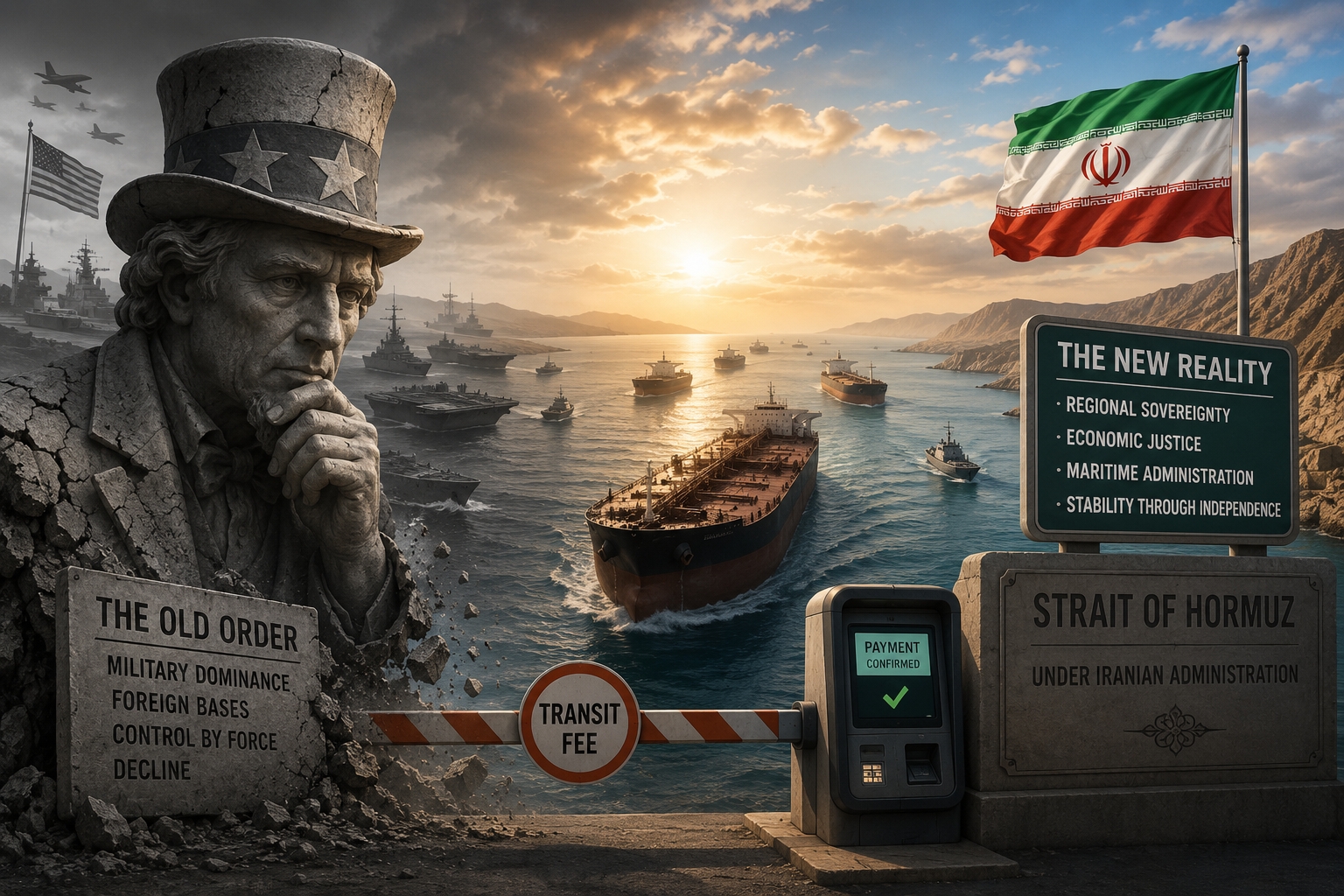
A prolonged closure of the Strait of Hormuz will bring down the US colossus. Disruption in energy supplies will have a global impact that we...
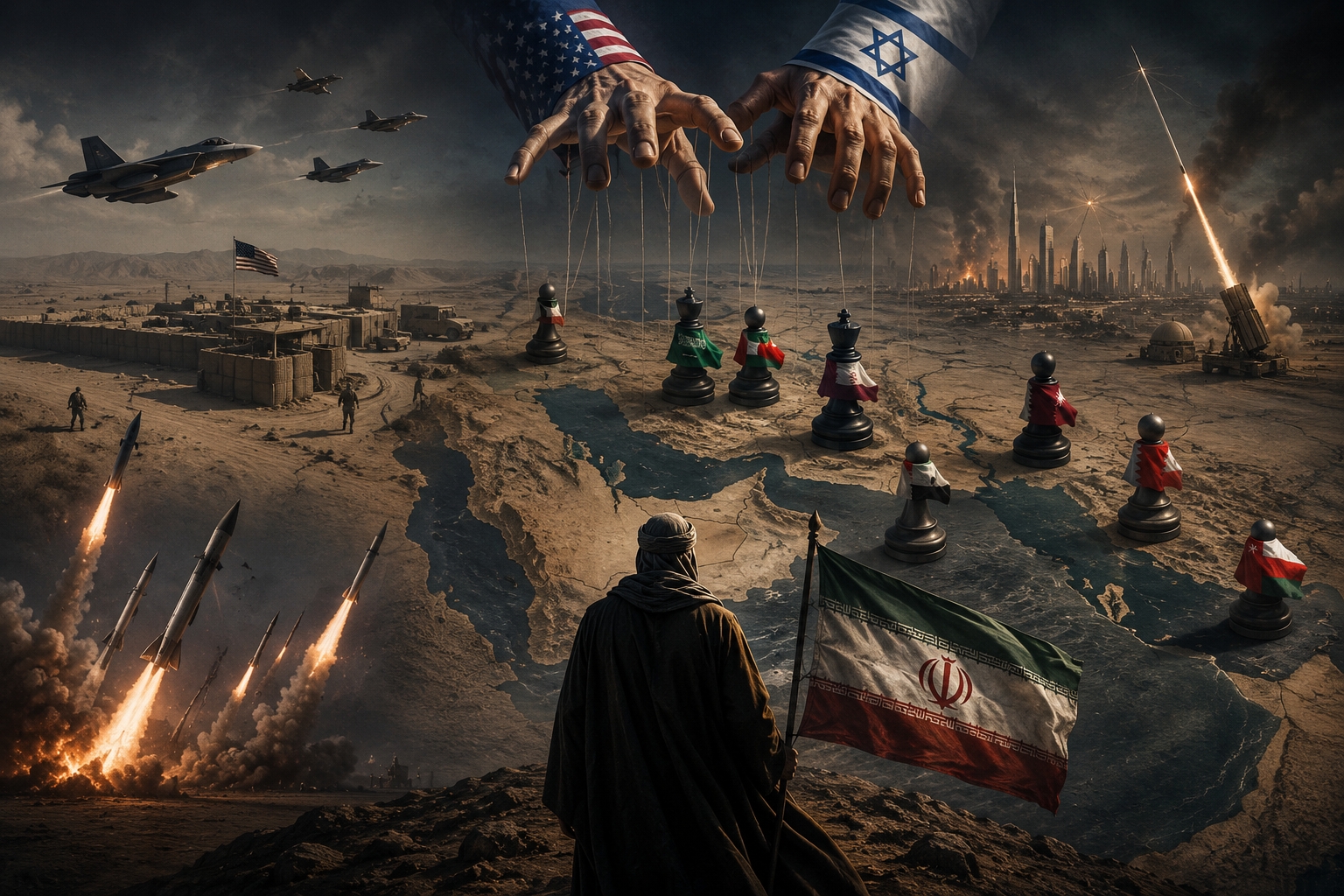
Islamic Iran has the longest coastline along the Strait of Hormuz. The US lies thousands of miles away yet it wants to control it. Under wha...
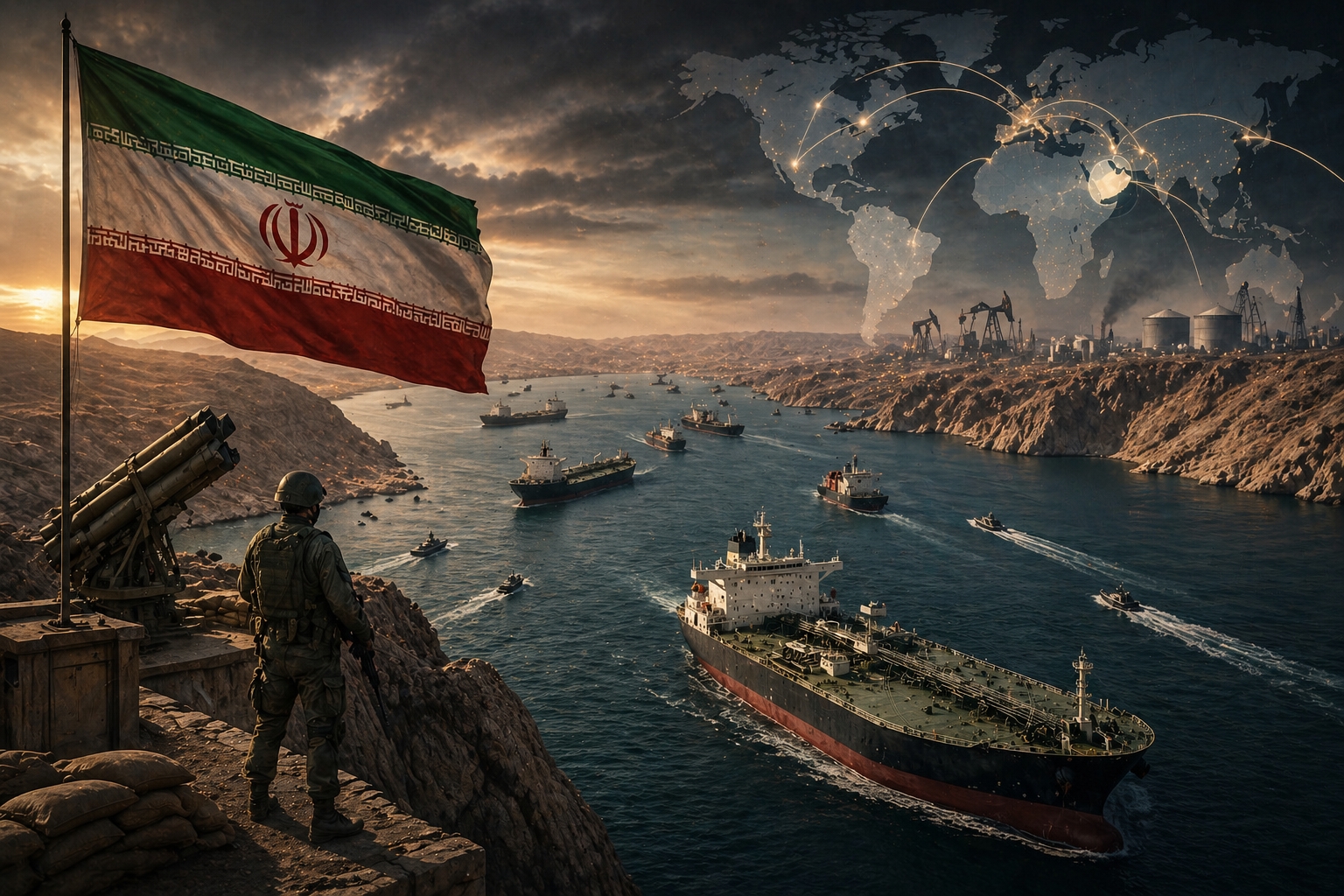
The Strait of Hormuz has become an important weapon in Islamic Iran’s hand vis-à-vis its enemies. On the surface, it now controls tanker ...
By controlling shipping through the Strait of Hormuz, the Islamic Republic has Trump by the throat. Oil prices and, therefore, prices of foo...