 Archives
Multimedia
Donate
About
Sign In



 Mohamed Ousman


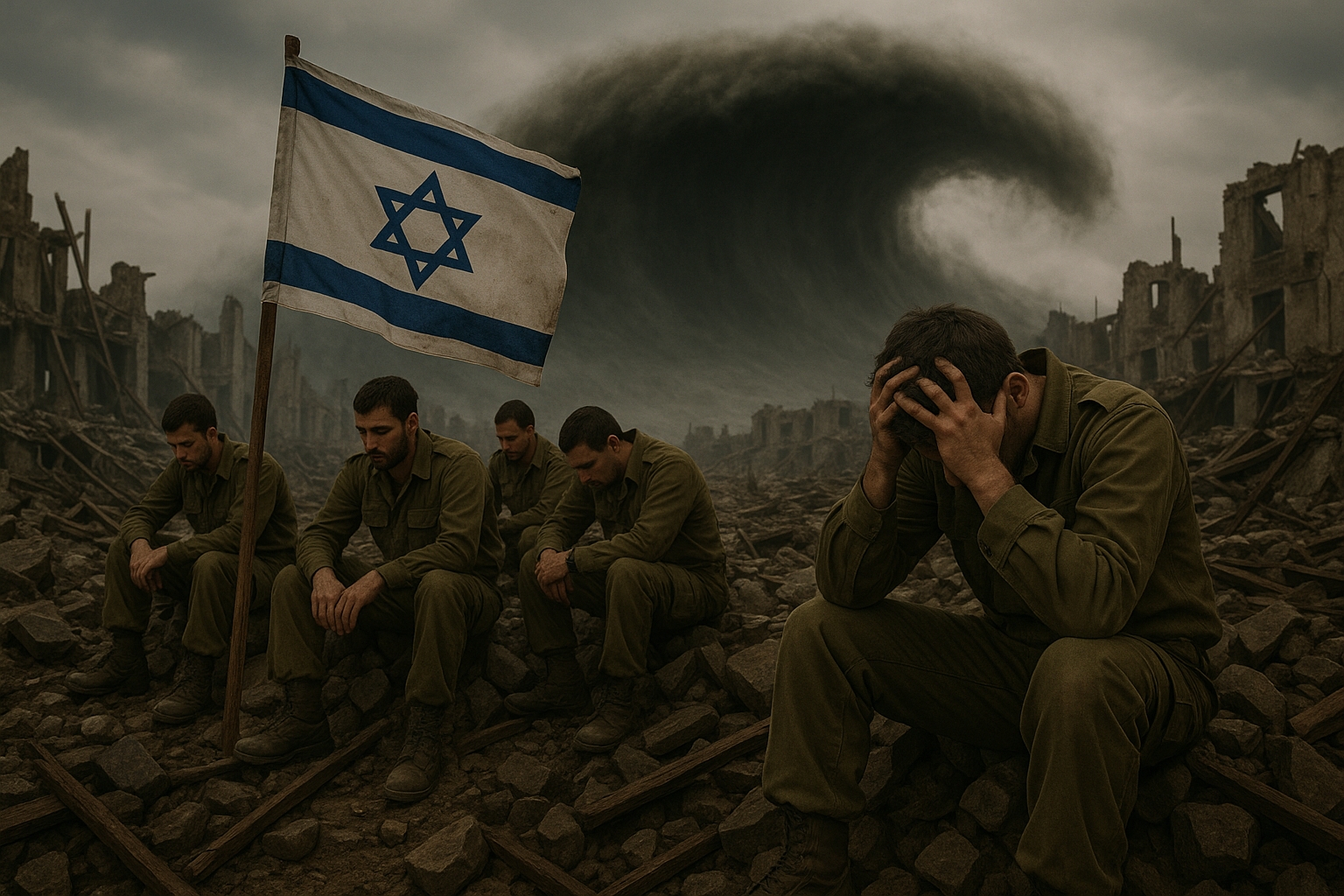
NB. The zionist Israeli Jewish nation-state is illegitimate. This piece is for the purpose of Muslim reflection.
The analysis below distinguishes between political participation, ideological accommodation, coalition-building and the independent interests of Palestinian citizens.
Participation in a parliamentary system along with examining political conduct, policy outcomes and accountability may establish whether a politician is a puppet or collaborator.
The Arabian Parliamentary Parties as a Legitimising Instrument
Ra’am, led by Mansour Abbas and the Joint List have secured 19 seats—an unprecedented parliamentary result.
Their representation creates a dilemma: whether participation advances substantive equality and Palestinian rights or normalises institutions whose policies they should oppose.
Abbas’s willingness to accommodate zionist parties warrants scrutiny against his public positions on statehood and the character of Israel.
The decisive test is political independence, not parliamentary representation alone.
Jolani ISIS and Selective Confrontation
Available reports identify nine Israeli military outposts in Syria used as verified Israeli voting stations.
The zionist occupation force reportedly operated early-voting facilities for soldiers across military positions, including locations in Syria.
Zionist Israel, meanwhile, continues military operations and maintains positions inside Syrian territory amidst the Jolani regimes non response to Israeli encroachment.
Jolani is prepared to deploy ISIS-linked fighters against Ansar-Allah in Yemen but refuses confrontation with Israel.
Syria’s transitional authorities have incorporated former armed factions into state security structures and joined the international coalition against dissenting ISIS fighters.
The Wider Problem of Muslim Political Accommodation
The same question applies to Muslim politicians in the US, Britain, Canada, South Africa and elsewhere.
Politicians become instruments of legitimisation when symbolic representation substitutes for accountability or when access to office requires silence over oppression.
The Qur’anic test is whether political participation advances Islamic justice, preserves communal integrity and resists complicity in oppression.
Muslim participation in secular politics becomes confirmation of inherent betrayal as willingness challenge injustice diminishes.
Imam Muhammad Al-Asi’s Qur’anic framework - Governance as Amanah not Political Careerism
Al-Asi’s framework begins with the Qur’anic understanding that political authority is a trust (amanah), not a commodity to be exchanged between competing political elites (The Ascendant Qur’an: Realigning Man to the Divine Power Culture. Vols. 1-12. ICIT. 2008-2022).
The foundational reference is Qur’an 4:58, which commands that trusts be delivered to those entitled to them and that judgement between people be exercised with justice.
Al-Asi explains that the trust involves the relationship between rulers and the people.
Political authority must therefore be exercised by competent individuals who are accountable to the constituency and guided by Allah’s justice.
This framework immediately changes how the Israeli election should be examined.
The genocidal zionist Israeli Jewish nation-state election produced three political groups: Netanyahu’s bloc: 53 seats; Eisenkot’s bloc: 48 seats; and the Arabian-led parties: 19 seats.
Neither bloc achieved the 61 seats necessary for a parliamentary majority. The Arabian-led parties consequently possess substantial negotiating leverage.
But Al-Asi’s question would not simply be who can assemble 61 seats. It would be: what political purpose will that authority serve, whose interests will it protect, and what principles will constrain its exercise? A parliamentary majority is a mechanism for obtaining authority. It is not proof of justice.
The Danger of Political Authority Detached from Moral Responsibility
Al-Asi describes the Muslim political world as a situation in which: “Power is up for grabs. Authority belongs to the incompetent.”
He identifies political opportunism, external sponsorship, nepotism and illegitimate authority as symptoms of a political order detached from its Islamic obligations.
Although his immediate subject is Muslim political administration, the analytical principle applies moreso to the zionist Israeli Jewish nation-state's coalition negotiations.
The Israeli political establishment is negotiating the distribution of parliamentary authority among genocidal parties. The contest involves racist priorities and political survival. The distinction between Netanyahu and Eisenkot cannot be assessed through their respective programs and actual conduct as their competing claims lack political legitimacy and moral authority.
A change of prime minister does not represent a change in the underlying political order.
As the incoming regime preserves discriminatory legislation, colonization, occupation, settlement expansion and policies denying Palestinian self-determination, the replacement of one governing coalition with another cannot be regarded as transformation.
This is an important distinction between changing officeholders and changing the political foundations of government.
Election and the Question of Justice
Al-Asi’s discussion of Qur’an 8:25 is particularly important: “And guard yourselves against the social upheaval that does not befall only those among you who are unjust and oppressive, to the exclusion of others.”
It warns that injustice can produce consequences extending beyond its immediate perpetrators.
Al-Asi interprets this as a warning about the relationship between rulers and the governed. When political authority becomes detached from justice, the consequences spread throughout society.
Applied to Israel, this framework requires examining the consequences of regime policy for Palestinians, Palestinians and residents of the occupied territories and people subjected to military occupation.
Although the 19 Arabian seats are politically significant because they demonstrate the electoral mobilisation of Palestinians within Israel, their parliamentary representation does not concern itself with the resolution of the Palestinian question.
The decisive question is whether their representatives can convert token electoral participation into opposition to zionist Israeli Jewish nation-state policies that perpetuate Palestinian oppression.
The Danger of Lending Islamic or Moral Legitimacy to Compromised Authority
Al-Asi’s historical discussion of king Mu‘awiyah is particularly relevant to political legitimisation.
He describes how Islamic scholars were brought into the official fold to lend credibility to a political arrangement that contradicted Qur’anic principles.
His argument describes the consolidation of political power and financial authority in the hands of ruling elites.
The lesson is not that every form of political participation is illegitimate.
Rather, political participation becomes dangerous when respected individuals and institutions provide moral credibility to an unjust system without possessing the independence to challenge it.
This is the central test for Muslim politicians in western societies as well.
A Muslim parliamentarian in South Africa, Britain, Canada or the United States may seek political office to protect citizens, oppose discrimination and advance social justice.
But if political advancement requires abandoning principled opposition to oppression, the parliamentarian risks becoming a legitimising instrument rather than an independent advocate of what was originally intended.
Al-Asi’s argument demands scrutiny of political outcomes rather than Islamic appearances and vocabulary.
Transformation requires more than Replacing Political Personnel
Al-Asi states “the transformation of society is not achieved by a military coup d’état.”
He argues that social transformation begins with correcting humanity’s relationship with Allah and developing a principled society.
This provides an important corrective to the assumption that replacing Netanyahu with Eisenkot would necessarily resolve the structural problems facing Palestinians. Meaningful political transformation must be assessed against the actual treatment of Palestinians and the state’s institutional practices.
The same principle applies to Muslim political movements: capturing parliamentary seats is not equivalent to transforming society.
Political Resistance and the Moral Distinction between Legitimate Authority and Violence
Al-Asi distinguishes between legitimate political authority grounded in the Qur’an and Sunnah and armed rebellion against such an established order.
His argument concerns the protection of an Islamic society, its inhabitants and their security.
It cannot simply be transferred to every contemporary conflict by declaring one political organisation legitimate and every opponent illegitimate.
Nor does it establish that all armed resistance against an occupying power is equivalent to rebellion against a legitimate Islamic government.
The relevant moral questions include occupation, civilian protection, political legitimacy, proportionality and the right of people to resist oppression.
The protection of civilians must remain fundamental, regardless of their religion.
Consultation, Accountability and the Final Test
The zionist Israeli Jewish nation-state election presents a political dilemma: the Arabian parties can influence government formation, but must decide whether that influence produces meaningful benefits or merely provides parliamentary legitimacy to policies they cannot change.
The final Qur’anic test is not the number of Muslim politicians in parliament.
It is whether political authority advances Islamic justice, protects human dignity and remains accountable to those whose interests it claims to represent.
Al-Asi’s central lesson is that political legitimacy must be measured by Islamic justice, not merely by the acquisition of power.
Imam Zafar Bangash’s Seerah Framework and the Covenant of Madinah
The Seerah framework presented by Bangash provides another way of examining the zionist Israeli Jewish nation-states elections: political participation must be evaluated against the Prophetic model of community-building, principled alliances, political independence and the establishment of justice (Power Manifestations of the Sirah: ICIT, Toronto. 2011).
The Seerah does not advocate political isolation. It teaches principled engagement without surrendering the mission.
The Prophet Muhammad (ﷺ) did not begin his mission by seeking positions within the existing Quraysh political establishment.
The Makkan period concentrated on developing individuals, establishing conviction, strengthening solidarity and building an organised community around tawhid and taqwa.
The subsequent establishment of the Madinan community demonstrated that political organisation required institutions, leadership, collective responsibility and a clear moral foundation.
The Covenant of Madinah is particularly instructive.
It established arrangements among different “religious” communities, recognising their distinct identities while establishing common obligations concerning security, mutual responsibility and the resolution of disputes.
Three principles are relevant to the zionist Israeli Jewish nation-states elections.
First, political participation must preserve independence.
The Prophet’s alliances did not require abandoning the principles of Islam.
Muslim political representatives should similarly avoid arrangements that promote injustice.
Second, coexistence must be distinguished from submission.
The Covenant of Madinah demonstrates that Muslims can enter political arrangements with people of different religious convictions without surrendering their theodology or accepting oppression.
Third, agreements must be judged by their obligations and consequences.
A political coalition that offers parliamentary representation but cannot protect the rights of the represented population raises serious questions about its practical value.
The 19 Arabian seats therefore represent a political opportunity, but not a victory.
If their representatives secure genuine equality, protect Palestinian rights and challenge discriminatory policies, participation can be justified.
If participation merely stabilises an unjust political entity, it contradicts the independence and moral clarity demonstrated by the Prophetic example.
Dr. Kalim Siddiqui’s Islamic Movement Theory
Siddiqui’s Islamic Movement Theory provides a structural critique of Muslim participation in political systems whose ideological foundations are not derived from Islam (Bangash, Zafar: In Pursuit of the Power of Islam: Major Writings of Kalim Siddiqui. The Open Press, Toronto. 1996; Siddiqui, Kalim: Stages of Islamic Revolution. The Open Press, London. 1996).
His central concern is the distinction between an Islamic movement pursuing the establishment of an Islamic socio-political order and individual Muslims seeking accommodation within existing political establishments.
An Islamic movement is not simply a collection of Muslim officeholders, parliamentary candidates or community representatives.
It requires an independent ideological foundation, collective leadership, political consciousness and a coherent understanding of its historical mission.
This distinction is relevant to the zionist Israeli Jewish nation-state elections.
The Arabian parties have achieved a historic parliamentary result, but their 19 seats exist within the institutional framework of the zionist Israeli Jewish nation-state.
Their parliamentary influence does not automatically translate into independent political power.
From Siddiqui’s perspective, the critical question would be whether political participation strengthens an independent collective political consciousness or gradually absorbs that consciousness into the priorities of the established political system.
This also raises questions for Muslim politicians in South Africa, Britain, Canada and the US.
Muslim representation in western parliaments can provide important opportunities to oppose discrimination, defend civil liberties and advance justice.
However, representation alone cannot constitute an Islamic political program.
Where political survival depends on abandoning fundamental principles, accommodating oppression or providing religious credibility to policies that contradict Islamic justice, political integration risks replacing independent moral leadership.
Siddiqui’s framework would therefore distinguish between tactical participation and strategic political subordination.
The former may be useful when it serves a clearly defined collective purpose.
The latter becomes problematic when the movement loses its independent objectives and simply reproduces the priorities of the system in which it operates.
The zionist Israeli Jewish nation-state election illustrates this tension clearly: parliamentary influence is not synonymous with political independence.
The fundamental lesson is that Muslim political participation must be measured by its contribution to Islamic justice, collective integrity and independent moral leadership, rather than the number of Muslims occupying positions of authority.
Conclusion
Three complementary intellectual approaches emerge from this analysis:
|
Framework |
Central political test |
|
Imam Muhammad Al-Asi |
Is authority exercised as an amanah and according to justice? |
|
Imam Zafar Bangash |
Does political engagement preserve Prophetic principles and independence? |
|
Dr. Kalim Siddiqui |
Does participation strengthen an independent Islamic movement or subordinate it to an existing political order? |
The zionist Israeli Jewish nation-state election has produced an unusual parliamentary configuration: Netanyahu’s 53 seats, Eisenkot’s 48 and the Arabian parties’ 19.
But parliamentary arithmetic is not the same as political transformation.
The most important question is whether political leverage will translate into substantive improvements in Palestinian rights, equality and freedom, or simply facilitate the continuation of existing political arrangements.
The same test should be applied consistently to Muslim politicians throughout the western political world.
Muslim representation is valuable when it advances Islamic justice.
It becomes morally compromised when representation is exchanged for silence, complicity or the legitimisation of oppression.