 Archives
Multimedia
Donate
About
Sign In
Archives
Multimedia
Donate
About
Sign In



 Mohamed Ousman


American intervention in Venezuela and Iran must be analyzed through the Islamic political framework.
Concepts articulated by Imam Muhammad al-Āsī, complemented by Imam Zafar Bangash’s Sirah-based theory and Dr. Kalim Siddiqui’s Islamic Movement theory will be utilized.
Also, Ibn Khaldun’s concept of ‘asabiyyah will be considered.
Imperial domination operates through the incorporation of states and elites into a global kufr power structure, primarily the Judeo-Christian imperial federation.
Resistance is sustainable only where leadership preserves ideological independence, commitment to Allah’s authority, and autonomous political identity.
While Iran approximates this paradigm despite internal contradictions, Venezuela’s secular-nationalist resistance lacks an ideological anchor capable of resisting absorption into the global system of kufr.
Authority, Independence, and Power
Imam al-Āsī situates Islamic politics within an uncompromising struggle over authority (ḥākimiyyah).
The Qur’anic command prohibiting alliances with those not committed to Allah’s authority is not a matter of ritual or theology but a decisive political injunction.
Islam emerges as an opposition movement against power-elites who have usurped Allah’s authority and institutionalized it within global systems of domination.
Contemporary US interventionism represents the operational face of this usurpation.
Whether through military invasion, sanctions or regime manipulation, the objective is to subordinate resistant states to a Judeo-Christian imperial order.
Comparing Venezuela and Iran allows for an examination of how ideological independence—or its absence—shapes the outcome of such confrontations.
Modus Operandi with Kufr: Lessons from the Sirah
Imam al-Āsī acknowledges that attempts to reach a modus operandi with kufr existed even during the Prophet’s leadership.
However, the Makkan phase was defined by the rejection of ideological compromise.
For 13 years, the Prophet (ﷺ) prioritized doctrinal clarity, philosophical independence, and exclusive commitment to Allah’s authority over tactical accommodation.
Imam Zafar Bangash’s Sirah theory emphasizes that this period established Islam’s political DNA: independence precedes power.
Any alliance that dilutes ideological autonomy undermines the moral legitimacy required for enduring authority.
The Makkan paradigm transformed Muslims into conscious rebels against all structures that negate Allah’s sovereignty.
This framework renders contemporary normalization with imperial power not a pragmatic necessity but a betrayal of Islamic political identity.
Judeo-Christian Imperial Federation and Modern Power
Imam al-Āsī identifies modern global power as a Judeo-Christian imperial federation sustained by political, economic, military and ideological institutions.
Entry into this system—whether through alliances, coalitions or ideological affinities— results in the erosion of Islamic character.
Muslim leaders who normalize relations with kufr power structures mislead the Ummah, regardless of their personal piety or ritual performance.
US foreign policy exemplifies this system.
Its interventions are not value-neutral but enforce compliance with a global order hostile to autonomous authority.
States that resist are subjected to sanctions, delegitimization and internal destabilization until they either submit or collapse.
Venezuela: Resistance without Ideological Independence
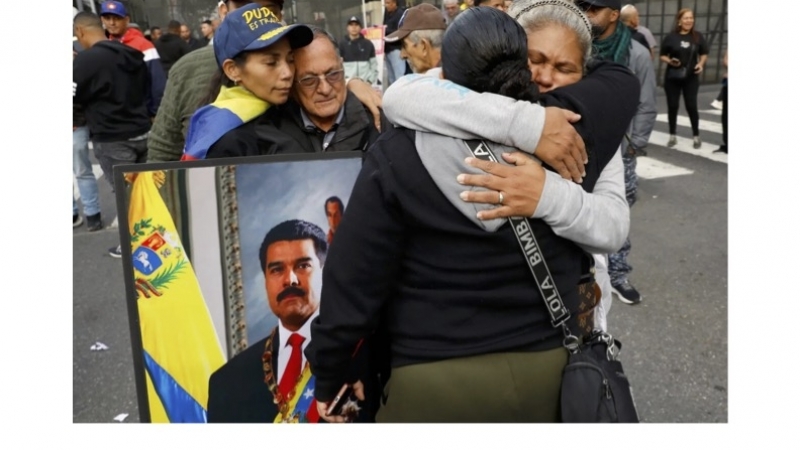
American pressure on Venezuela has taken the form of economic warfare, political recognition of alternative leadership and covert destabilization.
While Venezuela’s leadership rhetorically opposes US imperialism, its resistance remains confined within a secular-nationalist framework.
From Āsī’s perspective, this constitutes resistance without ideological independence.
Venezuela does not challenge the authority claims of the global system itself; it merely contests its position within it.
Consequently, its leadership remains vulnerable to incorporation, coercion, or replacement.
Ibn Khaldun’s theory of ‘asabiyyah illuminates this vulnerability.
Without a unifying metaphysical authority, social cohesion deteriorates under pressure.
Economic hardship accelerates elite defections, popular disillusionment and internal fragmentation.
Power becomes coercive rather than legitimate, signaling decline.
Iran: Partial Realization of Islamic Political Independence
Iran’s post-1979 trajectory contrasts sharply from this.
While not immune to contradiction, Iran emerged from an Islamic movement that redefined authority in explicitly Islamic terms.
Dr Kalim Siddiqui conceptualized such movements as civilizational revolts against jahili power structures.
The Islamic Revolution dismantled western-backed authority and replaced it with an order grounded in divine sovereignty.
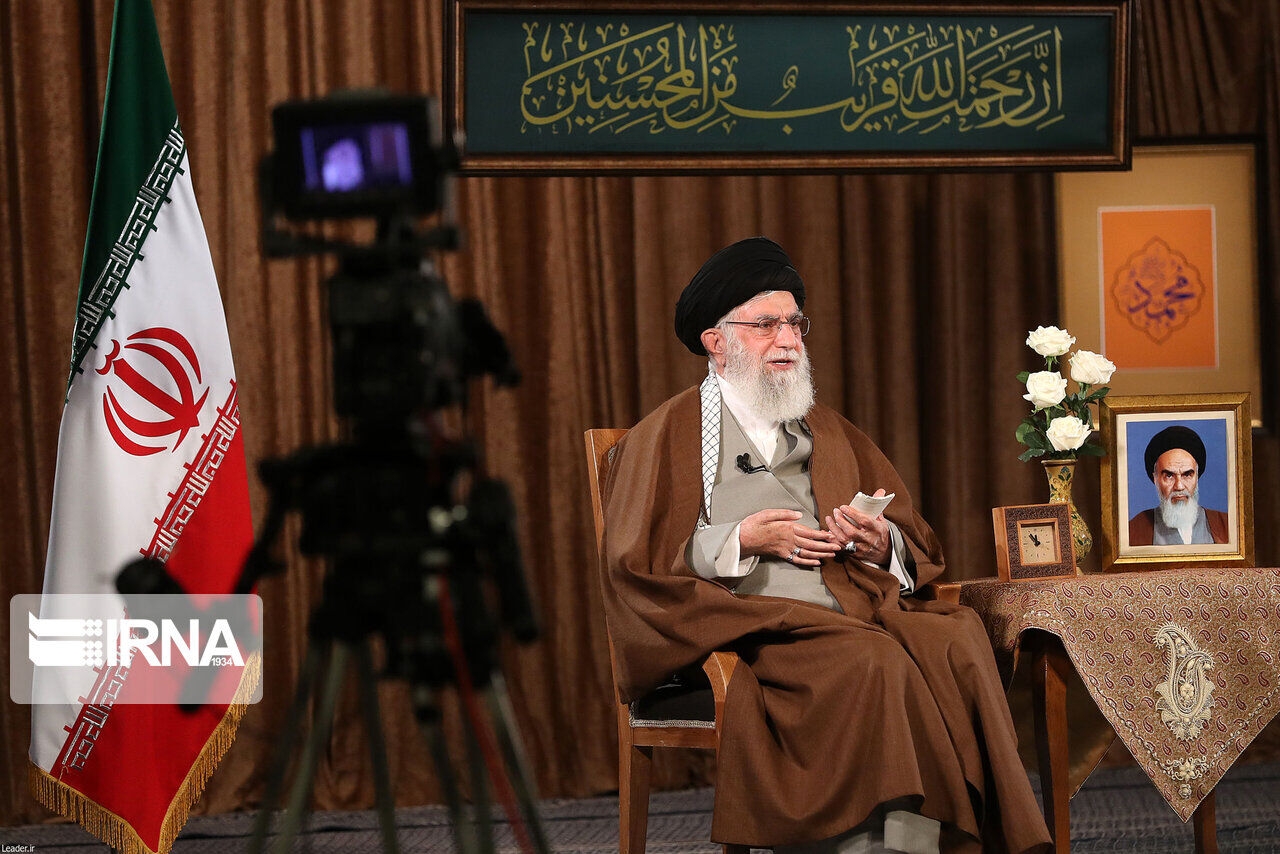
Iran’s sustained resistance to US sanctions and isolation reflects a degree of ideological independence consistent with Āsī’s framework. While Iran engages in tactical arrangements with other nation states, these do not constitute ideological subordination or inferior partnership within the Judeo-Christian imperial system.
This distinction aligns with Āsī’s nuanced position: political arrangements are permissible when they do not compromise Islamic priorities or autonomy.
Iran’s resistance identity integrates Islamic ideology and political purpose.
Leadership, Legitimacy, and the Loss of Islamic Character
Āsī repeatedly warns that Muslim leaders who court governmental kufr lose their Islamic character and privileges.
This loss is not symbolic but structural: leadership ceases to represent Allah’s authority and instead becomes an administrative extension of imperial power.
Although Venezuela is not a Muslim polity, its leadership exhibits analogous traits.
Authority is derived from economic performance and popular legitimacy rather than a transcendent moral order.
When sanctions disrupt material conditions, legitimacy erodes rapidly.
The state becomes reactive, negotiating survival within the very system that oppresses it.
Iran’s leadership, by contrast, continues to frame resistance as a moral obligation rather than a tactical preference, preserving legitimacy even amid hardship.
Comparative Analysis: Ideology versus Power
The Venezuela–Iran comparison confirms a central thesis shared by Āsī, Bangash, Siddiqui, and Ibn Khaldun: power divorced from ideology is unsustainable.
Imperial systems prevail not merely through force but by inducing ideological accommodation among elites.
Venezuela’s resistance lacks a paradigm shift from multiple authorities to a single overriding authority.
Iran’s resistance reflects such a shift. Consequently, Iran remains outside the imperial consensus, while Venezuela oscillates between defiance and vulnerability.
Conclusion
US intervention in Venezuela and its sustained hostility toward Iran exemplify the operation of a global kufr power structure that tolerates no autonomous authority.
Islamic political theory provides a rigorous framework for analyzing why resistance succeeds or fails.
Imam al-Āsī’s insistence on ideological independence, Imam Zafar Bangash’s Makkan paradigm, Dr. Kalim Siddiqui’s Islamic movement theory, and Ibn Khaldun’s sociology of power converge on a single conclusion: normalization with imperial power extinguishes political autonomy.
Only leadership grounded in exclusive commitment to Allah’s authority can sustain resistance against hegemonic domination.
Terms
‘asabiyah: Any social expression of clan solidarity or exclusivity—ethnic, racial, national, sectarian—that presents itself with an air of supremacy or elitism, such that individual members are supported by the rest even if their actions are unjust, criminal, and oppressive. (Āsī, 2018, Vol. 13, p. 366).
Kufr: Denial of Allah’s authority and power; this becomes a “philosophy” or an “ideology.” There is a mental construct of ideas that argue against Allah as Sovereign, Lawgiver, and Authority.
There may be many expressions of this antithetical hypothesis and political orientation; but one thing in common among all of them—bar none—is their exclusion of Allah as the Almighty and the ultimate Authority. (Āsī, 2019, Vol. 14, p. 440).
Bibliography
Al-Āsī, Muhammad: The Ascendant Qur’an: Realigning Man to the Divine Power Culture. Vols. 4/5/8/10/11/13/14. Institute of Contemporary Islamic Thought (ICIT), Toronto. (2010-2019).
Bangash, Zafar: Power Manifestations of the Sirah. Toronto: ICIT. (2011).
Siddiqui, Kalim: Issues in the Islamic Movement 1980–1981. London: The Open Press, (1982).
Siddiqui, Kalim: Stages of Islamic Revolution. London: The Open Press, (1996).


Islamic Iran has a score to settle with Donald Trump and his minions who were involved in the assassination of General Qassem Soleimani thre...