
 Archives
Multimedia
Donate
About
Sign In
Archives
Multimedia
Donate
About
Sign In



 Crescent International


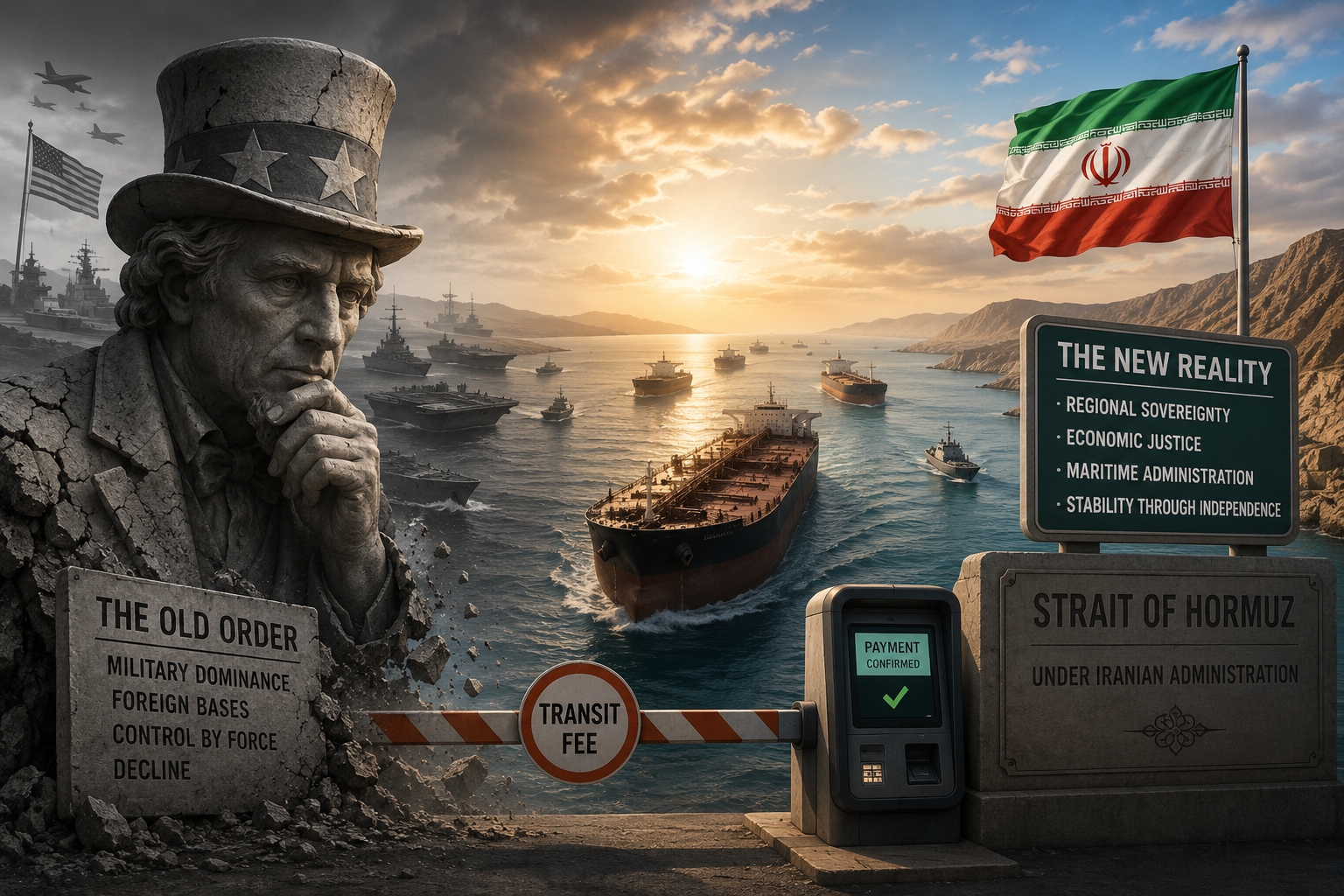
With strikes and counter-strikes continuing to occur between the US and Islamic Iran, the tenuous ceasefire between them teeters on the brink.
The latest strikes occurred in the early hours of June 28 when the US bombed Iranian positions around the Strait of Hormuz while Tehran retaliated by striking US bases in Bahrain and Kuwait.
The US is desperately trying to prevent Iran’s control of the Strait of Hormuz.
On June 25, US Secretary of State Marco Rubio stated: “Let’s suppose that we went crazy and lost our minds completely and decided to agree to have a tolling or a fee mechanism. How would that work? It’s not doable.”
While Rubio has on several occasions demonstrated a poor grasp of the issues, his remarks on how a fee system in the Strait of Hormuz would operate may be the clearest illustration yet of his shallowness.
First, what business does the US, based thousands of miles away, have in what occurs in the Strait of Hormuz?
Second, toll-based transit systems are a routine feature of global maritime commerce, with established waterways around the world using standardized electronic payment and billing mechanisms for commercial shipping.
How would Iran’s fee mechanism work?
Here are a few basic ways it can be constructed.
Iran can easily establish an administrative framework for Hormuz and the mechanics would be relatively straightforward.
Shipping companies could register their vessels with the relevant maritime authority, receive electronic invoices based on factors such as vessel size, cargo type or tonnage, and complete payment through established banking channels before receiving transit authorization.
Frequent commercial operators could maintain prepaid or credit accounts, while occasional users could pay on a voyage-by-voyage basis.
From a purely administrative perspective, there is nothing technically unusual about such a model because similar systems already operate successfully in other major maritime corridors.
Canadian and US authorities charge transit fees for the use of the St. Lawrence Seaway.
Panama charges transit fees for vessels using the Panama Canal.
Transit fees for the Suez Canal are collected by Egypt.
Prior to 1956, the Suez Canal Company was controlled by French and later British interests.
After Gamal Abdel Nasser nationalized the Suez Canal, the waterway continued to function effectively.
The principal difference was that the revenues no longer flowed into French and British coffers but went instead to Egypt, its rightful recipients.
It should also be noted that Islamic Iran never ratified any treaty that explicitly recognizes the Strait of Hormuz as an international waterway governed by the modern legal regime of transit passage.
However, most importantly, what makes the new setup around the Strait of Hormuz possible is the completely new regional political, economic and social architecture.
The old regional architecture—built around overwhelming US military dominance, a network of American bases, and security arrangements with Washington has collapsed.
Since February 2026, Iran’s impactful military actions against US bases in the region have demolished the myth of American supremacy in the region.
The strategic calculation surrounding the Strait of Hormuz, therefore, cannot be separated from the broader transformation taking place in West Asia.
The question is no longer simply whether Iran has the administrative capability to establish a fee mechanism.
It clearly does.
The deeper question is whether the US and its regional proxies can stop Iran from implementing the new arrangement.
The latest developments show that the US and its surrogates are unable to stop Iran’s implementation of a new regional architecture surrounding the Strait of Hormuz.
The real issue at hand is that the Trump regime is assuming that control equals usability.
Even in a worst-case scenario for Islamic Iran where the US succeeds in establishing military control of the strait, Iran would still retain the ability to launch missiles, drones, and other attacks that will keep the waterway unstable and commercially unusable.
Shipping companies and insurers do not operate based on who controls a map—they operate based on risk.
With the realities outlined above, it is simply a matter of time before the Strait of Hormuz enters a new form of administration.
This transition, howver, is unlikely to occur without another major military escalation, as declining empires often respond to the erosion of their influence by attempting to preserve their position through the use of force.
Add to this the fact that the US is currently led by a “genius statesman” (Trump), and this prediction becomes not a matter of possibility, but a matter of time.

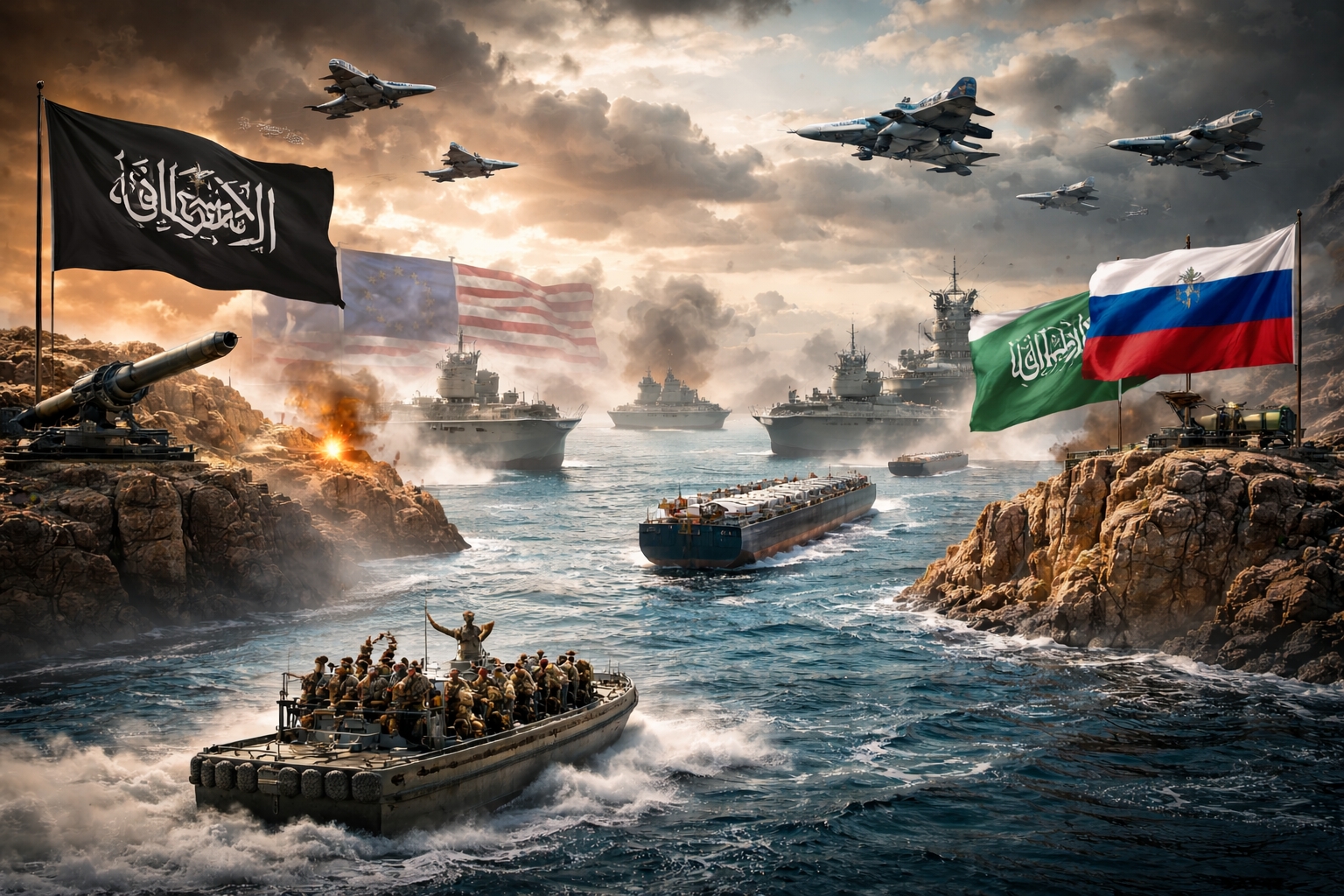

Long before the Strait of Hormuz became a contested waterway and America’s illegal intrusion, the narrow waterway was coveted by empires. ...
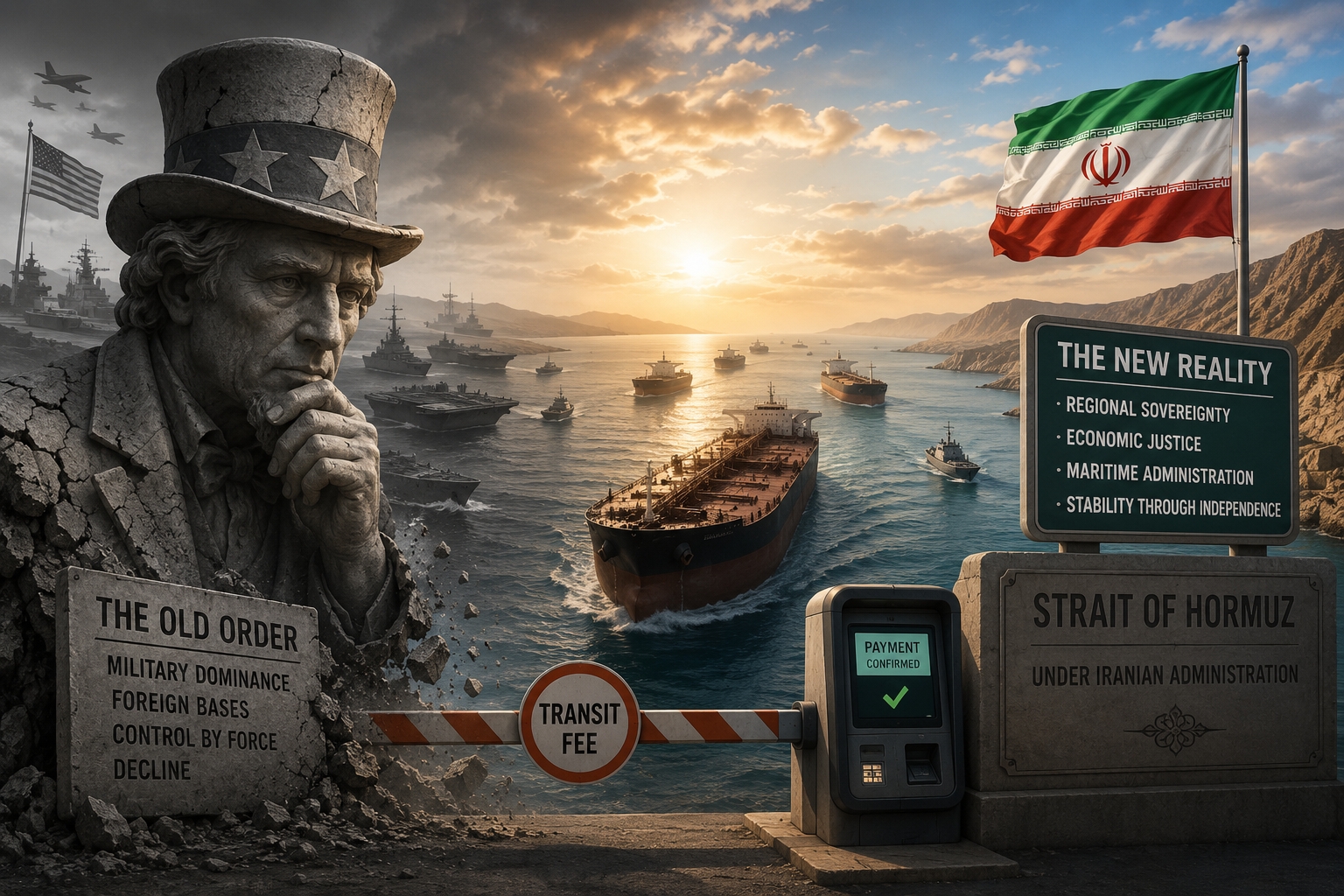
A prolonged closure of the Strait of Hormuz will bring down the US colossus. Disruption in energy supplies will have a global impact that we...
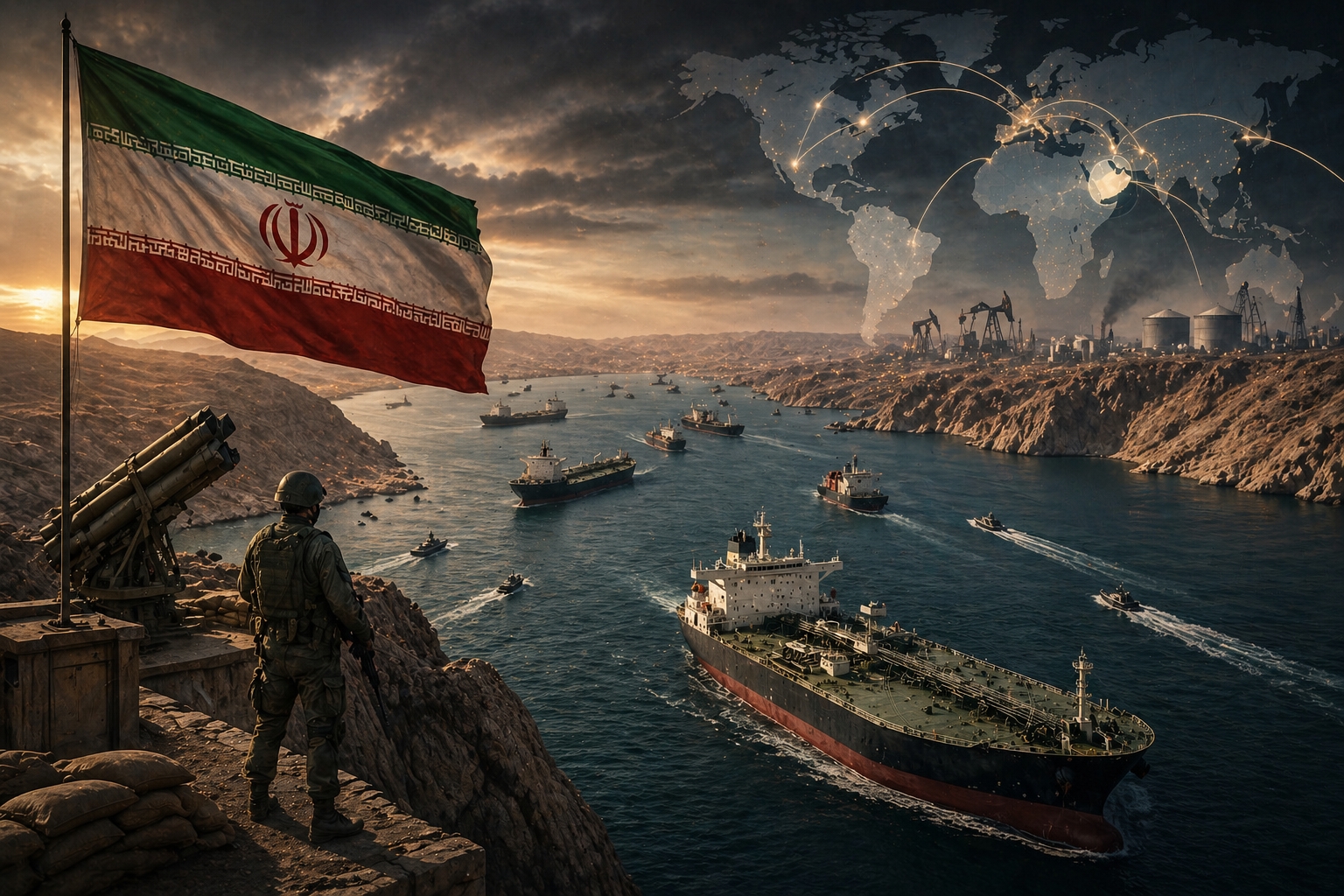
Attacks on oil tankers and vessels in the Strait of Hormuz can be traced to the “tanker war” between 1981-1988. The western-Arabian-Comm...
