 Archives
Multimedia
Donate
About
Sign In
Archives
Multimedia
Donate
About
Sign In



 Muslim Mahmood


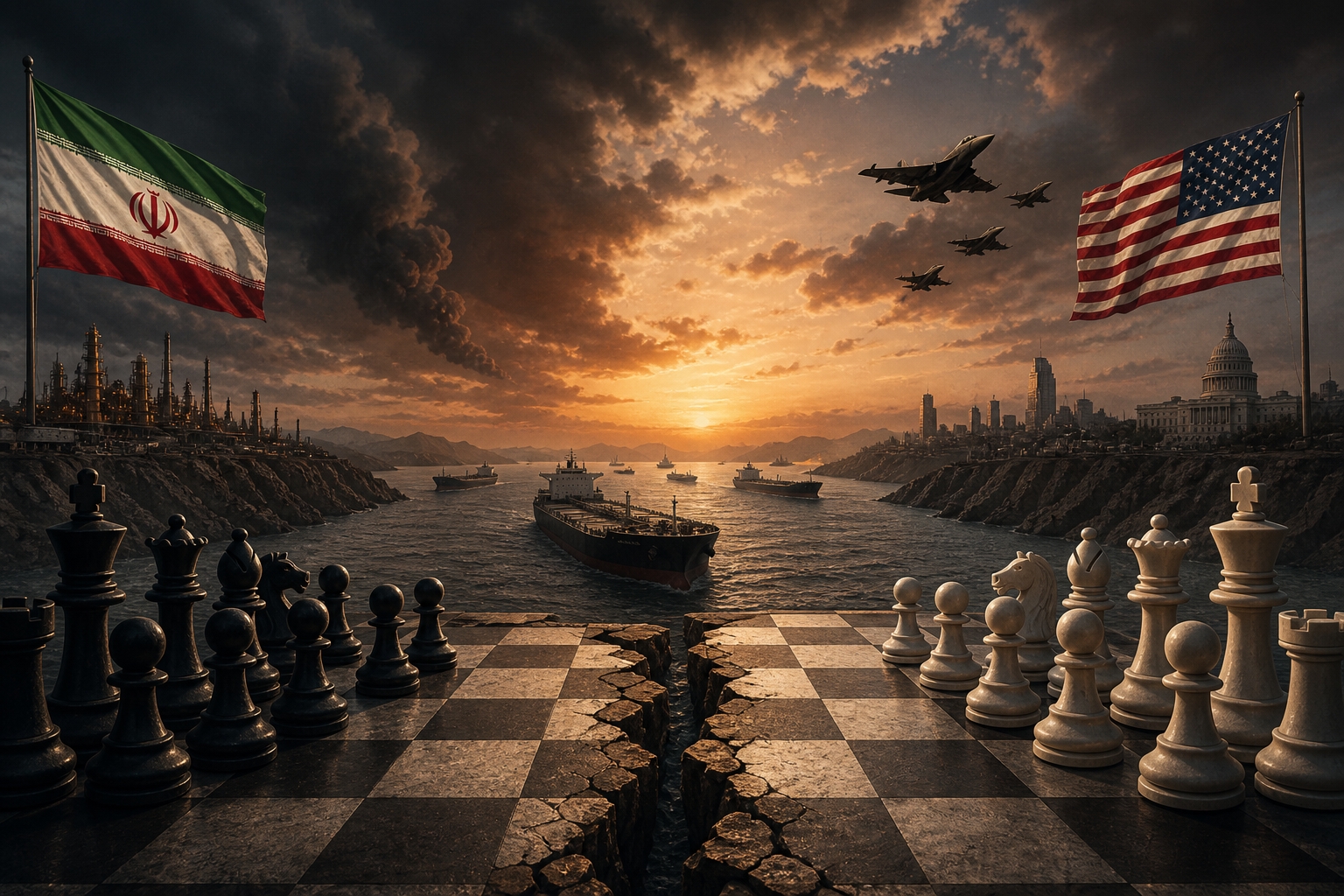
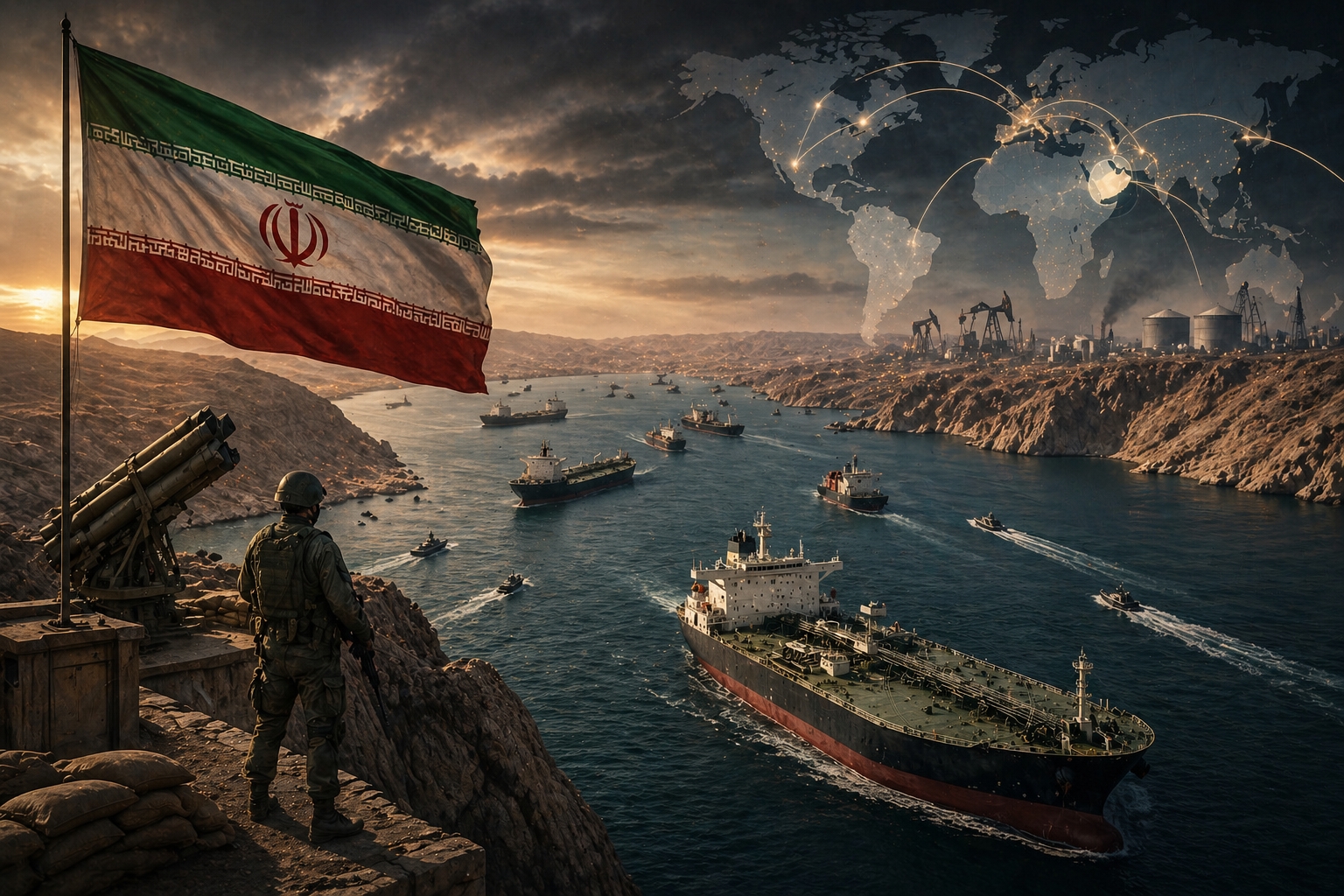
In mid-June 2026, drone footage showed something that had not been photographed in decades: dozens of laden tankers sitting motionless in the waters off Musandam, their engines idling, their insurers unreachable, their crews waiting on a ceasefire that kept being announced and then contradicted within hours.
Iran’s foreign ministry told one wire service that shipping was moving normally. Iran’s own military command, hours earlier, had declared the strait closed. The US vice president went on television to insist the waterway was open. It was, by any honest accounting, neither open nor closed—it was contested, in the way it has been contested, on and off, for five centuries.
This is the condition of the Strait of Hormuz that most coverage misses. It is treated in western financial press as a valve—something that is either flowing or not, a number on an energy dashboard.
It is rarely treated as what it actually is: a 33-km-wide chokepoint whose control has been fought over by Portuguese admirals, Safavid shahs, British naval officers, Omani sultans, Iranian revolutionary guards commanders, and now the regime of Donald Trump, precisely because whoever can credibly close it holds leverage disproportionate to their size.
Understanding the events of 2026—the closures, the countervailing US blockade, the tolling schemes, the memoranda of understanding signed and violated within days—requires understanding that this water has never simply carried cargo. It has carried the balance of power in the Persian Gulf.
A Corridor Older Than Oil
Long before petroleum invested the strait with its contemporary importance, it was already indispensable. Between the tenth and fifteenth centuries, ports along its shores anchored a trading network stretching from East Africa to China, moving perfumes, silk, and dried fruit outward and porcelain, cotton textiles, and precious stones inward—a commercial hub that flourished within the wider Islamic world of the medieval period.
The Kingdom of Hormuz, controlling the strait’s namesake island, grew wealthy enough on transit trade to draw the attention of a rising European sea power.
In 1515, Portuguese forces under Afonso de Albuquerque seized Hormuz outright, recognizing that whoever held the island could tax and license the movement of everything passing between the Persian Gulf and the Indian Ocean. Portugal maintained that grip for more than a century, administering it from Goa through a system of naval blockade, until a joint Safavid-English force expelled the Portuguese in 1622.
The lesson embedded in that century of occupation—that control of a narrow channel can substitute for control of the surrounding land—is the same lesson every subsequent power in the Gulf has tried to relearn on its own terms.
What followed the Portuguese departure was, by the standards of the region, unusually quiet. For roughly 300 years, the strait functioned as a working trade corridor rather than a contested one, its strategic value present but latent, waiting on a resource that had not yet been found.
When Oil Rewrote the Map
That changed with the twentieth-century discovery of petroleum in Persia, and later in Saudi Arabia, Kuwait, Iraq, and the Gulf’s smaller emirates. What had been a spice-and-textile route became, within a few decades, the maritime bottleneck for the fuel driving the postwar industrial world.
By the early 2000s, the strait was moving some 17 million barrels a day; by 2018, roughly 21 million; by 2024, an average of 20 million barrels daily, or about a fifth of global petroleum oil consumption, alongside close to a fifth of the world’s liquefied natural gas trade, most of it originating in Qatar.
The geography that makes this possible is unforgiving in a way few other trade routes are. At its narrowest, the strait is only about 33 kms across, and the internationally recognized shipping lanes—the traffic separation scheme negotiated with Oman under International Maritime Organization auspices in 1968—narrow that further to a pair of two-mile channels, one inbound, one outbound.
Only Saudi Arabia and the United Arab Emirates operate pipelines capable of moving meaningful volumes around the strait entirely, and even at full capacity those bypasses cannot absorb more than a fraction of what transits by sea. For Qatar’s LNG in particular, and for Iraq, Kuwait, and Bahrain more broadly, there is functionally no alternative route at all. This asymmetry—enormous global dependence funneled through a corridor that a single riparian state partly controls—is the structural fact that has made Iran’s relationship to the strait a matter of strategic calculation rather than mere geography, and it is the fact that Washington, London, and Tel Aviv have each, in their own idiom, spent the better part of five decades trying to manage.
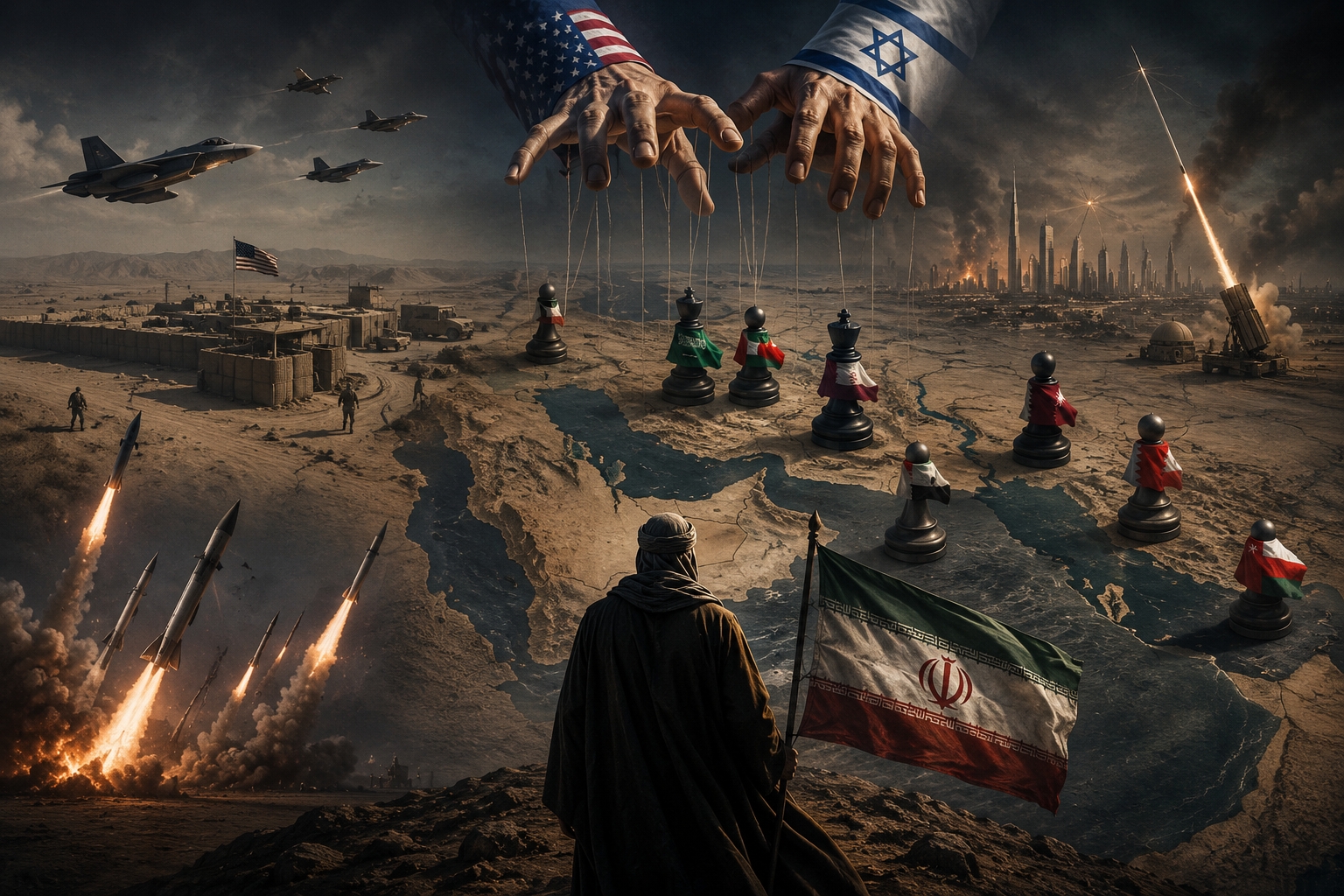
It is also the fact that makes the events of this year legible as something other than a sudden crisis. When the Israeli and US regimes launched their illegal war on Iran on February 28, with the stated aim of dismantling its nuclear and missile programs, and when Iran’s Islamic Revolutionary Guard Corps responded within days by threatening—and then repeatedly enacting—closure of the strait, both sides were drawing on a script written well before either was born: control the corridor, and you control leverage far beyond your material weight.
Iran’s own coastline on the Persian Gulf is the longest of any bordering state, and its exclusive economic zone there is nearly double that of its nearest rival—a fact of geography that has shaped Persian and Iranian strategic thinking about the waterway since long before the 1979 Islamic revolution gave that thinking a specifically revolutionary vocabulary.
What makes 2026 different from earlier episodes is not the threat itself but its duration and its counter-move. Previous Iranian threats to close Hormuz—during the tanker war of the 1980s, the tensions of 2011–12, the Twelve-Day War of June 2025—were episodes measured in days or weeks before shipping resumed.
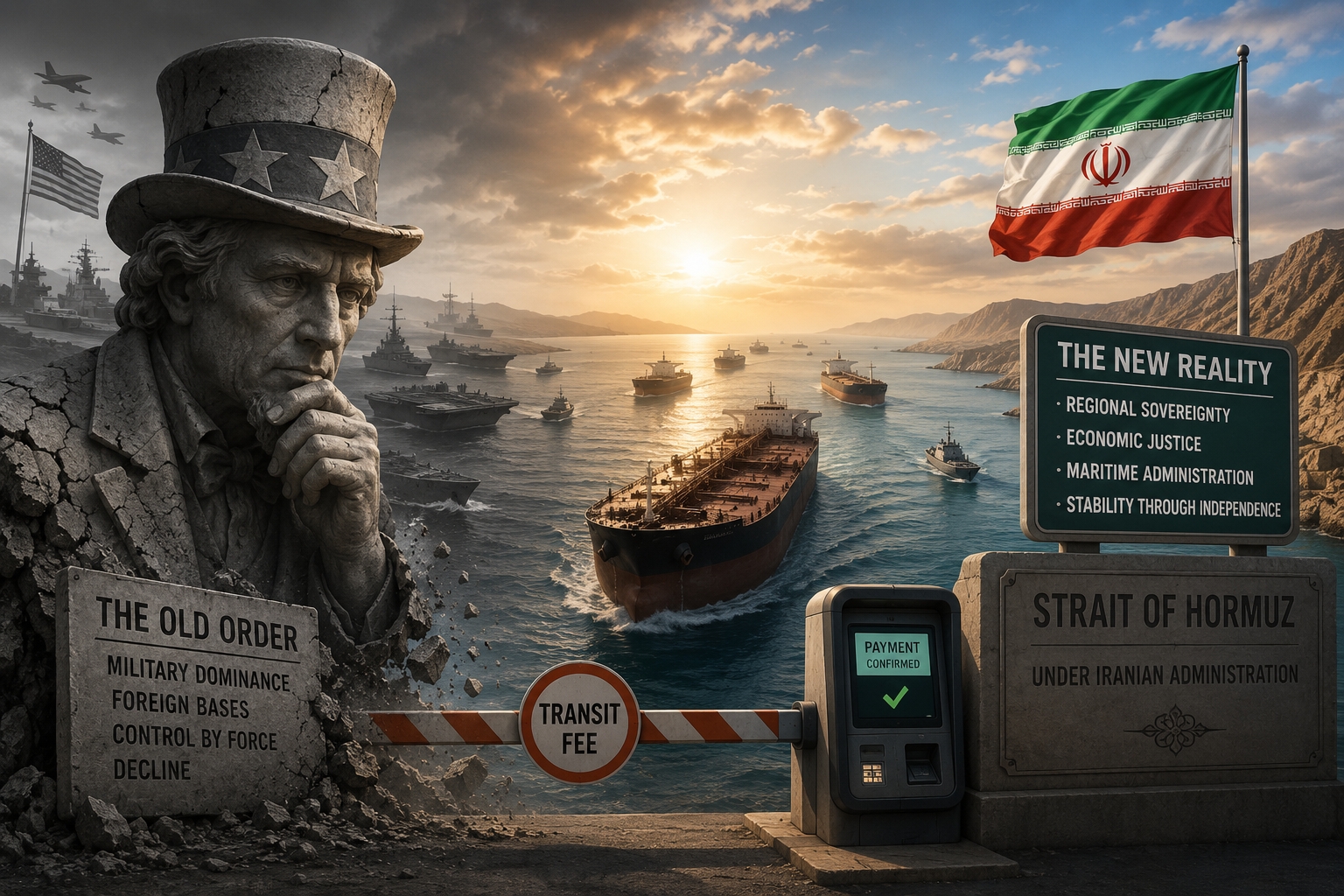
This time, closures, partial reopenings, a US counter-blockade on vessels calling at Iranian ports, and an Iranian proposal to charge tolls under Revolutionary Guard administration have stretched across months, with the Abu Dhabi National Oil Company’s own chief executive estimating in April that full flows might not resume before 2027 even under a rapidly concluded settlement. A waterway that once measured its interruptions in tanker-days is now measuring them in fiscal quarters.
The next installment of this report examines how that shift came to be—through the doctrine of deterrence that emerged from the 1980s “Tankers War”, through the war-gaming that convinced US planners the strait could not be reliably held by force alone, and through the specific chain of decisions in 2026 that took the world from a threatened closure to a functioning toll regime enforced by the same Revolutionary Guard command that first made the threat credible.

A prolonged closure of the Strait of Hormuz will bring down the US colossus. Disruption in energy supplies will have a global impact that we...
Attacks on oil tankers and vessels in the Strait of Hormuz can be traced to the “tanker war” between 1981-1988. The western-Arabian-Comm...
Islamic Iran has the longest coastline along the Strait of Hormuz. The US lies thousands of miles away yet it wants to control it. Under wha...