 Archives
Multimedia
Donate
About
Sign In
Archives
Multimedia
Donate
About
Sign In



 Zafar Bangash



On our journey from Madinah to Makkah, there were three official stops and one unofficial stop. At the first stop, our passports were collected from the Saudi office but not before they had checked that nobody was being “smuggled” into Makkah on the bus! The next stop was the miqat, the place where all male pilgrims must be dressed in ihram to enter Makkah.
Before we left our hotel in Madinah, there were two individuals in our group who were not wearing the ihram. I asked them to put it on but they paid no heed.
When we reached the miqat, Saudi officials boarded the bus and found the two individuals without ihram. They were told to put on the ihram or they would not be permitted to proceed further.
Their ihrams were in their suitcases. Imagine looking for their suitcases among 50-60 others. It took a full half hour to locate them. They had to go inside the building, make wudu and put on the ihram. This process delayed our journey by an hour.
Along the way, the bus stopped at a run down restaurant for pilgrims to use the washrooms. They were filthy but nature’s call had to be answered. People joked about the “five-star hotel” we were treated at.
Our next stop was closer to Makkah where again, our passports were “confiscated” by the Saudis. When we entered Makkah, it was almost 3:30 am. We would stay in Aziziya for two days, a locality outside Makkah closer to Mina.
We quickly dropped our luggage in the building. It belonged to the Khogeer group who were our official sponsors in the kingdom. After two days, we would go to Mina, and then to Arafat, back to Muzdalifah and to Mina after completing the Hajj rites.
After dropping our luggage in the building, I was anxious to head to the Haram to offer the Fajr salat and to perform Umrah. The Darus Salam reps wanted us to have breakfast before we went to the Haram. Most members of our group wanted to go for Fajr salat.
I asked for the building address but we were told that the company bus will pick us up from Junoon Bridge (near Masjid Jinn) every two hours and bring us back to the building. There were elderly people in our group. They would be lost if there was no transportation for the journey to the building.
Why we were not given the exact address of the building, I do not know. Unfotunately, there weren’t even street names to go by. As our bus from Madinah arrived in Aziziya, I tried to observe some landmarks to make a mental note of them.
One was Mustashfa al-Faisal (The Faisal Hospital). I assumed most people in Makkah would know about it. My assessment proved correct. We headed to the Haram and were dropped off near the Junoon Bridge.
Again, I asked the driver to make sure he would be there every two hours. He assured me that he would.
As we walked toward the Haram, elderly members in our group asked me about the bus and I told them that the driver had assured me that it would be there.
While I had no official responsibility for our group—it was the responsibility of Darus Salam and the Khogeer group—members of our group came to rely on me because I was the only one taking responsibility.
In the bus, we had discussed that after Fajr, we would perform Umrah—the tawwaf, offer two rakat nafl at Maqam-e Ibrahim, zamzam, Sa‘i and halq—and then have breakfast at one of the many restaurants around the Haram (McDonald, Kentucky, Starbucks and other American junk food outlets had not invaded the sanctity of the Haram yet).
My wife and I had decided that we would stay in the Haram to pray Zuhr salat and then return to our building. Several members of our group had planned to do the same.
After Zuhr salat, we walked to the Junoon Bridge hoping to board the bus to take us back to our building. We waited for several hours but no bus came. We neither had the address of the building in Aziziya nor a phone number to contact anyone there.
We decided to take a taxi but what do we tell the driver where to go. There were three other sisters of our group also waiting there. My wife said we should take them with us.
The ladies packed in the back seat while I told the driver in my rudimentary Arabic that we wanted to go to Aziziya. Where in Aziziya, he asked. I remembered Mustashfa al-Faisal. He seemed satisfied with my request. When we arrived at the hospital, I told him to keep driving.
He was a Yemeni brother and was polite and helpful. We drove into one neighbourhood of houses and buildings in Aziziya. There were a few small shops there. I went to ask if they knew about Abdullah Khogeer’s building. They had no clue.
I asked the driver to keep driving around the neighbourhood in the hope that I would find some familiar landmarks. We had arrived at the building in the dark and had left in the dark that morning.
We drove around different streets but did not locate our building. The driver stopped at one point and asked, where do you want to go. I could understand his frustration.
I got out of the taxi and started heading toward a smaller builing to see if they might be able to help. Before I reached that building, I turned around and lo and behold, our building was right there!
I thanked the driver for his help and gave him more money than he asked for. We hurried into the building, showered and changed our clothes. I had been in ihram since the previous afternoon, more than 24 hours ago.
After freshening up, I went into the room where the Darus Salam reps were staying and asked what happened to the bus that was supposed to pick us up every two hours? They just gave me a blank stare.
Upon return, I had discovered that a number of elderly people had still not made it to the building. I felt really sorry for them and was so upset with the Darus Salam crew that I blurted out, “may Allah punish you for causing pain to these elderly people.” They lowered their heads and just kept quiet.
One elderly couple, the Hashmi family, returned to the building after 9 pm. Their son Amer had specifically asked me to look after them. His mother had knee problem and walked with a cane.
Brother Hashmi narrated what happened. He said they waited near the Junoon bridge for several hours but no bus came. They went back to the Haram in hopes that they might meet a member of our group. It was like looking for a needle in a haystack!
He said, they finally got into a taxi and asked the driver to take them to Aziziya. This much they remembered but where abouts in Aziziya? They saw a masjid and he went inside to seek help of some Saudis sitting there. It was after maghrib.
Fortunately, Brother Hashmi had his ID card on him that was issued to each pilgrim in Madinah. It had the name and phone number of the hotel in Madinah. One of the Saudis called the hotel in Madinah and asked for details. They gave him the phone number of the Khogeer group in Makkah.
He called the Khogeer group and told them about the lost pilgrims. They took the details and said they will send a car to pick them up and take them to the building. To their credit, they did.
We were issued new ID cards at breakfast the next morning in Aziziya that had our details with a phone number in case we got lost.
(Next: More idiotic and irresponsible behaviour of the Bani Saud)


Far from being the spiritual journey and fulfilment of a life-long desire to perform Hajj, for many pilgrims this year’s pilgrimage turned...
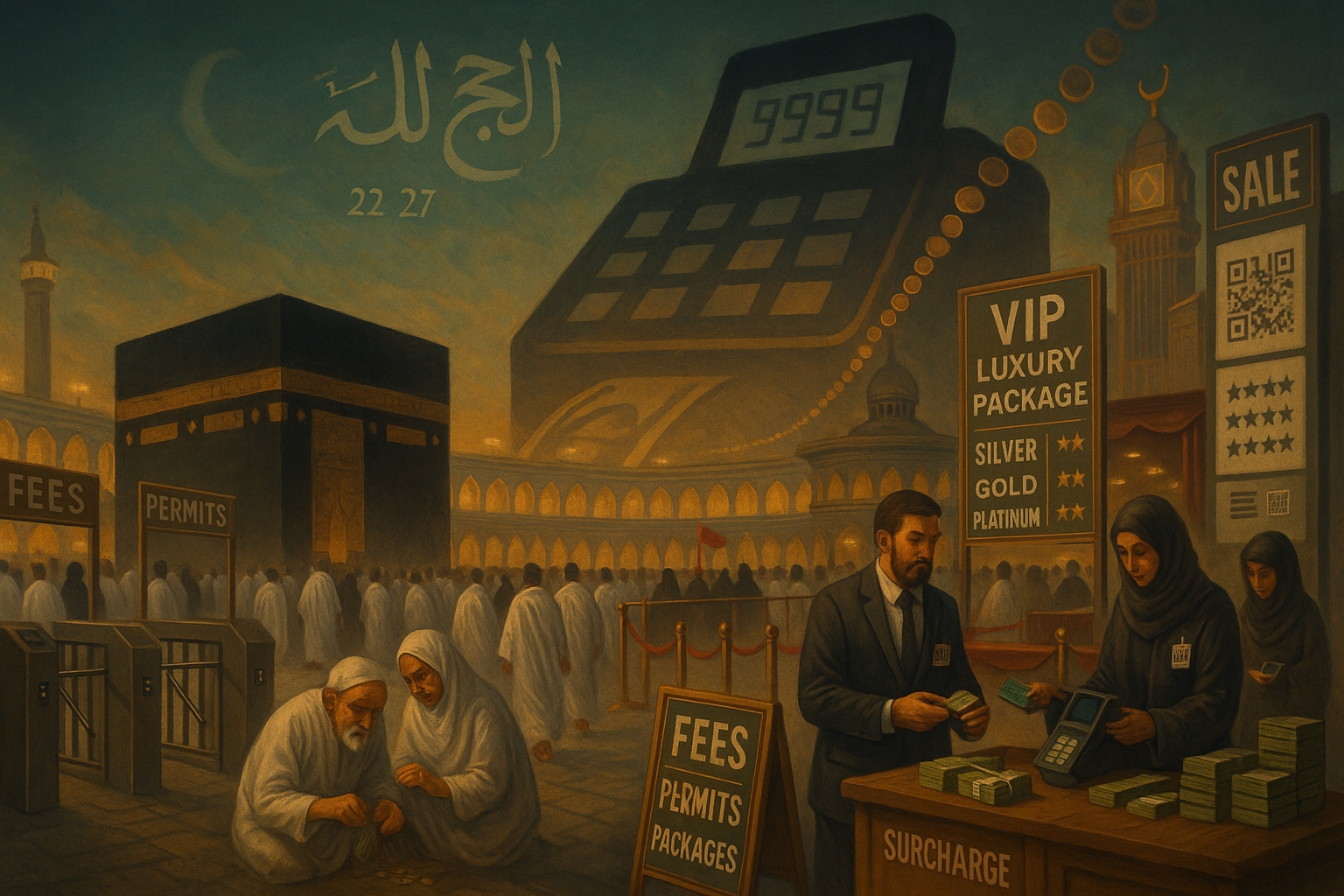
The Bani Sa‘ud have turned Hajj into a money-making racket. This is contrary to Allah’s teachings in the noble Qur’an. Why do Muslims ...

There is a curious phenomenon that Bani Saud have monetized Hajj, an important Islamic obligation, while complaining about Islamic Iran’s ...
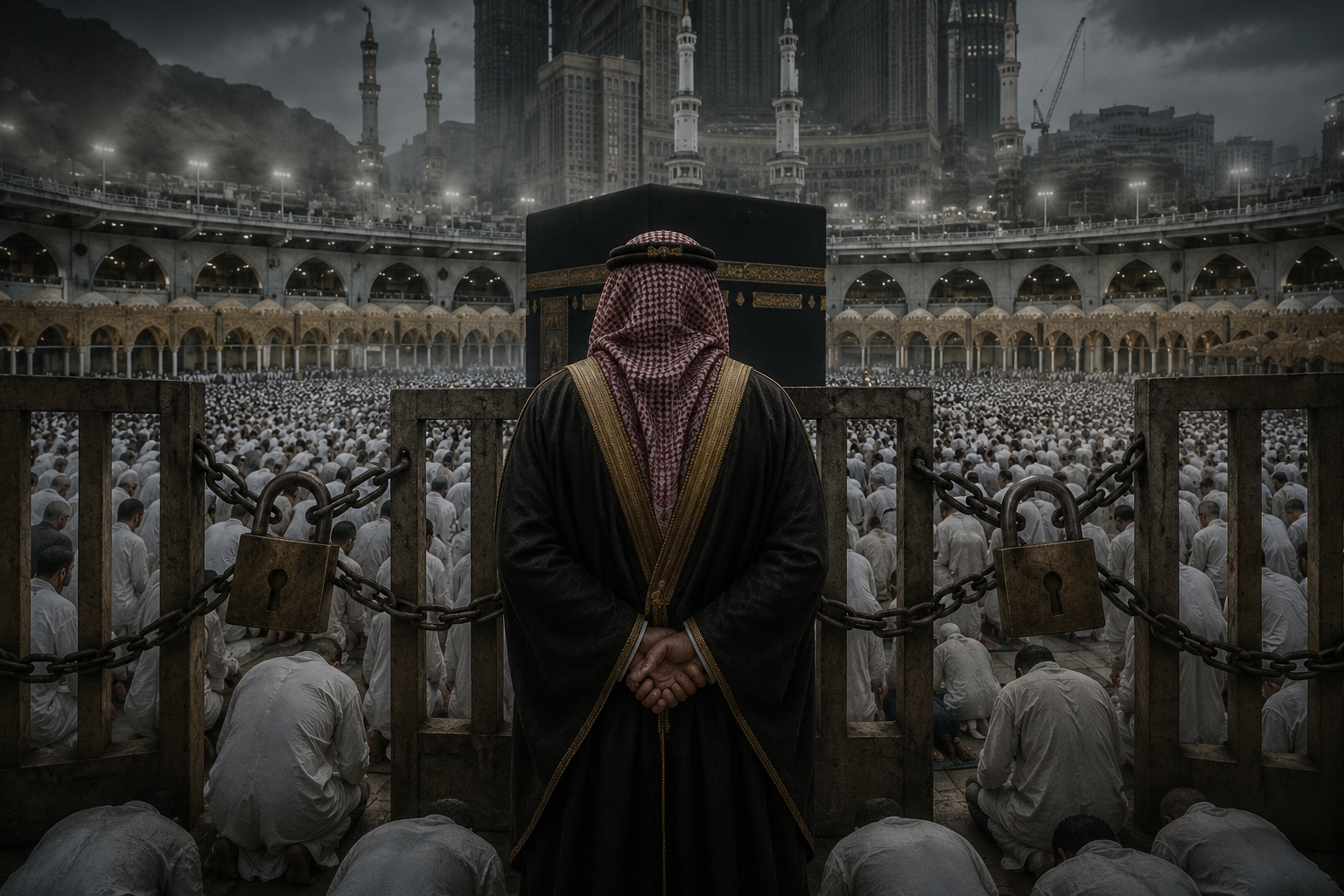
In this series of articles, ICIT director Zafar Bangash offers his personal reflections on Hajj. These are not related to the performance of...