 Archives
Multimedia
Donate
About
Sign In
Archives
Multimedia
Donate
About
Sign In



 Mohamed Ousman



The question of how sacred geography and strategic geography are managed in the contemporary Muslim world raises difficult ethical and political contradictions. On one side is the Hajj system administered by the illegitimate Bani Saud regime, who are widely criticized in some Islamic circles as being increasingly commercialized through fees, quotas, and regulatory constraints.
On the other side are state-controlled strategic waterways such as the Strait of Hormuz, where Islamic Iran’s geopolitical position enables it to influence maritime access and extract economic advantage through transit-related mechanisms and strategic leverage.
While the two systems are structurally different—the former rooted in ritual administration and the latter in geopolitical economics—critics draw parallels between them as forms of controlling collective Muslim assets for state benefit. In the words of Imam Muhammad Al Asi, “Makkah, Al Ka‘bah, Al Bayt Al Haram and Al Qibla no longer are functional—they exist but they don’t function!”
This framing suggests a transformation of sacred institutions into managed systems of exploitative control rather than spaces of unrestricted communal Muslim unity.
Similarly, the critique extends beyond ritual space into political economy: “We assemble at Makkah, Al Ka‘bah, Al Bayt Al Haram and Al Qibla at a discounted rate… only 2 million… are permitted to go” despite a global Muslim population exceeding two billion.
In contrast, maritime chokepoints like Hormuz represent not ritual access but strategic infrastructure, where Islamic state sovereignty translates into economic control over global shipping flows for between 6-7 billion globally oppressed people.
The comparison is not to equate sacred with commercial, but to interrogate how authority, access, and benefit distribution operate within Muslim governance systems—be it in sacred strategic or commercially strategic domains.
Imam Muhammad Al Asi: Qur’anic Framework of Sacred Access and Political Accountability
Within Al Asi’s interpretive framework, the Hajj is not merely a ritual obligation but a structural representation of global Muslim unity that has been compromised by Bani Saud state nationalization, usurpation, control, class hierarchy, and political restriction. He argues that the egalitarianism of Islam has been replaced by managed commercialized control systems.
He states sharply: “Al Hajj has become something personal… We say to that type of attitude you haven’t fulfilled your obligation. Al Hajj is a social obligation.” This critique reframes the Hajj as a collective Islamic political event rather than an individual spiritual exercise.
A central theme in his discourse is the distortion of equality in sacred space. He notes that “only 2 million… are permitted to go” while the broader ummah remains excluded. In this reading, restriction is not merely logistical but ideological.
It reflects a breakdown in the Qur’anic vision of unity symbolized by ihram, where “there is no individuality, no kinship or race identity that can override the sense of community.”
He extends this argument into political economy, suggesting that Muslim rulers have detached religious ritualistic practice from justice: “These aristocratic princes do not want to be bothered with an iman/divine commitment that holds them responsible for hoarding their wealth while their neighbors in Africa and Asia are starving.”
This moral critique becomes sharper when he connects governance to accountability structures in early Islamic history. He recalls the practice of public accountability during Hajj under the legitimate Khalifa, ʿUmar ibn al-Khattab, where governors were summoned and questioned before the public.
This is presented as a model of integrated “spiritual”-political governance, in contrast to modern systems where “Muslims have been repressed… under emergency laws… military rule.”
The Qur’anic axis of his argument is the concept of divine sovereignty as active governance rather than abstract “belief”. He emphasizes: “Allah has been for practical purposes… absent in our conceptual sense.” This absence allows worldly power to replace divine accountability, where rulers operate under nationalistic geopolitical fear rather than taqwa i.e. violating the moral and ethical standards of Allah.
In his framework, control over Hajj becomes symbolic of broader governance failure. The sacred becomes administratively restricted, while political authority becomes disconnected from Qur’anic justice.
His critique suggests that the Hajj system mirrors wider structural issues in Muslim political life, viz: fragmentation, lack of shura, and absence of public moral agency.
Thus, any comparison with strategic toll systems, such as maritime transit control, must be understood not as equivalence. It is a parallel manifestation of how Muslim states should convert shared resources (sacred or geographic) into instruments that serve the Ummah and the oppressed peoples.
The Islamic Republic of Iran’s control over the Strait of Hormuz is unlike the abuse of strategic authority that serve the enemies of the Ummah and the oppressed peoples as is the case of the nationalization of the Haramayn by Bani Saud in Arabia.
Imam Zafar Bangash: Sirah-Based Governance and Historical Continuity
Bangash approaches Islamic governance through a sirah-oriented lens, emphasizing prophetic precedent and historical continuity in political organisation. In this framework, legitimacy is derived not only from authority but from alignment with the Prophetic model of justice, consultation, and resistance to coercion.
The sirah narrative emphasizes that early Islamic governance was rooted in accountability and collective consultation (shura), particularly during moments of conflict and state formation.
The example of the Prophet’s decision-making process during military and political crises is often cited to demonstrate that authority was not absolute but consultative and responsive.
In this light, modern restrictions on Hajj participation or administrative monetization of sacred access are often criticized as deviations from Prophetic governance principles. The issue is not merely financial cost but whether governance structures reflect the egalitarian ethos of the sirah or reproduce hierarchical control systems.
Bangash’s framework also highlights resistance to unjust authority as a continuation of the Prophetic struggle. This includes opposition to systems perceived as prioritizing state interest over communal welfare.
In this reading, any system that limits access to sacred spaces or commodifies collective obligations risks contradicting the foundational sirah model.
When compared to strategic economic leverage, such as control over maritime chokepoints, the sirah framework does not reject state sovereignty but demands that such sovereignty be exercised within divinely ordained ethical and consultative limits. The key question is whether governance structures serve the ummah and the oppressed peoples as is the case of the Islamic Republic of Iran’s control over the Strait of Hormuz or it instrumentalizes shared assets for state power accumulation that serve the enemies of the Ummah and the oppressed peoples as is the case of Bani Saud in Arabia.
Dr. Kalim Siddiqui: Islamic Movement Theory and Structural Power
Siddiqui provides a structural analysis of Muslim political fragmentation through Islamic Movement Theory, focusing on power, legitimacy, and ideological coherence. In his framework, the central problem of the Muslim world is not merely policy deviation but the absence of an integrated global Islamic movement capable of coordinating governance, economy, and identity.
From this perspective, both the administration of Hajj and strategic economic zones reflect fragmented sovereignty within the Muslim world. Instead of a unified ummah exercising collective stewardship over sacred and strategic geography, authority is dispersed among nation-states operating within global power structures and in the case of Islamic Iran causing tension within the global power structures.
Siddiqui’s analysis would interpret the regulation of Hajj and the strategic leverage over maritime routes as symptoms of the same underlying condition: the transformation of the ummah into competing state units rather than a unified civilizational actor. This fragmentation prevents the emergence of coordinated decision-making structures based on shura at a global level.
He argues that without movement-level integration, Islamic governance remains reactive rather than transformative. In this sense, both religious administration and geopolitical strategy risk becoming embedded within state-centric logic rather than ummatic purpose.
The implication is that issues such as Hajj accessibility or transit control cannot be resolved purely administratively. They require a broader reconstitution of Muslim political agency through organised movements capable of transcending nation-state and sectarian fragmentation to decisively deal with traitors such as Bani Saud and those with nationalistic tendencies within Islamic Iran to integrate global Muslims into the governance structures of the Islamic Republic of Iran.
Across these three frameworks, a shared analytical thread emerges: Muslim governance—whether in strategic sacred space or strategic geography—reflects deeper questions of authority, access, and representation.
Al Asi highlights the theodological (a word coined by Al-Asi to integrate theology with ideology) and moral crisis of restricted sacred access and the erosion of shura-based accountability. Bangash situates governance within sirah continuity and Prophetic precedent. Siddiqui frames both religious and geopolitical systems as products of structural fragmentation within the ummah.
Together, these perspectives suggest that both Hajj administration and strategic transit systems are not isolated technical issues but expressions of how Muslim political authority can be better organized, justified, and used to contest gargantuan oppressors such as the zionists and imperialists in the modern world.
Bibliography
Al-Āsī, Muhammad: The Ascendant Qur’an: Realigning Man to the Divine Power Culture. Various Volumes. Institute of Contemporary Islamic Thought, (2008-2024).
Bangash, Zafar: In Pursuit of the Power of Islam: Major Writings of Kalim Siddiqui. Toronto: The Open Press (1996).
Bangash, Zafar: Power Manifestations of the Sirah. Toronto: ICIT. (2011).
Bangash, Zafar: Editorial introduction to Siddiqui’s collected works.
Bangash, Zafar: Articles in Crescent International (various issues)
https://crescent.icit-digital.org/articles/power-dimensions-in-the-sirah-of-the-noble-messenger-saws
https://crescent.icit-digital.org/articles/the-importance-of-re-examining-the-seerah-of-the-prophet
Siddiqui, Kalim: The Islamic Movement: A Systems Approach. London: The Muslim Institute, (1976).
Siddiqui, Kalim: Issues in the Islamic Movement. Toronto: The Open Press (1982).
Siddiqui, Kalim: Beyond the Muslim Nation-State. The Muslim Institute (1977).
Siddiqui, Kalim: Stages of Islamic Revolution. London: The Open Press, (1996).


Far from being the spiritual journey and fulfilment of a life-long desire to perform Hajj, for many pilgrims this year’s pilgrimage turned...
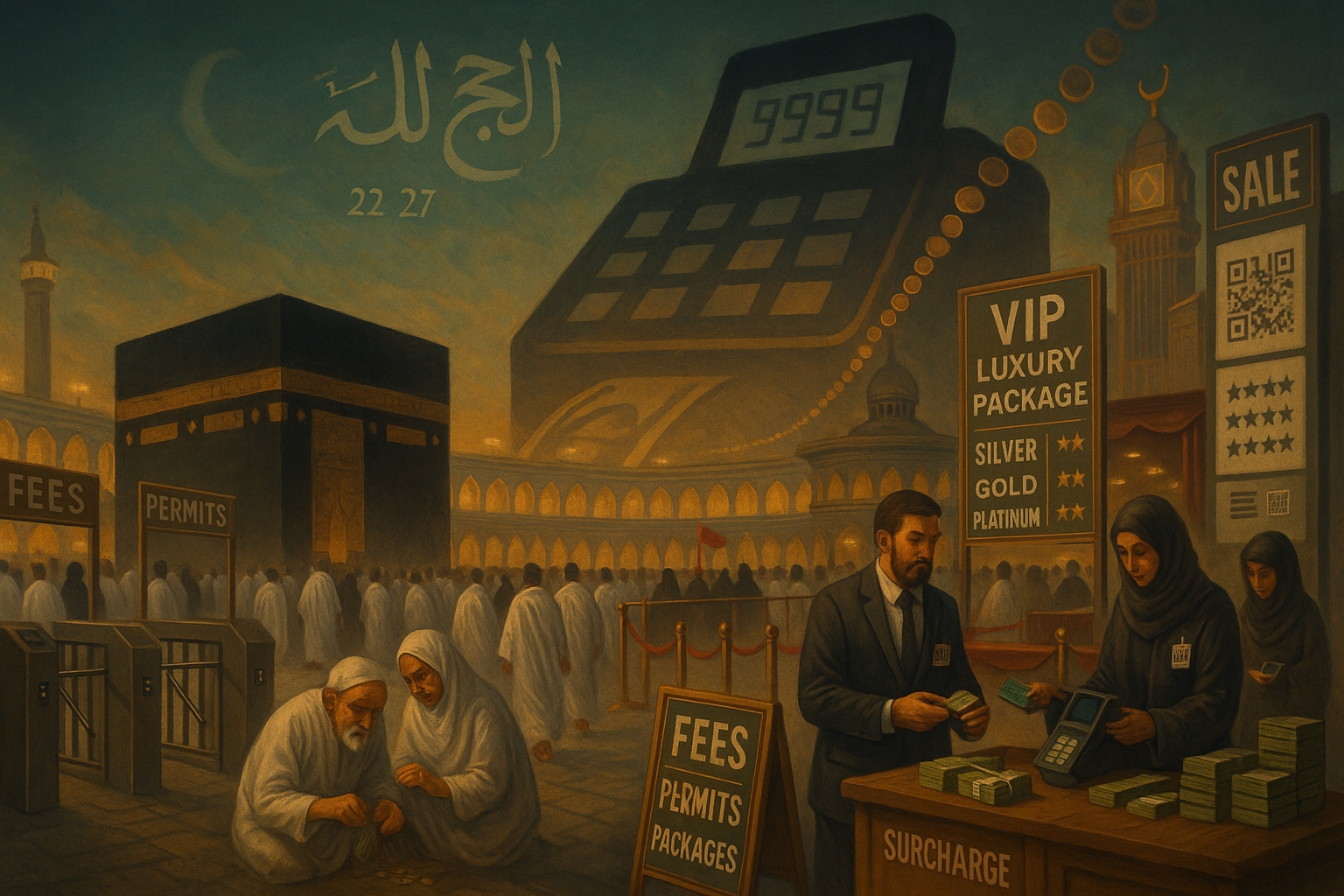
The Bani Sa‘ud have turned Hajj into a money-making racket. This is contrary to Allah’s teachings in the noble Qur’an. Why do Muslims ...
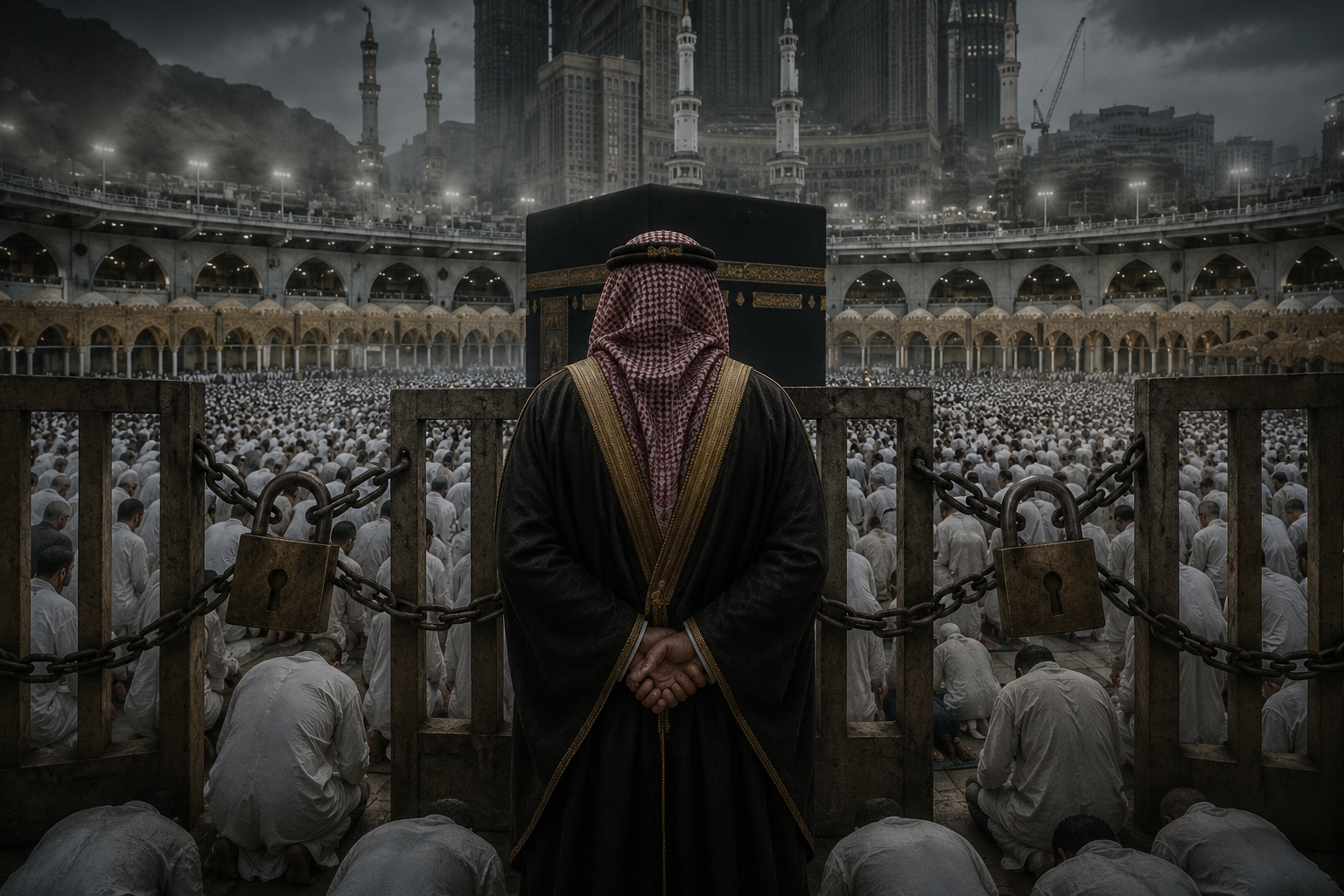
In this series of articles, ICIT director Zafar Bangash offers his personal reflections on Hajj. These are not related to the performance of...
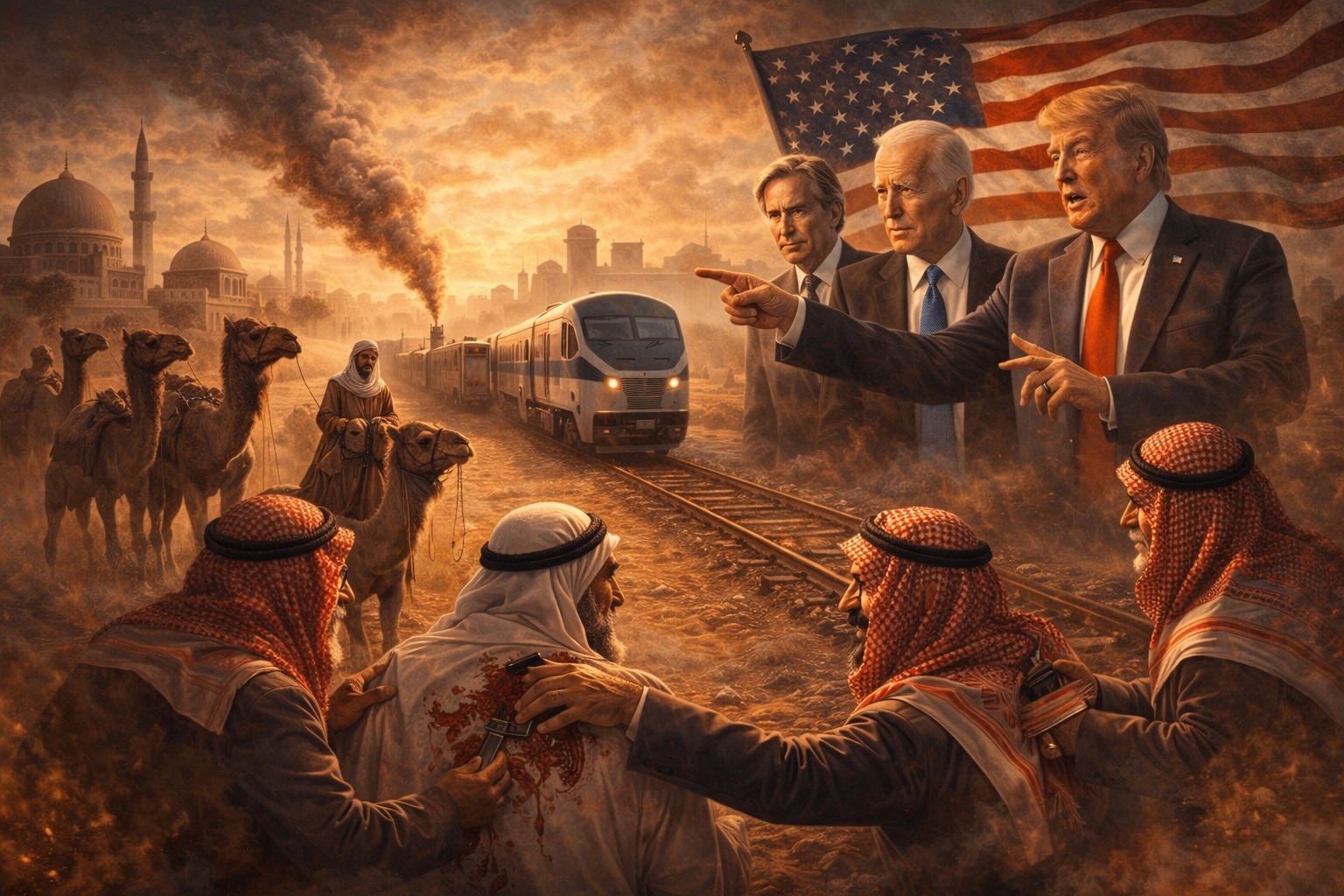
At every step of the way in performing Hajj, Bani Saud incompetence is the greatest impediment. Despite their decades-long illegal occupatio...