 Archives
Multimedia
Donate
About
Sign In
Archives
Multimedia
Donate
About
Sign In



 Zafar Bangash


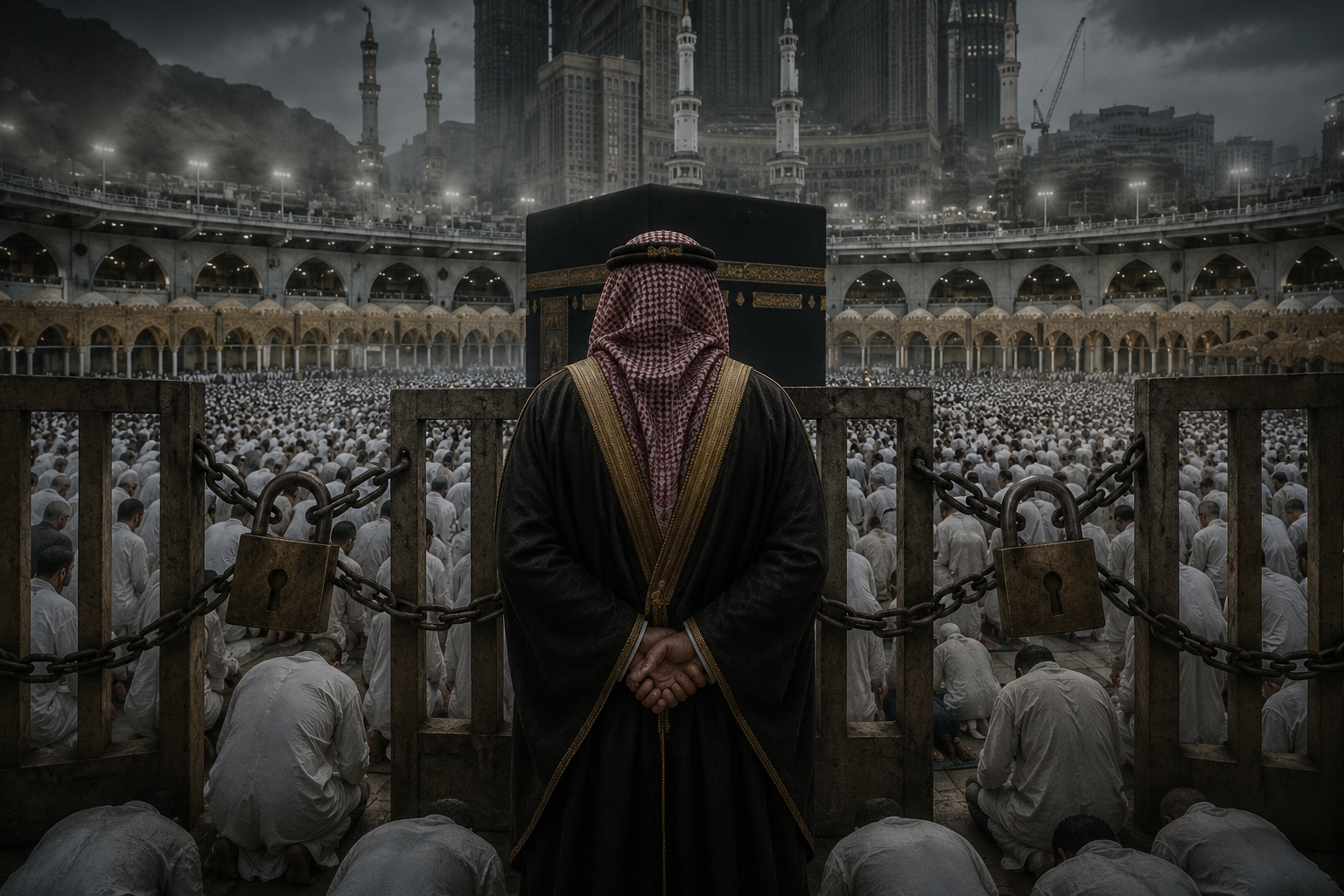
Hajj is a life-long ambition of every Muslim. Unfortunately, only a tiny minority is able to perform this vital act of ibadah because the Bani Saud have imposed rules not sanctioned by Islam.
I was blessed with performing Hajj twice. The first time in July-August 1987, I took my mother (may Allah bless her soul) for Hajj. The second time was with my wife in February 2001.
My first experience was extremely painful. The Saudis massacred more than 400 Iranian hujjaj who were participating in the bara‘at min al-mushrikeen march as commanded by Allah in the noble Qur’an (Surat al-Tawbah, verse 3).
I survived the massacre because I was not near the front of the march that was led by handicapped Iranian war veterans in wheelchairs on one side, and women on the other.
They were the main victims of Saudi barbarism in complete violation of Allah’s commands (Surat al-Baqarah, verse 197).
It was an extremely traumatic experience which I have documented in my book, The Makkah Massacre and the Future of the Haramain (1988).
This article is not about the performance of Hajj per se but about the archaic policies of Bani Saud. Minor changes have been introduced in these policies over the years, but they fail to meet Islamic standards.
Some context is necessary. The Bani Saud have approved agents in different countries that are linked to agents in the kingdom. The latter group comprises allies of the ruling family.
Pilgrims must go through these agents for Hajj arrangements. Ultimate decision rests with agents in Saudi Arabia.
Our first encounter with Bani Saud’s archaic policies was at Jeddah airport, the port of entry for most pilgrims. The Saudi obsession with separating men from women was enforced.
Pilgrims and their spouses or mothers were separated and made to form separate lines to be processed for immigration. Many elderly ladies were unable to complete the forms creating unnecessary difficulties.
Worse, the female pilgrims’ passports were checked by male—yes, you read that correctly—male Saudi officials. Why is it unacceptable for spouses to be in the same line but it is OK for non-mahrum Saudi males to process their passports?
Past the immigration hurdle, Saudi custom agents check all bags and immediately confiscate any translations of the Qur’an or books of duas. They dump them in a huge bin. Such disrespect is appalling.
Once we were out of the terminal building, the travel agency representative (Flywell Travel linked to Darus Salam Hajj group) was waiting outside. Our group was going to Madinah first before going to Makkah.
Our passports were taken away from us. This is another Bani Saud obsession and causes endless headaches for pilgrims. We were also given boarding passes for the flight to Madinah. To our horror, we discovered that the boarding passes did not have our names on them.
We boarded a Saudi airline plane that was carrying Filipino workers to Madinah. Had the plane crashed, we would not have been listed among the victims. Our families would not even know how we died!
Before boarding the plane, I asked the travel agent rep about who would meet us at Madinah airport to take us to the hotel. He said a rep from Darus Salam would be there and take care of our transportation arrangements.
Upon arrival at Madinah airport, there was nobody to meet us. We waited for several hours. Buses picked up pilgrims and drove away. We had no contact phone number for the travel agent or any phone number for the hotel.
What were we to do? We huddled together and decided that we should board one of the buses and go to Madinah and then sort out things there.
The Saudi obsession with separating women from men cropped up again. The bus driver (male) insisted women only in one bus and men had to take another bus!
We had no idea where the buses would drop us in Madinah. Would the women be dropped off at a different location than the men? To our good fortune, the buses for women and men arrived at the hotel where we were supposed to stay.
It was a great relief but another problem emerged. A hotel staff member boarded our bus and told us not to disembark yet because they were busy checking out other pilgrims. The bus driver was getting impatient. He wanted to dump us and leave.
We had to get off the bus and with our luggage sat on the sidewalk. After a while, I went inside the hotel to check what was going on. Sure enough, the lobby was full of suitcases with the hotel staff checking out pilgrims.
I decided to try my luck with the manager. I went into his office and explained to him that we had been travelling for two days (we had left Toronto on a Lufthansa flight on Sunday night and our connecting flight to Jeddah was at 11am the following day but for some unexplained reason, out flight was delayed to 1:40 am Tuesday morning). It was 4 pm Tuesday afternoon when we arrived at the hotel in Madinah.
I told the hotel manager—an Egyptian who seemed to be a reasonable person—that we had elderly people, we were exhausted and would like to check in as soon as possible. He said that was not possible because pilgrims were being checked out and the rooms were not cleaned.
I suggested to let us check in so we could wash and go to al-Masjid al-Nabawi to offer Asr salat. It was almost time for Asr. Rooms could be cleaned whenever the cleaners had time.
I also offered to take care of room allocations for our group. I made a list of our group and asked people to decide who they wanted to share a room with: four men per room and four women per room.
The list was prepared, rooms allocated and room cards issued to everyone. The list was handed over to the hotel manager. The cleaning staff did not show up until after 10 pm. Imagine standing outside on the sidewalk until then after an exhausting two-day journey!
We washed and cleaned and went to Masjid al-Nabawi to offer Asr salat. Our rooms were a mess but that was preferrable to standing outside for many hours. We also prayed maghrib salat and then went to have dinner where we saw the Darus Salam representatives for the first time.
I went over to ask them why nobody came to meet us at the airport to bring us to the hotel, as promised. One of them said quite arrogantly, “You are here, so what’s your problem”? I was shocked at his dismissive attitude. This was not the last time they showed such disdain for pilgrims.
In addition to visiting the historical sites in Madinah—Masjid Quba, Masjid Qiblatain, Jannatul Baqi‘, the Mount of Uhud, the grave of Hamza (رَضِيَ ٱللَّٰهُ عَنْهُ), the trench of the battle of Ahzab etc—the most cherished moments were paying respects to the Prophet (ﷺ).
The Wahhabi disrespect for the noble messenger (ﷺ) hits one like a bolt. Saudi policemen inside al-Masjid al-Nabawi strike anyone who dares touch the railing of the Rawd al-Jannah (the Prophet’s (ﷺ) resting place). Leaving Madinah is a sad experience.
The night before we were to leave Madinah, the Darus Salam rep announced that all of us should be in the lobby at 8 am the next morning to leave for Makkah. Again, I intervened and went over to ask: what time will the bus arrive to take us?
He said, it will be around 2 pm. So I told him that it was unfair to get us down in the lobby at 8 am with our luggage, especially given so many elderly people in our group. Once people check out, they cannot go back to their rooms to rest or wash. I told him that I will take responsibility for getting everybody in the lobby by 2 pm.
He agreed. The next morning at breakfast I told our group to come down to the lobby at 2 pm, not 8 am. They were quite relieved.
The bus taking us to Makkah did not arrive until 6:30 pm in the evening!
(Next: The Journey to Makkah and more Saudi horrors)


Far from being the spiritual journey and fulfilment of a life-long desire to perform Hajj, for many pilgrims this year’s pilgrimage turned...
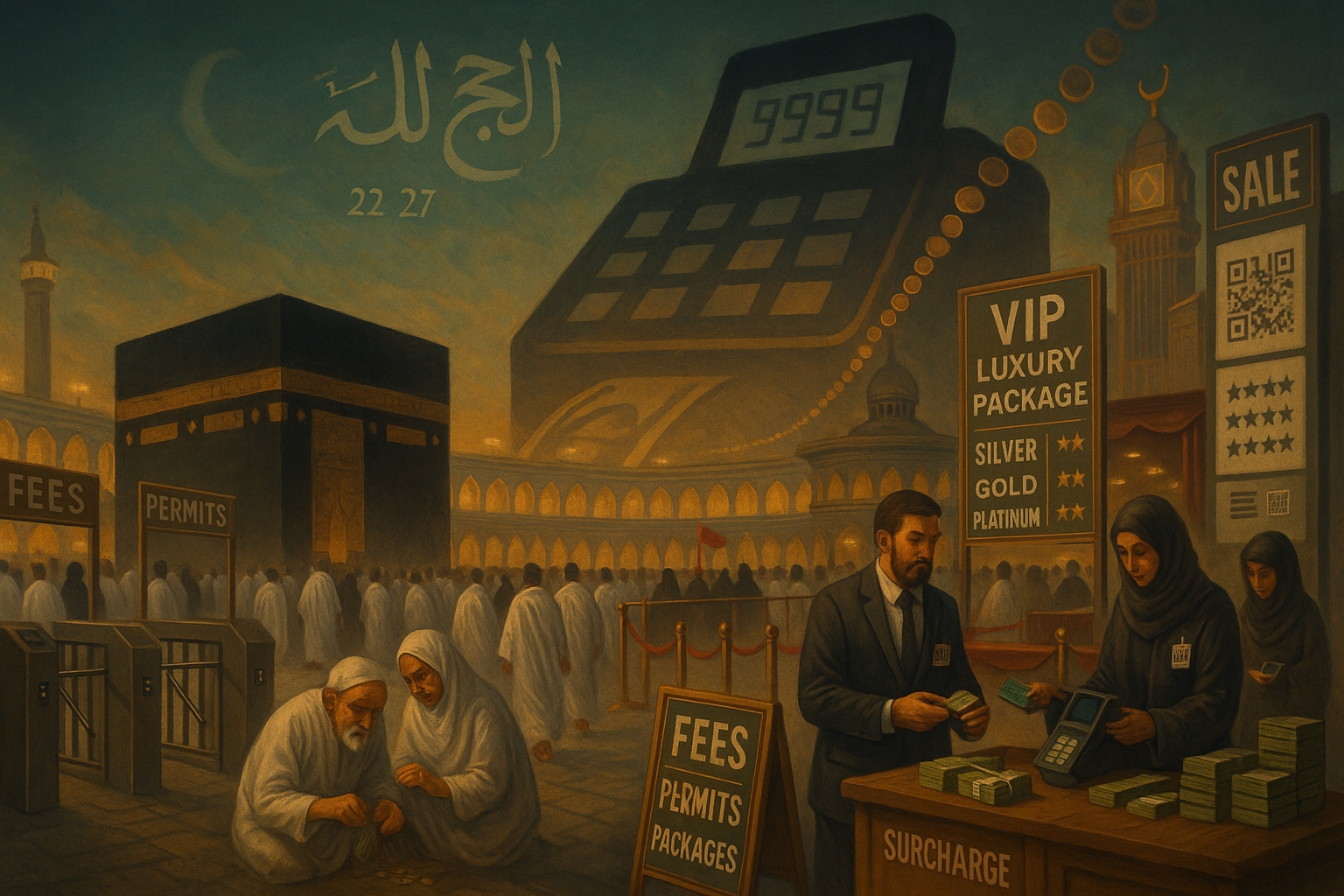
The Bani Sa‘ud have turned Hajj into a money-making racket. This is contrary to Allah’s teachings in the noble Qur’an. Why do Muslims ...

There is a curious phenomenon that Bani Saud have monetized Hajj, an important Islamic obligation, while complaining about Islamic Iran’s ...

At every step of the way in performing Hajj, Bani Saud incompetence is the greatest impediment. Despite their decades-long illegal occupatio...