 Archives
Multimedia
Donate
About
Sign In
Archives
Multimedia
Donate
About
Sign In



 Omar Ahmed


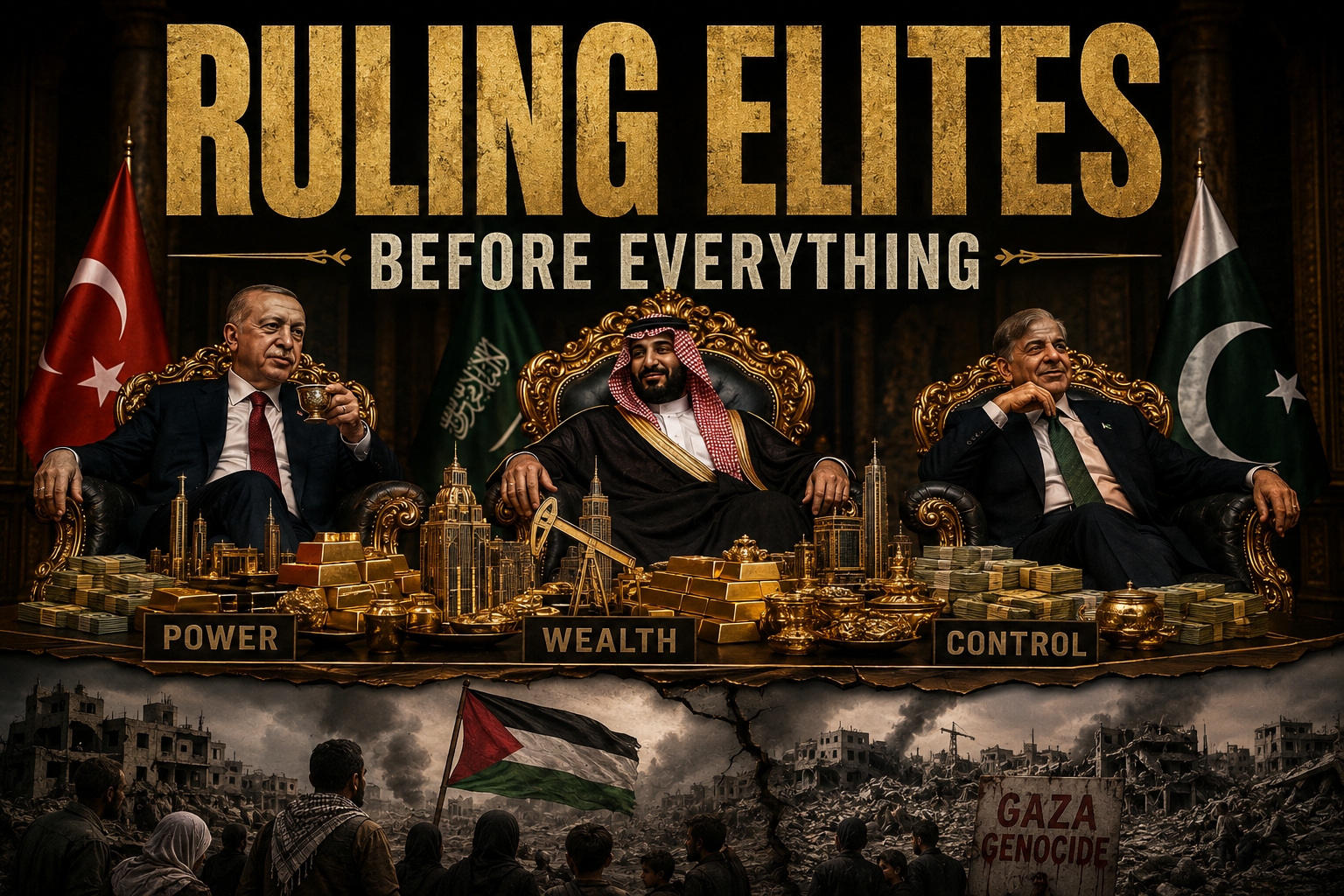
Three leading powers of the Organisation of Islamic Cooperation (OIC) gathered in the holy city of Makkah on August 7, 2026 to formalize a mutual defence treaty. Saudi Arabia, Pakistan and Turkiye declared that an armed attack on any one of them would be treated as an attack on all.
Turkish Foreign Minister Hakan Fidan later compared the clause directly to Article 5 of the North Atlantic Treaty Organisation (NATO), although the agreement’s full text and operational commitments have not been published.
The Makkah Joint Defence Agreement carries considerable political weight, but it is not yet known whether it can produce the command structure, military planning and shared obligations associated with a functioning alliance.
Turkiye’s inclusion expands the bilateral Strategic Mutual Defence Agreement signed by Saudi Arabia and Pakistan in September 2025. The enlargement had been anticipated as the regional order came under growing strain.
The US–zionist war against the Islamic Republic of Iran, the zionist entity’s widening attacks across West Asia, and renewed fighting involving Yemen have all exposed the limits of Washington’s security architecture.
The pact’s declared purpose is deterrence. For Riyadh, it also offers a possible counterweight to US pressure for normalization with the zionist entity before even the limited terms of the Arab Peace Initiative are met.
For Ankara and Islamabad, it opens access to Saudi capital while strengthening their place in a regional security structure that is not formally controlled by Washington.
Whether this develops into a measure of strategic independence or merely reorganizes three US partners within the same western-led order will depend on whom the pact ultimately defines as the aggressor.
A Muslim nuclear umbrella?
The original Saudi–Pakistani agreement was signed shortly after the zionist entity’s brazen strike on Doha in September 2025. Its timing encouraged speculation that Pakistan, the only Muslim-majority state possessing nuclear weapons, was extending some form of deterrent umbrella over the kingdom.
Neither party publicly promised the use of nuclear weapons, however, and the text of the agreement was not released. The Makkah pact should, therefore, not be treated as proof that Pakistani warheads have been assigned to Saudi or Turkish defence.
Strategic ambiguity may itself serve the parties: the possibility of escalation can influence an adversary’s calculations without Islamabad making an explicit nuclear commitment.
The arrangement is also tied to conventional arms. Saudi Arabia has shown interest in Pakistani-produced systems such as the JF-17 Thunder multirole combat aircraft, while Turkiye brings an increasingly capable defence industry.
The three countries can combine Saudi finance, Turkish technology and Pakistan’s military experience in ways that reduce dependence on western platforms.
That prospect is significant, but the direction of the alliance remains contested. Burcu Ozcelik, a senior research fellow for Middle East Security at the Royal United Services Institute, told Reuters that the agreement sought to counter Iranian power while also building deterrence against the zionist entity. Fidan, by contrast, insisted that the pact was not aimed at Iran or any other country.
For the Muslim world, this is the central contradiction. A defence arrangement that restrains zionist aggression and gives regional states room to reject normalization could serve a constructive purpose. A Sunni bloc directed against Islamic Iran and the Resistance Axis would reproduce the very sectarian divisions that Washington and Tel Aviv have exploited for decades.
The theoretical possibility of Pakistani nuclear deterrence extending to Turkiye may also enter zionist calculations. Former zionist entity prime minister Naftali Bennett has described Turkiye as “the new Iran”, portraying President Recep Tayyip Erdogan as a sophisticated adversary seeking to encircle the occupation state.
Ankara, in turn, sees unchecked zionist expansion as a direct security threat.
Syria is the most likely arena of friction. The occupation state has repeatedly attacked Syrian territory and sought strategic depth beyond the occupied Golan Heights. Turkiye has cultivated close ties with the post-Asad authorities and wants influence over Syria’s military reconstruction.
Recent zionist strikes near areas of prospective Turkish activity have already prompted efforts to establish a deconfliction mechanism among Turkiye, Syria and the zionist entity.
Arms, autonomy and old dependencies
Turkiye’s entry builds upon longstanding defence ties with Pakistan and Qatar. Its military-industrial complex has expanded rapidly, producing systems such as the Bayraktar TB2 unmanned combat aerial vehicle, the MPT-76 rifle and the developing KAAN combat aircraft.
Pakistan’s defence industry is also closely connected to Turkish technical cooperation. Azerbaijan’s acquisition of the JF-17 illustrates the widening market for Pakistani platforms, including configurations incorporating Turkish systems. Saudi interest in the aircraft therefore fits a broader attempt to diversify procurement.
Joint production and technology transfer could give the pact more substance than a diplomatic declaration. Yet diversification should not be confused with independence. All three states retain extensive political, financial or military ties to the US and NATO structures.
Turkiye remains a NATO member, Pakistan has a long history of security cooperation with Washington, and Saudi Arabia still relies heavily on US weapons and support.
The pact can reduce selected vulnerabilities. It cannot, by itself, remove those relationships or resolve the different interests of its members.
Why Egypt remains outside
Egypt’s exclusion initially puzzled observers. Cairo had taken part in the diplomatic process preceding the Makkah agreement. On June 21, the foreign ministers of Egypt, Saudi Arabia, Turkiye and Pakistan met in Cairo as the R4 grouping.
According to their joint statement, they discussed regional developments and the implementation of the US–Iran Islamabad Memorandum of Understanding.
Speculation has centered on a possible Saudi or Turkish objection, although no veto has been publicly confirmed. Riyadh may remember Egypt’s refusal to commit ground forces to the Saudi-led war on Yemen after joining the coalition in 2015.
Ankara, meanwhile, has had to manage Cairo’s close relations with Greece and Cyprus, both of which maintain growing security cooperation with the zionist entity.
The Muslim Brotherhood remains another point of contention. General Abdel Fattah el-Sisi’s regime views the movement as an existential threat, while Turkiye historically offered its members political space.
Even so, Ankara continues to court Cairo. During a visit to Egypt, Fidan said: “We hope Egypt will be our formal partner.”
Egypt has strong reasons to remain engaged. Any prolonged closure of the Red Sea threatens Suez Canal revenues and the country’s already fragile economy. Cairo has also participated in Saudi-led maritime discussions while seeking to preserve a diplomatic role in talks involving Iran and the US.
It nevertheless has equally strong reasons to avoid an automatic military commitment. The memory of Egypt’s intervention in the North Yemen Civil War still weighs heavily. Gamal Abdel Nasser sent tens of thousands of troops to support the republican government against Saudi-backed royalists.
The war consumed Egyptian lives and resources before the humiliating 1967 defeat accelerated the withdrawal.
Cairo is also constrained by the Camp David order and its security coordination with the zionist entity, particularly around Gaza. Joining a pact understood partly as a deterrent against Tel Aviv would test those commitments.
Joining one directed against Yemen or Iran could pull Egypt into another regional war with no clear benefit to its own security.
The ambiguity of the Makkah agreement therefore suits Cairo’s caution. Questions of command authority, force commitments, geographical scope and decision-making remain unanswered.
Yemen delivers the first test
The pact faced a test within 36 hours of its signing. Yemen’s Ansarallah-aligned armed forces said they had struck the Jazan refinery with a drone. Saudi authorities confirmed that a fire at the facility had been extinguished without injuries but did not initially attribute the incident. The refinery was targeted again in the following days.
These attacks cannot be separated from the history of the Saudi-led war and blockade imposed on Yemen. Describing them simply as an Iranian attempt to destabilize the kingdom erases Yemeni agency and the unresolved conflict that produced the confrontation.
Sana‘a has developed its own military capacity and political objectives, even while maintaining close ties with Tehran and the wider Resistance Axis.
In late July, Pakistan warned that attacks on its maritime interests would cross a national security “red line.” The danger became more immediate after missiles struck the commercial cargo ship Tihamah near the Bab al-Mandab.
Six people were killed, including three Pakistani nationals; the toll included four sailors and two rescuers, according to Yemeni authorities.
Pakistan’s Deputy Prime Minister and Foreign Minister Ishaq Dar condemned the attack as a violation of international law.
Islamabad then said it would fulfill its commitments to a Saudi-led maritime security coalition. Pakistan’s role as a mediator between Iran and the US complicates any military move, however. Direct participation against Ansarallah could damage Islamabad’s credibility with Tehran and draw it into the same Yemeni battlefield from which Saudi Arabia has struggled to extricate itself.
For the Resistance Axis, pressure on shipping and energy infrastructure is a form of horizontal escalation designed to raise the economic cost of the US–zionist war. For Pakistan and Turkiye, the same actions can threaten nationals, trade routes and diplomatic interests. The Makkah pact brings these conflicting calculations into a single framework without resolving them.
An alliance caught between two orders
Yemen remains volatile, with the Ansarallah-aligned forces fighting those aligned with the Saudi-backed Presidential Leadership Council and attacks continuing around the port of Al-Mukha. Iraq presents another front.
On July 28, US and Saudi aircraft struck Popular Mobilization Forces (PMF) positions in eastern Iraq. US Central Command acknowledged the operation, using its customary designation of resistance factions as “terrorist” forces and claiming the strikes answered drone attacks directed by the Islamic Revolutionary Guard Corps (IRGC). Reports said several IRGC officers were among those killed.
These developments place the Saudi kingdom in direct confrontation with forces allied to Iran even as its new partners insist that the Makkah pact is not anti-Iran. They also show why Tehran will judge the agreement by military conduct rather than its language of Islamic solidarity.
September 30 is another important date, but the original distinction must be kept clear. Baghdad has identified it as the final deadline for the remaining US-led coalition forces to leave federal Iraq, not as a formal deadline for dissolving the PMF.
The resistance factions are nevertheless under intense US and domestic pressure to surrender or integrate their weapons. Conflating the two processes serves Washington’s effort to portray the resistance as an obstacle after years of occupation.
Every missile or drone directed at Saudi territory or Saudi-linked shipping now tests a pact that promises to regard an attack on one member as an attack on all. Yet Pakistan faces its own insurgencies and financial constraints, while Turkiye has no interest in the collapse of the Islamic Republic or a region-wide sectarian war.
Both have joined Saudi maritime initiatives, but neither can treat Riyadh’s priorities as identical to its own.
The Makkah Joint Defence Agreement therefore stands between two possible regional orders. It may become a vehicle for collective autonomy, Muslim defence cooperation and deterrence against the zionist entity. It may instead be absorbed into the US-led campaign to contain Iran and dismantle the Resistance Axis.
The difference will be decided in practice: by whether its members confront aggression from Tel Aviv, reject sectarian mobilization against Tehran, and address Yemen as a sovereign political actor rather than a battlefield on which outside powers settle their disputes.
Until then, the Makkah pact offers a powerful symbol, but not yet a coherent security doctrine.

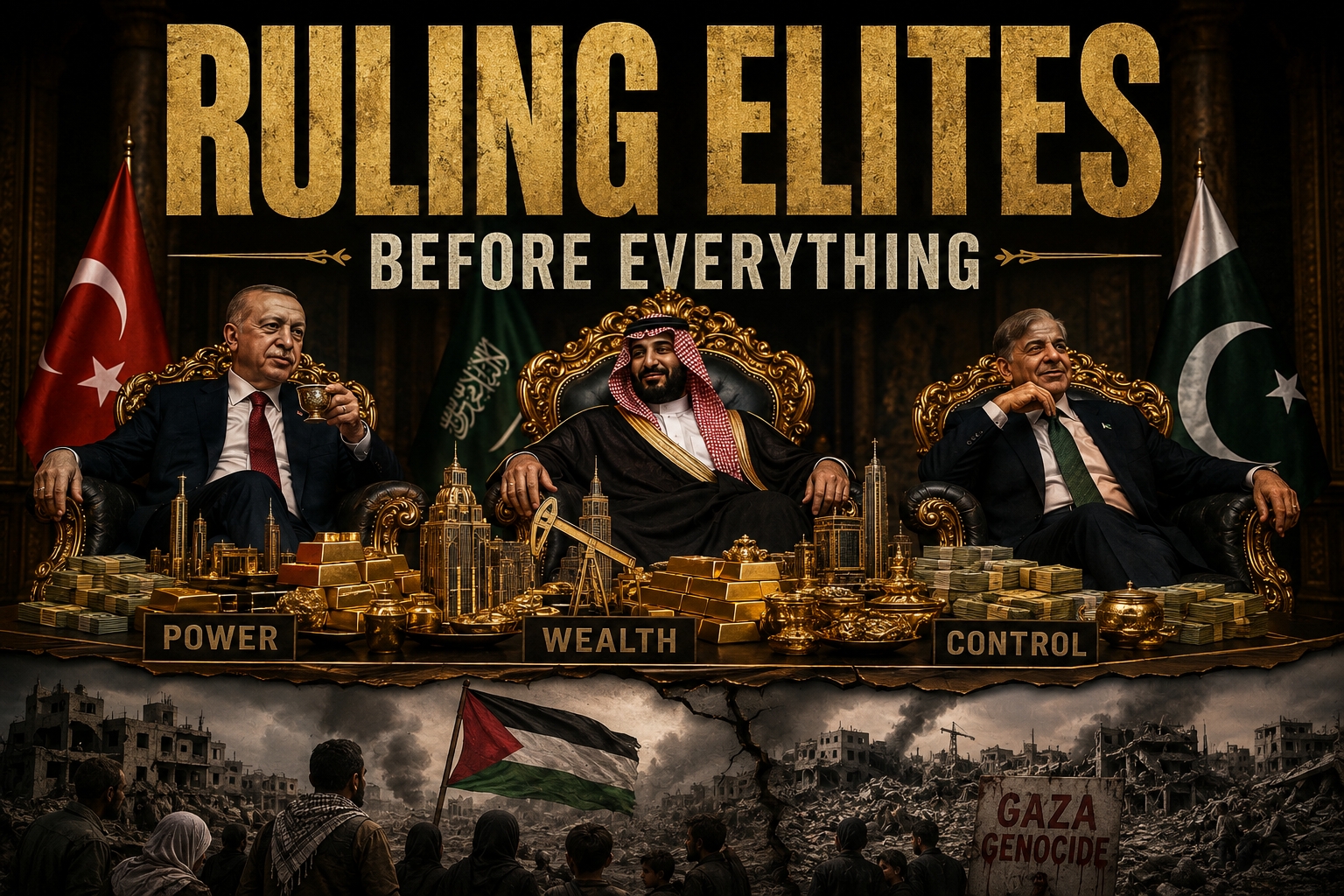

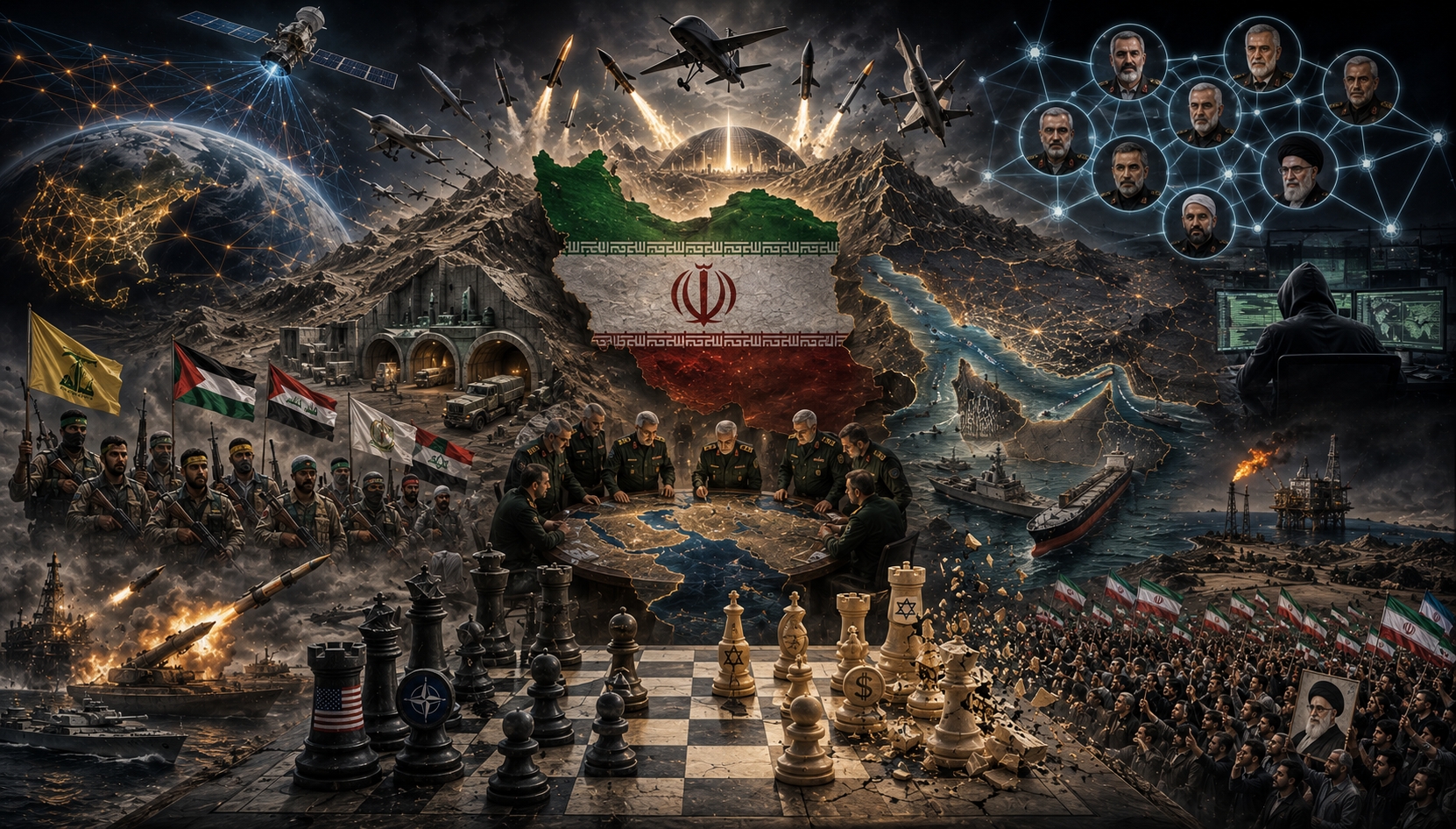
While the Arabian rulers in West Asia are incapable of defending themselves, their reliance on the US and zionist Israel has also proved ill...