 Archives
Multimedia
Donate
About
Sign In
Archives
Multimedia
Donate
About
Sign In



 Mohamed Ousman


A structured geopolitical analysis of the US-Israel attack or invasion of Islamic Iran, is interpreted through three Islamic intellectual frameworks: Imam Muhammad al-Asi, Imam Zafar Bangash, and Dr. Kalim Siddiqui.
1. Imam Muhammad al-Asi’s Qur’anic Framework
Using the Qur’anic analytical method advanced by Imam al-Asi, geopolitical conflicts are not merely state-centric or material struggles but manifestations of deeper systems of power (mustakbirīn vs. mustaḍʿafīn). In this framework, the US-Israel confrontation with Iran represents an extension of the global hegemonic order rooted in domination, deception and layered authority structures.
Al-Asi’s “Israeli octopus” metaphor reflects a networked power system rather than a single territorial entity. In this view, Israel is not just a state actor but part of a wider constellation of influence embedded within Western political, financial, and military systems—particularly those led by the United States. Thus, the attack on Islamic Iran is not reducible to bilateral hostility but is an expression of this transnational hegemonic matrix.
From the Qur’anic lens, this aligns with patterns of istikbār (arrogant domination), where dominant powers seek to suppress independent Islamic self-determination and political will—especially when it challenges global hierarchies. Islamic Iran, regardless of internal critiques, is positioned as a state resisting this order, making it a target not solely for its policies but for its defiance of systemic subordination.
Al-Asi would argue that the “camouflage” mentioned in his work is evident in how such conflicts are framed in global discourse. Narratives of “security,” “nuclear threat,” or “regional stability” obscure the underlying power consolidation and strategic control over resources, geography, and ideological space.
The Qur’an’s emphasis on unveiling hidden injustice becomes central here: leadership that lacks Qur’anic consciousness may misinterpret the conflict as isolated or reactive, rather than systemic and premeditated.
Geopolitically, Islamic Iran occupies a crucial node: it connects Central Asia, West Asia (aka the Middle East), and maritime routes. Its independence challenges US dominance in the region and Israel’s strategic security doctrine. Within Al-Asi’s framework, this makes Islamic Iran a pressure point where the hegemonic system seeks either subjugation or destabilization.
Furthermore, Al-Asi would highlight the role of Muslim political fragmentation. The inability of Muslim-majority states to perceive the conflict through a unified Qur’anic lens leads to disjointed responses—some aligning with hegemonic powers, others remaining passive. This fragmentation perpetuates the cycle of domination.
In summary, under Al-Asi’s Qur’anic theory, a US-Israel attack on Islamic Iran is: 1. not an isolated military event but a manifestation of systemic global domination; 2. part of a networked “octopus” structure of power; 3. sustained through narrative camouflage and ideological framing; and 4. enabled by Muslim political disunity and lack of Qur’anic strategic consciousness.
2. Imam Zafar Bangash’s Sirah-Based Framework
Bangash approaches geopolitics through the Sirah (Prophetic biography), treating the life of the Prophet Muhammad (ﷺ) as a model for political struggle, resistance, and statecraft.
From this perspective, a US-Israel attack on Islamic Iran resembles the coalitions/Aḥzāb that historically formed against the early Muslim community in Madinah. These alliances were not merely defensive but aimed at crushing an emerging independent order that threatened existing power structures. Similarly, Islamic Iran is viewed as a state asserting autonomy against dominant global powers.
Bangash would interpret the conflict through the lens of:
External siege: Like Madinah facing coordinated hostility, Islamic Iran faces sanctions, cyber warfare, and military threats.
Internal resilience: The Sirah emphasizes the importance of internal cohesion (ṣabr, unity, leadership). Islamic Iran’s endurance under pressure reflects this dynamic.
Strategic patience: The Prophet’s approach was not impulsive confrontation but calibrated responses—treaties, alliances, and selective engagement.
Importantly, Bangash would stress that victory is not purely military. In the Sirah, moral legitimacy and popular participative support through shura were decisive. Thus, the narrative battle—how the conflict is perceived globally—is as important as battlefield outcomes.
He would also critique Muslim countries that align with US-Israeli interests, comparing them to hypocritical or opportunistic actors in the Sirah who undermined collective security.
Thus, the Sirah framework frames the conflict as: 1. A coalition assault on an independent Islamic state; 2. A test of unity, patience, and strategic leadership; and 3. A reminder that legitimacy and resilience outweigh raw power.
3. Dr. Kalim Siddiqui’s Islamic Movement Theory
Dr. Siddiqui conceptualized global politics through the lens of the Islamic movement (al-ḥarakah al-islāmiyyah), emphasizing the struggle to re-establish Islam as a civilizational force.
In this framework, a US-Israel attack on Iran is interpreted as part of a broader effort to contain and neutralize any Islamic political resurgence. Dr. Siddiqui viewed the post-colonial Muslim world as dominated by nation-states lacking Islamic legitimacy, with the Islamic Revolution in Iran post-1979 representing a rare example of an Islamic movement achieving state power.
Thus, Iran becomes: 1. A symbolic and strategic axis of Islamic resistance; and 2. A threat not only militarily but ideologically, as it challenges secular-global order.
Dr. Siddiqui would argue that global powers seek to: 1. Isolate such movements diplomatically; 2. Demonize them ideologically; and 3. Destabilize or dismantle them militarily.
The attack on Islamic Iran, therefore, is not just about nuclear issues or regional politics but about preventing the replication of Islamic revolutions and Islamic governance models.
Crucially, Dr. Siddiqui distinguished between the Islamic state and the Islamic movement. Even if Islamic Iran is a state, its legitimacy derives from its roots in an Islamic movement. Hence, defending it (critically, not unconditionally) becomes part of a wider obligation to sustain the global Islamic resurgence.
He would also criticize Muslim elites for failing to transform their societies into movement-based structures, leaving them vulnerable to external domination.
In essence, Dr. Siddiqui’s theory sees the conflict as: 1. A systemic attempt to crush Islamic revival; 2. A struggle between hegemonic global powers and Islamic civilizational assertion; and 3. A call for rebuilding authentic Islamic movements beyond state boundaries
Bibliography
Al-Āsī, Muhammad: The Ascendant Qur’an: Realigning Man to the Divine Power Culture. Various Volumes. Institute of Contemporary Islamic Thought, (2008-2024).
Bangash, Zafar: In Pursuit of the Power of Islam: Major Writings of Kalim Siddiqui. Toronto: The Open Press (1996).
Bangash, Z. Power Manifestations of the Sirah. Toronto: ICIT. (2011).
Bangash, Zafar: Editorial introduction to Siddiqui’s collected works
Bangash, Zafar: Articles in Crescent International
https://crescent.icit-digital.org/articles/power-dimensions-in-the-sirah-of-the-noble-messenger-saws
https://crescent.icit-digital.org/articles/the-importance-of-re-examining-the-seerah-of-the-prophet
Siddiqui, Dr. Kalim: The Islamic Movement: A Systems Approach. London: The Muslim Institute, (1976).
Siddiqui, Dr Kalim: Issues in the Islamic Movement. Toronto: The Open Press (1982).
Siddiqui, Dr. Kalim. Beyond the Muslim Nation-States. The Muslim Institute (1977).
Siddiqui, Dr. Kalim: Stages of Islamic Revolution. London: The Open Press, (1996).

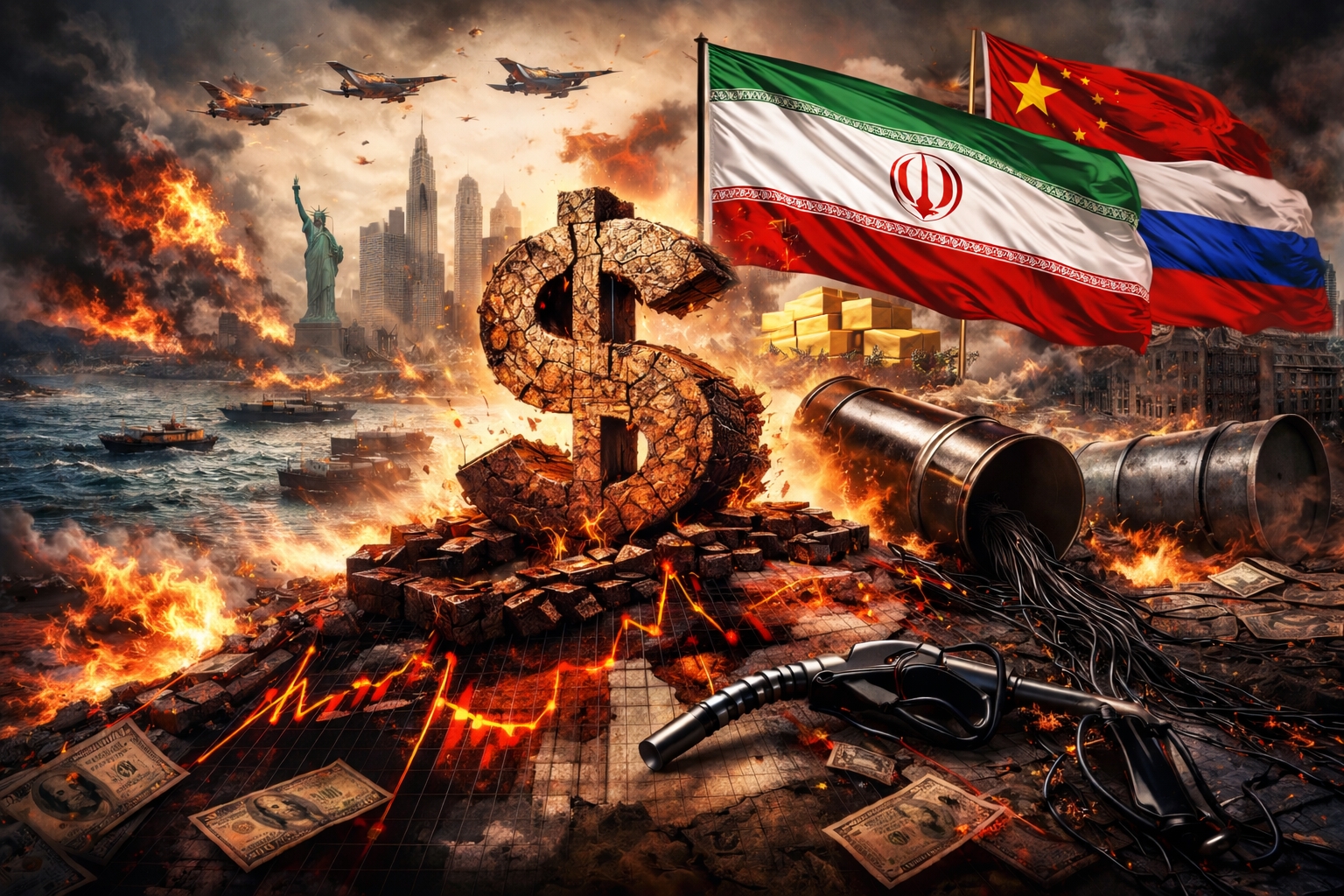
The US-zionist war on Islamic Iran cannot be isolated from the broader war on the Ummah, be it Palestine, Lebanon, Iraq or Yemen. The Islami...
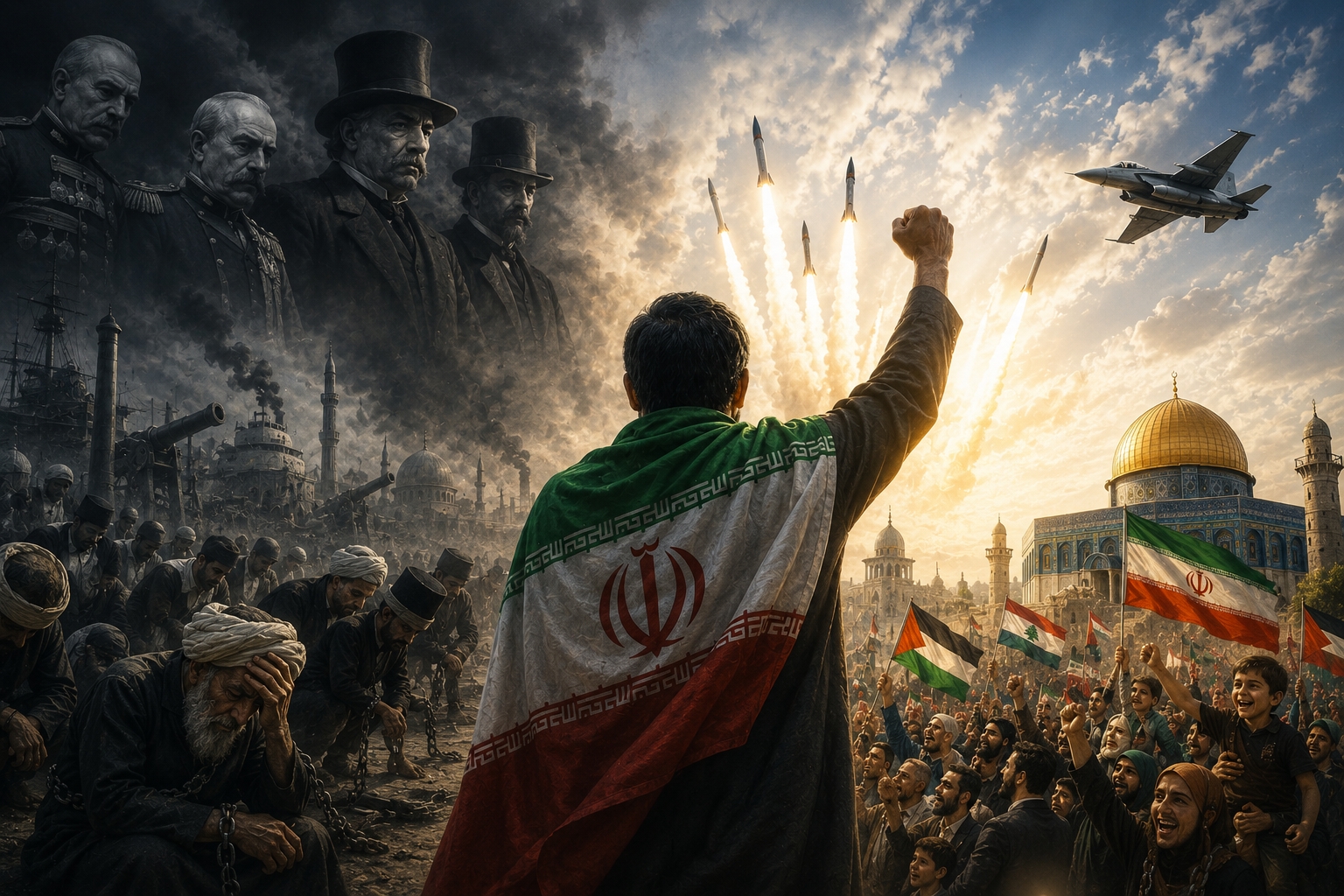
Since the defeat and retreat of the Ottoman Turks from the Balkans in 1878, Muslims have faced repeated humiliations at the hands of western...

The US-zionist war on Iran was unprovoked and is illegal. While it continues, it has exposed the true nature of the two sides. On one side a...
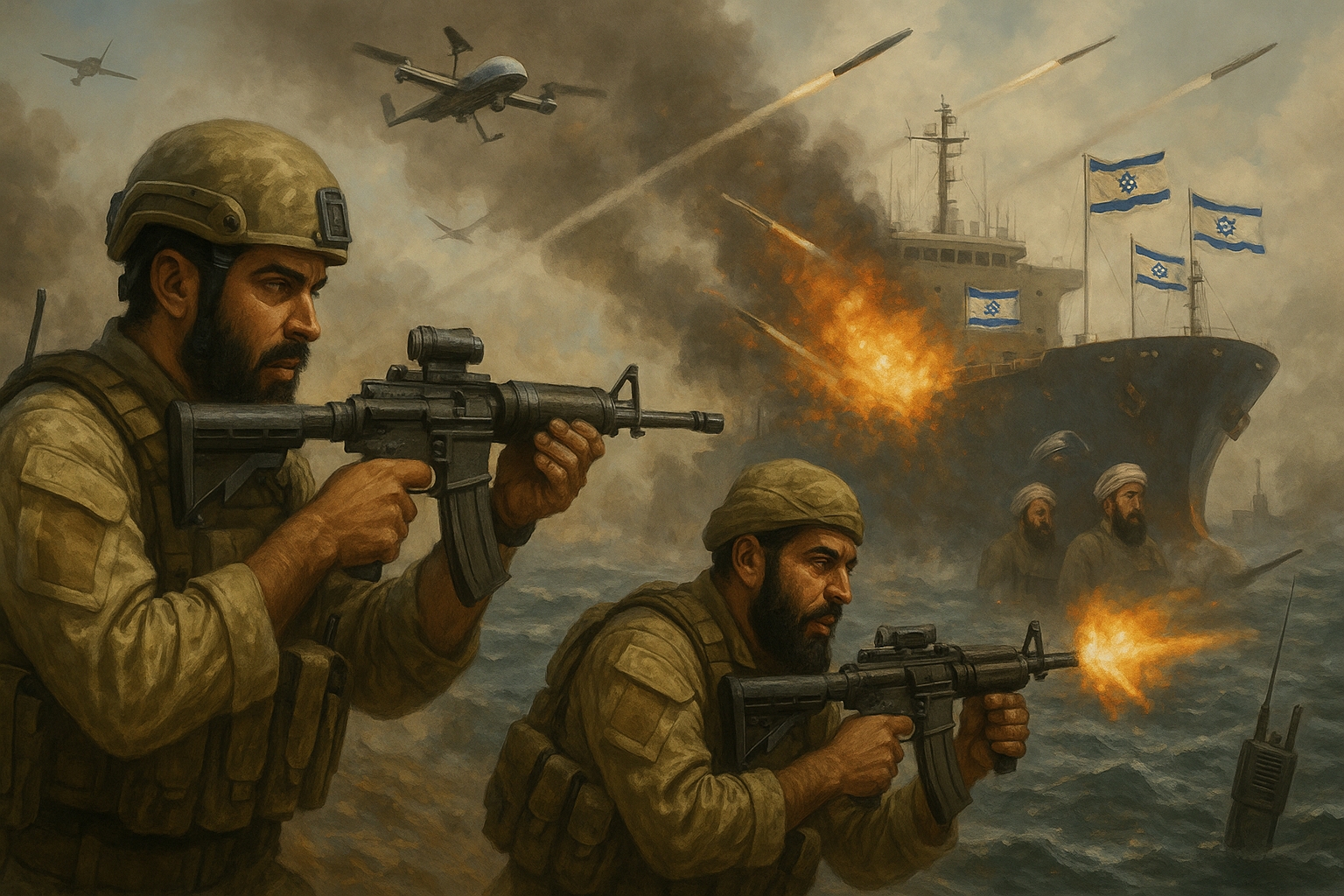
The Islamic Republic of Iran has stood all alone against the forces of darkness and barbarism. By making enormous sacrifices, it is defendin...