 Archives
Multimedia
Donate
About
Sign In
Archives
Multimedia
Donate
About
Sign In



 Yusuf Dhia-Allah


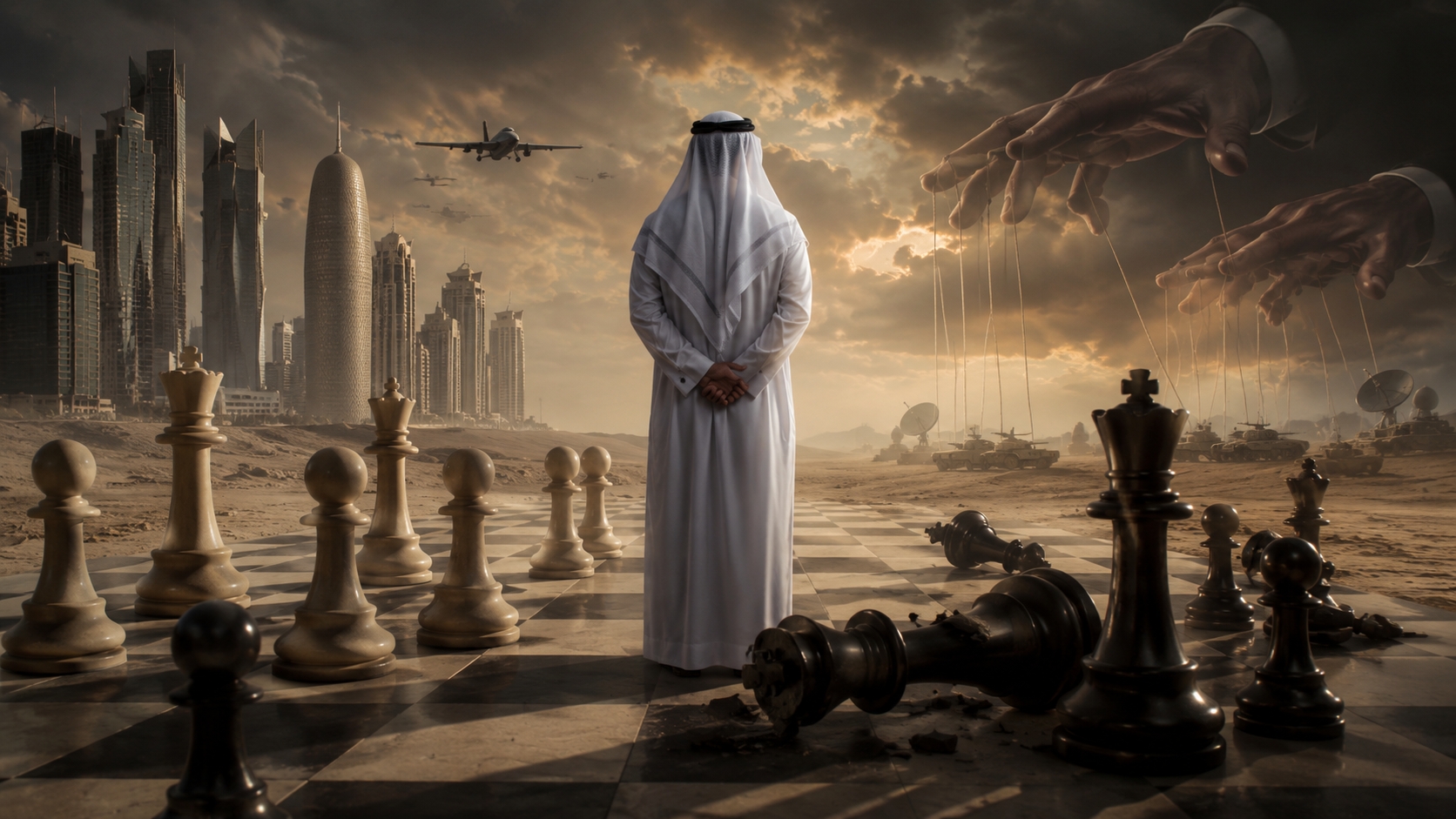
Last month (July 12) the former Emir of Qatar, Sheikh Hamad bin Khalifa al Thani passed away. He was 74. By a happy coincidence, the arch-zionist, Lindsey Graham also died a day earlier.
Both Hamad and Graham were staunch zionist supporters. The American senator was a war criminal calling for the destruction of Gaza and Iran like the US had done to Japan and Berlin during the Second World War.
That the zionists have achieved Gaza’s total destruction is well known. Graham had a large role in ensuring that Israel gets whatever weapons it needed to perpetrate the genocide in Gaza.
The US and Israel also tried to destroy Iran but failed. Graham is now lodged in the lowest depths of hell with fellow war criminals and terrorists like Arial Sharon, Yitzhak Rabin, Menachim Begin and Yitzhak Shamir, and many others. No doubt, Hamad is also in this company.
Ordinarily, the death of a former Emir of Qatar would not merit much attention. Neither he nor Qatar are important in the scale of global politics.
It is a tiny sheikhdom on the western shores of the Persian Gulf. Its total population of 3.2 million comprises only about 300,000 native Qataris.
What has thrust tiny Qatar into the limelight is not only its oil and gas exports, but its sovereign investment fund, one of the largest in the world. American executives make a beeline to Doha with their favourite projects seeking investments.
Two other factors make it prominent. It houses the largest US airforce base in West Asia at Al Udeid. It was constructed at a price of more than $1 billion and paid for entirely by the Qataris to ingratiate themselves to the Americans.
The base was built soon after the Americans had attacked and decimated the Iraqi army in January 1991. American troops had swarmed the region, locust-like, to punish the Iraqi dictator Saddam Hussain for failing to overthrow the Islamic government in Iran.
When his war against Iran ended in August 1988, Iraq was left with vast quantities of western weapons including chemical weapons. He could not be allowed to keep them. There was a remote chance that he might pose a threat to zionist Israel, the west’s favourite terrorist regime in the region.
The Americans also established other military bases in countries like Bahrain (the US Fifth Fleet), Oman, Kuwait, Iraq, the UAE, Saudi Arabia and Jordan. There are a total of 19 military bases making a ring of fire around Islamic Iran.
Doha, however, has also made itself an important interlucator for the US. At Washington’s behest, the Qataris opened an office for the Taliban in June 2013 to facilitate negotiations with the US. These culminated in the Doha Agreement of February 2020 resulting in the US’s ignominious escape from Kabul in August 2021.
Following the US failure to degrade Iran’s military power, Qatar has acted as a mediator, together with Pakistan, to facilitate indirect talks between them. That these talks have not yielded the desired result primarily due to US duplicity and dishonesty is a different matter.
Let us return to Qatar as a statelet. Sheikh Hamad assumed power in 1995 and ruled until 2013 when he handed it over to Tamim.
From an oil and gas producer and exporter, it developed one of the largest sovereign investment funds in the world. Hamad had laid the foundation for this transformation.
Unlike other Arabian potentates, he was a ‘graduate’ of the British Military Academy at Sandhurst. Don’t laugh! His ponderous bulk was not military training material.
Pity the British sergeant who had to deal with the over-indulgent Qatari while haranguing other cadets in his care pressing them into shape.
The British are quite adept at accommodating the bone-lazy Arabs, especially scions of ‘royal families’ that they themselves had installed in power. Bending rules to indulge them pays off in the long run. This is also the case with Qatar.
Even the current Emir, Sheikh Tamim bin Hamad is Sandhurst-trained. Unlike his father, he is tall and has long legs. He should have been able to run relatively fast although his rise in the Qatar military has nothing to do with his military prowess.
He graduated from Sandhurst in 1998 and within a few years, rose to the rank of the top military commander. This is also the case with the tiny monarch of Jordan, Abdullah-II. Like his father, he is barely five feet tall yet his chest is decorated with medals. How many wars has he won to bedeck his chest with these medals?
In Arabian countries, without exception, the ruler is supreme. In some, like the Bani Saud-ruled kingdom, or Jordan, he is calls himself ‘king’. In others, like Qatar, Kuwait etc, they are called ‘Emir’. Some king, some Emir. Slave of the west is a more apt title.
No disagreement, much less criticism, of the ruler is permitted. It could result in severe punishment. Dungeons in Saudi Arabia are full of dissidents. These include academics, human rights activists and lawyers. Their only crime is to ask for some basic rights.
Court-promoted priests go so far as to declare that even if the ruler declares on television that he indulges in major sins, the citizens are not permitted to criticise him. Where did these priests learn such nonsense?
In his first address to the people after being declared Khalifah, this is what Abu Bakr As-Siddiq said.
“As long as I obey Allah and His Messenger (ﷺ), you should obey me. But if I violate Allah’s commands, then you have no obligation to obey me. Instead, you should set me right.”
Like other Arabian regimes, Qatar’s constitution also stipulates that the word of the emir is law. He cannot be criticized otherwise it is considered an “insult”. It is punishable by a long prison sentence. These potentates claim to be “perfect”.
In June 2013, Sheikh Hamad transferred power to his 33-year-old son Sheikh Tamim. The latter was not the oldest son but fourth in line. So what accounted for this transfer of power?
It has to do with Bedouin customs. Hamad had three wives but his favourite was the second wife, Shaykha Mozah bint Nasser al-Mosned. Tamim was her son.
While it is understandable that the first wife had fallen out of favour, hence the arrival of the second wife. But what explains Hamad’s preference for her over the third wife?
Hamad wanted to make sure Tamim succeeds him in his lifetime. Hamad’s older brother, Sheikh Jassim bin Khalifa Al Thani was the prime minister at the time. He was an ambitious and shifty character but Hamad forced him to resign to pave the way for Tamim.
Hamad had seen how King Hussain of Jordan done a similar switch in 1999. The cancer-stricken Jordanian monarch flew from the US while receiving treatment, to dismiss Crown Prince Hassan, his brother. He signed a decree giving the throne to his son, Abdullah.
His son was barely 37 years old and had no experience in statecraft but became the king when Hussain died. The only experience he had until then was acting in a few third-date movies. He was also trained at Sandhurst and was a second leuitenant but was given rapid promotion as air force chief. When your father is determined to make you king (or emir), then lack of experience is no bar to elevation.
Back to Qatar, where most of the cabinet posts are filled by Al-Thanis. Talent natural resides in the clan. Others must wait until the Americans, or the zionists decide that the clan has outlived its usefulness and a new set of puppets need to be installed in power!

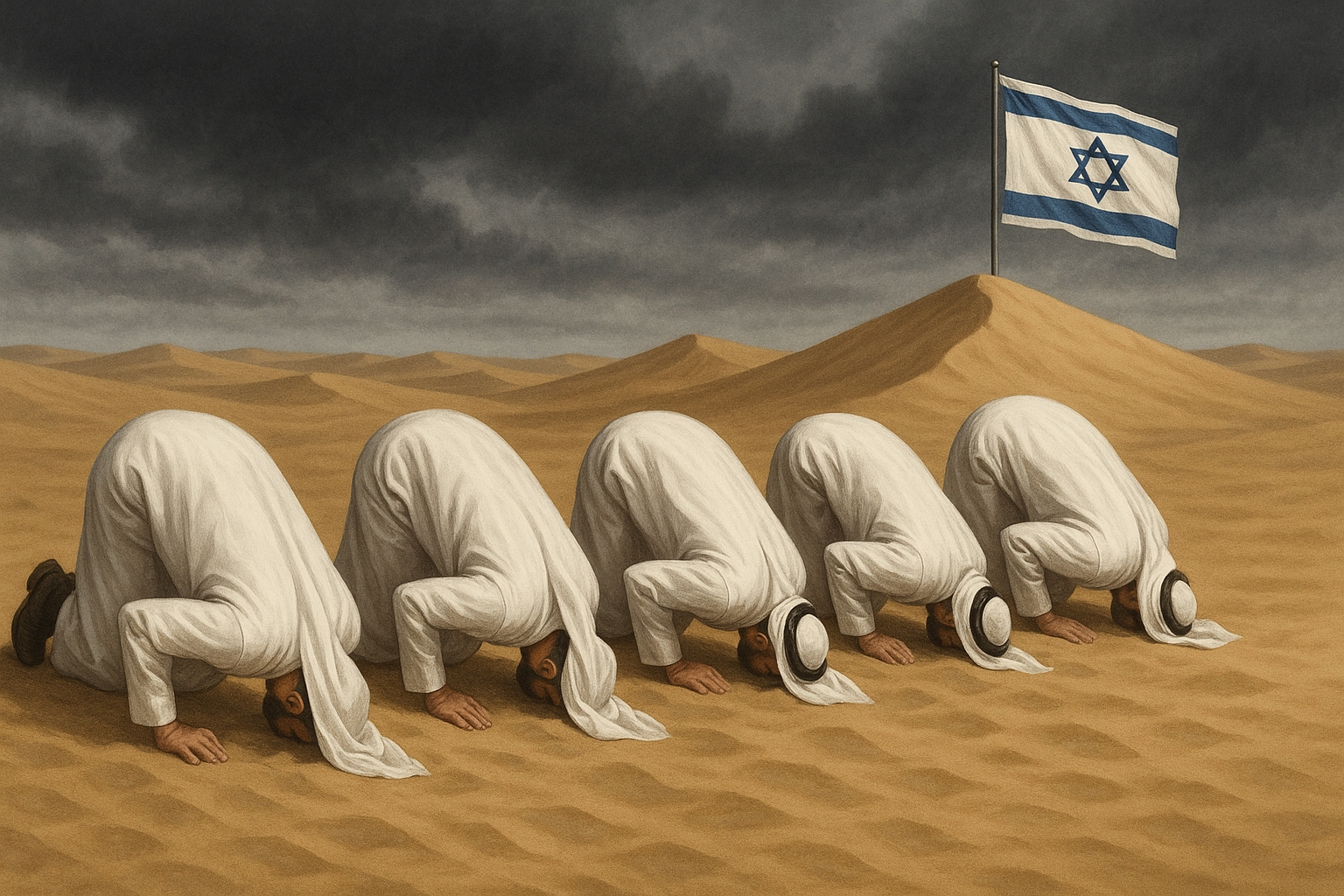
Are Muslim and Arab countries prepared to face the stark reality that zionist Israel poses an existential threat to all of them or continue ...
How far will the Saudi-Qatari high speed train project go? While the 785 km track will be built, will it realize the economic and passenger ...

What is the reality of Al Jazeera's "leaks" over differences between Israeli Prime Minister Benjamin Netanyahu and his intelligence chiefs? ...
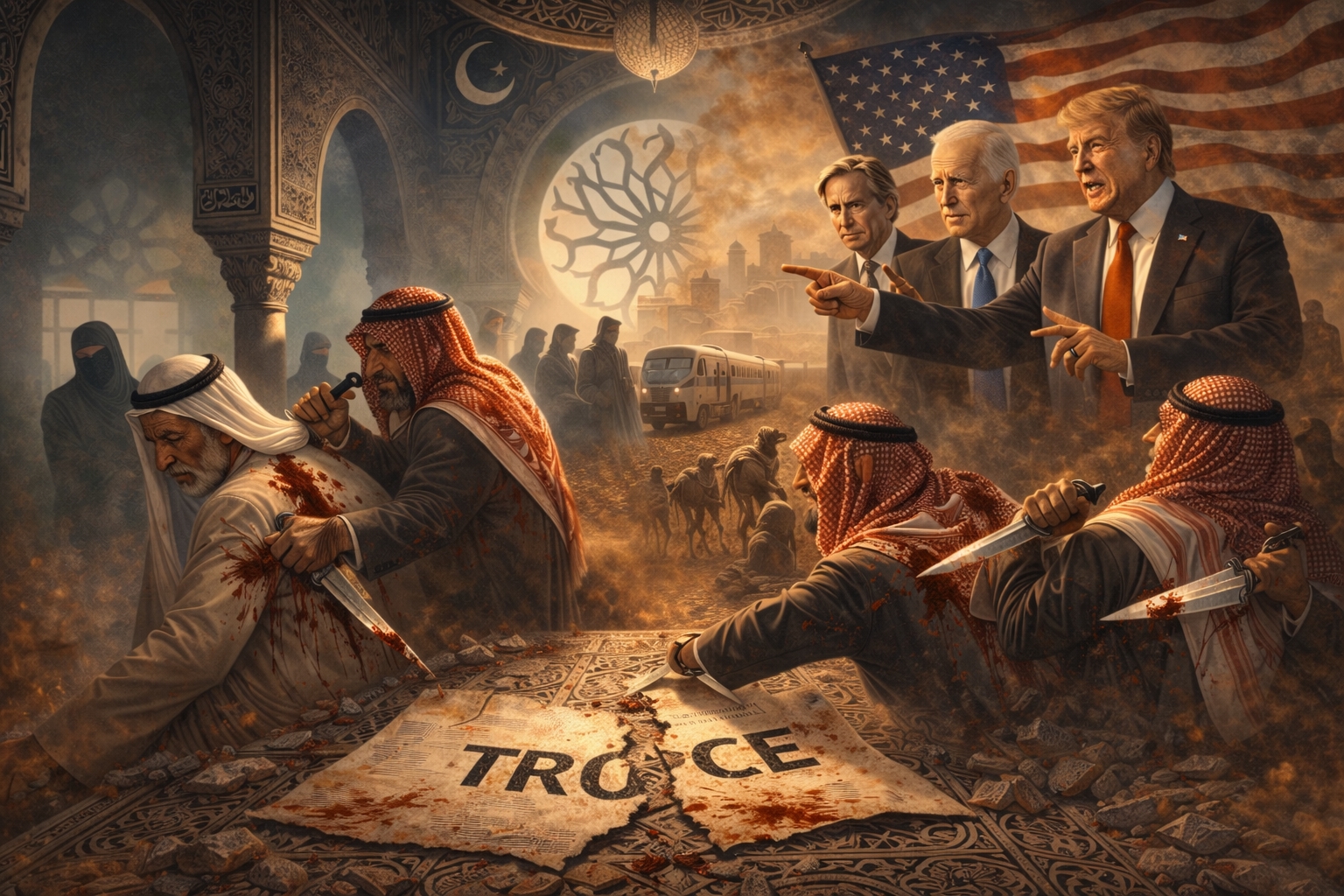
Like children fighting over toys, Saudi and Qatari rulers are involved in infantile squabbles much to the annoyance of their US-Nato masters...