 Archives
Multimedia
Donate
About
Sign In
Archives
Multimedia
Donate
About
Sign In


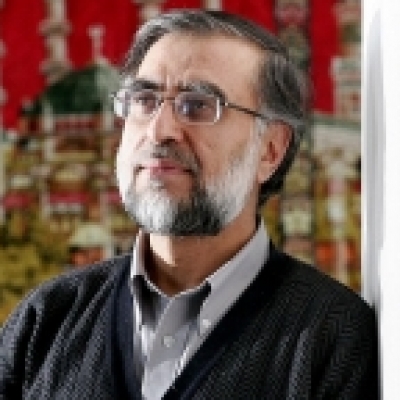 Zafar Bangash


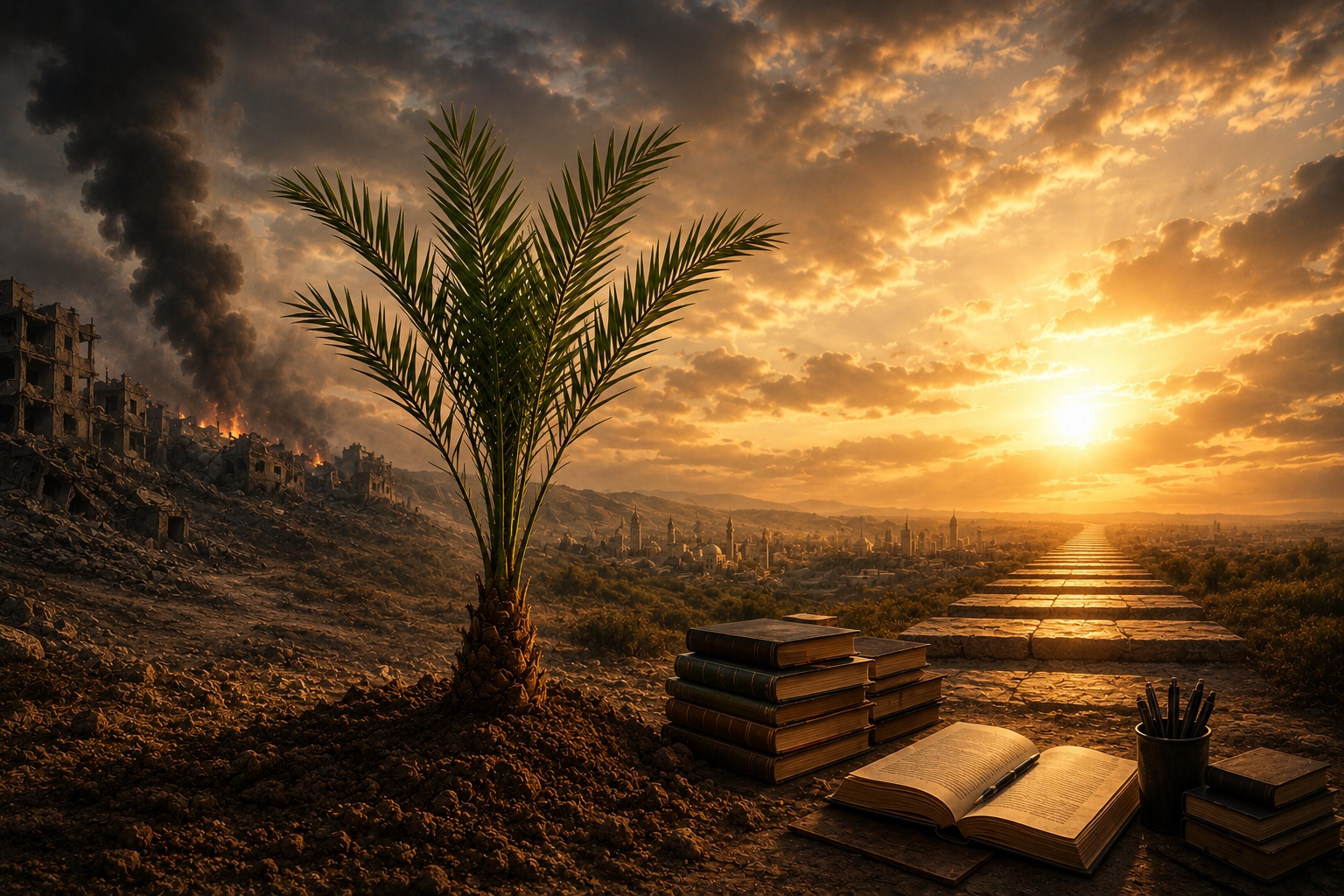
There is a Prophetic hadith that Dr. Kalim Siddiqui was fond of quoting: if you are involved in planting a date palm tree and you see that the world is about to end, do not stop— complete the planting.
It is a hadith that arrests the mind precisely because it defies the logic of utility that governs so much of what passes for Islamic activism today. Its meaning is not about planting trees. It is about the obligation to act rightly and fully, regardless of outcome, regardless of circumstance, regardless of the time remaining. It is the hadith of civilizational commitment.
Dr. Kalim lived this principle not as rhetoric but as biography. He suffered his first heart attack in February 1974, during the early years of the Muslim Institute’s existence, and spent the remaining two decades of his life in steadily deteriorating cardiac health—yet he continued to write, to lecture, to organize, to travel, and to think at a pace that would exhaust men half his age.
Even as his health was failing in the final months of his life, he was simultaneously preparing Stages of Islamic Revolution for publication and planning his next project: a new approach to the study of the Seerah. He died on April 18, 1996, in Pretoria, South Africa, having just made wudu for Maghrib prayers. He was, to the very end, planting the tree.
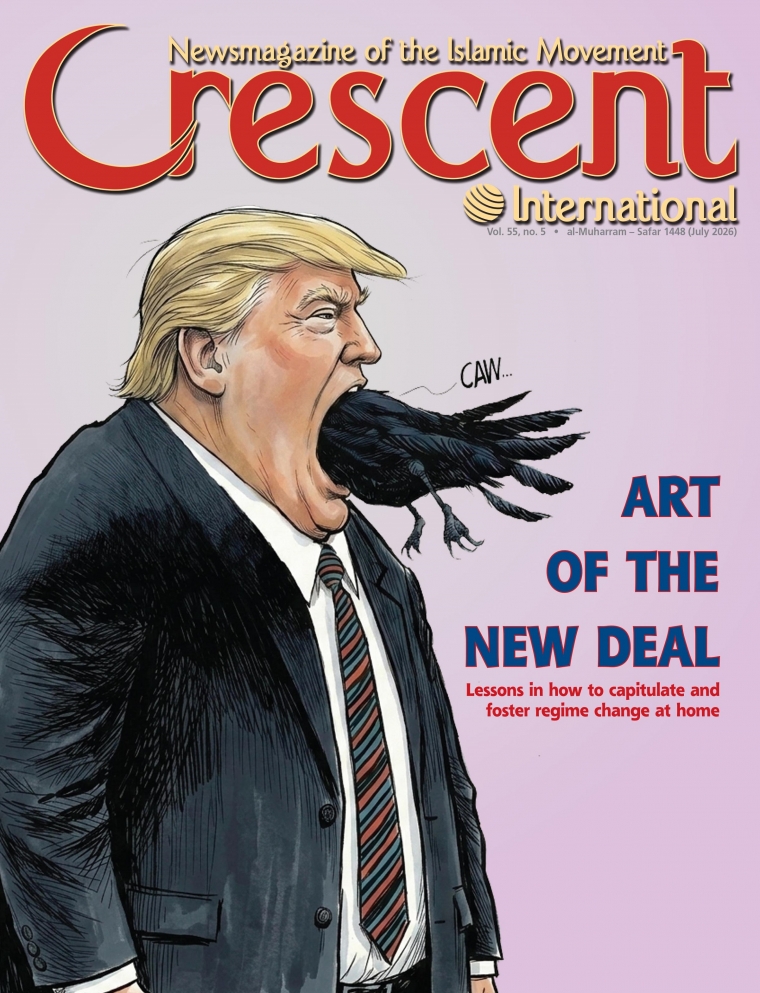
It is now 30 years since his death. The ideas he propounded as early as the 1970s are not only still relevant but also necessary to extricate the Muslim world from its present predicament. Two institutions he either founded or decisively shaped—Crescent International and the Institute of Contemporary Islamic Thought (ICIT)—continue to carry the intellectual and organizational weight of his vision.
Understanding what they are, what they have attempted, and why they matter requires returning to the foundations: to Dr. Kalim’s analysis, his methodology, and the civilizational horizon he kept in view even as the world burned.
Diagnosis That History Has Confirmed
Dr. Kalim Siddiqui was born in British India in 1931, migrated to Pakistan in 1948 and then went to Britain in 1954, where he studied journalism and earned a PhD in International Relations. But the defining act of his intellectual life was the founding of the Muslim Institute in London in 1973 and the publication of its Draft Prospectus—a document that reads today not as a historical artifact but as an accurate map of the present.
He wrote that not a single Muslim country was truly independent. What was called “independence” was merely the handing over of power by the colonial masters to their Muslim agents: in Lord McCaulay’s words, “perfect Brown Englishmen”.
Dr. Kalim insisted that the imposed systems in Muslim societies were totally alien and had to be uprooted and replaced by systems rooted in the values of Islam. He further rejected the nation-state structure, as well as the political party approach, identifying both as western-imposed constructs that had produced not liberation but further fragmentation of Muslim societies.
These were not arguments fashionable among Muslim intellectuals at the time. They were, in fact, deeply unwelcome—to the ruling elites of Muslim-majority states, to the western-educated Muslim intelligentsia who had bought into the notion of secular modernity, and to the imperial powers whose entire strategy in the postcolonial Muslim world depended on precisely the structures Dr. Kalim identified as instruments of subjugation.
What he proposed in their place was neither romantic nor simple. The Draft Prospectus of the Muslim Institute set out that its primary task was to draw up detailed conceptual maps and operational plans for a Muslim civilization of the future—integrating the considerable storehouse of knowledge developed by great Muslim civilizations of the past with the work of contemporary Muslim scholars across all fields of human endeavor.
This was a project of civilizational scope, not of party politics. Its horizon was not the next election cycle or the next coup. It was the reconstruction of Muslim thought from its epistemological foundations upward.
In the foreword to the third volume of the annual anthology, Issues in the Islamic Movment: 1982-1983, Dr Kalim wrote: “Ideas make history. The religion of secularism, however, is based on the opposite proposition—that history makes ideas. The root of all struggle in the world today is between these two propositions and their adherents.”
Islamic Iran’s victory over the evil forces of imperialism and zionism in the 100-day war confirms what Dr Kalim had stated more than 40 years ago. This is now acknowledged—at least Iran’s victory—by many non-Muslims including most people in the US and zionist Israel as well.
In pursuit of his grand vision of a new emerging civilization of Islam, Dr. Siddiqui synthesized classical scholarship with modern analysis. He drew on medieval jurists and modern Islamic thinkers alike, and rejected narrow sectarian or party-political frameworks.
This combination of intellectualism and activism was rare, and Dr. Kalim envisioned his ideas as guiding not a faction but a movement—a movement for global Islamic change rooted in Qur’anic epistemology rather than in borrowed western ideological forms.
The Islamic Revolution in Iran
When the Islamic Revolution triumphed in Iran in early 1979, Dr. Kalim recognized its significance almost instinctively—not because he had been closely following Iranian affairs (he acknowledged Iran as a “blind spot” in his earlier works), but because the Revolution fitted precisely into the understanding of contemporary history he had already developed.
Here, at last, was the “model society in one geographical area” that the Draft Prospectus had anticipated: true, it was imperfect, embattled, and fragile, but real. The Islamic state was no longer a theoretical aspiration. It existed. The question became how to understand it, defend it, and learn from it—and how to extend the light of its example to the rest of the Muslim world.
This function was and is being performed by Crescent International that we will discuss in a separate article.


Dr Kalim Siddiqui was a towering figure in the eighties and nineties. He was far ahead of his time. The ideas he propounded as early as the ...
April 18, 2026 will mark 30 years since Dr Kalim Siddiqui passed away to join heavenly compamy. His life’s struggle, clarity of thought an...
Dr. Kalim Siddiqui rejected both quietism and reactionary militancy. Instead, he advocated a principled, Qur’an-centered struggle rooted i...
Stages of Islamic Revolution was the last book Dr Kalim Siddiqui published before his death a few days later. It is not about the Islamic Re...