 Archives
Multimedia
Donate
About
Sign In
Archives
Multimedia
Donate
About
Sign In


 Muslim Mahmood


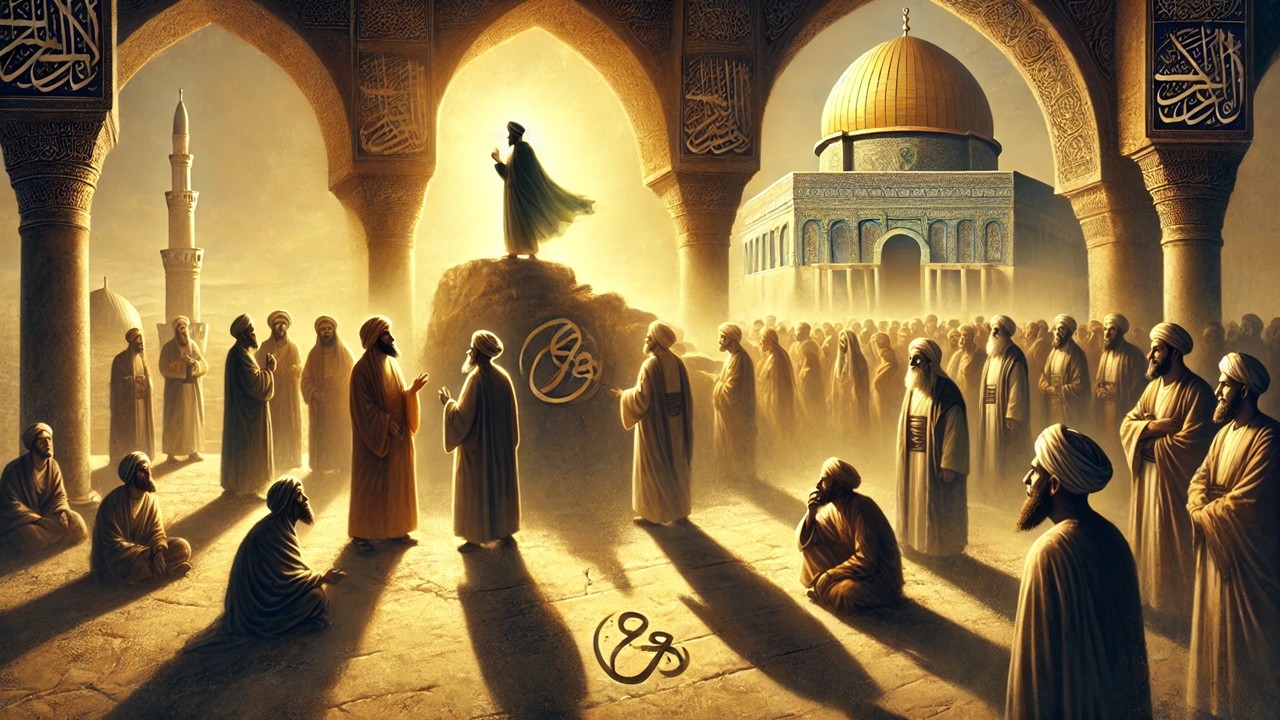
Likewise, O social human] you shall move through life — stage by stage.
- The Ascendant Qur’an: al-Inshiqaq (84:19)
Dr. Kalim Siddiqui (September 15, 1931 – April 18, 1996) was a British-Pakistani Islamic scholar and activist. Born in British India, he migrated to Karachi in 1948 and later to the UK (1954) where he studied journalism and earned a PhD in International Relations. He worked as a journalist (The Kensington News, The Guardian) and taught internationally before founding the Muslim Institute in London (1973) and later establishing the Muslim Parliament of Great Britain.
Dr. Siddiqui authored numerous works—among them Beyond the Muslim Nation-states (1977) and Stages of the Islamic Revolution (1996)—which argued for Islamic unity beyond colonial nation-states and for a “global Islamic movement.”
His thought blended rigorous scholarship with activism: he drew on Qur’anic principles and the Prophet’s example to critique colonial legacies and secular politics, urging Muslims to develop a unified Islamic worldview rather than fragmented party politics. World events profoundly shaped him: he was galvanized by Pakistan’s founding-era Muslim League symbolism and by post-colonial crises (Bangladesh, Iran’s Islamic Revolution, Bosnia) to champion a global Islamic movement dedicated to social and political renewal.
His life combined “intellectualism and activism” in rare measure, and his legacy endures through the institutions and ideas he left behind.
Biography and Career Milestones
Dr. Siddiqui was born in British India on September 15, 1931. In 1948, shortly after Partition, his family moved to Karachi, Pakistan. In 1954 he came to Britain to study journalism. While in London he joined the Khilafat movement circle and began a journalism career. He worked first at the Kensington News and later at The Guardian (as sub-editor), showing early flair for writing and editing. Concurrently he pursued formal education: completing O‑Levels and A-Levels before joining University College London to earn a PhD in International Relations.
In the late 1960s, Dr Siddiqui returned briefly to Pakistan as a foreign correspondent, covering regional affairs. Back in Britain, he focused on institution-building. In 1973 he founded the Muslim Institute (London) to promote Islamic research and planning. At the Institute, he held courses in Islamic history and global affairs.
Following protests arising from the Rushdie affair, he established the Muslim Parliament of Great Britain (MPGB) in 1992 as a community organization. Under his leadership the Muslim Parliament created projects such as a registered Islamic welfare fund (Bait al-Mal al-Islami) and the Halal Food Authority, reflecting his emphasis on practical institutions.
Dr. Siddiqui also championed international Muslim causes (for example, he mobilized Muslim support for Bosnia’s Muslims during the Serbs’ war of the 1990s). He remained Director of the Muslim Institute and Leader of the Muslim Parliament until his death.
Dr. Siddiqui died suddenly in Pretoria, South Africa on April 18, 1996. He was attending a conference he had helped organize when he passed away. Colleagues note that “no understanding of [the era] is possible without reference to him” because he “lived [the period], studied it, analysed it, understood it, explained it, and at the same time contributed to its shaping”. By all accounts, he was a methodical and prolific scholar-activist whose ideas continue to influence Muslim intellectual and political circles.
Intellectual Themes and Major Works
Dr. Siddiqui’s intellectual legacy is marked by comprehensive Islamic scholarship aimed at practical change. He sought to analyze contemporary crises through classical Islamic concepts (the Qur’an, Hadith, Seerah and historical examples) and to apply them to modern socio-political challenges. His writings are highly analytical and panoramic, combining rigorous research with clear advocacy.
For example, he often invoked the Prophetic model (seerah) as a universal paradigm. In Stages of the Islamic Revolution he warned that Islam’s tradition “cannot be allowed to become a prisoner of history” – meaning Muslims should actively emulate the Prophet’s example in new contexts. He frequently used Qur’anic injunctions and Prophetic example (seerah) to justify activism; e.g. he is known to quote the hadith “whoever of you sees an evil, let him change it with his hand” to encourage Muslims to oppose injustice (as he does in his foreword to Stages of the Islamic Revolution).
Dr. Siddiqui’s methodology was to synthesize classical scholarship with modern analysis. He drew on medieval jurists (citing, for instance, Al‑Mawardi on Caliphate in Stages) and modern Islamic thinkers (e.g. Jalal al-Ahmad’s critique of western influence). He rejected narrow sectarian or party-political frameworks.
In line with this, he rejected the western-style party system as divisive. Zafar Bangash notes that Dr. Siddiqui “rejected the political parties approach as divisive and inimical to the ethos of Islam,” insisting instead on unity of purpose. He called on Muslim scholars (“social scientists”) to develop a new political theory rooted in Islamic tradition, rather than borrowing western models.
In practice, Dr. Siddiqui’s rhetoric was scholarly yet stirring: his colleagues recall that he spoke with authority, always framing contemporary issues in Islamic terms and citing the Qur’an/Hadith to support his points. According to colleagues, “this combination of intellectualism and activism” was rare, and indeed he envisioned his ideas as guiding the community and movement for global Islamic change.
Motivations for Championing a Global Islamic Movement
Several intertwined factors inspired Dr. Siddiqui’s global vision. Personal and historical context played a major role: born just before Partition, he was imbued with Muslim League ideals. He was influenced by “the Islamic symbolism the Muslim League used to mobilize the Muslim masses” – viewing the Prophet’s example as a template for political action. Experiencing two partitions (British India and later Pakistan’s 1971 split), he became convinced that mere nationalism could not fulfill Muslim aspirations.
As Zafar Bangash writes, Dr. Siddiqui recognized that the Muslim world “needed to break loose from the stifling legacy of colonialism”. This anti-colonial outlook was reinforced by early global events: for instance, Dr. Siddiqui met and engaged with Iranian students in London in the late 1970s, acknowledging that Iran had long been “a blind spot” for Sunni Muslims. He was deeply affected by the 1979 Islamic Revolution, which seemed to confirm the possibility of Islamic revival beyond traditional Sunni circles.
In fact, Bangash notes that Dr. Siddiqui “hypothesized the existence, role and structure of an Islamic movement” dedicated to a new world order well before 1979 – demonstrating how intellectual insight drove his activism even ahead of events.
Key intellectual influences also shaped him. Dr. Siddiqui consistently referenced the Qur’an and Hadith as guiding texts. He urged Muslims to follow the prophetic principle (promoting justice and commanding good) rather than adopt western secular systems. Classical scholarship informed his ideas: for example, in Stages of the Islamic Revolution he engages scholars like al-Mawardi (11th-century jurist) and modern thinkers like Jalal al-Ahmad. These references show he merged traditional Islamic theory with contemporary anti-imperialist thought.
Several specific events and texts deeply motivated Dr. Siddiqui. In 1973, he attended an international Islamic Youth Conference in Libya (called by Col. Qaddafi). Disappionted by the shallow thinking of Qaddafi’s ‘third international theory’, he wrote a book, Towards a New Destiny, refuting its arguments.
Throughout the 1980s and 90s, he followed Muslim struggles globally: the Afghan jihad against the USSR and, later, the Bosnian war. Each confirmed his belief that local struggles were linked to a broader Ummah. To him, events like the Rushdie affair (UK 1989) and the plight of Palestinians signaled that western powers opposed a resurgent Islam; Dr. Siddiqui interpreted these crises as calls to unite Muslims transnationally.
Ideologically, Dr. Siddiqui positioned himself as an Islamic-globalist. He did not align with any one sect or party but insisted on the primacy of Islam itself as the organizing principle for a unified community. As he put it, Muslims must have a common worldview: “all parts of the Ummah and all schools of thought…are part of a single endeavour”.
Thus, his championing of the Global Islamic Movement sprang from both conviction (Scriptural and historical awareness) and witnessing world conditions. His writings frequently cite Quranic verses (e.g. on Muslim brotherhood) and Prophetic precedents to justify this stance. In sum, Dr. Siddiqui’s leadership of the Global Islamic Movement was driven by the fusion of personal history, scholarly study, and real-world events: he saw an urgent need to mobilize the Muslim world in unity and devoted his life to laying both the intellectual and institutional foundations for that cause.
Sources: All information is drawn from the provided documents on Dr. Kalim Siddiqui (Bangash 1996; Creating a New Civilization of Islam booklet 1996; Stages of the Islamic Revolution 1996) as cited above. Each claim is supported by those primary sources.


Dr Kalim Siddiqui was a towering figure in the eighties and nineties. He was far ahead of his time. The ideas he propounded as early as the ...
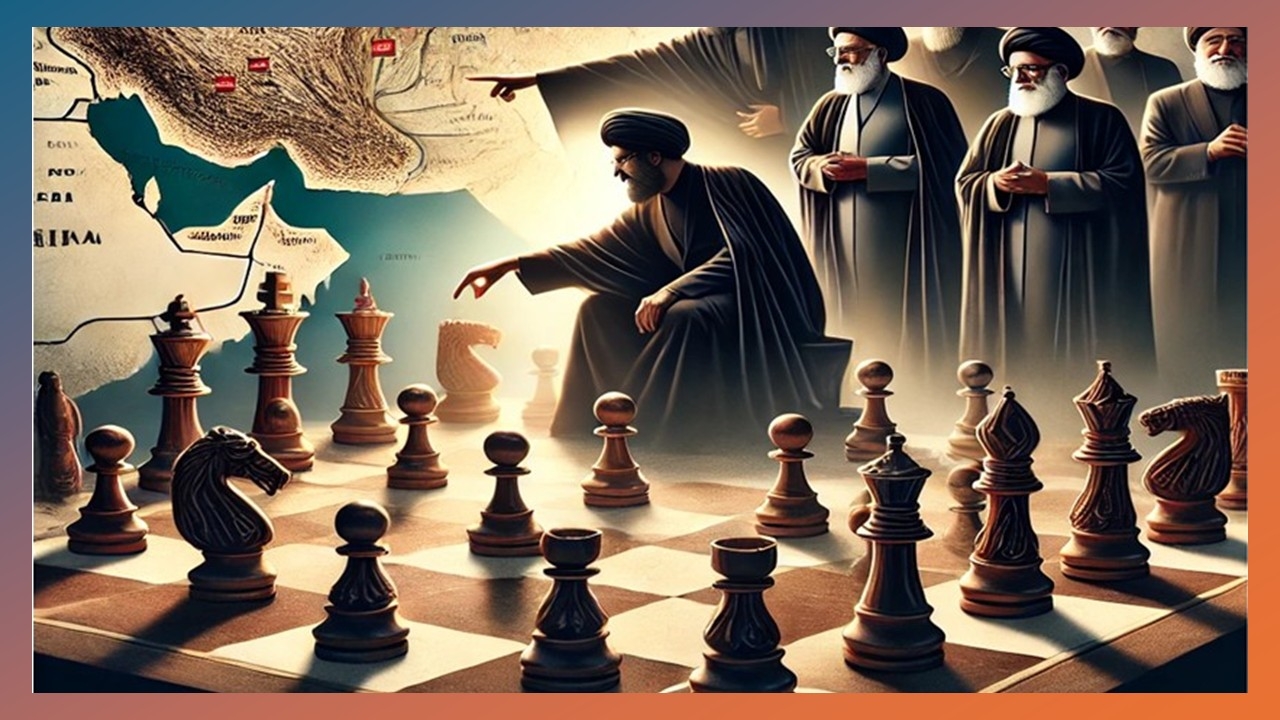
Dr. Kalim Siddiqui rejected both quietism and reactionary militancy. Instead, he advocated a principled, Qur’an-centered struggle rooted i...

Dr Kalim Siddiqui was an intellectual and activist. He articulated a vision for Muslim societies 50 years ago that still resonates powerfull...
Stages of Islamic Revolution was the last book Dr Kalim Siddiqui published before his death a few days later. It is not about the Islamic Re...