 Archives
Multimedia
Donate
About
Sign In
Archives
Multimedia
Donate
About
Sign In


 Mohamed Ousman


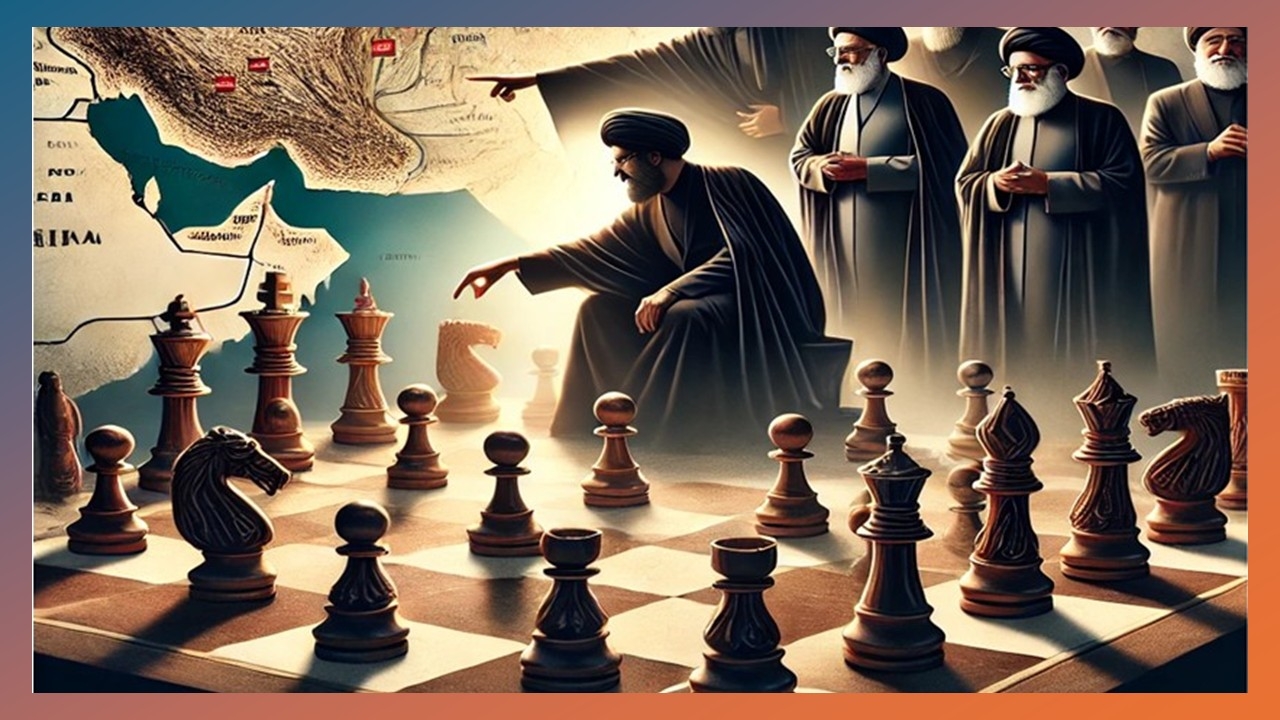
The late Dr. Kalim Siddiqui offered one of the most incisive frameworks for understanding modern Muslim political consciousness through what he termed the Islamic Movement. His thought rejected both quietism and reactionary militancy. Instead, he advocated a principled, Qur’an-centered struggle rooted in moral clarity, intellectual independence, and long-term civilizational renewal.
In an era marked by intensifying geopolitical tensions—particularly those involving the United States, Israel, and Islamic Iran—Dr. Siddiqui’s framework provides a lens through which to critically evaluate not only power dynamics but also the internal responses of Muslim societies.
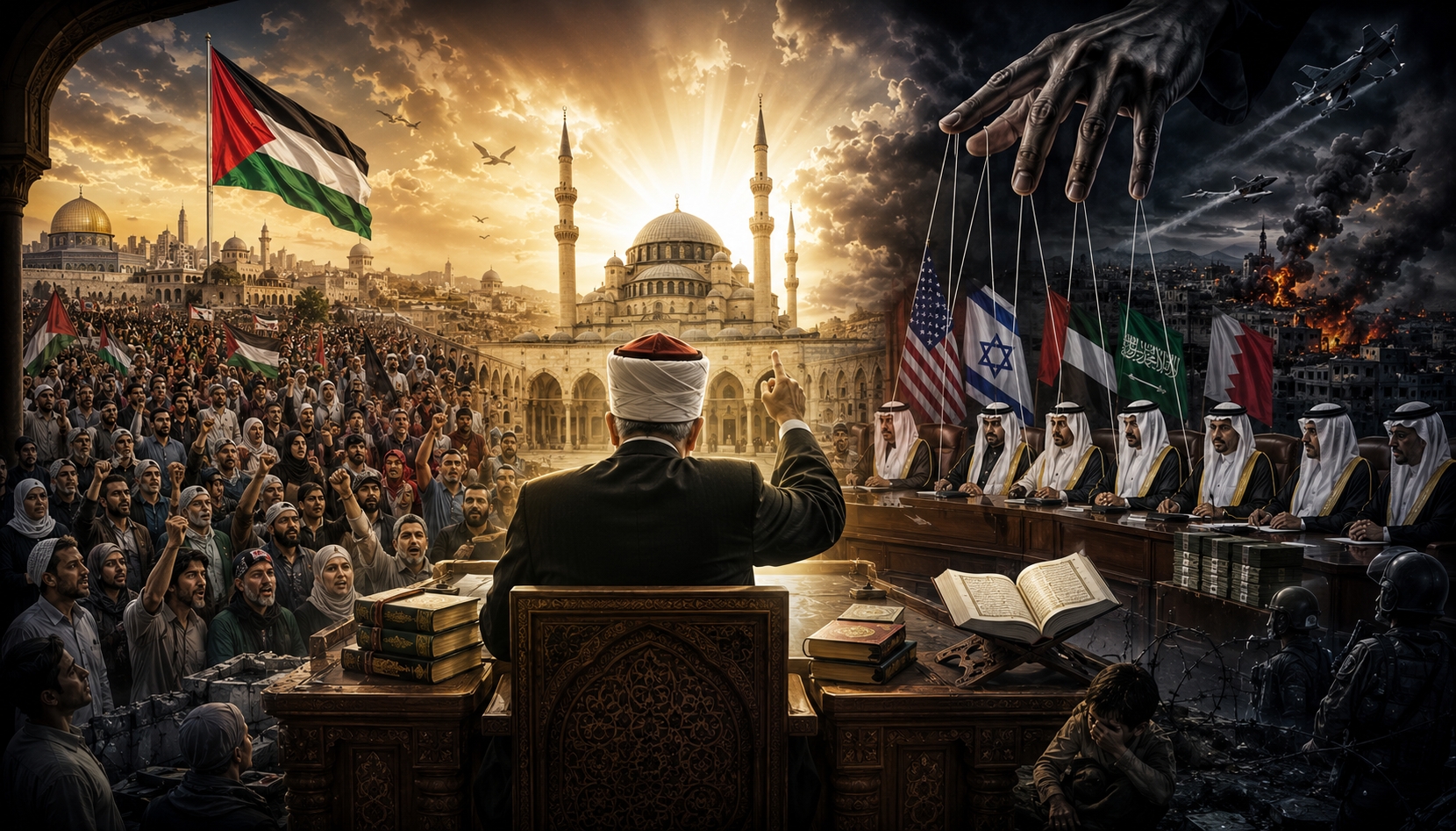
The assertion cited from Imam Al-Āsī (2008), describing an “Israeli octopus with global tentacles,” reflects a worldview in which political and economic influence is diffuse, embedded, and often obscured. Whether one agrees fully with this characterization or not, it points toward a broader concern central to Siddiqui’s thinking: the existence of interconnected global power structures that shape Muslim lands and destinies.
For Dr. Siddiqui, the problem was never simply reducible to a single nation-state or military presence. Rather, it was systemic, involving ideological dominance, economic dependency, and intellectual subordination.
The Islamic Movement as Method, Not Moment
Dr. Siddiqui’s Islamic Movement theory emphasizes process over event. He argued that meaningful transformation in Muslim societies cannot emerge from episodic reactions—whether protests, uprisings, or even wars—but must be rooted in sustained intellectual and moral work. This perspective is crucial when analyzing contemporary geopolitical tensions such as potential or perceived conflicts involving the United States, Israel, and Islamic Iran.
Much discourse surrounding these tensions is framed in apocalyptic or “end times” language, often invoking eschatological traditions to interpret current events. Dr. Siddiqui would have strongly cautioned against this tendency. For him, reducing complex geopolitical realities to signs of imminent cosmic conclusion undermines agency and responsibility. It risks fostering fatalism rather than strategic clarity.
Refuting End-Times Determinism
The invocation of end-times narratives in political analysis often leads to a form of determinism: the belief that events are preordained and, therefore, beyond meaningful human intervention. This stands in tension with a well-known hadith of the Prophet Muhammad (ﷺ): if the Day of Judgment arrives while one is planting a date-palm tree, one should continue planting it.
This hadith is profoundly anti-apocalyptic in its practical implications. It rejects paralysis. It affirms continuity of ethical action even in the face of existential finality. Dr. Siddiqui’s Islamic Movement aligns closely with this ethos. His framework insists that Muslims must act as agents of history, not spectators awaiting its end.
In this light, interpreting geopolitical tensions—such as US-Israeli hostility toward Islamic Iran—as definitive signs of the end times is not only analytically weak but spiritually counterproductive. It shifts focus away from structural analysis and strategic response toward speculative theology.
Geopolitical Realities: Power, Perception and Narrative
From a geopolitical standpoint, tensions involving Islamic Iran, the US, and Israel must be understood within a matrix of interests: regional dominance, nuclear capability, energy security, and ideological rivalry. Islamic Iran represents a unique case in the Muslim world—a state that has maintained a degree of political independence from western hegemony while simultaneously projecting influence across the Muslim world.
For the US, Islamic Iran challenges its longstanding architecture of alliances and control in the region. For Israel, Islamic Iran is perceived as an existential threat, particularly due to its support for non-state actors and its nuclear ambitions. These dynamics are not reducible to religious prophecy; they are grounded in strategic calculations.
Dr. Siddiqui’s framework would urge Muslims to analyze these realities without romanticism or simplification. He would likely critique both uncritical support for state actors and passive acceptance of external narratives. The Islamic Movement, in his view, must maintain intellectual autonomy—refusing to be co-opted by either western geopolitical agendas or reactionary internal discourses.
The Danger of Conspiratorial Reductionism
While Imam Asi’s metaphor of an “octopus” highlights historical and contemporary hidden networks of influence, Dr. Siddiqui warned against simplistic conspiracy thinking. He acknowledged the existence of global power structures but insisted that Muslim weakness cannot be explained solely by external manipulation. Internal decay—intellectual stagnation, political fragmentation, and moral inconsistency—plays a decisive role.
Thus, analyzing US-Israel–Islamic Iran hostility through Dr. Siddiqui’s lens requires a dual focus: recognizing external pressures while confronting internal deficiencies. The Islamic Movement is not merely oppositional; it is reconstructive. It seeks to rebuild Muslim societies from within, enabling them to engage the world from a position of strength and integrity.
Continuity Over Catastrophe
The hadith about planting a date-palm tree serves as a powerful corrective to apocalyptic thinking. It emphasizes continuity of effort, regardless of perceived imminence of crisis. Dr. Siddiqui’s theory similarly prioritizes long-term institution-building over short-term reactions.
In geopolitical terms, this means that even in the face of escalating tensions or potential conflict, Muslim societies while supporting the effort on the frontlines must simultaneously continue investing in education, governance, economic development, and intellectual production. These are not secondary concerns; they are the foundation of meaningful resistance.
Islamic Iran as Case Study: Between Resistance and Statehood
Islamic Iran occupies a complex position within Dr. Siddiqui’s framework. On the one hand, it represents a form of resistance to western dominance that he might have found noteworthy. On the other, it is subject to the same limitations and contradictions that affect all modern nation-states.
Dr. Siddiqui rejected nationalism as a primary organizing principle, viewing it as a colonial imposition that fragmented the Muslim ummah. Thus, while Iran’s geopolitical stance may challenge certain power structures, its tainting with nationalism risks not necessarily embodying the Islamic Movement in its pure form.
Analyzing potential conflict involving Islamic Iran therefore requires nuance. It is a binary struggle between Islam/good and Kufr/evil, not a fulfillment of prophecy. This contest is shaped by interests, alliances, and perceptions.
Intellectual Independence as Resistance
One of Dr. Siddiqui’s most enduring contributions is his emphasis on intellectual independence. He argued that Muslim intellectual output must be liberated from both western frameworks and stagnation born out of traditional blind imitation/following. This is particularly relevant in the context of media narratives surrounding geopolitical conflicts.
Global discourse on Islamic Iran, Israel, and the US is heavily mediated by dominant media structures. Dr. Siddiqui would urge Muslims to critically engage these narratives, neither accepting them uncritically nor rejecting them reflexively. The Islamic Movement must produce its own analysis, grounded in Qur’anic principles and empirical reality.
Toward a Post-Apocalyptic Consciousness
Ultimately, Dr. Siddiqui’s vision calls for a post-apocalyptic consciousness—one that refuses to interpret every crisis as a terminal development. This does not mean ignoring eschatological teachings, but rather contextualizing them within a broader framework of responsibilities and actions.
The Qur’an, as Imam Āsī suggests, provides guidance that unveils hidden dynamics. But this unveiling is not meant to induce fear or fatalism; it is meant to empower action. Dr. Siddiqui’s Islamic Movement embodies this ethos, translating revelation into strategy.
Tribute and Legacy
Dr. Kalim Siddiqui’s legacy lies not in a single text or institution, but in a method of reflection and action. He challenged Muslims to move beyond reactive politics and toward proactive transformation. In a world increasingly defined by uncertainty and conflict, his insights remain profoundly relevant.
By rejecting both conspiratorial reductionism and apocalyptic determinism, Dr. Siddiqui offers a balanced framework for understanding geopolitics. His emphasis on continuity, intellectual independence, and moral clarity provides a path forward for those seeking to navigate complex global realities without losing sight of principled action.
The tensions involving the US, Israel, and Iran are significant, but they are not the end of history. Interpreting them through an end-times lens risks undermining the very agency needed to respond effectively. The hadith of the date-palm tree reminds us that even in the shadow of the final hour, defining action must continue.
Dr. Siddiqui’s Islamic Movement theory reinforces this message. It calls for sustained effort, critical thinking, and moral commitment. In doing so, it transforms geopolitics from a spectacle of power into a field of responsibilities.


Dr Kalim Siddiqui was a towering figure in the eighties and nineties. He was far ahead of his time. The ideas he propounded as early as the ...
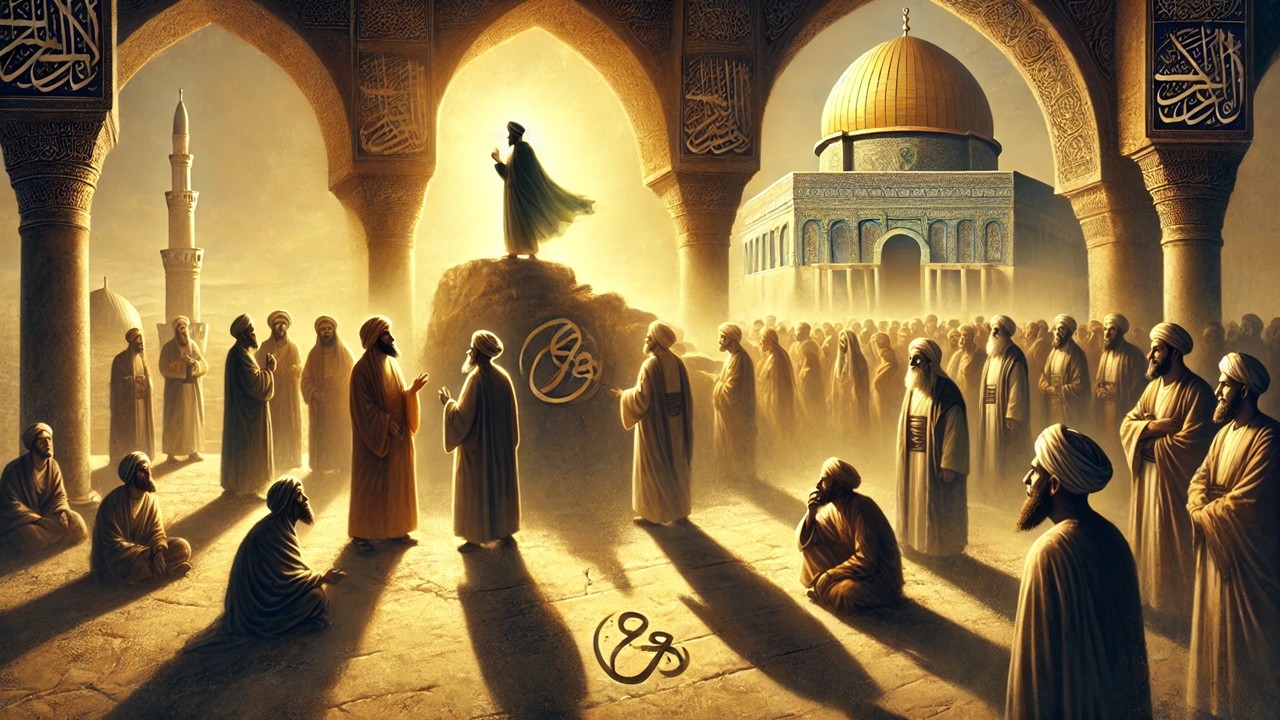
April 18, 2026 will mark 30 years since Dr Kalim Siddiqui passed away to join heavenly compamy. His life’s struggle, clarity of thought an...

Dr Kalim Siddiqui was an intellectual and activist. He articulated a vision for Muslim societies 50 years ago that still resonates powerfull...
Stages of Islamic Revolution was the last book Dr Kalim Siddiqui published before his death a few days later. It is not about the Islamic Re...