 Archives
Multimedia
Donate
About
Sign In
Archives
Multimedia
Donate
About
Sign In



 Kevin Barrett


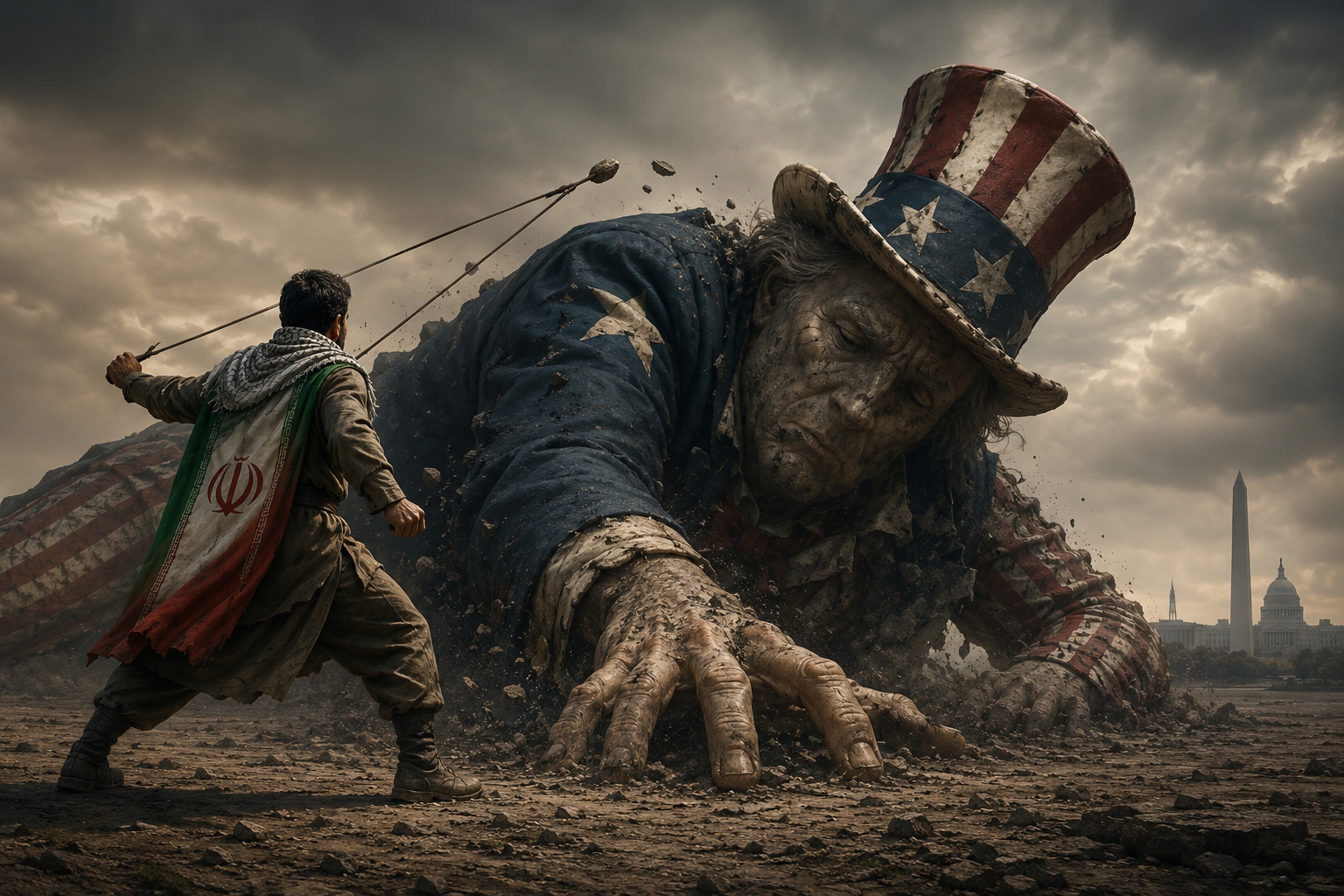
Most wars are in some sense wars of attrition. Both sides endure losses, get worn down, and reach the point that one of them loses the will and/or ability to keep fighting. The loser then accepts the winner’s terms. Alternately, both sides can grow exhausted and settle for less than victory.
Normally wars of attrition favor the side with greater power and resources. During World War II, for example, the Allies enjoyed a three-to-one advantage over the Axis powers in economic output and its key subcategory, munitions production.
Crucially, they controlled more than 90% of global oil supplies, while the Axis controlled only three percent. Under those circumstances, many historians argue, an Allied victory was nearly inevitable.
Today we are in the midst of a slow-burning World War III consisting of two (so far) sub-wars of attrition: The American Empire’s war on Russia through Ukraine, and its war on Iran. As in World War II, the American side enjoys seemingly insuperable advantages, including a $30 trillion to $2.5 trillion GDP advantage over Russia, and a $30 trillion to $0.5 trillion advantage over Iran.
The EU, still American vassals, offers another $20 trillion GDP at the service of the US. So in terms of nominal GDP the US-occupied west enjoys a nearly 20-to-1 advantage over Russia and a 100-to-1 advantage over Iran.
A naïve observer—and there are many of them in the west—might assume that the US will win World War III even faster and more easily than it won World War II.* But they would be wrong, for several reasons.
First, nominal GDP doesn’t reflect actual manufacturing power. China, the de facto ally of Russia and Iran, has far more manufacturing power than the US—perhaps more than the whole “collective west” combined. Second, the US has no clear strategy to maintain its empire, but flails counterproductively, nowhere more so than in its Israeli-instigated attack on Iran.
And finally and most importantly, Iran has leveraged its geographical and spiritual advantages and is threatening to expel the US from West Asia, despite its 100-to-1 underdog status in GDP and military spending. That expulsion will downgrade US domination of global energy resources, ultimately undoing Uncle Sam’s pretensions to global hegemony and empowering the multipolar coalition of Russia, China, and Iran.
How can a state outgunned 100-to-1 win a war of attrition? Iran is providing the answers, and they will be studied for centuries in future military academies.
The strategic lynchpin of Iran’s victory is its control over the Strait of Hormuz. About one fifth of global oil and gas, and one third of fertilizers, transit the strait. When the US and its Israeli masters attacked Iran on February 28, murdering leaders and schoolgirls alike, they provided Iran with a legitimate and urgent reason to assert control over the Strait and deny passage to adversaries.
Iran is currently attriting the US and its vassals, including the Europeans, Japanese, and South Koreans, by preventing them and their local collaborators from using the Strait. Traffic has plunged 95%, and Trump’s “blockade the blockade” self-owned has only worsened the crisis.
While Iranians, too, will suffer economic pain from the mutual war of attrition, they are in a position to outlast the US. Iranians, unlike Americans and Europeans, are used to being blockaded. They have the fortitude to endure hardships, and have developed workarounds.
What’s more, Iran doesn’t rely exclusively on the Strait of Hormuz. It borders 10 countries, including those reachable via the Caspian Sea, notably Russia. Iran has plenty of experience redirecting products to flow across those borders, often surreptitiously.
But how can Iran close the Strait when the more-powerful US wants it open? By developing asymmetric forces including tens of thousands of missiles, drones, and small speedboats, and hiding those forces deep underground, often under mountains, where the US cannot find or destroy them.
As of late May, American mainstream media have admitted that Iran still retains most of its pre-war missile and drone force, not to mention its speedboats, despite the huge US bombing campaign from February 28 through April 8. While Trump repeatedly made bombastic claims that he has “completely destroyed” or “virtually destroyed” Iran’s entire military, The New York Times reported on May 12 that more than 90% of Iran’s missile force remains intact. Other sources including Dr. Mohammad Marandi say that Iran has ramped up its manufacturing and currently has a bigger missile force than it did before the war.
Other Iranian military forces also remain strong; the New York Times cited a US military insider saying that Iran’s air defenses have actually improved since the war began. And even if all this were not the case, Iran only needs to send an occasional attack drone towards hostile shipping and the insurance companies will do the rest.
And if the US escalates again, Iran can encourage its Ansarallah allies to close the Bab al-Mendab gate to the Red Sea, effectively doubling the economic pain.
With its impregnable force of missiles, drones, and speedboats, Iran can not only close the Strait of Hormuz to hostile military and civilian craft, but also dominate the escalation ladder by threatening to destroy critical infrastructure in “Israel” and the US vassal Gulf states.
Whatever the US or Israelis hit in Iran, Tehran can hit its equivalent. This was demonstrated when, after Israel and the US bombed Iran’s South Pars gas field on March 18, Iran retaliated by striking US-occupied Qatar’s Ras Laffan Industrial City, the largest liquefied natural gas (LNG) export complex in the world, wiping out a quarter of Qatar’s gas export capacity. Trump, cowed, backed off and ordered “Israel” to stop striking Iranian energy sites.
The US and “Israel,” frustrated by their inability to de-fang the Iranian military lion, turned to attacking civilian targets, including schools, hospitals, apartment buildings, bridges, mosques, and even a synagogue, before finally giving up and accepting the uneasy ceasefire.
Iranians, outraged by these pointless massacres, and by the dastardly murder of their leaders under cover of negotiations, have been rallying every night in huge numbers in public squares, calling on their government and military to continue fighting until victory.
So neither Iran’s military power, nor its fighting spirit, has been attrited. On the contrary, the Islamic Republic is much stronger in late May than it was at the end of February when the war began.
Unlike Iran, the US and Israel are suffering massive attrition on both the logistical and psychological fronts. Logistically, the US has used up between half and three-quarters of its Patriot and THAAD interceptors, one third of its Tomahawk missiles, and one-third to half of its long-range stealth cruise missiles, Precision Strike Missiles (PrSM), ATACMS, and long-range stealth cruise missiles.
Most outrageously, the US used more than half of its entire THAAD inventory to defend “Israel”. That was far more firepower than Israel used to defend itself. It was also vastly more than the US used to defend its Arabian vassals.
If the US ever feels the need to go to war to protect its own strategic interests rather than the zionist entity’s, it had better not happen during the next several years, because the weapons inventories just aren’t there and can’t be quickly replaced. The overall cost of all of these wasted weapons has been estimated at around $2.5 billion, which is vastly more than what Iran spends on its more frugal and effective missile, drone, and speedboat force.
America’s will to fight has also been grossly attrited, whereas Iran’s has not. The war on Iran was never popular in the US. Trump’s advisors, American military leaders, many politicians, and the general public were never enthusiastic. But the situation is reaching critical levels. According to pollster Nate Silver:
“Immediately after the Iran War began, about 48 percent of Americans opposed the conflict…That was already unpopular relative to past wars, but things have only gotten worse. Nearly 60 percent of Americans oppose the war today. In fact, I had to extend the y-axis of our polling average upward to accommodate the increasing unpopularity of the conflict.”
Other polls are even worse for the Trump regime. According to Ipsos, “71% of Americans think their country should not be involved in the Iran war and this rises to 79% for those aged 18-34.”
And this cascade of unpopularity has happened before the supply chain disruption that is coming this summer, no matter what happens in the Strait of Hormuz. As the economic shocks intensify and reverberate, Americans’ unprecedented levels of antiwar sentiment, already off the charts, could contribute to revolt in the streets or within the military. At a minimum, it will lead to catastrophe for Trump’s Republican allies in the November elections, and potential impeachment proceedings.
The longer the war goes on, the more the American side suffers—or more accurately, reaches and exceeds its tolerance for suffering—as opposed to the Iranian side. Every additional day, week, and month of continued conflict, or even continued reductions in traffic through the Strait of Hormuz, squeezes the US more than it squeezes the Iranians.
Iran has shown the world how an underdog can wage a successful war of attrition against a far more powerful foe. And the key to Iran’s success is not just its prowess at strategizing and waging asymmetrical warfare, aided by geography. Its spiritual tradition, rooted in the Qur’an and Islamic history, requires and honors resistance against oppression (zulm) and aggression (‘udwan). In any war of attrition, the side with faith and righteousness enjoys an advantage over those who know, deep down inside, that they are fighting for an unjust cause. And the United States under the Trump regime has made itself a shameless exemplar of aggression and injustice, while Iran has taken care to ensure that its responses are defensive, rational, and proportionate.
Iranian communicators have effectively conveyed their dedication to “sacred defense,” as the @ExplosiveMedia Lego video makers call it, reaching out to the global public with far more effective messaging than their American counterparts. 80% of the global public now blames the war on the US and Israel, according to a recent Gallup poll. Despite the fact that American zionist Jews dominate global media, and outspend Iranian communicators by a huge margin, Iran has managed to more than hold its own in the battle for public opinion.
Iran has stunned the world by standing strong while exhausting the zionist-occupied USA’s military, economic, psychological, and spiritual resources. Tehran is writing a textbook on asymmetrical warfare, knocking a world hegemon off its perch, and setting a legendary example of resistance to injustice.
*In a sense Russia “won” World War II since it did most of the fighting, but the US emerged from the war as the world’s number one power.


If the US were to try and meddle with the Iran deal, it would end up as loser.

The very idea of US-Iran talks appears far-fetched given the extreme hostility Trump showed toward Tehran during his last term as president....

What direction the indirect talks between Iran and the US would take is difficult to predict. In the latest round on April 26, the US demand...
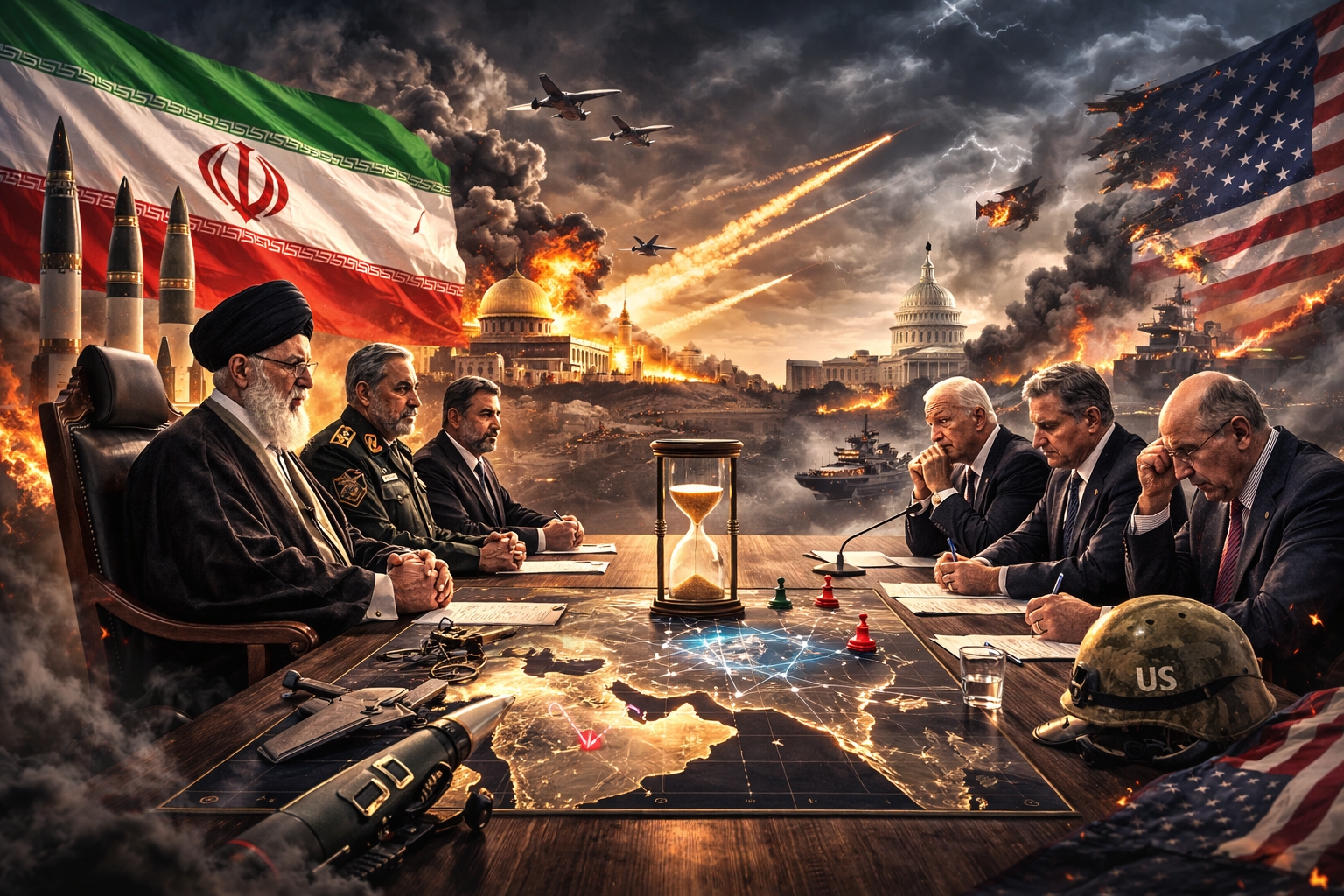
Many people ask, with good reason, why Islamic Iran continues to negotiate with the US when its record is upholding any agreement is appalli...