 Archives
Multimedia
Donate
About
Sign In
Archives
Multimedia
Donate
About
Sign In


 Tahir Mustafa


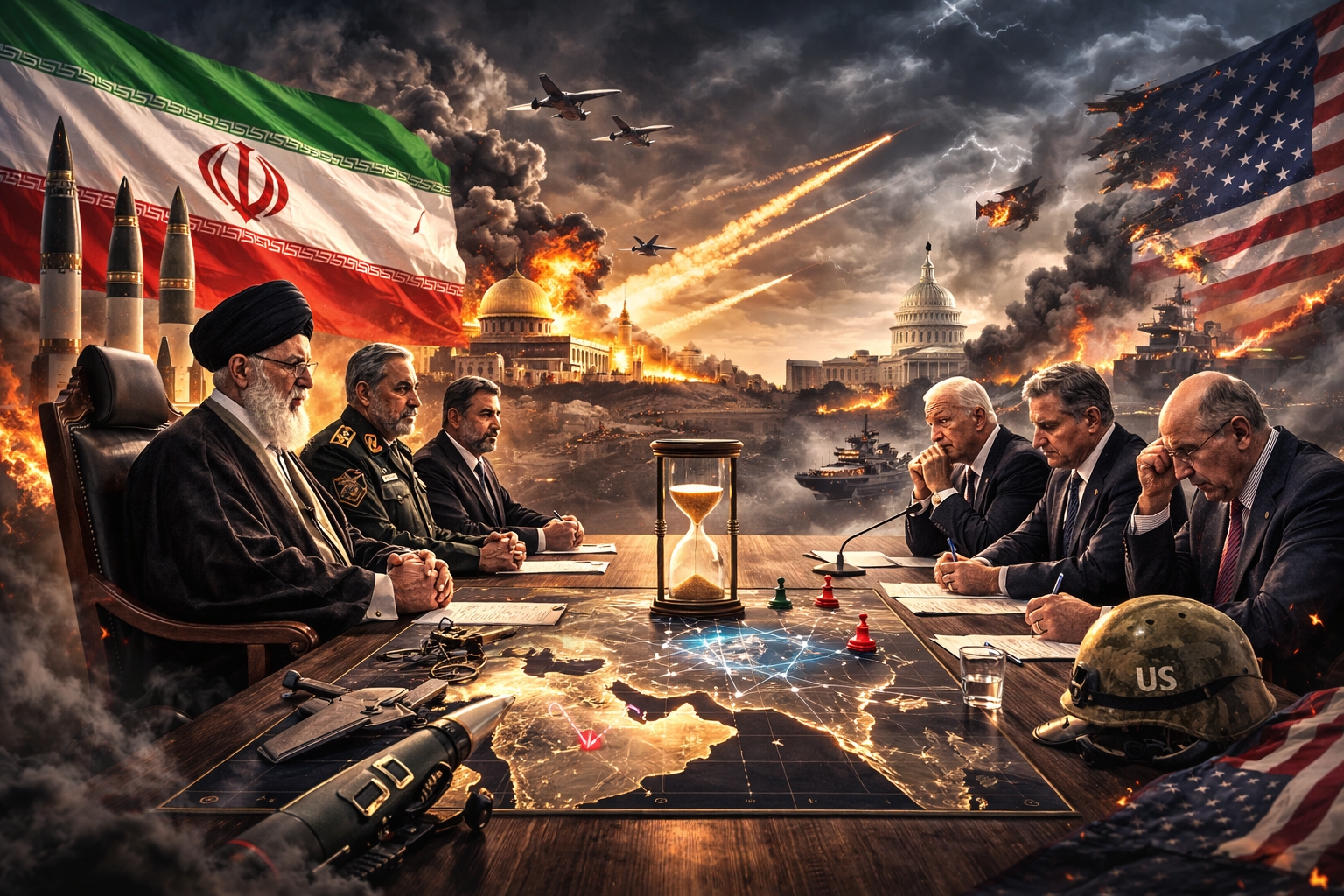
For more than four decades, hostility has defined relations between the Islamic Republic of Iran and the US. Sanctions, military threats, covert operations, and regional confrontation have shaped the landscape.
Yet, despite this entrenched antagonism, Iran continues to negotiate with Washington at critical junctures. To some observers, this appears contradictory. Why negotiate with an entity that openly seeks to constrain and weaken you?
The answer lies not in sentiment, but in strategy.
Iran’s engagement with the Washington regime should not be read as reconciliation or trust-building. Rather, it reflects a calculated geopolitical approach rooted in strategic realism, statecraft, and Islamic political wisdom. Negotiation, in this context, is not concession. It is a tool of power.
Strategic Intelligence and Calibration
In international politics, adversaries often speak precisely because they are adversaries. One of the oldest strategic maxims—“keep your friends close and your enemies closer”—reflects a hard truth: engagement can provide insight that isolation cannot.
For Tehran, negotiations serve as an instrument of strategic intelligence. Direct or indirect diplomatic contact allows Iran to gauge the mentality of American policymakers, observe internal divisions within the US political establishment, and assess shifts in strategic priorities. Through negotiation, Iran can identify red lines, evaluate the durability of commitments, and measure the coherence of American imperialism.
Negotiation exposes the mechanics of American oligarchic system. It reveals whether Washington seeks temporary tactical compromise or long-term structural pressure. It clarifies whether escalation rhetoric is domestic posturing or genuine preparation for confrontation.
Engagement, therefore, becomes a means of calibration. By entering negotiations from a position of deterrent strength — whether in missile capability, regional alliances, or strategic depth — Iran tests how far the US is able to go and how much they misunderstand Iran’s socio-political landscape.
History provides precedence. During the Cold War, the United States and the Soviet Union maintained constant diplomatic channels even at moments of peak hostility. Arms control agreements did not signify trust; they signified mutual recognition of power and limits. Talks were part of deterrence, not its opposite.
Similarly, Iran’s negotiation posture reflects the logic of realism: speak to your adversary not because you believe in their goodwill, but because you must understand their intentions and tactics.
Projection of Rational Statehood and Global Legitimacy
Negotiation is not only about information; it is also about narrative.
In the contemporary international system, perception often shapes power. States do not operate in isolation; they function within a global arena of public opinion, media framing, and diplomatic alignment. By remaining at the negotiating table, Iran projects itself as a rational and responsible state actor. It signals that it is willing to pursue political solutions rather than reckless escalation.
This matters, particularly within the Global South and the emerging multipolar order. Many states view unilateral sanctions and coercive pressure with skepticism.
When Iran engages diplomatically, it weakens attempts to portray it as irrational or inherently destabilizing. It shifts the burden of escalation onto Washington.
Diplomacy constrains opponents. If Iran consistently demonstrates willingness to negotiate while the United States withdraws or imposes additional conditions, the global narrative begins to shift. Escalation becomes politically costlier for Washington. The legitimacy of coercive measures erodes.
Legitimacy is not abstract. It affects trade relations, regional partnerships, and international cooperation. States calculate risk not only in military terms but also in reputational terms. A country perceived as reasonable retains more diplomatic maneuverability.
Moreover, negotiation itself signals strategic weight. The Trump regime, armed with nuclear weapons and dollar supremacy, does not negotiate with weak actors it can easily overpower. Washington did not negotiate extensively with Iraq in 2003; it invaded. The fact that the US is forced to engage with Islamic Iran diplomatically since 1979 reflects recognition of Iranian deterrent capability and regional influence.
If Iran were weak, negotiations would be unnecessary. The presence of diplomacy reveals deterrence and Iran’s regional power.
Islamic Political Tradition and the Prophetic Seerah
Beyond geopolitical realism, engagement with adversaries is deeply rooted in Islamic political tradition.
The Seerah of Prophet Muhammad (ﷺ) provides multiple examples of principled political contact with opponents. In Makkah, the Prophet engaged in dialogue with Quraysh leaders even as hostility intensified. He navigated alliances, negotiations, and tribal dynamics with strategic foresight.
The Treaty of Hudaybiyyah stands as perhaps the clearest illustration. At the time, some companions perceived the treaty’s terms as unfavorable. Yet, the agreement created breathing space, shifted the strategic environment, and ultimately facilitated the peaceful expansion of Islam. What appeared as concession became strategic breakthrough.
Hudaybiyyah was not weakness. It was calibrated patience grounded in confidence.
Similarly, the Prophet (ﷺ) sent diplomatic letters to the Persian and Byzantine rulers—global superpowers of their era. These engagements did not signify submission; they reflected power, recognition of political reality and the importance of strategic communication.
Islamic political wisdom (hikmah) and maslahah permit—and at times require— engagement with adversaries when it strengthens the Ummah’s long-term position and is done from a position of strength. Engagement is not capitulation; it is instrumentality.
This tradition rejects simplistic binaries. One may resist injustice while still engaging diplomatically if that engagement is part of the broader political, media, academic, military and economic resistance. One may negotiate without compromising principles.
The objective is preservation and advancement of strategic interests of the Muslim Ummah. Without Iran, there would be no regional resistance to the genocidal zionist regime in occupied Palestine.
Iran’s continued diplomatic contact with the US fits within this broader framework. It reflects an understanding that power is exercised not only on battlefields but also across negotiating tables.
Negotiation as an Instrument of Power
The assumption that negotiation equals weakness stems from a misunderstanding of power. True weakness avoids contact out of fear. Strategic strength engages selectively, confidently, and deliberately.
Iran’s deterrence posture—including missile capability, regional alliances, and domestic resilience under sanctions—provides the backdrop against which negotiations occur. Without such leverage, diplomacy would carry little weight.
Negotiations also preserve flexibility. They keep channels open in times of crisis, reduce miscalculation risks, and allow strategic pauses. Even when talks fail, they generate information and shape perception.
In an era of asymmetric confrontation and economic warfare, political engagement becomes another theater of struggle. The diplomatic arena is not separate from geopolitical competition; it is part of it.
The question, therefore, is not why Iran negotiates with the United States. The more appropriate question is how it negotiates—and from what position.
As long as engagement is grounded in deterrence, clarity of purpose, and principled statecraft, it represents not contradiction but coherence.
Diplomacy, in this context, functions as intelligence gathering, narrative shaping, and strategic signaling. It is neither surrender nor illusion. It is a calculated instrument within a broader struggle over power, legitimacy, and order.
In both modern geopolitics and Islamic political tradition, engagement with adversaries has always been part of strategic wisdom.
Negotiation is not the opposite of resistance. At times, it is one of its most sophisticated forms.


If the US were to try and meddle with the Iran deal, it would end up as loser.

The very idea of US-Iran talks appears far-fetched given the extreme hostility Trump showed toward Tehran during his last term as president....

What direction the indirect talks between Iran and the US would take is difficult to predict. In the latest round on April 26, the US demand...
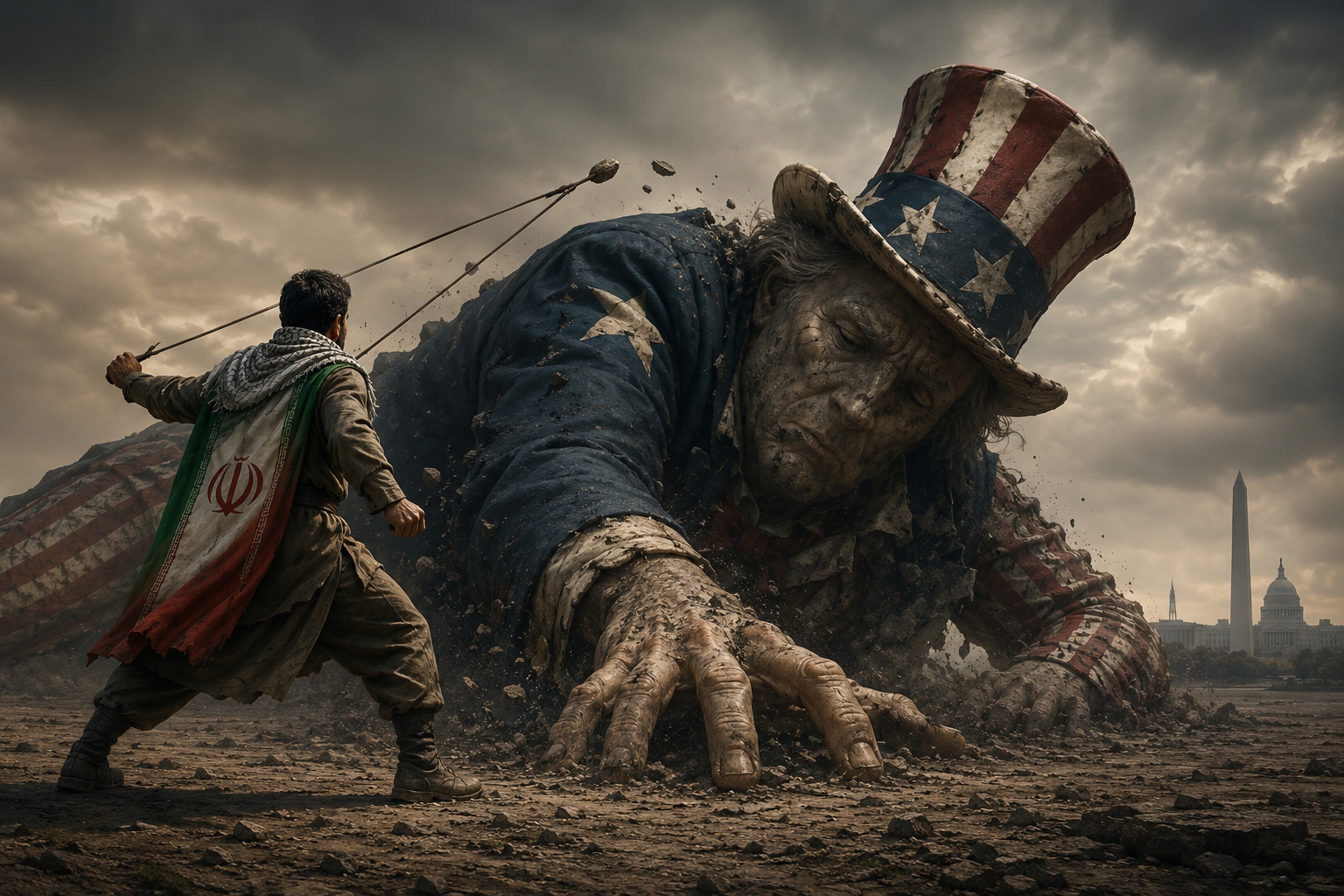
Islamic Iran has successfully leveraged geography by controlling the Strait of Hormuz and mobilized its masses on the basis of spiritual awa...