
 Archives
Multimedia
Donate
About
Sign In
Archives
Multimedia
Donate
About
Sign In



 Crescent International


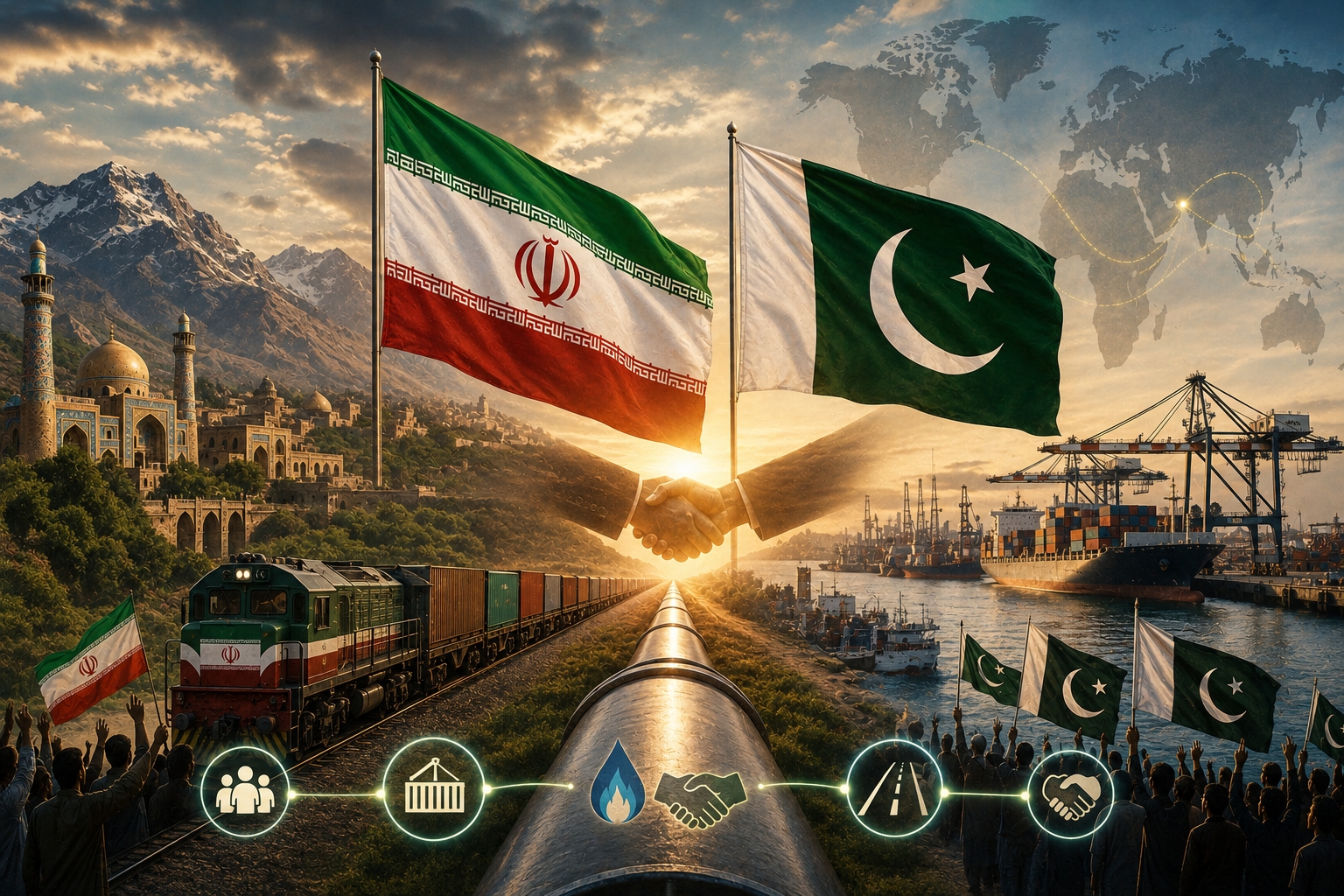
During Iranian President Masoud Pezeshkian’s one-day visit to Islamabad on June 23, there was much talk about “shared values” and an opportunity for the two sides to review the full spectrum of bilateral relations.
Officials of both countries vowed to explore avenues for “enhanced cooperation in trade, energy, border security, people-to-people exchanges and regional connectivity.”
Increasing trade to $30 billion annually from the current measly $3 billion was also mentioned.
It is a tall order.
The Iranian president and his delegation were warmly welcomed at the Nur Khan Airbase in Rawalpindi.
The two countries not only share a 900-km long border but also have deep cultural, historical and religious links.
How these are utilized by the two countries will determine the future trajectory of their relations.
For its part, Iran has always wanted close economic and trade ties with Pakistan.
President Pezeshkian also called for Muslim unity to confront their enemies and strong defence ties among Muslim countries.
This has been Iran’s policy with all its neighbours but regrettably, the Arabian potentates on the western shores of the Persian Gulf have failed to reciprocate Iran’s goodwill gestures.
Instead, they have aligned themselves with the zionist entity against the larger interests of the Ummah.
That and their reliance on the US has been shaken by Iran’s convincing defeat of the US and zionist Israel during the illegal war unleashed by the two criminal regimes in Washington and Tel Aviv.
Regarding Iran-Pakistan relations, a good starting point would be the revival of the gas pipeline project.
The two countries signed a deal in 2012 when Asif Ali Zardari was president.
This street urchin is again the president.
Pity the people of Pakistan!
Iran built its section of the pipeline up to the Pakistan border.
It even offered to provide a $2 billion loan to complete the Pakistani side.
What did the latter do?
Shahid Khaqan Abbasi was the Petroleum Minister at the time.
He went to Qatar to sign a deal for LNG at 30% higher than what Iran was offering.
There is speculation that he took a hefty bribe from the Qataris.
Whatever the truth about the bribe, the excuse Pakistan made at the time was that the US would impose sanctions on the country if it went ahead with the Iran gas pipeline project.
Did the Pakistanis not know this at the time they signed the deal?
It seems more likely that the deal with Iran was signed to get the Qataris to pay the bribe.
There is hope in Pakistan that with the lifting of US sanctions, including secondary sanctions, as outlined in the MoU, it would open up opprtunities for trade.
There is huge potential for it.
Pakistan would get access to Central Asian markets that it had previously hoped to get through Afghanistan.
The military’s ill-conceived hostile policy toward Afghanistan scuttled this hope.
That route is effectively closed unless the military changes its anti-Taliban attitude.
Unlike Afghanistan, Iran is a vast country with a poweful military and immense natural resources.
It recently demonstrated its military prowess by defeating two satanic powers simultaneously.
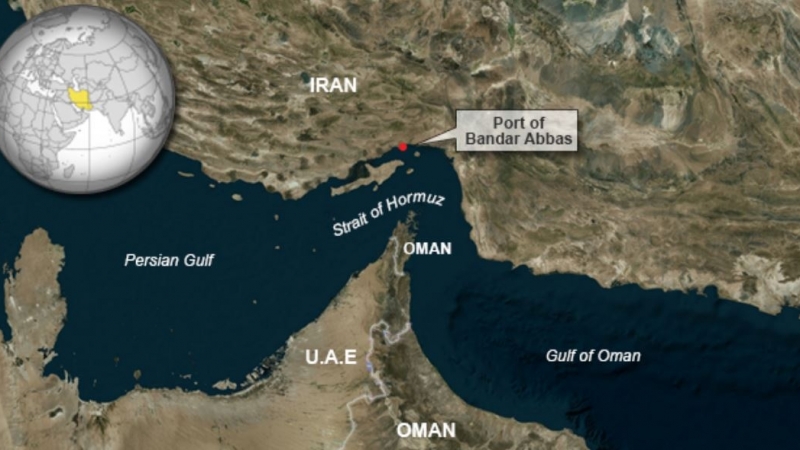
Further, Iran now effectively controls the Strait of Hormuz.
Will Pakistan’s rulers—civilian and military—demonstrate the requisite skills in dealing with Iran?
Pakistani officials lack the intellectual depth of the Iranians.
Almost every Iranian official holds a PhD.
Most Pakistanis barely have grade 12 education.
Regrettably, the Pakistanis are also prone to short-term transactional dealings.
Everyone merely looks for what’s in it for him personally.
During President Pezeshkian’s visit, the Pakistani hosts made several missteps.
When the visiting dignatory disembarked from the plane, Pakistani Prime Minister Shehbaz Sharif, dressed in suit and tie, was holding an umbrella.
To everyone’s horror, he only protected himself from the bristling sun, not his guest.
Instead of wearing the comfortable and elegant Pakistani dress—Shalwar Kameez—the Pakistanis, in typical pukka sahib style, wore suits and ties.
Are they unaware that Iranian officials never wear a tie?
It is seen as a symbol of slavery to the west.
With such lack of attention to detail, it is safe to say that Pakistanis will continue to make blunders and fail to take relations to the level that they deserve.
The fault will lie entirely with them even though the Iranians are keen to cultivate close economic and strategic ties with Pakistan.
When dealing with clowns and opportunists, it is difficult to establish stable relations.


Three countries in South Asia—Iran, Pakistan and Afghanistan—have between them enormous mineral and energy resources. This makes them th...
2