 Archives
Multimedia
Donate
About
Sign In
Archives
Multimedia
Donate
About
Sign In



 Muslim Mahmood


In the humid, high-stakes atmosphere of Islamabad’s Nur Khan Air Force Base, a single moment captured the tectonic shift in global power.
As Iran’s delegation led by Foreign Minister Abbas Araghchi, stepped onto the tarmac on April 24, it was greeted with the full honors of the Pakistani state—a vintage escort with fighter jets and the presence of Pakistan's Chief of Defence Staff, Field Marshal Asim Munir.
More telling, however, was what did not happen.
Iran’s top diplomat had announced that it was a bilateral visit and there would be no meeting, even an indirect one, with the Americans.
Donald Trump was forced to announce after Araghchi left Islamabad for Oman that the American team will not be going to Pakistan.
Araghchi returned from Oman to Islamabad but then left for Moscow without waiting for the Americans to arrive.
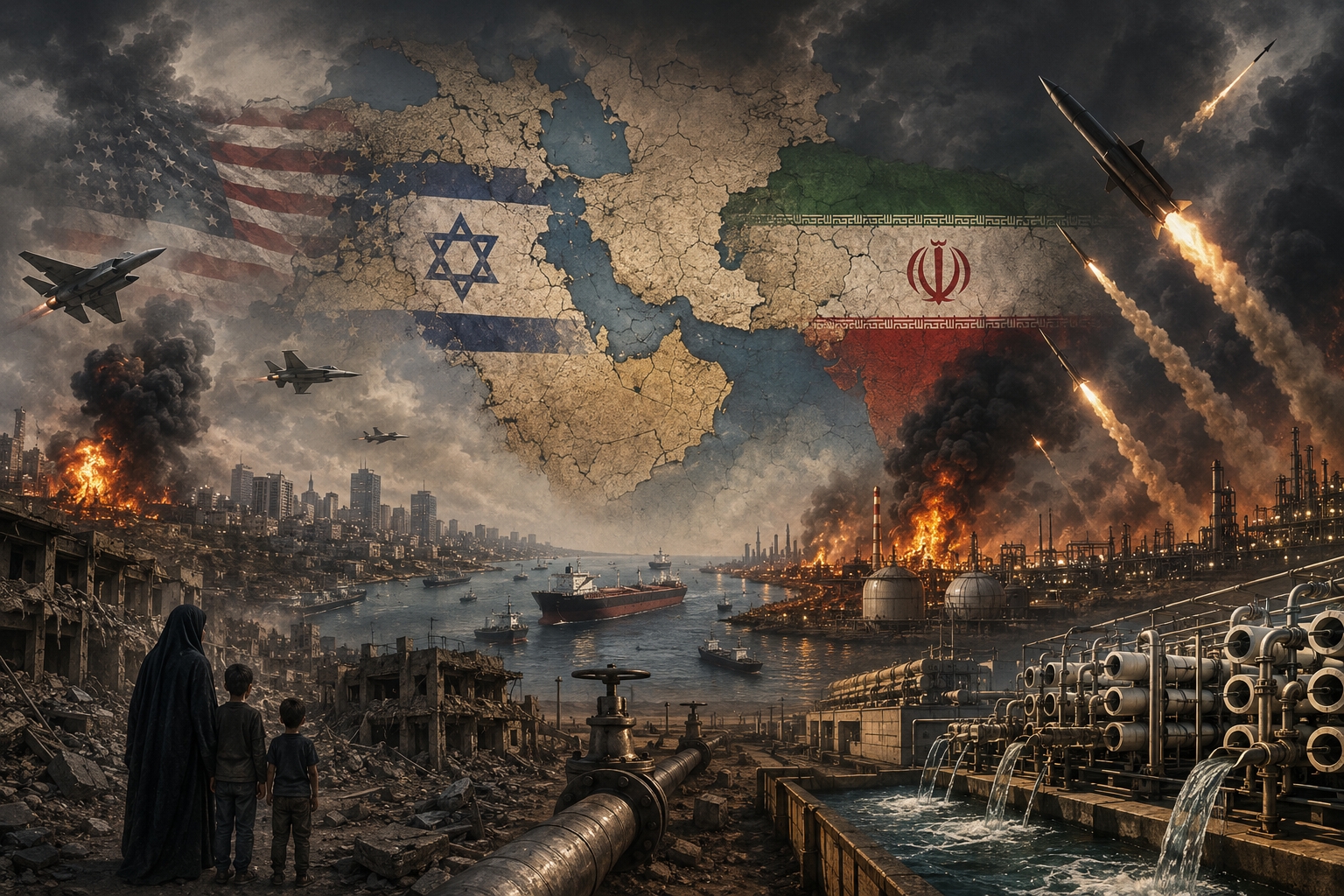
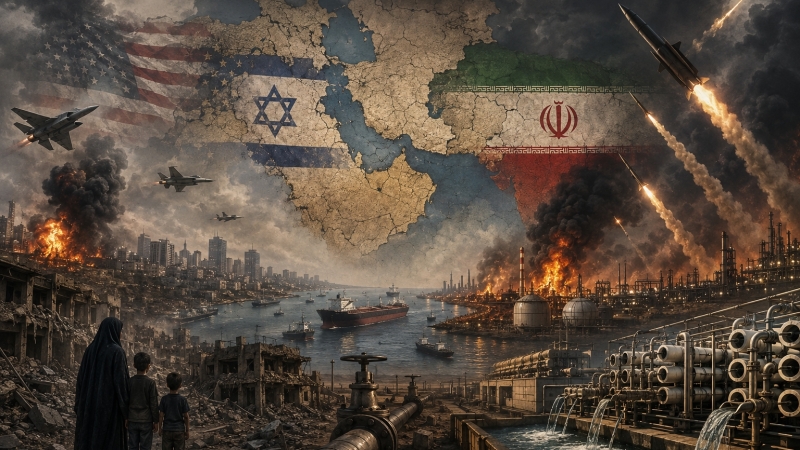
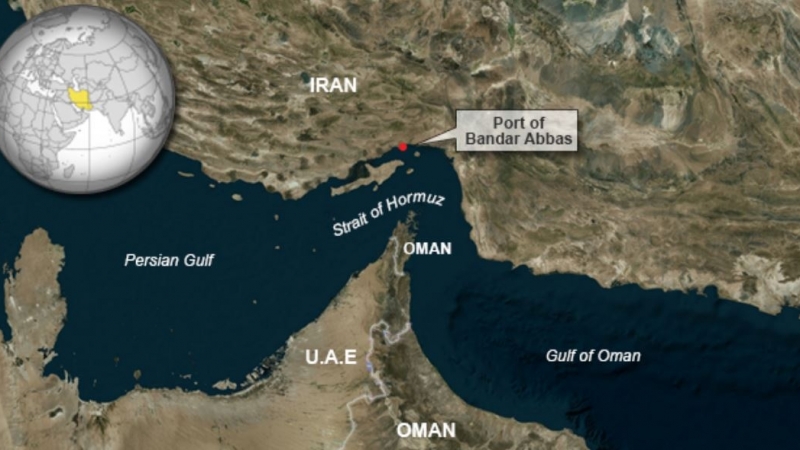
The standoff in Islamabad is the diplomatic manifestation of a much more serious confrontation unfolding in the world’s most vital maritime corridors.
At the heart of this crisis is a US-led naval blockade of the Strait of Hormuz, initiated on April 11, 2026.
Designed to choke Iranian energy exports and force a surrender on nuclear and regional issues, the blockade has instead triggered a counter-strategy of “maritime leverage” that threatens to upend the global economic order.
Tehran has moved from absorbing pressure to producing it, transforming the Strait of Hormuz and the Bab al-Mandab into interconnected pressure points.
Historically, the United States has relied on its naval supremacy to guarantee “freedom of navigation.”
However, the current situation reveals a paradox: by attempting to enforce a blockade on Iranian vessels, Washington has effectively layered its own restrictions over a waterway that Iran already physically controls.
In response, the Islamic Revolutionary Guard Corps (IRGC) has asserted strict military oversight of the strait.
Reports of IRGC vessels seizing tankers and controlling shipping lanes suggest that Tehran is no longer willing to allow “business as usual” for US-aligned trade while its own economy is under siege.
The economic mechanics of this confrontation are staggering.
Under the latest blockade, Iran is losing an estimated $200 million to $300 million daily in oil revenue, totaling over $13 billion a month.
The Iranian rial has plummeted, and the government has been forced to triple fuel prices.
This has added to the strain on people.
Yet, the pain is not unilateral.
By signaling that the security of the Strait of Hormuz is inextricably linked to the Bab al-Mandab in the Red Sea, Tehran has expanded the battlefield.
The involvement of allied forces in Sana‘a means that any escalation in the Persian Gulf can now trigger a secondary crisis in the Red Sea, potentially cutting off the main artery of trade between Europe and Asia.
This “multi-layered deterrence model” has forced a radical rethink among America’s traditional Arabian allies.
For decades, the Gulf monarchies—most notably Saudi Arabia and Qatar—viewed US military bases as the ultimate insurance policy.
Today, that perception is crumbling.
The recent Iranian strikes on US installations in the region have demonstrated that these bases may now be liabilities rather than assets.
Instead of providing protection, American presence is increasingly seen as a magnet for retaliation, turning host countries into targets in a war they did not choose.
The resulting diplomatic vacuum is being filled by a new configuration of regional powers.
In Islamabad and Ankara, discussions are underway for a “regional security platform” that would replace the US military umbrella with a coalition of Muslim-majority states.
This proposed alliance, involving Pakistan, Turkiye, Egypt and Saudi Arabia, represents a fundamental shift toward indigenous security.
Pakistan has already signaled its intent by deploying 13,000 troops and advanced JF-17 and J-10CE fighter jets to Saudi Arabia, positioning itself as an alternative security guarantor.
The move toward a regional order without Washington is driven by a growing consensus that the US-Israel nexus is more focused on expansionist goals than regional stability.
Gulf countries are now openly questioning whether the “US shield” is actually a tool for regional dominance that excludes their own interests.
Saudi Arabia and Qatar have gone so far as to declare that their territories will not be used for strikes against Iran, a significant blow to US operational planning.
However, the path to this new order is fraught with complexity.
Some analysts warn that such a force could devolve into a Sunni-led coalition intended to contain Iran rather than a truly inclusive regional defense structure.
There are also deep-seated rivalries between Ankara, Cairo and Riyadh that complicate the formation of a unified military command.
Yet, the urgency of the current crisis seems to override historical grievances.
The proposal that Russia and China might store Iranian enriched uranium as part of a settlement further illustrates how global powers are being drawn into this new regional architecture to provide the guarantees that Washington no longer can.
While the diplomats talk in Islamabad, the Pentagon is preparing for a different outcome.
Open-source intelligence reveals a massive airbridge of C-17 and C-5M heavy transport aircraft moving Patriot missile batteries and THAAD components into the region.
The United Arab Emirates has reportedly granted the US permission to stage significant air forces on its territory, effectively becoming a “stationary aircraft carrier” for potential strikes against Iran.
This military buildup suggests that the US may be transitioning from a strategy of economic attrition to one of high-intensity ground conflict.
The risk of a “decisive strike” is high, but the historical lessons of the 2003 invasion of Iraq loom large.
Today Iran is guided by imaan (faith-commitment) and its military leadership has made it clear that they possess a higher state of readiness than at any point in history.
The threat is no longer confined to the high seas.
Tehran has warned that any further “maritime piracy” or “economic robbery” will be met with a reaction that transcends borders.
One must assess the credibility of these developments within the broader context of a fading hegemon.
Reports from Islamabad and the maritime corridors of the Persian Gulf suggest that US policy of “maximum pressure” has reached a point of diminishing returns.
Rather than fracturing Iran’s leadership, the blockade appears to have unified it under a “revolutionary” banner, while simultaneously alienating Washington’s most important regional partners.
The “Gulf stalemate” is more than a regional spat; it is a contest over the definition of power in the 21st century.
If trade routes and maritime chokepoints now outweigh traditional military dominance, then Iran’s strategic use of geography has effectively neutralized much of the US technological edge.
The world is watching a high-stakes experiment in whether a regional power can successfully challenge a global superpower by weaponizing the very arteries of the global economy.
The events of April 2026 mark a definitive break from the post-Cold War order in West Asia (aka the Middle East).
The US blockade has not brought Tehran to its knees.
Instead, it has accelerated the formation of a new regional security architecture led by Pakistan and Turkiye, and it has turned the world’s most vital waterways into a battlefield of political leverage.
Whether this leads to a new, more stable regional balance or a catastrophic global conflict remains to be seen.
What is certain is that the “security umbrella” that has defined the Persian Gulf for half a century is being folded.
Regional countries are learning to walk in the rain on their own terms.