 Archives
Multimedia
Donate
About
Sign In
Archives
Multimedia
Donate
About
Sign In



 Crescent International


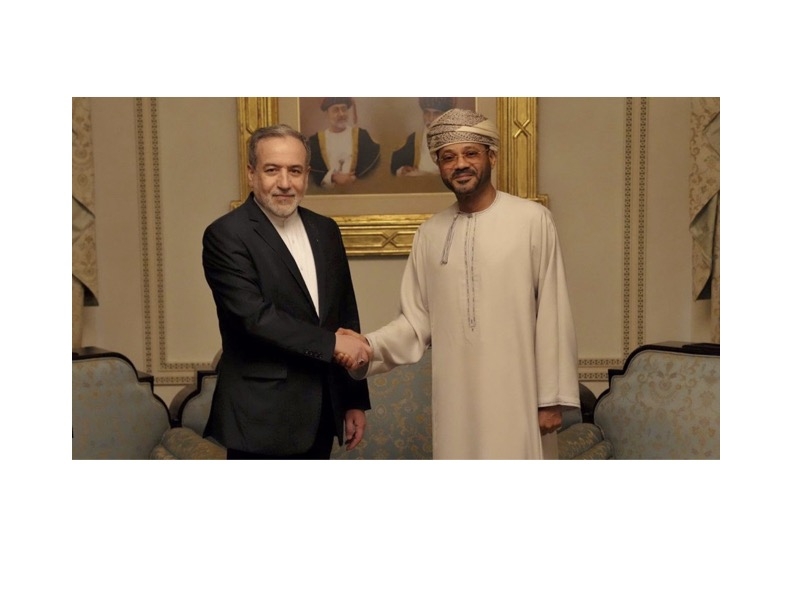
Two rounds of indirect talks held in Muscat, Oman between the Islamic Republic of Iran and the US ended today (February 6).
Oman’s Foreign Minister Badr al-Busaidi shuttled between the two delegations communicating their respective positions.
This is what Iran had insisted despite US desperation for face-to-face talks.
There was even fear that the talks would not take place at all but Donald Trump was forced to climb down from his high horse.
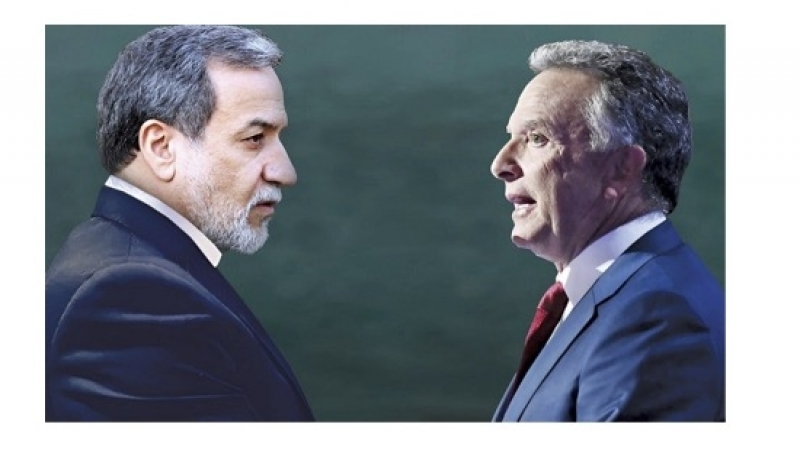
Iran’s delegation was led by Foreign Minister Abbas Araghchi.
He was accompanied by Deputy Foreign Minister Majid Takht-Ravanchi, and Hamid Qanbari.
Iran’s Foreign Ministry spokesman Esmaeil Baghaei was also part of the delegation.
The US side comprised special envoy Steve Witkoff and Trump’s son-in-law and adviser Jared Kushner.
Both Witkoff and Kushner can be seen as representing zionist Israel.
There were reports that US Cental Command head, Admiral Brad Cooper also joined the US delegation, raising serious concerns among the Iranians.
Venue for indirect talks
Several regional countries, among them Turkiye, Qatar, Saudi Arabia and Egypt mediated between the two sides in view of the military threats issued by Trump against Iran.
The US aircraft carrier, Abraham Lincoln was also sent to the Arabian Sea, clearly seen by Iran as a threatening posture.
Tehran responded firmly and warned that any aggression against its territory or sovereignty will receive a swift and powerful response.
The Rahbar, Imam Seyyed Ali Khamenei, addressing participants at the start of the Deh-e Fajr (Ten Days of Dawn) celebrations on February 1 warned that any attack on Iran will lead to regional conflict.
This caused panic among regional countries.
When the Rahbar speaks, they listen.
They know that the Islamic Republic will not only carry out its threats but none of these countries that host American military bases will be safe.
Rulers of these countries scurried to urge Trump not to embark on any military adventure whose consequences will be catastrophic not only for the region but for the US and Israel as well.
It seems they were able to get this into Trump’s thick skull.
After huffing and puffing, the big bad wolf in the White House was forced to climb down.
Initially, Istanbul (Turkiye) was suggested as venue for the talks.
The US also issued a laundry list of demands—no nuclear weapons for Iran, no uranium enrichment on its soil, ship all enriched uranium outside the country, curtailment of Iran’s missile program and end to its support for members of the axis of resistance.
Iran firmly rejected these demands.
It warned that apart from its nuclear program within the framework of its NPT rights, no other issue will be discussed.
Further, Tehran also demanded that the talks be held in Muscat, Oman, rather than Istanbul.
Representatives from countries such as Turkiye, Egypt, Qatar and Saudi Arabia were invited to the Istanbul talks.
This would have widened the discussion to issues that Iran did not want to discuss.
The other reason for Muscat as the venue was that the sixth round of indrect talks between the US and Iran were scheduled there for June 15, 2025.
The zionist war criminals, aided and abetted by Trump, launched an attack on Iran on June 13.
The US also carried out strikes on Iran’s nuclear facilities on June 22, in complete violation of the NPT.
The US-zionist attacks were illegal, against the UN charter and against international law.
The two regimes are international outlaws and their words cannot be trusted.
That is why, Iran approached the latest round of indirect talks with great caution.
Agenda
The indirect talks were aimed at assessing each side’s position and setting the framework for future talks.
From initial reports, it seems some progress was made although the fact that Iran announced the two rounds were over “for now” suggested that both sides needed to return home for further consultations.
To sum up, Iran said it was willing to discuss limits on its nuclear enrichment but needed firm guarantees of the removal of sanctions.
It will become clear within the next few days whether Trump is able to make that adjustment.
And if so, whether he can be trusted to keep his word.
For now, caution is in order as far as Iran is concerned.
And its forces need to keep their finger on the trigger to prevent Trump from any mischief.