 Archives
Multimedia
Donate
About
Sign In
Archives
Multimedia
Donate
About
Sign In



 Mohammed Khaku


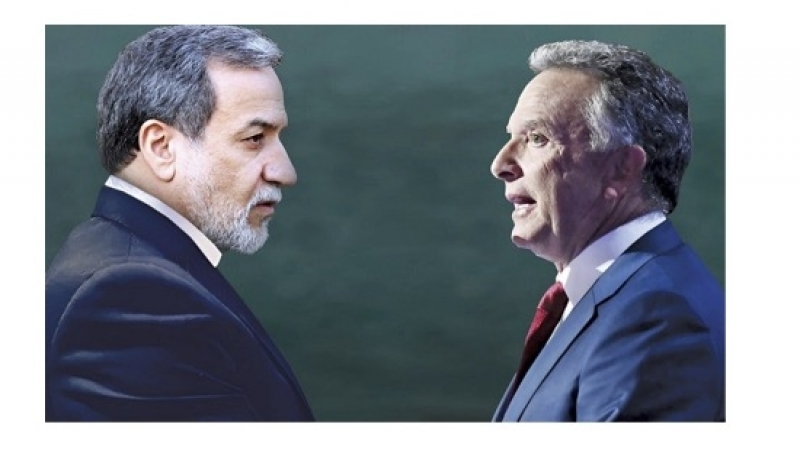
The indirect Iran-US talks seem promising.
The road ahead, however, is uncertain due to the US’s shifting positions.
Washington will have to decide between prioritizing zionist Israeli and American interests.
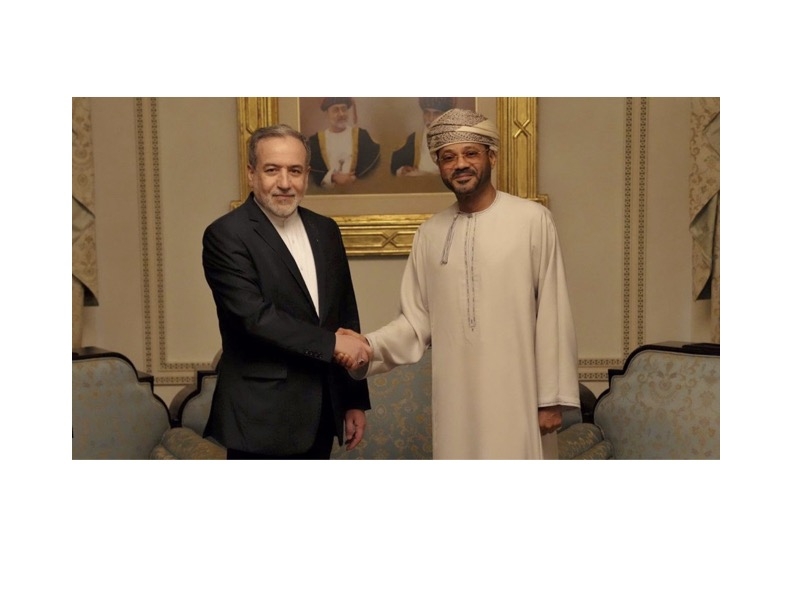
On Friday (Februry 6), officials from Iran and the United States met in Muscat, to talk about Iran’s nuclear program in exchange for lifting US sanctions.
Oman’s Foreign Minister, Badr Al-Busaidi, acted as go-between.
Under zionist pressure, Trump sent a naval armada to the Persian Gulf, but now risks embarrassment by accepting Iran’s terms for the meeting.
Iran turned down the US agenda.
It insisted on discussing only nuclear matters and refused to address its missile program or regional alliances.
Iran views these as vital to its national defense.
The indirect talks in Oman wrapped up the same day.
Could this give Trump an excuse to start a war with Iran, saying he tried to make a deal but Tehran turned it down?
It feels reminiscent of the narratives once used about Saddam Hussein and Muammar Qaddafi, and it’s already being echoed by some zionist media outlets and talk shows.
According to Bloomberg, Reuters, and Axios, the Trump regime agreed to Tehran’s demand to shift Friday talks from Istanbul to Muscat.
The White House kept quiet about the venue change and Iran’s conditions.
These involved steering clear of direct face-to-face talks, using Oman as a go-between, and sticking strictly to talks on the nuclear program.
This blocked US-Israeli attempts to discuss Iran’s ballistic missiles or its support for resistance groups in the region.
The Netanyahu-led Israeli regime laid out several demands for Iran: no development of nuclear weapons, no uranium enrichment within its borders, sending all enriched uranium abroad, reducing its missile program, and stopping support for groups in the axis of resistance.
Iran categorically rejected these demands.
It said the occupying regime that is guilty of genocide in Gaza has no right to make such demands.
The Islamic Repulic insisted that aside from its nuclear program with its attendant rights under its NPT, it won’t discuss any other matters.
It would only consider enrichment limits if there are firm guarantees for the complete removal of sanctions on the very day an agreement is signed.
When the US was gearing up to carry out its unprovoked attack on Iraq, it had fabricated lies.
Even before it started, many neoconservatives were echoing Netanyahu’s assertion that Iran was the next target.
With nuclear powers like Israel and the US flexing their muscles, it might be overdue and reasonable for Iran to consider developing its own nuclear deterrent.
However, as Iran’s Foreign Minister Abbas Araghchi noted, “President Trump entered office stating that Iran should not possess nuclear weapons.”
That really lines up with our own principles and could be the starting point for an agreement.
Despite the US wanting face-to-face talks, Iran insisted on indirect engagement.
When the Rahbar, Imam Seyyed Ali Khamenei speaks, people in Iran and millions of his followers around the world listen closely.
At the start of the Deh-e Fajr (Ten Days of Dawn) celebrations, commemorating Imam Khomeini’s 1979 return from Paris, he declared that the Islamic Republic would retaliate if attacked.
He warned that any country hosting American military bases or facilitating US-zionist war on Iran should expect retaliation.
Authoritarian Arabian regimes informed the US they wouldn’t permit access to their airspace or waterways fearing reprisals.
They advised Trump to steer clear of any military action that would engulf the entire region, the US, and Israel.
It seems they finally managed to break through Trump’s stubborn, oblivious mindset.
The oragutan in the White House was ultimately compelled to back down.
Trump is a fascist, corrupt, a liar, indicted felon and sex predator.
He favors aggressive, gunboat-style diplomacy over genuine strategic planning.
The real threat to American security isn’t a lack of military strength—the Pentagon’s $866 billion budget makes that clear—but rather a Congress influenced and occupied by zionists and an executive branch that uses US power impulsively instead of strategically.
Congress should stop the regime from sending billions of taxpayer dollars to Israel and from engaging in imperial overreach through proxy wars without its approval.
Bad political choices have fueled the “Forever Wars” throughout West Asia (aka the Middle East).
The Trump regime often chooses reckless actions over measured diplomatic strategy.
History shows that when the US launches military aggression, fueled by an unchecked military-industrial complex and lacking clear end goals, it ends up costing trillions of dollars and destabilizing entire regions.
Trump’s disregard for the separation of powers, national debt, tariffs, immigration, press freedom, the Federal Reserve’s independence, conflict with governors and mayors, street protests, and the Justice Department’s autonomy are seen as moves toward fascism and authoritarian control.
Americans need to prepare for a possible coup d’état and regime change in Washington.
Amid the chaotic US foreign policy, one question lingers: Is Iran armed with nuclear weapons, or Israel?
It is the zionist occupying regime armed with more than 300 nuclear weapons.
It has perperated a genocide in Gaza (ongoing), and operates as a terrorist regime.
Displaying blatant hypocrisy, Iran’s peaceful nuclear program is targeted while maintaining deafening silence about the genocidal zionist regime’s nuclear arsenal.
Further, the extremist Jewish entity in occupied Palestine is praised.
It has been illegally planted in a predominantly Muslim region and is a source of instability since its creation.
Criticising Iran’s backing for resistance groups like Hizbullah, Hamas, and the Ansarallah is hypocritical, especially when the US uses zionist Israel as a key proxy to advance western interests in the region.
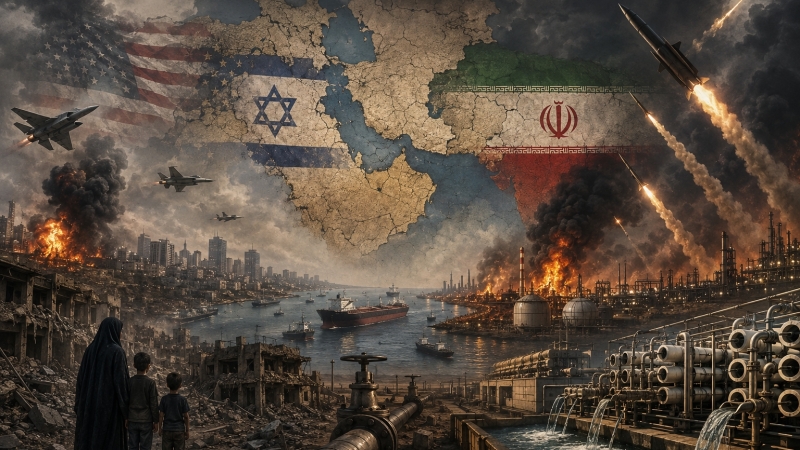
Any attack on Iran could spark a prolonged conflict with catastrophic consequences for the entire region and beyond.
Regional countries are ruled by illegitimate dictatorships or monarchies, products of the 1916 Sykes-Picot agreement.
Instead of targeting Iran, the US and Israel should be held accountable for their criminal acts.
These include the genocide in Gaza and slaughter of millions of innocent people by supporting terrorists in the region.
Pastor Chuck Baldwin has a three-part message series called ‘End Time Israel’. The second message, The Wars of the Jews, is based on James chapter four and offers insight into the conflicts of the Jews today, showing that the issues James addressed in the first century mirror those we face in 2026.
He also presents a four-part series titled ‘By What Authority Does occupying Zionist Israel Commit Mass Murder Against Women and Children? A Clinical Study of the Destruction of the Amalekites and the Old Covenant Laws of War.