 Archives
Multimedia
Donate
About
Sign In
Archives
Multimedia
Donate
About
Sign In



Far from fighting terrorism, the US creates and actively promotes terrorists for its imperialist agenda. Its support of ISIS in Afghanistan illustrates this.
Donald Trump has become totally unhinged. And he confirmed this yet again on October 13 when he announced that he would not certify Iran’s compliance with the nuclear deal called the Joint Comprehensive Plan of Action (JCPOA).
Egypt under the military dictatorship of Abdel Fattah al-Sisi, has been rewarded yet again by the United States for being a faithful ally in America’s quest for dominance in the North African region straddling the Mediterranean.
The first Battle of Kunduz took place from April to October 2015 for control of the city, where Taliban forces were playing cat and mouse for months and finally overran the city, forcing government forces to flee. The capture marked the first time since 2001 that the Taliban had taken control of a major city in Afghanistan. The Afghan government claimed to have largely recaptured Kunduz by October 1 in a counterattack. But by 6 October, the Taliban had recaptured substantial portions of Kunduz.
1Major donors to political parties and to individual politicians have totally corrupted the American political system. This explains why wars are waged all over the world leading to much bloodshed and hatred for the US.
2Muhammad Ali was not only a world-class boxer, he was also a human rights activist and stood against the immoral Vietnam War and refused to fight there for which the US establishment punished him. In death, however, they eulogized him because he had become an international icon.
The Rahbar, Imam Seyyed Ali Khamenei of Iran has repeatedly drawn attention to the importance of developing a ‘Resistance economy’. This includes reliance on indigenous talent and production to eliminate the need for imports or external support.
Life for the Afghan people has never been easy but having suffered war for nearly four decades, they want some peace and security. These are denied them because of the conflicting interests of external players.
Muslims face multiple challenges from foreign imposed wars to gross incompetence and corruption of their rulers. Imperialists and Zionists also continue to secularize Islam and divide Muslims by promoting sectarianism.
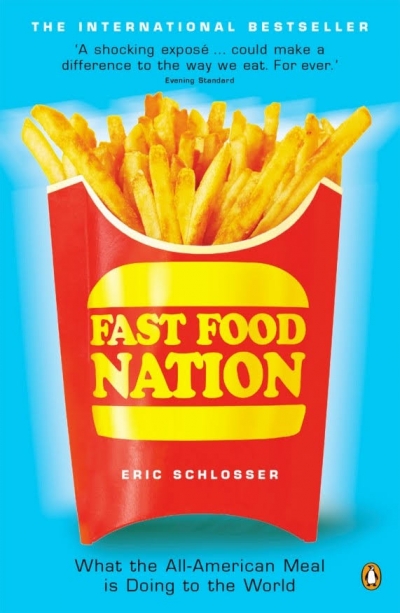
FAST FOOD NATION: WHAT THE ALL-AMERICAN MEAL IS DOING TO THE WORLD by Eric Schlosser. London: Penguin Books, 2002. Pp. 386. Pbk. £7.99.
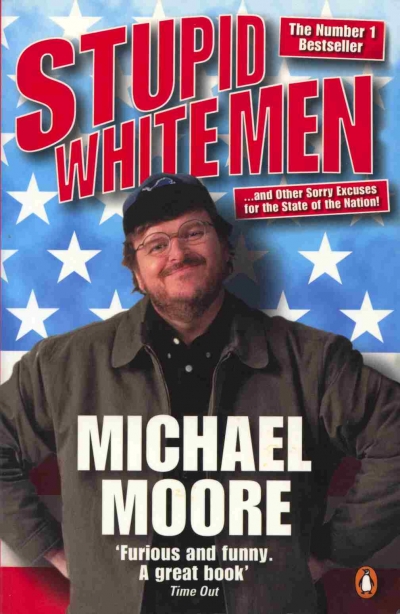
STUPID WHITE MEN (AND OTHER SORRY EXCUSES FOR THE STATE OF THE NATION) by Michael Moore. Pub: Penguin Books, London, 2002. Pp: 281. Pbk: £7.99.
Welcome to the new global economic order free from the chains of US imperialism.
US enmity towards Iran has nothing to do with Iran’s peaceful nuclear program. It is merely a pretext used by Washington for Iran’s refusal to fall in line with US demands.
It is always difficult to reconcile with decline in one’s power and clout. This is as true of individuals in old age as it is of societies and empires in their twilight years.
The era of US unilateralism has ended. Apart from its European allies — and there too, only some of them — the rest of the world has dismissed Washington’s demands to impose oil and trade embargo on Iran.
After the latest American rampage through three Afghan villages in the Pajway district of Qandahar on March 11, US President Barack Obama issued the following statement: “This incident is tragic and shocking, and does not represent the exceptional character of our military and the respect that the United States has for the people of Afghanistan.”
When it comes to the War on Terror, it appears there is always a possibility to find legal justification for just about anything. Despite there being an “absolute” prohibition on torture under international law, John Yoo, then a Deputy Assistant Attorney at the Justice Department’s Office of Legal Counsel (OLC).
The enterprise of US perpetual war is confronted with a persistent problem. Spiraling rates of psychological and social problems in returning war veterans is placing enormous stress on the narratives that the US government has constructed around the Iraq and Afghanistan wars.
As human rights campaigners around the world commemorated the 10th anniversary of the opening of the US detention facility in Guantanamo Bay, marking a decade of human rights abuses known as the “war on terror”, one would have expected that Western governments would be contemplating scaling back their aggressive rhetoric and draconian laws which have become a feature of the 21st century.
How long this standoff will continue is debatable but what we need to consider is how this situation has deteriorated to a point that the US feels it can attack and kill Pakistanis at will.