
 Archives
Multimedia
Donate
About
Sign In



 Waseem Shehzad


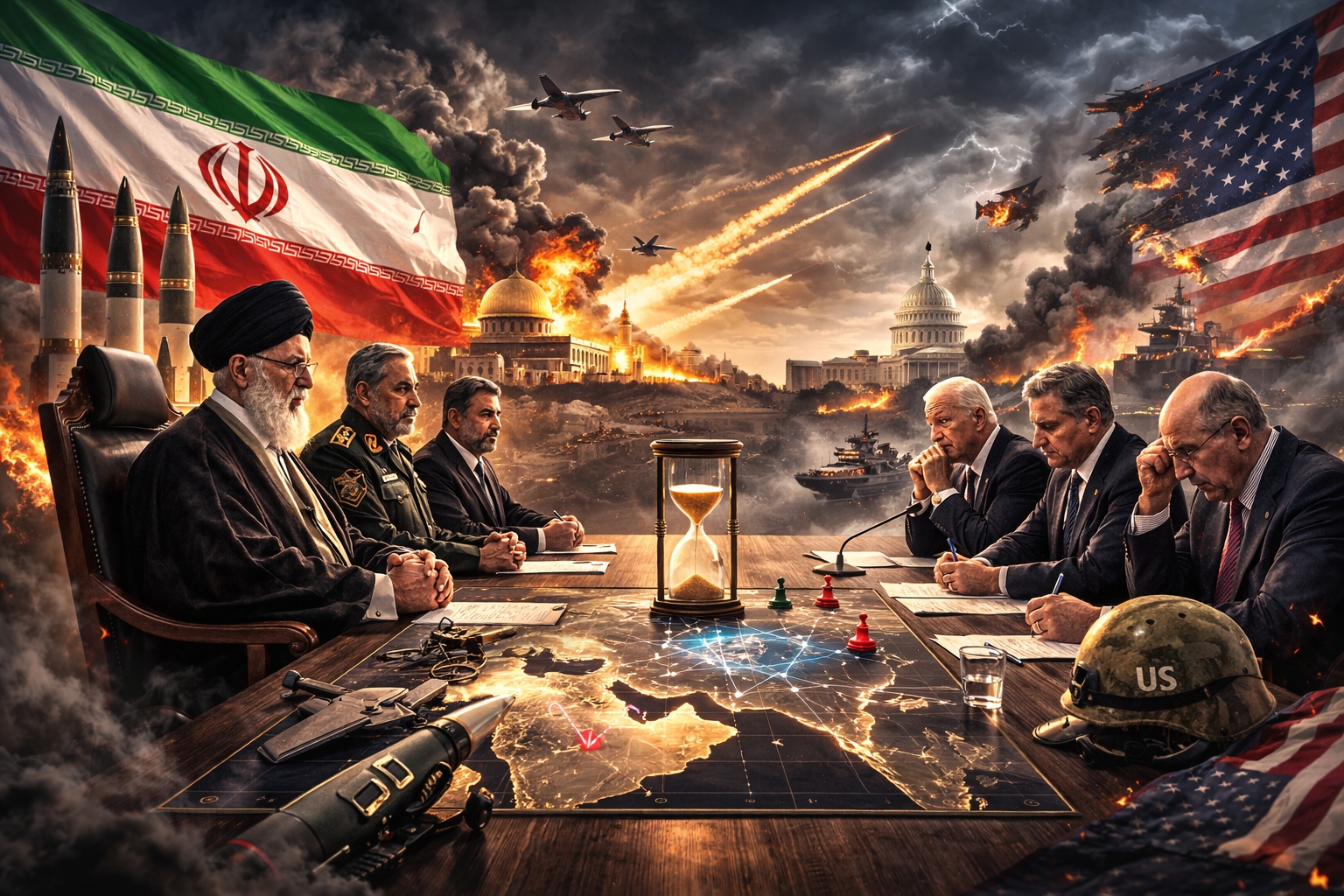
For any deal to succeed, the basic prequisite is that both sides must abide by its terms. American officials are by nature duplicitous. This is even more so in the case of Donald Trump. He is a liar, a crook and completely dishonest.
Making a deal with him is pointless. The question, therefore, arises: why does Islamic Iran entertain mediators from Qatar and Pakistan attempting to broker a deal?
Surely, Iranian officials are aware that Trump will not honour a deal. The MoU that Trump signed on June 18 provides ample proof of his duplicitous nature. He violated it within days of affixing his signature on the document.
So why do the Iranians keep talking about their willingness to find a diplomatic solution to the crisis? The reason is they do not wish to close the door on diplomacy. Already unjustly vilified, if they were to shut the door on diplomacy as well, they would be accused of refusing to negotiate, even if indirectly. This would then be used as a pretext by the warmongers in Washington and Tel Aviv to blame Tehran for any escalation.
There is already talk of the US-Israel relaunching the war on Iran. The two war criminals—Trump and Benjamin Netanyahu—face serious electoral challenges at home. They see war as a way out of their electoral predicament.
Iran has made clear that any renewed aggression will not only receive a strong retaliation but Tehran will go beyond a proportionate response. It will target US military and data centres in the region. The West Asian region is rich in American targets.
The Secretary General of Iran’s Supreme National Security Council Mohsen Rezaei clearly stated this in an interview on October 15. He also said that data and communication cables running at the bed of the Persian Gulf will also be targeted.
The cost of these cables is about $2 trillion. The data they transmit on a daily basis is estimated at $10 trillion. These are huge sums and any disruption will have a profound impact on the global economy. Satellite transmission cannot substitute for cable data transmission because they do not have the capacity.
Iranian officials have also warned countries in the region that if they facilitate US or Israeli strikes, they will not only be hit but will also face regime change and possibly occupation. The warning was aimed specifically at such illegitimate entities as Kuwait, the UAE and Bahrain.
Trump’s Iranian targets
Trump as well as other US officials have threatened to bomb the Pickaxe Mountain that is believed to store Iran’s enriched nuclear material. In June 2025, when the US bombed Iran’s nuclear facilities, Trump boasted that they had been “obliterated”. So, why it is necessary to bomb them again?
Trump has talked about using the GBU-43/B Massive Ordnance Air Blast (aka ‘the Mother of All Bombs’) to destroy the Pickaxe Mountain. The largest bomb in the US arsenal—it is 2,000-lbs—can penetrate to a maximum depth of 30 meters.
The mountain is not only made up of hard rock but the underground bunkers are at least 100 meters below the surface. The same applies to Iran’s missile manufacturing and storage facilities.
Iran’s energy infrastructure, oil fields and desalination plants have also been mentioned as targets for US-zionist aggression. While Iran does not have strong air defences, it has the capacity to retaliate forcefully against any aggression.
Top Iranian officials, including Mohsen Rezaie and Parliament speaker Muhammad Baqer Qalibaf have warned of a crushing response beyond the imagination of the adversaries. Top army and revolutionary guards commanders have issued similar warnings.
Iran’s target list
When it comes to targets Iran can hit and destroy, the list is long. Numerous American military bases have aleady suffered massive damage following Iranian strikes. Most of them are beyond repair. Any that are left—such as those in Saudi Arabia or Jordan—are now in Iran’s crosshairs.
There are also multiple AI data centres as well as centres of Meta, Microsoft, Amazon and other US companies in the region. Some have already been hit. Others will soon go up in smoke if Trump and Netanyahu relaunch attacks on Iran.
Iran closed the Strait of Hormuz soon after the US-Israeli criminal war on Iran was launched on February 28. Before the war, some 20 % of the world’s oil flowed through it. Despite optimistic statements by Trump, only a trickle of the pre-war volume is getting through.
In the Red Sea, the Yemeni Ansar-Allah have taken full control of Bab al-Mandab. So, between the Strait of Hormuz and Bab al-Mandab, some 30% of the world’s oil flow is stopped.
It has resulted in high gas and food costs. Europe is reeling from the shock. Millions of people across Europe have been protesting the high prices. On October 24, more than 410,000 people—800,000 according to union estimates—marched in Paris with similar rallies in other French cities as well as in cities across Europe.
Iran has said that the Strait of Hormuz will remain closed until its seven conditions are met. These are:
1: End to hostilities on all fronts against Iran and its regional allies;
2: Lifting the naval blockade on Iranian ports;
3: Lifting oil and economic sanctions;
4: Release of frozen assets
5: End to threats and all interference in Iran’s internal affairs;
6: The withdrawal of US military forces from areas surrounding Iran's borders; and
7: Compensation for war damages and guarantees that Washington will not interfere with or restrict Iran’s nuclear and missile capabilities (rejecting demands to zero-out enrichment or transfer stock abroad).
If these conditions are met, Iran will reopen the Strait of Hormuz within one week and resume formal negotiations with the US.
Tehran, however, insists that Washington must first fulfill these conditions before Iran would make a move. The reason is simple: in the past, the US has reneged on its pledges.
The other targets Iran has threatened to hit are the desalination plants in the Arabian states as well as zionist Israel. While the latter may last a little longer, people in the Arabian states will die of thirst within a week.
List of zionist targets
The zionist entity is rich in targets. Islamic Iran does not have to hit all of them. Only a few critical targets will bring an end to the illegitimate entity. The Dimona nuclear bomb-making facility and chemical weapons factories in Haifa, if hit will release toxic clouds that are likely to wipe out much of Israel’s population.
No Iron Dome batteries or David’s Sling can intercept all of Iran’s precision-guided missiles. This was proved during the 40-day war launched on February 28. Similarly, US-operated anti-missile batteries in Jordan have been degraded by the Islamic Republic.
What is clear is that should the US-zionist evil duo make the mistake of relaunching an attack against Islamic Iran, the price these warmongers will pay will be much higher than what they have experienced so far.
Every day that passes without Trump agreeing to Iran’s reasonable conditions will only increase the price for the US. Washington will soon realize that the price it has to pay is not worth the war is wants to pursue. Not only will Uncle Sam have to leave the region but the zionist entity will also cease to exist.


If the US were to try and meddle with the Iran deal, it would end up as loser.

The very idea of US-Iran talks appears far-fetched given the extreme hostility Trump showed toward Tehran during his last term as president....

What direction the indirect talks between Iran and the US would take is difficult to predict. In the latest round on April 26, the US demand...
Many people ask, with good reason, why Islamic Iran continues to negotiate with the US when its record is upholding any agreement is appalli...
