 Archives
Multimedia
Donate
About
Sign In



 Crescent International


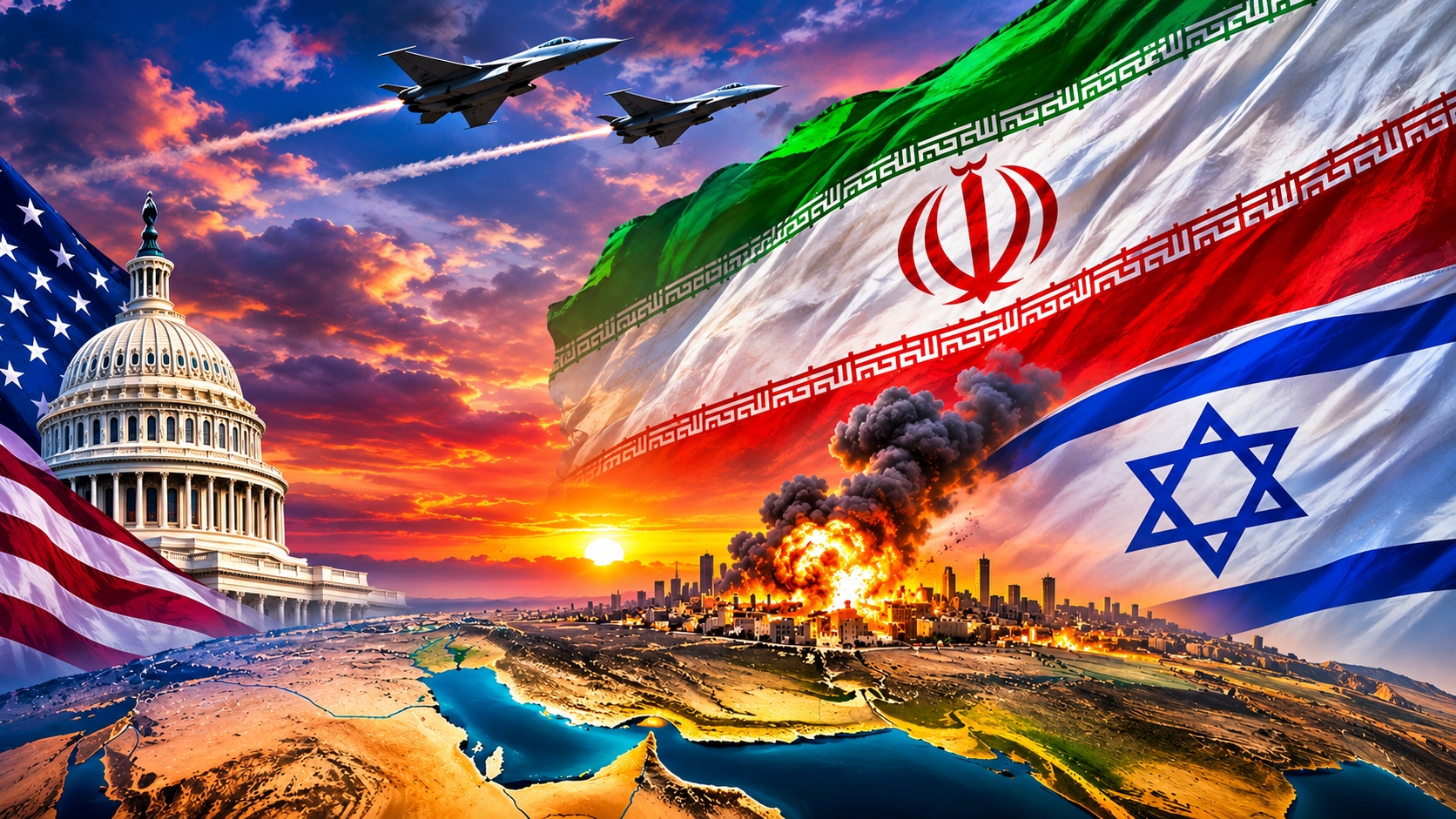
There is a strategic danger in Islamic Iran tolerating repeated, even if ineffectual US airstrikes against isolated patches of its territory in the Persian Gulf.
While these strikes may serve little military purpose and are driven largely by Donald Trump’s political ego and the MAGA regime’s need to project an image of continued imperial relevance, their long-term implications should not be underestimated.
It is quite evident that these attacks are not designed to defeat Iran militarily or fundamentally alter the balance of power.
Their primary purpose is performative: to demonstrate that Washington can still project military power, strike Iranian territory and present itself as an empire capable of imposing its will.
In this sense, the strikes are as much about domestic political theatre as they are about military objectives.
However, the absence of immediate military consequences does not mean the absence of strategic consequences.
The normalization of repeated US strikes against Iranian territory, even when they are militarily insignificant, risks establishing a dangerous precedent.
What is tolerated today as an inconsequential display of American aggression can gradually become an accepted feature of the regional security landscape.
Several years down the road, this normalization could become a strategic disadvantage for Iran, particularly if Washington begins to interpret Tehran’s restraint as an indication that limited attacks can be conducted without fundamentally changing the terms of confrontation.
There is, of course, another side to this equation.
These symbolic US strikes are not entirely without cost to Washington.
Iran’s meaningful retaliatory responses expose the limits of US military power and undermine the imperial image that these attacks are intended to reinforce.
Every time the US launches an attack and Iran responds effectively, the narrative of unquestionable American military superiority takes another hit.
Rather than demonstrating US dominance, these exchanges can reveal the vulnerability of American regional interests and the limitations of its capacity to dictate the terms of confrontation.
Yet, this does not eliminate the strategic danger for Iran.
The Islamic Republic is not confronting the US in isolation.
It is confronting the entire cabal of western regimes whose hostility towards an independent Islamic Iran extends well beyond the personality and political ambitions of Trump.
It would be a mistake to interpret disagreements among western rulers over Trump’s approach as opposition to the underlying objective of containing and weakening Iran.
Some western regimes may consider Trump’s military adventurism counterproductive, poorly calculated or strategically reckless.
Their disagreement is largely about the methods, timing and consequences of aggression, not necessarily about the legitimacy of Iran’s right to resist western domination.
Preference for a more coordinated, calculated and institutionally sustained approach should not be confused with opposition to the aggression itself.
An even greater long-term danger is that the normalization of these attacks could provide an opening for a future US regime to pursue the same confrontation through a more calculated and coordinated strategy.
Should the so-called Democratic Party, with its pseudo-liberal political establishment, eventually replace MAGA in the White House, it may interpret the precedents established under Trump as an invitation to wage the confrontation more effectively.
Unlike Trump’s largely ego-driven military theatrics, a future US regime could seek to consolidate western political support, coordinate military pressure with its European vassals and employ a more sophisticated combination of economic, diplomatic and military instruments.
What Trump is normalizing through seemingly inconsequential strikes today could become the foundation upon which his successors could build a more coherent campaign of aggression tomorrow.
This distinction is crucial.
Iran cannot formulate its long-term security calculations on the assumption that the current US regime’s political motivations will eventually disappear or that a less erratic regime will necessarily mean a less hostile western posture.
Consequently, while Iran’s retaliatory capacity must continue to impose greater costs on US aggression, it must also prevent the gradual normalization of attacks on its sovereign territory.
Allowing Washington to repeatedly cross this threshold, regardless of how insignificant individual strikes might appear, risks turning a temporary political spectacle into a longer-term strategic liability.
The question, therefore, is not simply whether these American strikes achieve anything militarily today.
It is how and when Tehran will deliver a devastating blow to make them more costly.
Based on our analysis, Iran will make this approach costly not by directly targeting American regional assets in a disproportionate manner, but by striking Israel at some point in the near future.
That will fundamentally alter the regional landscape in ways that many today consider unimaginable.