 Archives
Multimedia
Donate
About
Sign In
Archives
Multimedia
Donate
About
Sign In



 Ayman Ahmed


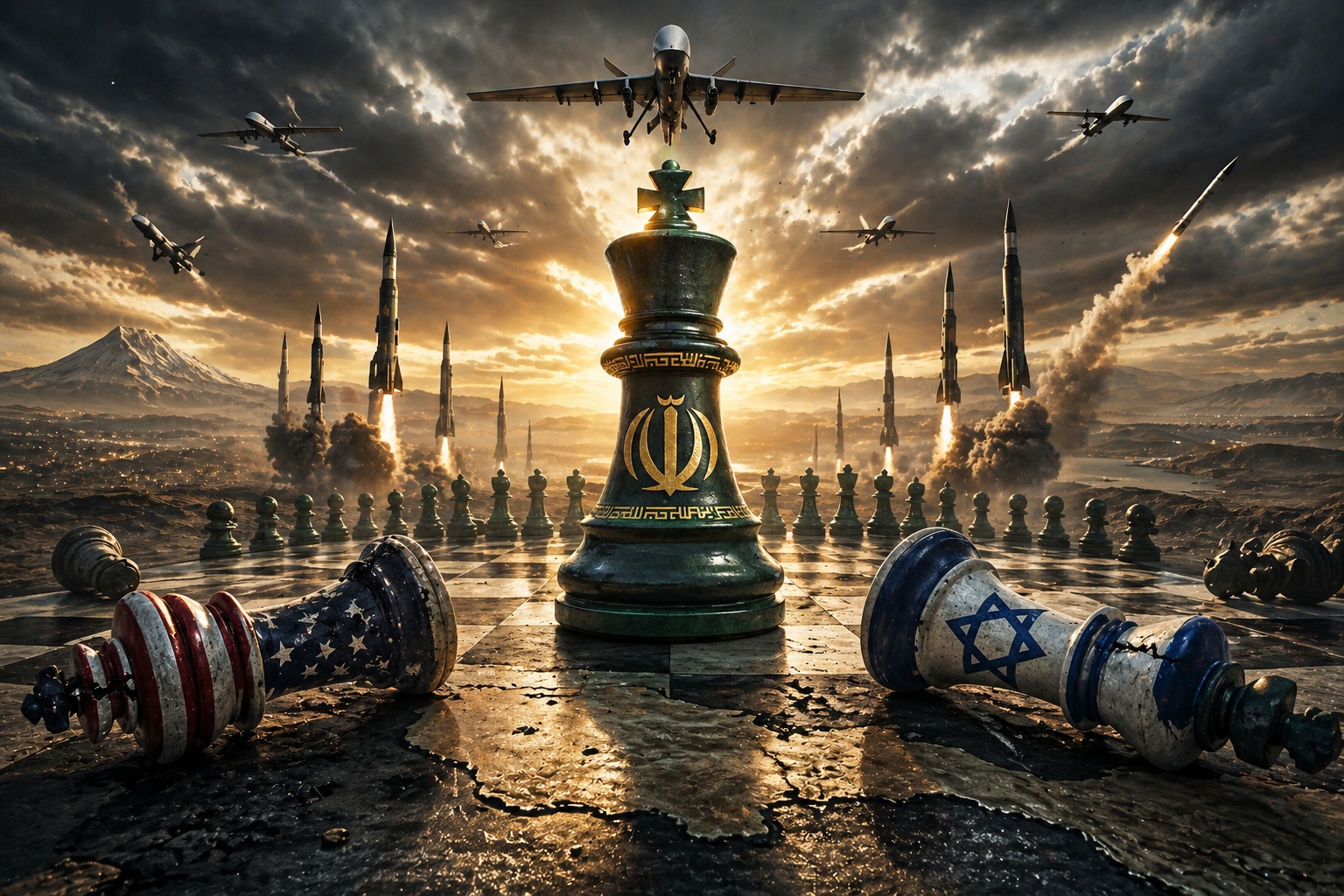
Islamic Iran’s convincing defeat of the US-zionist illegal war has enormous global implications. In particular, it has altered the political and military landscape in West Asia (aka the Middle East).
Despotic Arabian rulers are scrambling to secure their shaky thrones but find little support from the traditional powers they have hitherto relied on: the US and zionist Isreal. With the defeat of the evil duo, the Arabian potentates are forced to look elsewhere.
With Islamic Iran’s emergence as the undisputed regional power, they are forced to mend their relations, albeit reluctantly, with Tehran. The six countries that comprise the Gulf Cooperation Council (GCC) do not pursue a uniform policy. Oman and Qatar are on relatively good terms with Tehran with Oman being more friendly than others, while tiny Bahrain and the UAE are the most hostile. Kuwait and Saudi Arabia stand somewhere in-between.
Bahrain serves as a brothel for American soldiers where the US Fifth Fleet is based. The UAE is trying to dislodge Bahrain from this evil perch. Leading hotels in Dubai are dens of vice where girls are imported from East and West Europe to serve their clientele. It is reflective of the complete shameless of these despotic rulers.
All of them also host multibillion dollar US military bases on their soil. Some have British military bases as well. There are at least 40,000 to 50,000 US troops on these bases and vast quantities of military equipment. The heavily-armed foreign troops were supposed to provide protection to these regimes.
Of course, they needed protection from Iran, not the zionist entity but they discovered that in a real crisis when they needed help, the US was unable or unwilling to protect them. Its priority was and remains Israel’s security.
Despite hosting US military bases that have been used to attack Iran, the latter has still sought friendly, or at least non-hostile relations with these regimes. Until now, they have spurred such overtures. Recent developments may force them to reevaluate their approach.
Iran is now in control of the Strait of Hormuz. Neither the US nor any other power can do anything about it. The Arabian regimes will also have to come to terms with this reality.
They not only ship their oil and gas through the narrow strait, they also import their food through it. The GCC regimes have been forced to stop oil and gas production because they have no storage capacity left. The tankers loaded with oil and LNG are anchored in the northern reaches of the Persian Gulf unable to transit the Strait of Hormuz.
The martyr, Imam Seyyed Ali Khamenei (may Allah elevate his station in the hereafter) had warned several years ago that these military bases will not be able to protect these regimes. How true his words have come.
So, what are the options available to these potentates? Influential voices within these regimes have started to question the efficacy of hosting US military bases. It may, however, be too early to say whether they will be able to muster the courage to tell the Americans to go home.
Shutting down these bases is one of the conditions Iran has stipulated for a permanent ceasefire with the US. The Arabian potentates are coming to the same conclusion following the US-zionist war on Iran. It provides them an opportunity to rectify their policy.
Iranian officials have repeatedly expressed readiness for friendly relations with these regimes. They have said, quite rightly, that security of the Persian Gulf should be the collective responsibility of regional states. Outside powers should have no role in it. They are a source of instability and conflict.
Tehran has not only made statements but practically demonstrated its friendly intentions. Consider the Saudi blockade of Qatar in July 2017. It was Islamic Iran that came to Qatar’s rescue by providing food and other essential items of daily need. A number of Arabian regimes joined the Saudi-led blockade of Qatar that ended in January 2021 when the de facto Saudi ruler Muhammad bin Salman realized the futility of his action.
During the Iraqi-imposed war on Iran that lasted from September 1980 to August 1988, Kuwait shipped oil on behalf of Iraq. Other Arabian regimes also joined the war against Iran, some financially and others militarily by providing bases for American surveillance planes. Yet when the war ended, Iran did not go after Kuwait to punish it for such treachery.
Compare those friendly Iranian gestures with the US’s failure to protect these regimes when they needed help. If they have any sense, they will realize that the US is an unreliable entity. It is only interested in robbing them of their wealth and honour. Regrettably, these rulers have little of the latter even if they have plenty of the former which the US has taken from them anyway.
Based on the current reality, the two countries that will strengthen their relations with the Islamic Republic are Oman and Qatar. Saudi Arabia and Kuwait will also make amends. To what degree is yet to be seen.
The Emirati and Bahrainis will continue to remain hostile. Such hostility may result in Iran taking action against them to convince them that it does not pay to be Iran’s enemy. They would be well advised to rectify their policies and end their hostility toward a state that is now the indisputable pre-eminent military and political power in the region.

What does regional reset mean in West Asia? It depends on who is talking. For the aggressors, it means integrating the zionist entity into t...

What would be the consequences of direct US military involvement to save its zionist war in a potential war with Iran. This article examines...

Bashar al Asad’s overthrow has caused panic among dictators in West Asia, notably in Egypt, Jordan and Pakistan. They are trying to convin...