 Archives
Multimedia
Donate
About
Sign In
Archives
Multimedia
Donate
About
Sign In



 Mohamed Ousman



Below is a conceptual map that shows why people confuse the idea of support for Islamic Resistance Axis and endorsement of Walayat al-Faqih. The two are very different in Islamic political discourse.
The ideas are: 1. “Pro Islamic Resistance Axis” (regional geopolitical alignment) and, 2. “Pro-Islamic Iran state endorsement” (political-ideological alignment).
The former idea represents support for a network of actors resisting western/Israeli aggression, commonly called the Islamic Axis of Resistance. It is commonly described as a loose network of state and non-state actors aligned against Israel and US influence.
It includes Islamic Iran and allied states and non-state groups. The Islamic Axis of Resistance includes Sunni and Shi‘i participants.
Its alignment is geopolitical and the focus is conflict resolution. It is a regional anti-hegemonic framework, not a theodology of Islamic governance.
The latter idea represents support for the Islamic Republic of Iran as a state, its system of governance and the legitimacy of Walayat al-Faqih.
This is state ideology endorsement, not just foreign policy agreement.
The key difference (simple model)
|
Dimension |
Pro-Islamic Resistance Axis |
Pro-Iran State Endorsement |
|---|---|---|
|
What is supported? |
Regional struggle |
The Islamic Iran state system itself |
|
Scope |
Transnational |
Country-specific |
|
Islamic basis |
“Ummah unity”, anti-oppression |
Political legitimacy of Islamic Iran |
|
Sunni participation |
Common |
Very rare |
|
Typical language |
“resistance”, “Palestine”, “anti-imperialism” |
“leadership of Iran”, “Islamic governance model” |
|
Implication |
Tactical/geopolitical alignment |
Ideological/political approval |
The Islamic Axis of Resistance
How the Islamic Axis of Resistance actually works is best understood as a loose, decentralized network built around shared enemies (Israel / US influence); not a unified ideological bloc.
Members of the Islamic Axis of Resistance act independently with overlapping interests, not under strict command unity.
That Sunni scholars can support “resistance” but not the Islamic Republic of Iran is the core confusion. They can say: “We support resistance in Palestine”, “We oppose Israeli occupation”, “We support Muslim unity”. That is Islamic Axis of Resistance framing.
But Sunni scholars still cannot say: “We support Islamic Iran’s political system”, “We endorse Walayat al-Faqih”, “We accept the Islamic Republic of Iran’s governance model”.
That would be state ideology endorsement.
Both camps may agree on opposition to Israel, criticism of US foreign policy and support for Palestinian groups (eg, Hamas) but it also creates the false impression of ideological unity because the motivation differs.
The Sunni “resistance” supporter may be motivated by sectarian solidarity, political opposition to western policy or anti-occupation while the Islamic Iran-aligned supporter may be motivated by strategic depth and regional Islamic influence.
A useful test of where the boundary is actually drawn is that if a scholar says “We support Iran’s role in Palestine resistance” it is endorsing the Islamic Axis of Resistance.
If a scholar says “Iran’s Islamic Republic model is a legitimate governance system for Muslims” it is endorsing the Islamic Republic of Iran (which is rare among Sunnis). Most Sunni scholars who appear “pro-Iran” are actually only in the first category.
Think of it as two circles: where the big circle is “Resistance politics”. It includes anti-Israel, anti-western intervention, Palestine solidarity and includes Sunni, Shi‘i and secular actors.
A smaller, separate circle is “Iran state ideology support”. It includes the Islamic Republic of Iran’s governance model, the Leader and institutional alignment with Tehran.
The biggest misconception is that “supporting resistance equates with supporting Islamic Iran”.
In reality, support for the Islamic Axis of Resistance is issue-based (Palestine, anti-occupation, anti-intervention) whereas Islamic Iran state endorsement is ideological acceptance of its governance system.
These rarely overlap outside Islamic Iran.
Below is the Sunni-majority states’ official (state-level) posture toward Islamic Iran, focusing on diplomatic alignment vs opposition, not public opinion or individual scholars:
Sunni states cooperative or aligned with Iran (pragmatic partners)
These countries maintain active diplomatic relations and structured cooperation, even if they disagree politically.
Pakistan maintains diplomatic relations with Islamic Iran and cooperates in border security, energy (pipeline discussions) and regional stability talks.
Periodic tensions occur over border militancy, but not ideological hostility. The relationship is one of pragmatic cooperation regarding security and economic cooperation despite friction.
Turkey maintains strong diplomatic and economic ties with Islamic Iran. Both cooperated in Syria negotiations (Astana process alongside Russia) and trade and energy imports.
Competing regional ambitions exist, but not formal hostility. The relationship is oddly one of strategic competitor and partner, i.e. “cooperate while competing.”
Qatar is one of Islamic Iran’s closest Gulf diplomatic partners. They share the world’s largest gas field (North Dome/South Pars) and maintain open dialogue even during GCC tensions.
The relationship is one of strong pragmatic alignment regarding energy interdependence and independent foreign policy.
Kuwait and Islamic Iran share moderate alignment where diplomatic relations are maintained. In the US-zionist war on Iran, Kuwait, like other Arabian regimes, allowed its territory to be used to launch attacks against the Islamic Republic.
Sunni states with mixed relations (cooperation and rivalry)
These countries are neither aligned nor openly hostile, but fluctuate.
Saudi Arabia is historically a major regional rival of Islamic Iran. Since the 2023 normalization, it restored diplomatic relations with talks on de-escalation ongoing.
Still, deep geopolitical competition (Yemen, Iraq, Syria influence) exists. The relationship is one of competitive détente characterized by rivalry and diplomacy simultaneously.
The United Arab Emirates (UAE) normalized relations with Islamic Iran after years of tension. Yet security disputes, maritime tensions and frequent escalations occur. The UAE has been totally coopted by the zionist entity.
Malaysia maintains diplomatic ties and OIC cooperation. It is historically cautious due to sectarian sensitivity in its Sunni-majority domestic context.
It engages economically and diplomatically, but avoids alignment blocs. The relationship is oddly one of low-intensity engagement involving trade and multilateral cooperation with limited geopolitics.
Sunni states generally opposed or structurally adversarial to Iran
These states have had systemic geopolitical rivalry with Islamic Iran, though relations may fluctuate tactically.
Bahrain is one of the most anti-Islamic Iran states in the Persian Gulf. It accuses Tehran of political interference. It has strong alignment with Saudi Arabia. The relationship is one of intense hostility.
Jordan is politically aligned with the GCC and US security architecture. It views Islamic Iran as a regional destabilizing force, especially within Syria/Palestine dynamics. The relationship is one of strategic opposition.
Egypt has no stable strategic alliance with Islamic Iran. Relations remain limited and cautious. It competes regionally for influence in the Arabian order. The relationship is one of cold distance i.e. not active conflict, but non-alignment.
Sudan was historically aligned with Islamic Iran but later broke ties under GCC pressure. It is now generally aligned with the Saudi/UAE axis depending on government faction. The relationship is one of shifting alignment.
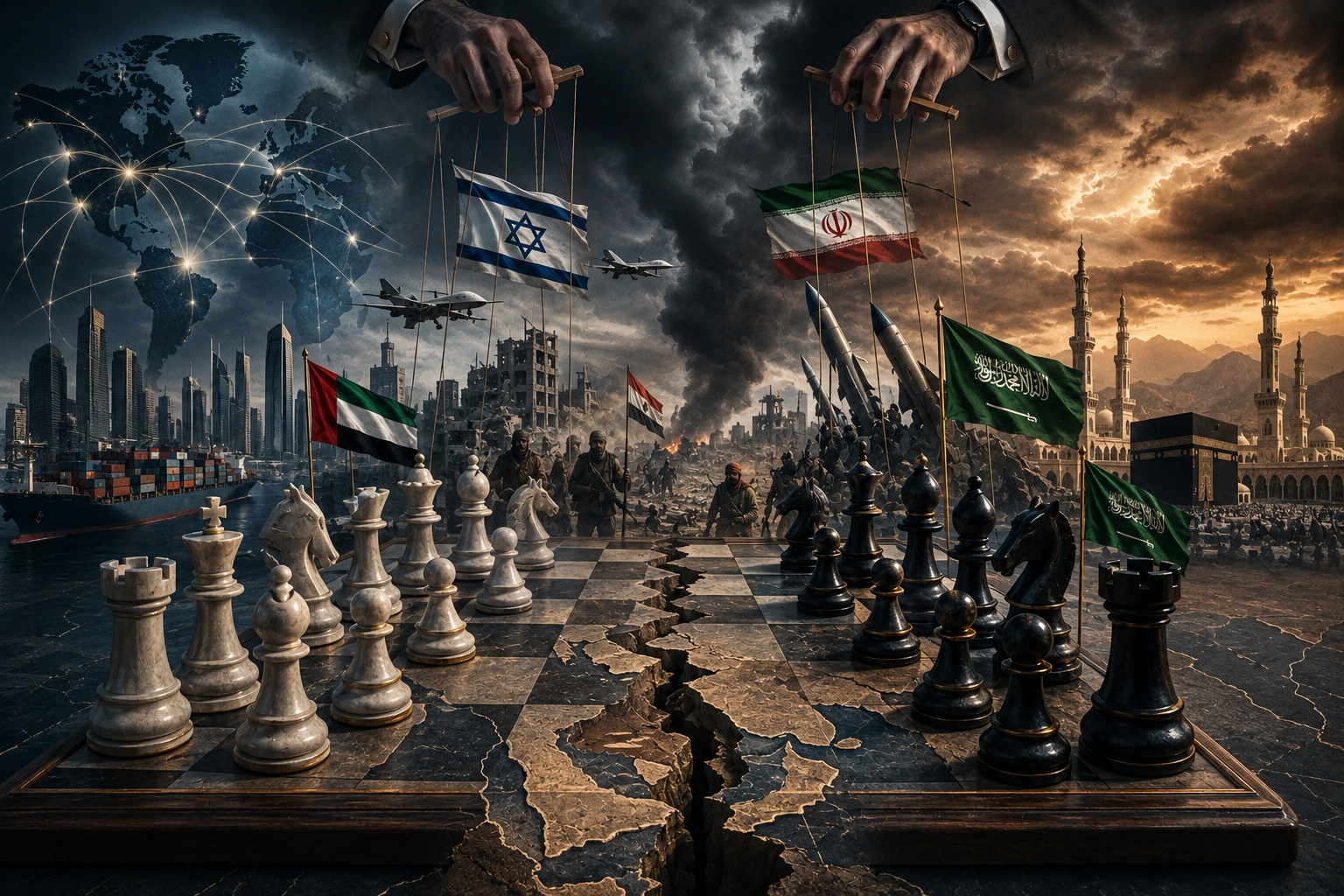
The big-picture structure and most important insight is that there is no “Sunni bloc” vs Islamic Iran.
Instead, the reality is cooperative Sunni states, (Pakistan, Turkiye, Qatar, Oman); swing/hedging states (Saudi Arabia, Malaysia); and adversarial or aligned with anti-Islamic Iran security posture (Bahrain, UAE, Kuwait, Jordan and sometimes Egypt).
The Sunni world is not unified against Iran. Some Sunni states cooperate closely with it (Qatar, Turkiye, Pakistan); some balance between rivalry and diplomacy (Saudi) while others are structurally aligned against it (Bahrain, UAE, Kuwait, Jordan).

Why some Sunni scholars, even those otherwise known to be knowledgeable about the Qur’an, are unable to understand that the concept of Wal...

Surviving for 37 years, Islamic Iran has defied all predictions and has made great strides in all fields of human endeavor. This is a remark...
The sacred community versus the civil society: two different worldviews.