
 Archives
Multimedia
Donate
About
Sign In
Archives
Multimedia
Donate
About
Sign In



 Crescent International


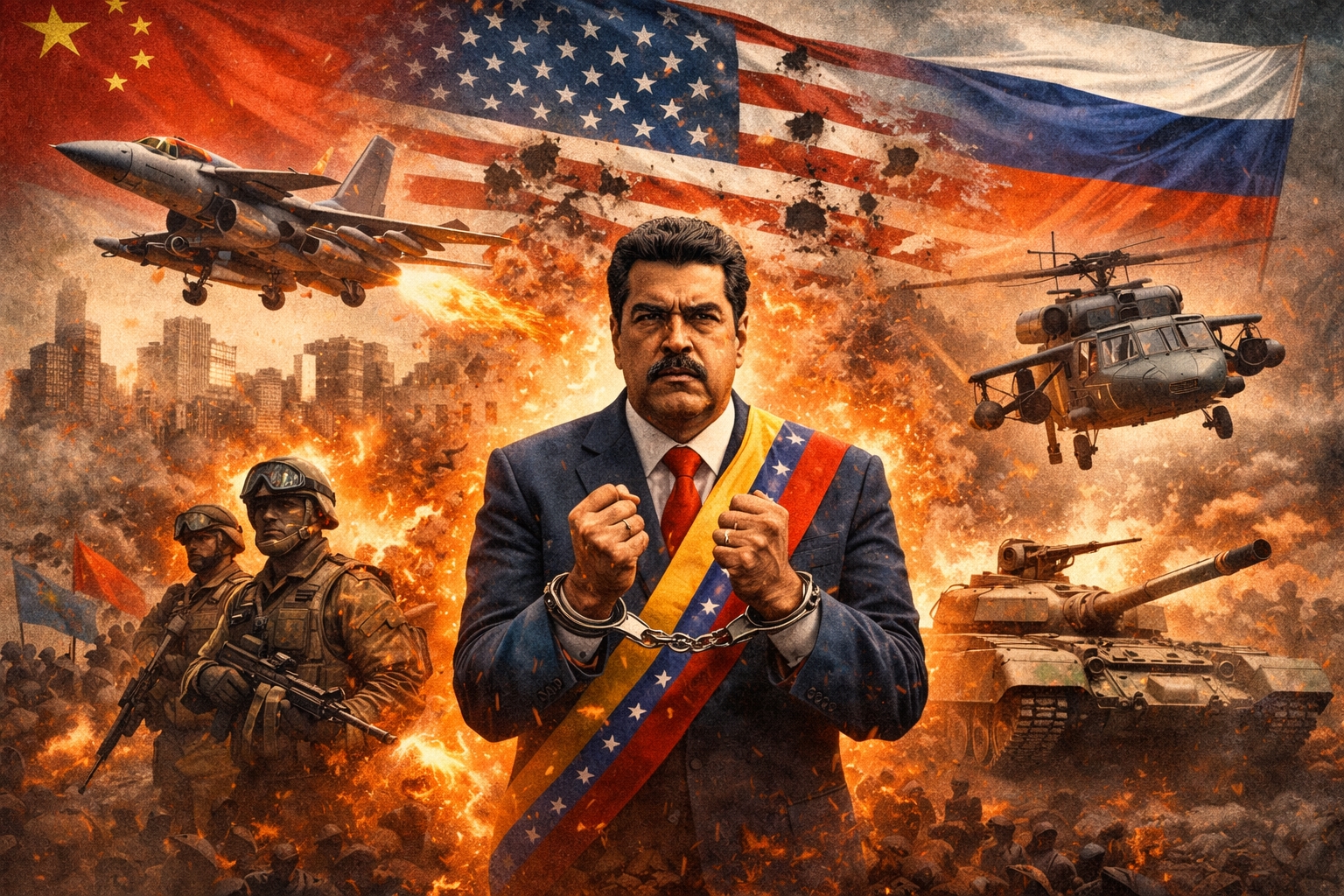
While much of the world got stuck on the optics of the kidnapping of Venezuela’s president, Nicolás Maduro, the more serious analysts examined the deeper outcomes which are likely to be the result of this latest American aggression.
One of the key long-term dynamics is how Russia and China will respond to this criminal act against their close ally in South America.
Many were surprised by the publicly restrained tone from both Beijing and Moscow.
While Russia is unlikely to respond in a dramatically escalatory way, China’s slower, more deliberate—yet sophisticated—response may prove far more consequential.
To understand why, it’s crucial to grasp why Beijing will interpret this as a major American escalation.
As pointed out by prominent Iranian analyst Ehsan Safarnejad, what happened in Venezuela is a major problem for China precisely because it signals a shift from rhetoric to precedent: if Washington is willing to kidnap a head of state in a move untethered from any serious international legal cover, then “red lines” become disposable when multipolar alignment is at stake.
Beijing understands that the US cannot easily confront China directly—militarily or economically—so it will instead fight China in its periphery by punishing visible partners and making an example of them.
Venezuela is not just a symbolic ally; it is a strategic node of resources and alignment.
The deeper damage, however, is deterrence-by-terror: once a country watches an allied government gets humiliated, destabilized, or removed, every future Chinese offer (infrastructure-for-resources, development finance, connectivity) is weighed against a new cost—US retaliation.
In that sense, the Venezuela operation is not only about Caracas; it is about disciplining the entire global South into hesitation, slowing the momentum of multipolar consolidation by turning partnership with China into a high-risk decision.
This phenomenon puts China’s global strategy at risk.
Beijing’s current modus operandi is to co-opt other parts of the world via economic incentives and a doctrine of political non-meddling.
This approach that has produced tangible results from Africa to Latin America, Canada and into parts of Europe.
The Venezuela case sent a clear message to Beijing that Washington may no longer even pretend to contain China through political and economic mechanisms alone.
That raises the next question: what exactly will China do?
Anyone imagining that China will start seizing US ships or “destabilizing America from within” is misreading how Beijing typically operates.
A more likely response is a scaled, opportunistic economic countermove: deepening investment footprints in Africa and South America—and, most importantly, expanding leverage in Europe through targeted, high-value deals that European governments and industries will find difficult to refuse.
One of the clearest illustrations of how China’s pushback can be sophisticated, yet firm is the way it has handled Nvidia.
Beijing has shown it is willing to apply regulatory pressure on US champions, including launching an anti-monopoly investigation into Nvidia under China’s Anti-Monopoly Law.
In January 2026, Chinese officials reportedly tightened the screws further by indicating that access to Nvidia’s H200 AI chips would not be broadly reopened: some technology firms were told purchases would be approved only under narrowly defined “special circumstances,” such as university research, rather than as routine commercial procurement.
Another Beijing’s “harsh” response will likely take the form of deepening ties with Russia and Iran.
Some readers may ask why Russia itself is unlikely to respond more aggressively to American jingoism.
The answer is that Moscow is already responding—in Ukraine, where Russia is fighting what is effectively a semi-direct war with NATO.
Russia has little appetite for overextension, because it views the Ukraine front as its foremost priority in confronting—and ultimately weakening—NATO.
With the “genius” Donald Trump in charge of American imperialism and a major in charge of the entire US military, China is well positioned not to interrupt the current regime in the White House from crashing American imperialism.
Beijing will continue playing chess while allowing the US to play checkers.


America’s list of enemies is not only long, it keeps growing. It is America’s systemic need. By conjuring up fear of real or imagined en...
Venezuela’s president, Hugo Chavez, won a clear victory in last month’s recall referendum, called by the country’s US-supported right-...
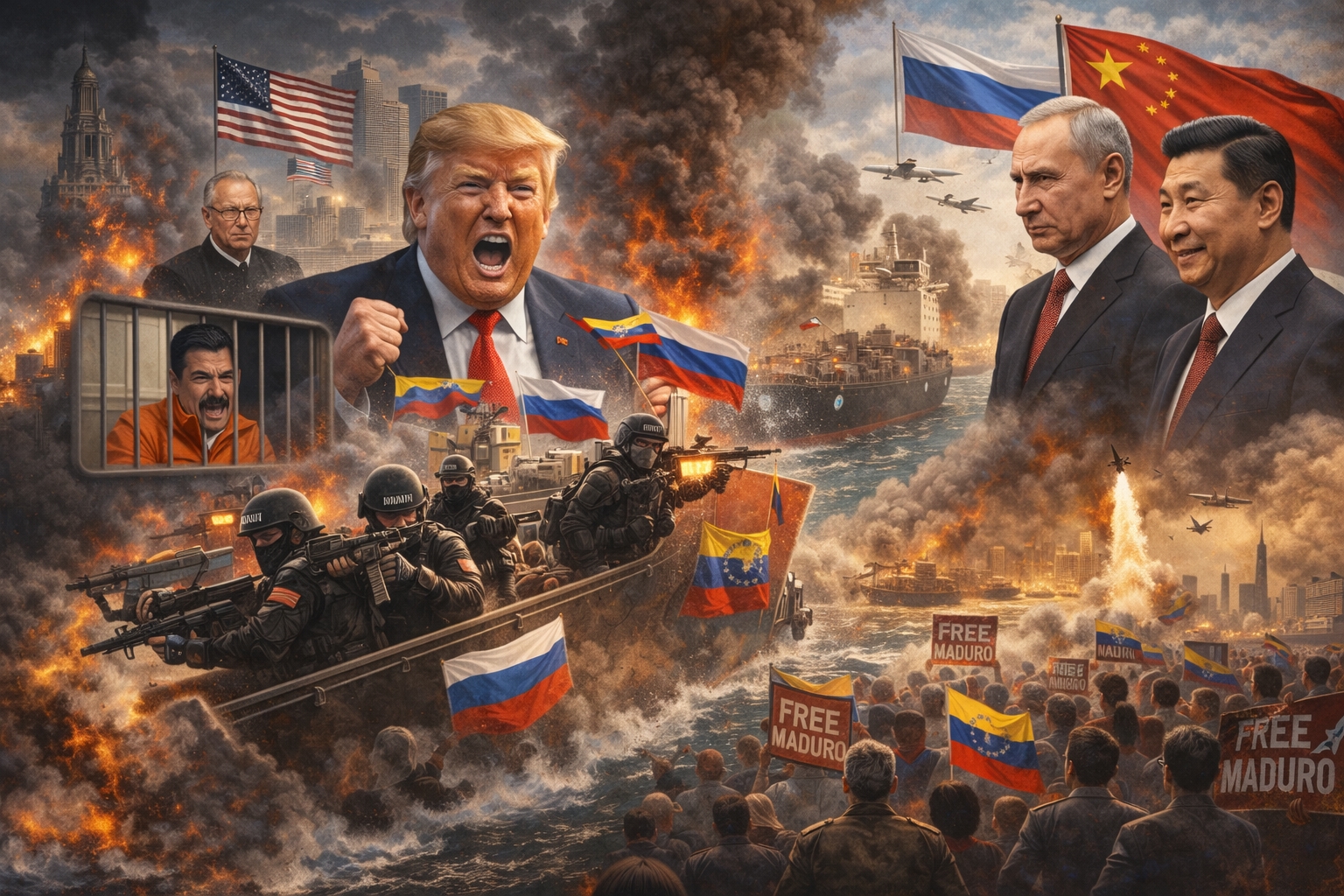
When your enemy is busy self-destructing, why interrupt him? This is what seems to be the case with Russia and China following Trump’s ill...
The scandalous manner in which the US has attempted to overthrow the legitimate government of Venezuela but failed shows the Empire has lost...
