 Archives
Multimedia
Donate
About
Sign In
Archives
Multimedia
Donate
About
Sign In



 Muslim Mahmood


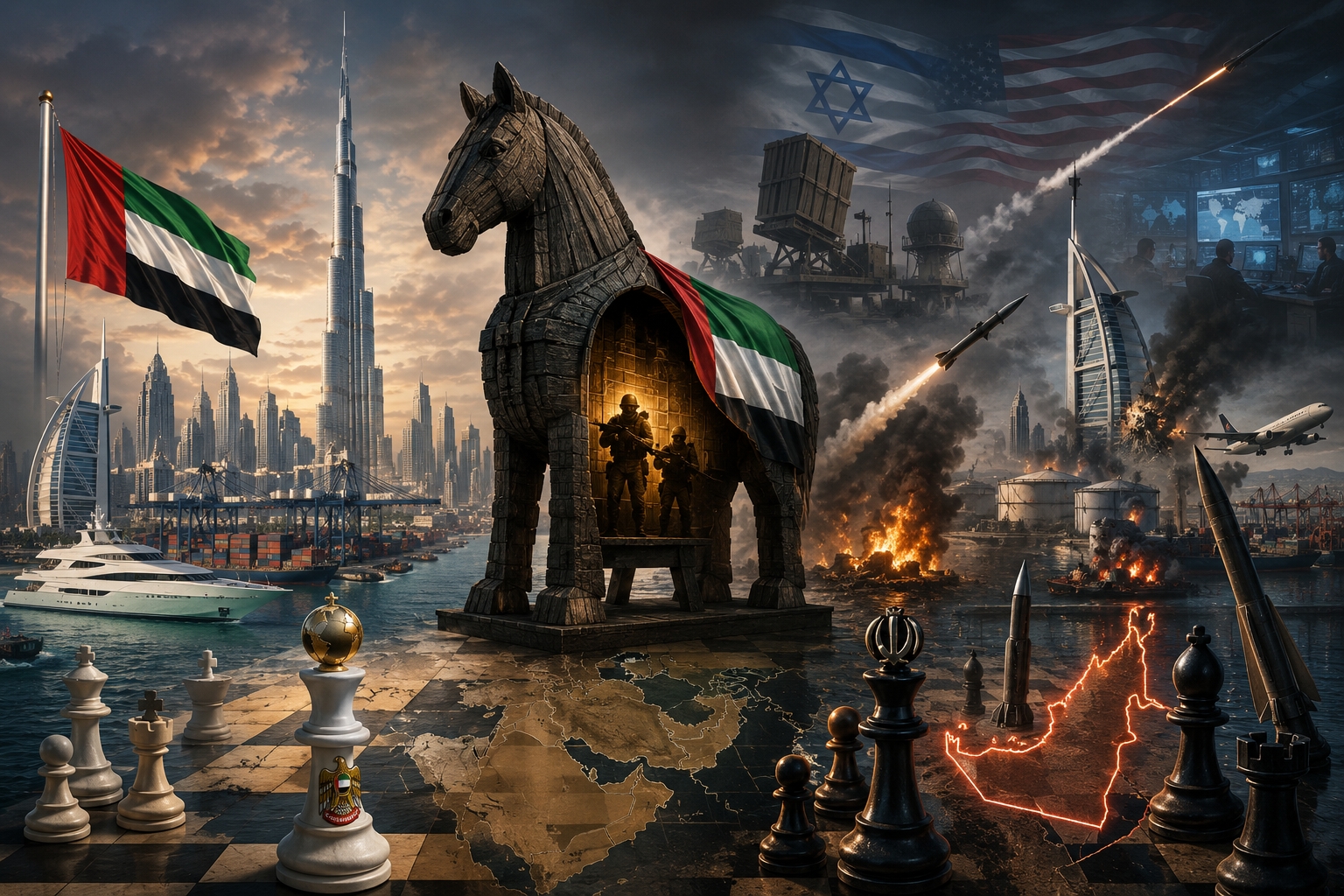
For decades, the United Arab Emirates (UAE) has cultivated an image of a glittering, high-tech oasis in a region often defined by volatility.
From the Burj Khalifa to the sprawling ports of Jebel Ali, the federation of seven emirates presents itself as the ultimate success story of globalization—a hub where capital, tourism, and innovation converge.
However, beneath this polished exterior of glass and steel lies a calculated and aggressive strategy that is attempting to reshape the geopolitical architecture of West Asia.
As we look toward the mid-2020s, the UAE is no longer content to be a junior partner in regional alliances or a passive member of global cartels.
It has emerged as a disruptive force, a “Trojan Horse” within the traditional Islamic world that is seeking to redefine the relationship between the state, religion, and global economy.
To understand the UAE’s current trajectory, one must first understand its foundational fear: the impact of Islam in politics.
While the entity presents a veneer of Islam, the ruling elite in Abu Dhabi view the mobilization of religious sentiment as an existential threat to their survival and stability of the global financial system.
This is not a mere ideological preference but a core security doctrine.
The lessons of the Arab Spring remain etched into the Emirati rulers’ consciousness.
They watched as established regimes were toppled by movements that found their voice and organizational strength within the mosque.
In response, the UAE became the first Persian Gulf state to systematically dismantle the mosque’s role as a site of political mobilization.
Today, the religious landscape in the UAE is one of total state control.
Friday sermons do not reflect scholarly Islamic teachings but are drafted by the Ministry of Awqaf, a secular civil authority.
This policy effectively demobilizes the power of Islam to inspire social or political change, turning the faith into a private matter of ritual rather than a public force for mobilization.
This “securitization of the soul” is the bedrock of what some analysts have termed “Muslim zionism”—a policy of deep ideological alignment with secular and western interests against any form of Islamic expression, whether it be the Muslim Brotherhood or its regional offshoots.
This ideological war is not confined to Emirati borders.
It is the primary driver of UAE’s foreign policy, particularly in Yemen and Sudan.
In Yemen, the Emirati involvement was never purely about countering Ansarallah or restoring a specific government; it was a targeted campaign to eradicate Al-Islah, the Yemeni branch of the Muslim Brotherhood.
Abu Dhabi’s strategy involved the deployment of mercenary units and specialized squads—some reportedly linked to foreign private military contractors and intelligence networks—to conduct “capture and kill” operations against Islamically-oriented politicians and activists.
By backing the Southern Transitional Council, the UAE sought to carve out a sphere of influence that is ideologically sterilized of Islamic teachings, securing strategic maritime assets in the process.
This pattern of intervention extends to the brutal civil war in Sudan.
The UAE has faced mounting international scrutiny and allegations of complicity in humanitarian catastrophes due to its support for the Rapid Support Forces (RSF).
By backing the RSF, the UAE is pursuing a two-pronged strategy: securing its own food security through Sudanese agricultural land and ensuring that a pro-Emirati, anti-Islamic military faction holds the reins of power in Khartoum.
This involvement illustrates the lengths to which Abu Dhabi will go to project its influence, even when such actions risk diplomatic isolation or accusations of fueling genocide.
The UAE is betting that its economic utility to the west will provide a shield against any meaningful accountability for its regional maneuvers.
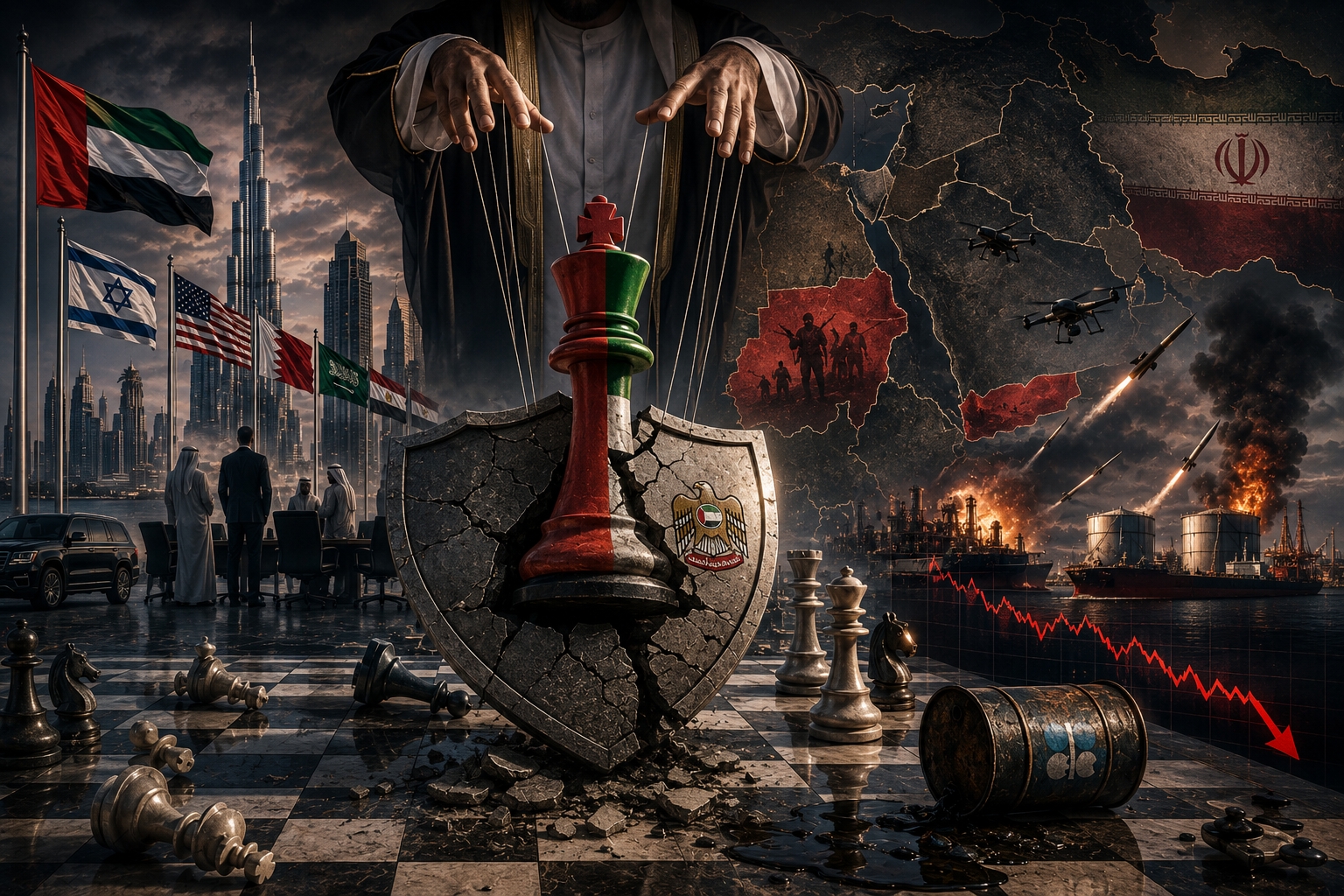
The quest for strategic autonomy reached fever pitch on May 1, 2026, when the UAE took the disruptive step of exiting OPEC.
For years, the UAE had chafed under the production quotas imposed by the Saudi-led organization.
Abu Dhabi’s economic survival depends on a rapid monetization of its massive oil reserves to fund its transition to a post-carbon economy.
The goal is ambitious: to increase production to five million barrels per day by 2027, and eventually to six million.
Remaining in OPEC meant that billions of dollars in infrastructure investment would sit idle while other countries dictated the UAE’s fiscal future.
By exiting OPEC, the UAE has signaled that its national interest now supersedes regional solidarity.
This exit from OPEC is more than just an energy policy shift; it is a declaration of independence from the shadow of Saudi Arabia.
For decades, the Gulf’s energy and security architecture was built on the Riyadh-Abu Dhabi axis.
However, as the UAE pursues a supposedly market-driven energy strategy, it has positioned itself as a competitor rather than a partner of the Bani Saud.
This move introduces a new era of price volatility and weakens the collective bargaining power of the Gulf states.
For the UAE, the potential for increased revenue and the ability to respond rapidly to global market disruptions outweigh the risks of regional friction.
However, this drive for autonomy is being tested by the very alliances the UAE built to secure it.
The so-called Abraham Accords, signed in 2020, were marketed as a historic peace deal that would usher in a new era of prosperity.
In reality, the Accords were a strategic realignment designed to create a united front against Iran.
This alliance was not merely diplomatic; it was deeply military and technological.
By February 2026, when the United States and Israel launched an illegal war of aggression against Iran, the UAE found itself at the epicenter of a storm it had helped brew.
Abu Dhabi’s secret decision to allow Israeli-operated Iron Dome batteries and live intelligence sharing on its soil transformed the entity from a neutral financial hub into a primary combatant.
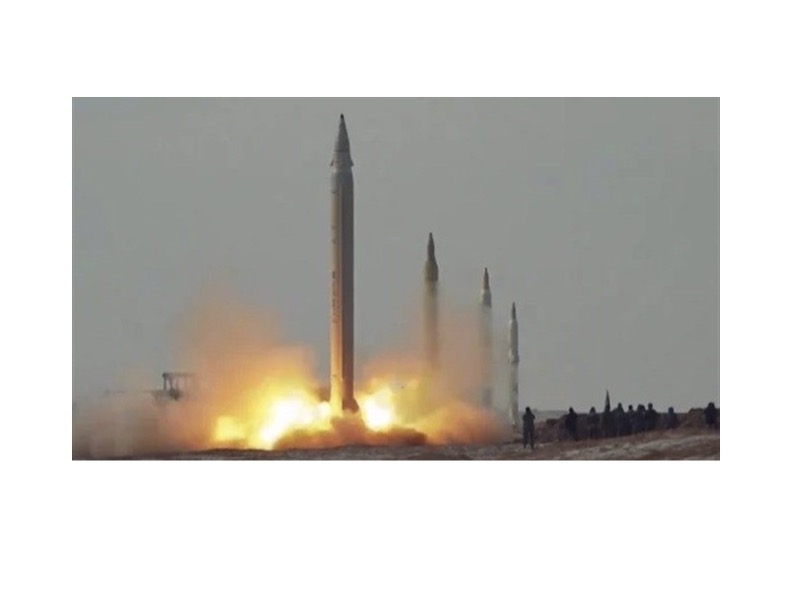
Iran’s response was swift and devastating.
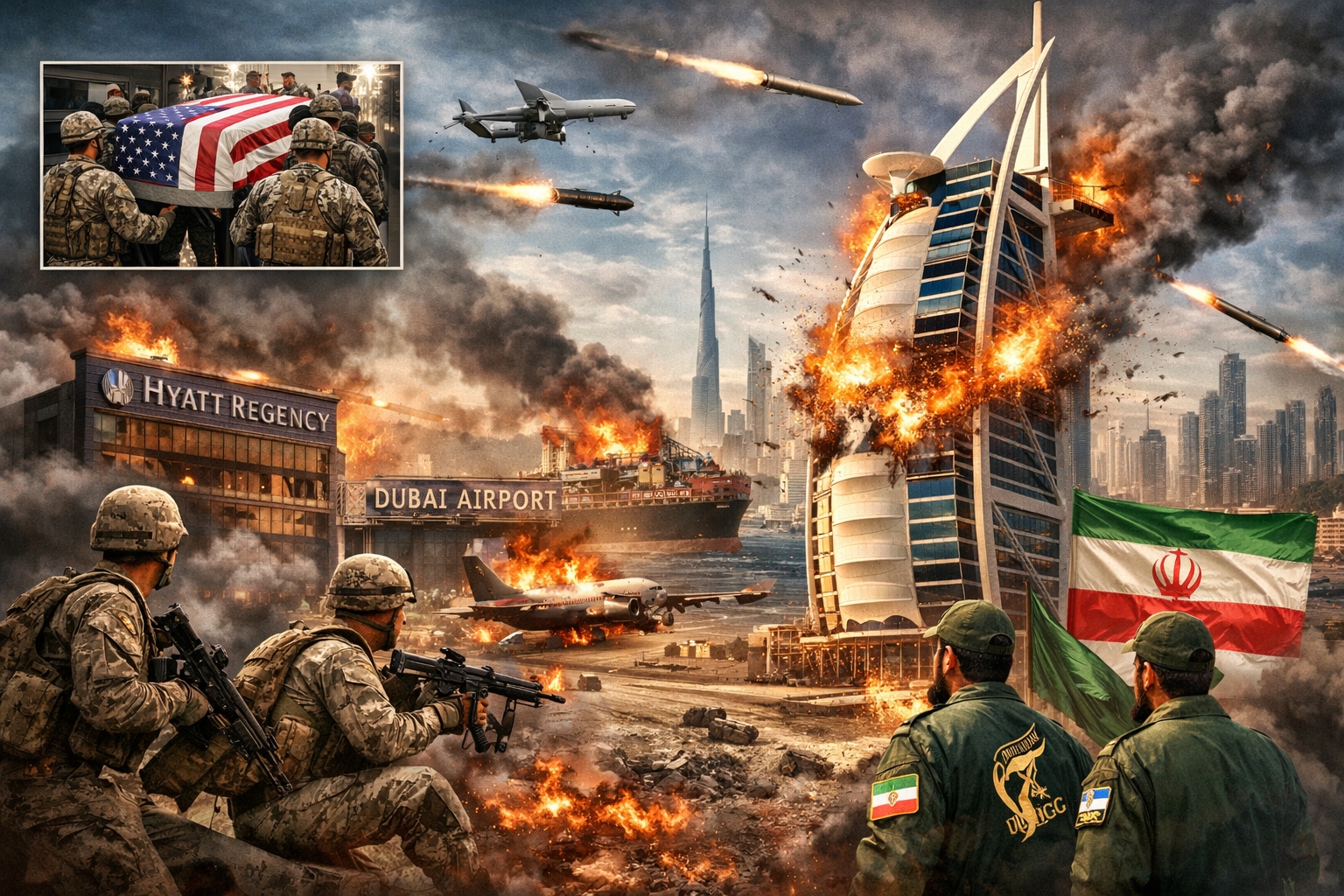
The narrative of the UAE as a safe haven for international investors was shattered when missiles struck the oil facilities in Fujairah and the Jebel Ali port in Dubai.
These were not attacks on remote desert bases; they were strikes against the symbols of Emirati identity.
The targeting of landmarks like the Burj Al Arab and Dubai International Airport sends a clear message: the UAE’s economic model is fragile and entirely dependent on a security environment that no longer exists.
The blockade of the Strait of Hormuz by Iranian forces has further complicated this picture.
The UAE has long positioned itself as a guardian of maritime security, calling for international intervention to keep the world’s most vital oil artery open.
Yet, despite its efforts to build bypass pipelines to Fujairah, those workarounds can only handle a fraction of its normal export volumes.
The UAE is now a state under siege, having intercepted hundreds of ballistic missiles and thousands of drones in a conflict that it quietly joined but publicly denied for as long as possible.
The internal social contract of the UAE—security and wealth in exchange for political passivity—is now under immense strain.
The federation’s economy, image, and very identity are built on the premise of being an island of stability in a sea of chaos.
With Iranian munitions falling 140 kilometers from Dubai and the Emiratis finding themselves diplomatically isolated from neighbors like Qatar and Kuwait, the Trojan Horse strategy is facing its ultimate trial.
The UAE bet on the US-Israeli alliance winning a fast, decisive war against Iran.
As that war drags on, Abu Dhabi is realizing that the price of strategic autonomy may be higher than it anticipated.
The UAE’s trajectory represents a fundamental shift in the Muslim world.
It is a state that uses the language of modernization and tolerance to mask a rigid system of control and a ruthless pursuit of regional dominance.
By seeking to neutralize Islamic expression at home and abroad, while simultaneously breaking away from traditional economic structures like OPEC, the UAE is attempting to build a new kind of architecture—one that is market-responsive, technologically advanced, but fundamentally disconnected from the traditional political aspirations of its broader religious community.
Can an entity sustain such a radical transformation while under direct military threat?
The UAE’s gambit to exit OPEC and its controversial role in regional conflicts have set it on a collision course with both its neighbors and the very forces of history it seeks to suppress.