
 Archives
Multimedia
Donate
About
Sign In
Archives
Multimedia
Donate
About
Sign In



 Muslim Mahmood


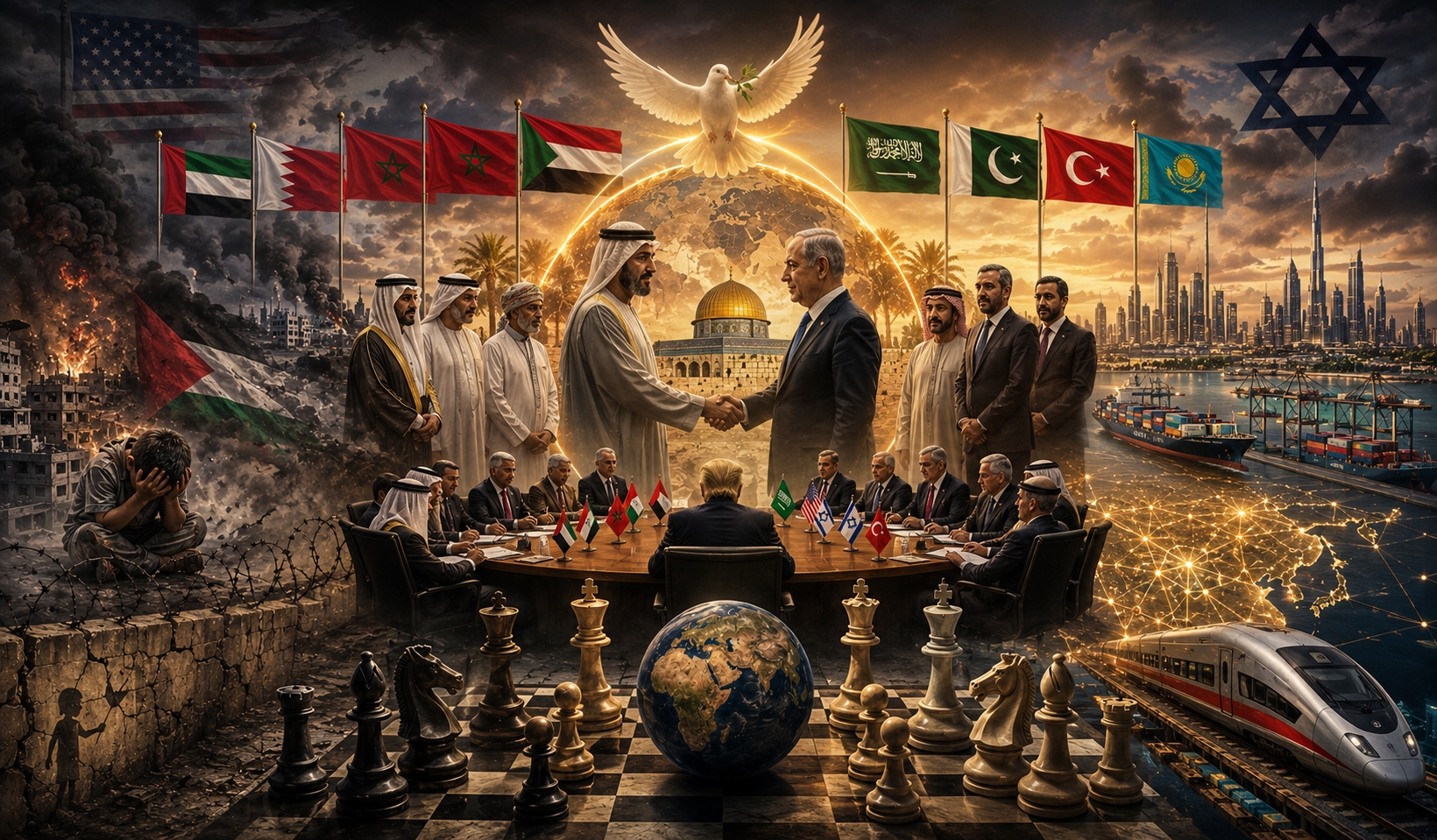
The shift began not with a treaty, but with a series of quiet understandings in the corridors of power across West Asia, where the old order is being dismantled by the very states that once relied on it.
While the official narrative out of Washington depicts the Abraham Accords as a historic pivot toward peace, internal assessments and seasoned diplomatic voices suggest a far more complex reality of transactional security and strategic hedging.
Timeline of the Abrahamic Realignment
The Mirage of Regional Peace
Former American diplomat Chas Freeman, a veteran of the West Asian political landscape, argues that the US is currently retreating from its traditional dominance as regional players begin to assert strategic autonomy.
Freeman characterizes the Abraham Accords not as a path to peace, but as a “diversion” designed to secure American support for authoritarian internal security while buttressing a defensive stand against Iran.
According to Freeman, the age of Euro-American global ascendancy is past, and states in the region are now diversifying their international relationships to adjust to a multipolar reality where they no longer take direction from external powers.
Furthermore, Freeman notes that Israel’s military options are largely spent, having failed to achieve a lasting peace through conventional force.
He argues that while Israel can continue its current military posture, actual stability can only come from reconciliation with the Palestinian people and neighboring Arab states—a resolution the Accords were largely designed to bypass.
This assessment is shared by some analysts who view the current expansion efforts as a distraction technique to mask the high costs of recent military escalations in West Asia.
Trump’s hopes for a “New Order”
In his second term, Trump has pushed for an even more aggressive policy, attempting to establish a “new order” in West Asia that integrates Arab and Muslim-majority states into a formal peace agreement with Israel.
This policy is rooted in geoeconomics, utilizing financial and economic incentives to circumvent long-standing political grievances.
His regime has explicitly linked the end of the current war to the immediate normalization of relations, even floating the provocative suggestion that the Islamic Republic of Iran could eventually join the framework.
While Trump describes the Accords as creating a “financial, economic, and social boom,” the push for expansion has met significant resistance.
Saudi, Qatari and Pakistan rulers have reportedly remained silent during recent demands to sign the agreement, reflecting the prohibitive political costs of normalization while Israel’s genocidal war on Gaza continues.
Despite this, the Trump regime continues to view the Accords as a blueprint for US leadership, favoring transactional diplomacy over traditional practices.
The Abraham Security Alliance Against Tehran
The coalition is functioning as a critical security bulwark against Iranian influence by integrating local military and intelligence capabilities.
This “Abraham Security Alliance” has already seen operational cooperation; during Iranian missile assaults in 2024, the UAE shared trajectory intelligence and Bahrain coordinated naval interceptions to protect Israeli territory.
Shared threats from aligned groups in Yemen and Lebanon have solidified these bonds, as Arabian rulers increasingly prioritize long-term strategic interests over popular domestic pressure.
The military integration extends into the industrial sector, with Israeli defense firms establishing subsidiaries in the UAE to co-develop anti-drone systems and electronic warfare suites.
This cooperation allows western powers to shift from direct intervention to a model of regional burden-sharing.
However, some experts warn that this encirclement may force Iran into a “threshold” nuclear dynamic, where the degradation of its conventional power makes the pursuit of nuclear weapons the only remaining deterrent.
Competition for Global Corridor
Underpinning the diplomatic maneuvers is fierce competition for control over West Asia’s strategic waterways and trade routes.
The proposed India-Middle East-Europe Economic Corridor (IMEC), designed to connect India to Europe through the UAE, Saudi Arabia, and Israel, serves as a direct competitor to China’s Belt and Road Initiative.
This project only remains viable within an expanded normalization framework, binding regional partners to American technological and economic systems.
The strategic importance of maritime chokepoints like the Strait of Hormuz—through which 20% of global oil supply passes—means the US cannot fully disengage, even as its focus shifts toward the Indo-Pacific.
Non-state actors have discovered that they can impose global costs by disrupting these corridors, creating a new “chokepoint order” where the command of circulation is as vital as the control of territory.
This has led to a state of “strategic exhaustion” for US power, as it is drawn into a persistent burden of crisis management across global shipping lanes.
The Unresolved Variable of Popular Sentiment
Despite the rapid integration of defense and technology sectors, the “warm peace” envisioned by the Accords’ architects has struggled to penetrate the broader public in West Asian states.
Popular opposition remains a significant obstacle, with citizens in signatory states increasingly viewing normalization as a betrayal of the Palestinian cause.
In 2024, the murder of a Chabad emissary in the UAE raised serious questions about the long-term safety of the Jewish community within the region and the resilience of the interfaith “coexistence” model.
The future viability of the framework hinges on its ability to manage these internal pressures while expanding to include regional hegemons like Saudi Arabia.
The Accords have survived the initial shock of the Gaza war but the political costs for new signatories remain high as long as there is no credible commitment to Palestinian statehood.
In the absence of a settlement, some fear that the attempt to isolate the Palestinian issue could eventually push the region back into a cycle of violent struggle as a last resort.
Realpolitik in a Fragmented Landscape
The Abraham Accords are evolving from a set of symbolic peace deals into an adaptive infrastructure of security and industrial cooperation.
This transition reflects a world where power is measured by resilience—the capacity to absorb structural shocks without collapse.
As the US is pushed from being the “world’s policeman” to a facilitator of local alliances, the region is left to find its own balance between the competing influences of Washington, Beijing and Tehran.
The truth of the Accords lies in this shift.
They are less about ending conflict and more about managing a new era of systemic disorder.

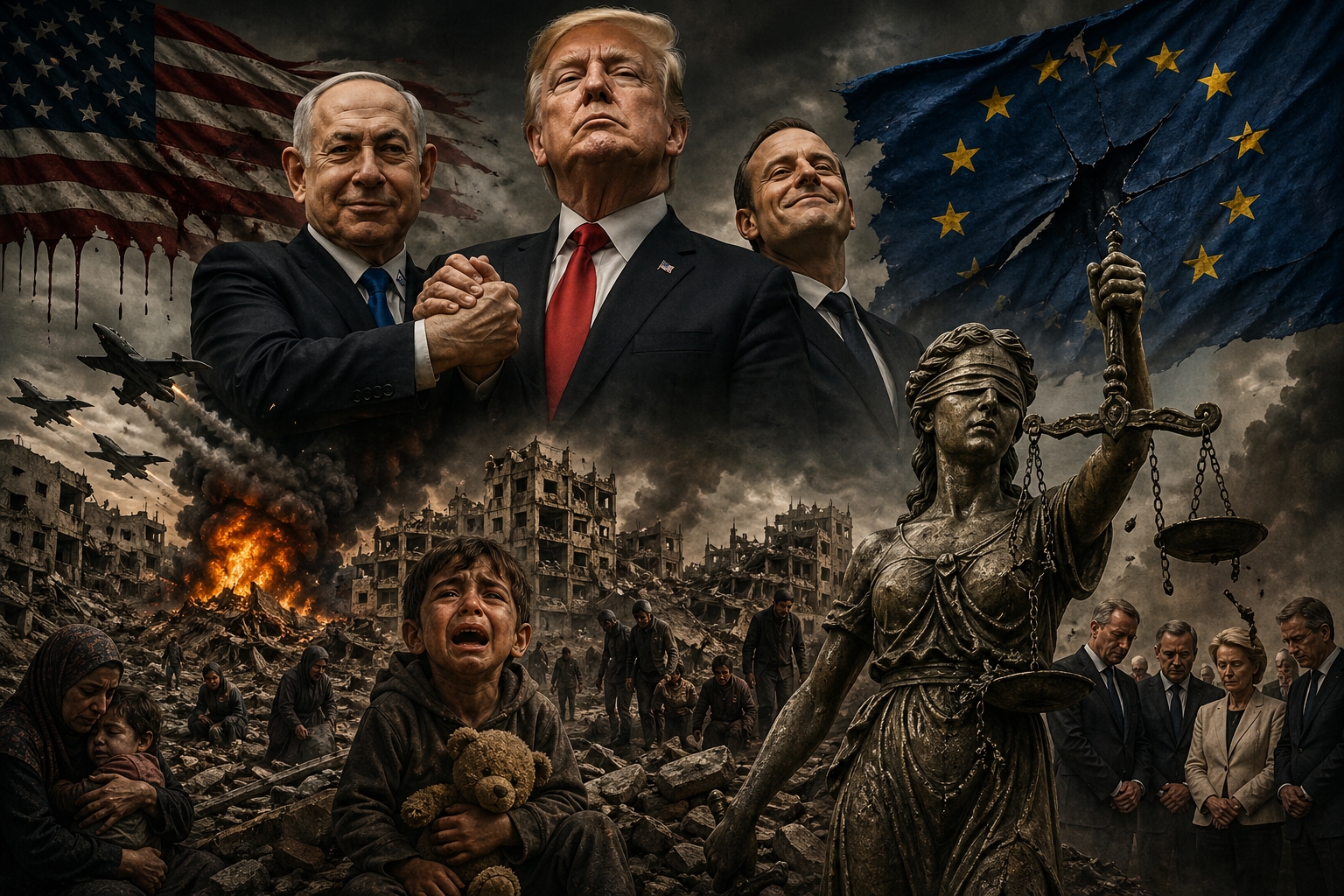

Trump may be a certified lunatic but the with position he holds and the power he wields, he poses a clear danger to the entire world. With h...
