 Archives
Multimedia
Donate
About
Sign In
Archives
Multimedia
Donate
About
Sign In


 Muslim Mahmood


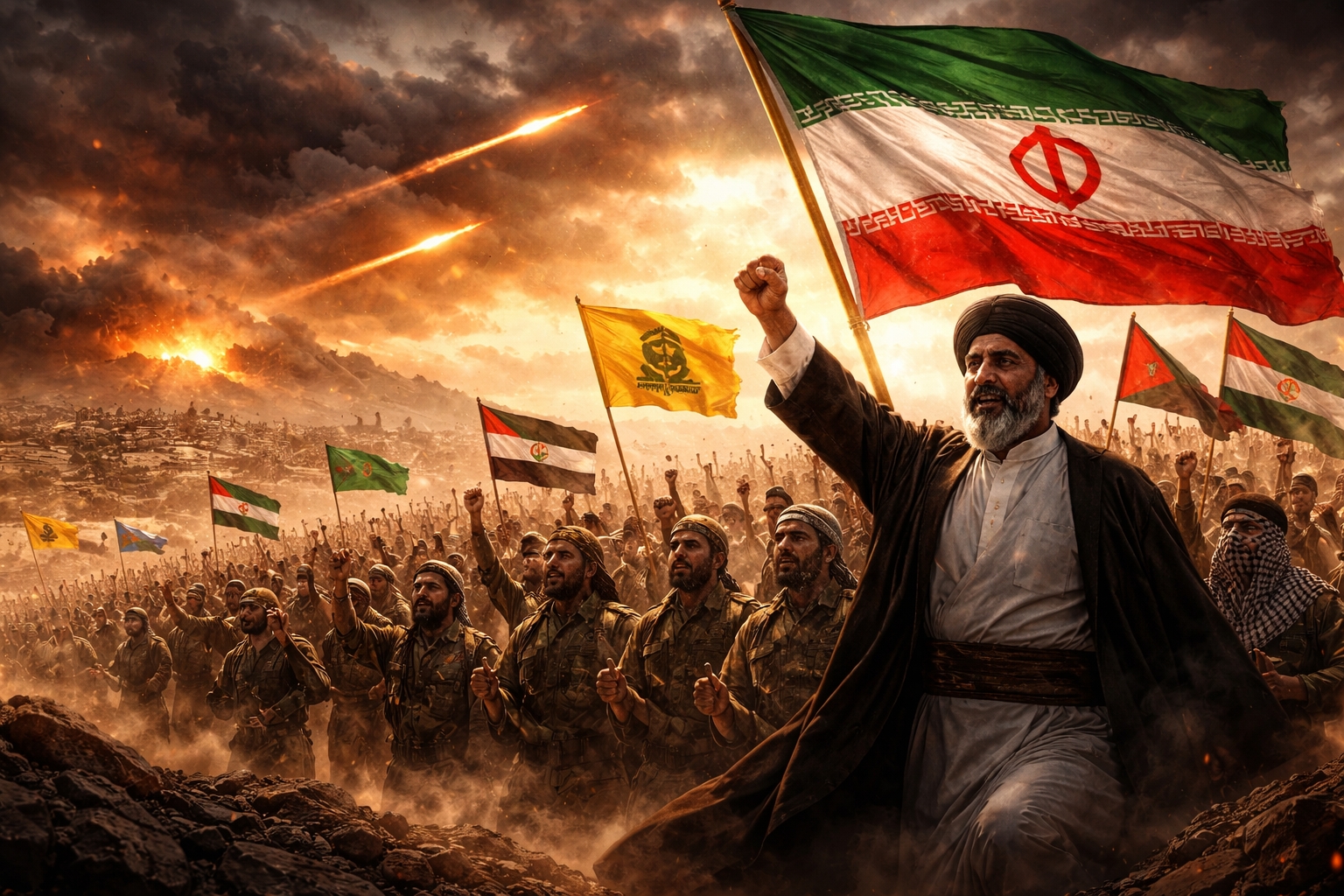
The Islamic Revolution is often mistakenly viewed as a localized historical event confined to the borders of Iran. However, a deeper analysis reveals that it is a universal, repeatable process driven by a profound intellectual shift and a global political consensus.
After nearly half a century of existence, its continued survival in the face of intense external aggression is not a sign of unviability, but rather a testament to the resilience of an ideology rooted in what is described as the “divine paradigm.”
Intellectual Foundations of the Movement
The core of revolution’s viability lies in a preceding “intellectual revolution.” This process involves a fundamental revision of how Muslims understand their history and destiny. It moves away from a stagnant, frozen theology toward a dynamic science of movement and achievement.
By using the life-example of the Prophet (ﷺ) as a “goal achieving system” rather than a mere collection of historical facts, the movement gains the ability to generate new political and social theories. This intellectual shift allows the revolution to transcend the limitations of the post-colonial order, enabling Muslims to regain control over their historical direction.
Resilience through Regenerative Power
A critical distinction must be made between structural power and regenerative power. Structural power—the physical institutions, bureaucracies, and administrative systems of a state—is inherently destructible. In contrast, real power is found in the values of faith, piety, and commitment.
This regenerative power allows a movement to recover from defeat and overcome overwhelming technological disparities. The history of modern struggles in regions like Afghanistan, Lebanon, and Somalia serves as evidence that faith-driven movements can successfully defy superpowers.
The resilience of the Iranian people is a manifestation of this power, suggesting that the Islamic Revolution is sustainable because its strength is not purely material, but rooted in the unwavering commitment of the masses.
Convergence of Global Political Thought
The global viability of this revolutionary model is further supported by a growing convergence of political thought across the Muslim world. Historically divided along sectarian lines, Sunni and Shi’i political perspectives are increasingly aligning on the essential need for a single, pious leader to guide the community. This convergence views the concept of the guardianship of the jurist not as a sectarian quirk, but as a functional equivalent to the classical khilafat. This shared political mindset creates a “global political consensus” that transcends national, racial, and linguistic boundaries.
By rejecting the western-imposed nation-state model, which is often viewed as a tool for neo-colonialism, the movement seeks a total transformation of the global order.
A Model for Replicability
The 1979 Islamic revolution is best understood as a “point in time” where forces of change converged, rather than an isolated phenomenon. It serves as an “open university” for the global Ummah, providing a blueprint for the “next Islamic Revolution and the one after that.”
While the Iranian state initially relied on old administrative structures, the theory of the revolution emphasizes that future Islamic states must move toward modest, low-cost systems that reflect the simplicity and justice of the early Islamic era. This process of change is not always sudden; it often moves through “partial revolutions” and interim movements that build the necessary experience and leadership for a total transformation.
Relevance in a Rapidly Evolving World
In the contemporary world characterized by shifting global hegemonies and moral uncertainty, the Islamic Revolution offers an alternative civilization based on justice and piety. Its viability is not measured by its acceptance by the west, but by its ability to provide a moral structure for its people. The strategic resourcefulness displayed in leadership transitions and the continued defiance of external hegemony indicate that the revolution is not only feasible but increasingly relevant.
As the global Islamic movement continues to mature, it aims to dismantle the legacy of colonialism and establish a new world order that prioritizes divine values over secular consumerism and exploitation.
· What are the specific stages of an Islamic Revolution? · How does Dr Kalim Siddiqui define the role of muttaqi leadership? · Why is an intellectual revolution necessary before a political one?
The Resilience and Global Viability of the Islamic Revolution
The provided texts explore the evolution and global potential of Islamic political movements, primarily through the framework of Dr. Kalim Siddiqui’s scholarship and the historical example of the Islamic Revolution in Iran. These sources argue that a fundamental intellectual revolution is necessary to move beyond stagnant theology and neo-colonial structures to reclaim Muslim destiny. The literature emphasizes that the Sirah and Sunnah of the Prophet serve as timeless paradigms for generating modern political power and social transformation.
Current global pressures, such as western hostility and the failure of secular nation-states, are seen as catalysts driving a global consensus toward total revolutionary change. Despite internal sectarian barriers and external aggression from western powers, the texts maintain that the Islamic movement remains a resilient and sustainable force. Ultimately, the author view the Iranian experience as a viable precursor to a broader, international revival of the Islamic State.
· How can the Prophet’s life serve as a modern political model? · What defines the ‘intellectual revolution’ needed for global Islamic change? · Why is the current nation-state system considered incompatible with Islam?
The provided text examines the enduring legacy and global viability of Iran’s Islamic Revolution nearly five decades after its inception. Despite facing significant external pressures and geopolitical aggression, the author argues that the movement remains a potent ideological force in the modern era. The narrative highlights the populace’s resilience and the government’s ability to seamlessly transition leadership as evidence of its systemic stability.
Furthermore, it explores the potential for these revolutionary principles to be exported and implemented successfully in other international contexts. Ultimately, the source asserts that the revolution’s ability to survive suggests it is a sustainable model for those pursuing social and political justice. What core principles make the Islamic Revolution’s ideology sustainable today? How can the Iranian model be applied to other regions? What role does leadership play in the revolution’s ongoing resilience?


As the Islamic revolution enters its 40th year, we examine its achievements and challenges
Is it a coincidence that a day after Iran joined SCO, riots erupted over the unfortunate death of a young woman in hospital (not the police ...

Iranians will go the polls again in a week’s time to vote in the second round of presidential election. The two front-runners, neither of ...