
 Archives
Multimedia
Donate
About
Sign In
Archives
Multimedia
Donate
About
Sign In



 Crescent International


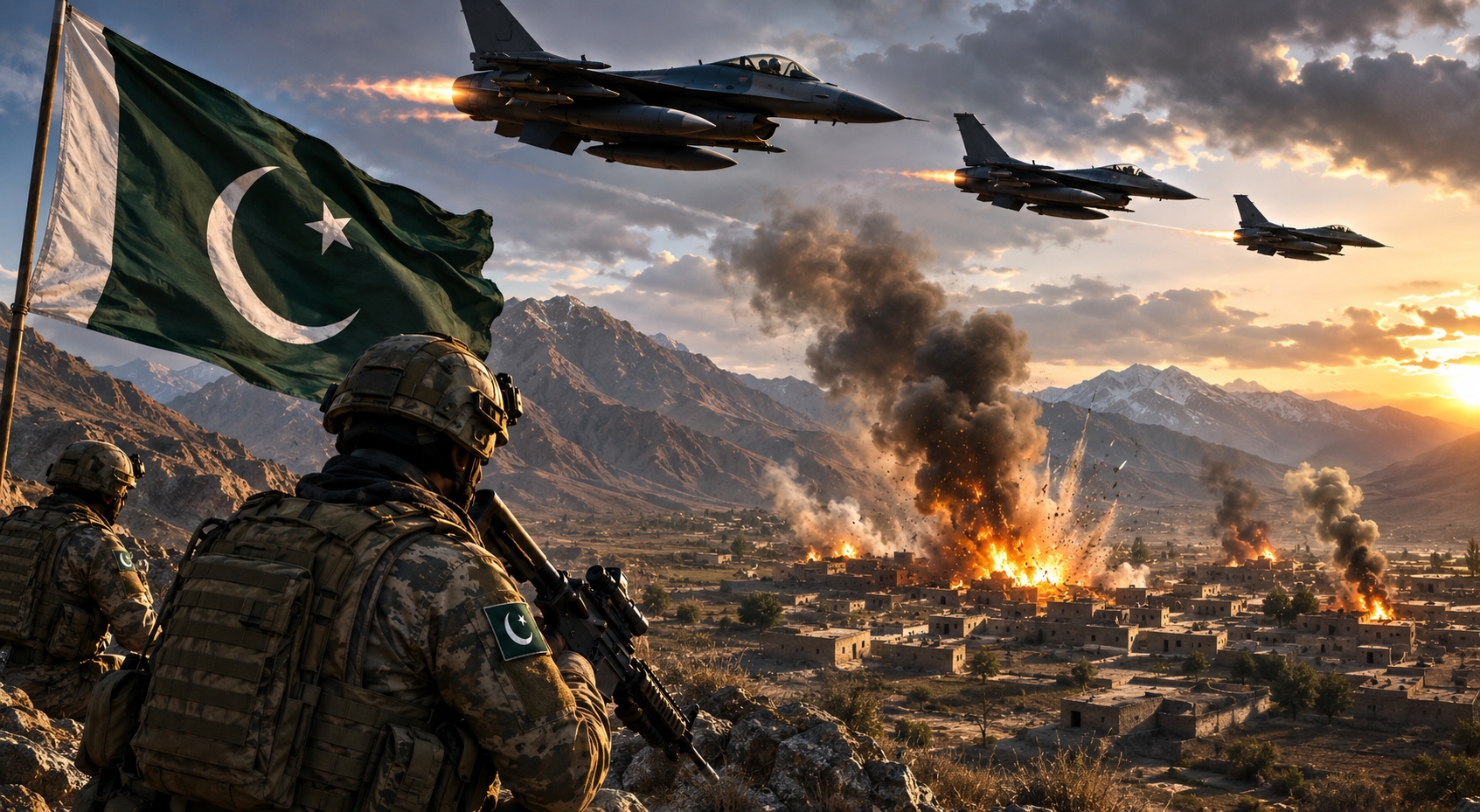
In a series of airstrikes carried out by Pakistani fighter jets on Afghanistan’s eastern provinces of Paktia, Paktika and Kunar on the night of June 28, at least 36 civilians were killed and more than 160 others wounded.
The deputy spokesman for the Islamic Emirate of Afghanistan (IEA), Hamdullah Fitrat said the dead included women, children and elderly civilians.
The most deadly strike occurred in Mandokhail village in Chamkani district of Paktia province.
In the first strike, a residential home was hit killing an elderly man and a child and injured several other members of the family.
As local residents rushed to assist the victims, a second airstrike hit the area killing a further 28 people and injuring 158 others, Fitrat said.
In Giyan district of neighbouring Paktika province, Pakistani planes bombed a house in Walust village.
In this strike, six civilians, most of them women and children, were killed..
In Barolo village, Manogai district of Kunar province, another residential home was reportedly destroyed in an airstrike.
No casualties were reported but the house was obliterated.
Why is the Pakistan military, the de facto rulers of the country, launching airstrikes on Afghan civilians?
The official reason for the latest strike was the June 27 night terrorist attack on the local headquarters of the Pakistan Rangers (Sindh) in Karachi’s Gulistan-i-Jauhar area.
Three security personnel were killed and four were injured, according to Inter-Services Public Relations (ISPR), the military media wing.
The ISPR said the attack was carried out by terrorists “belonging to Indian proxy Jamaatul Ahrar (JuA)”, adding that three terrorists were killed and one was arrested, whom it identified as an Afghan national.
Accusing militant groups of being “Indian proxies” without looking into the underlying causes of their actions is a convenient way of escaping responsibility.
Pakistan claims that the JuA, a break-away faction of the Tehrik-e Taliban Pakistan (TTP), is based in Afghanistan’s border provinces from where they carry out cross-border attacks.
If so, what justification is there for attacking civilians, as the Taliban have claimed.
The Afghan government spokesman, Zabihullah Mujahid, posted photos of the children injured in the Pakistani strikes on his X account.
Former US Special Representative for Afghanistan Reconciliation Zalmay Khalilzad condemned Pakistan’s airstrikes.
In a statement posted on social media, Khalilzad said Pakistan had once again resorted to military action despite appeals from the international community and many Pakistanis to settle disputes with Afghanistan through diplomatic means.
“I have always condemned the killing of Afghan civilians by Pakistan, and I condemn it again today,” he said.
Two other prominent Afghans—former President Hamid Karzai and former Chairman of the High Council for National Reconciliation Abdullah Abdullah—also condemned the Pakistani strikes that resulted in such high civilian casualties.
Khalilzad, of Afghan origin but now a prominent ex-US official, questioned whether Pakistan genuinely wanted a negotiated solution.
Was Pakistan’s leadership seeking to resolve the dispute or pursuing broader strategic objectives, he asked.
Pointing out that Islamabad had not responded to numerous proposals and plans put forward by the Taliban government, despite indicating that it agrees with them, he questioned Pakistan’s motives.
“In the continued absence of any constructive effort or response from Pakistan, it is time to ask an important question: Does Islamabad genuinely seek a solution and an agreement?”
Keeping Afghanistan unstable through continued military action, Khalilzad suggested that it raised questions about whether such instability benefits foreign actors, including China, while running counter to US interests.
The reference to “US interests” was a veiled threat to the generals in Rawalpindi that while they claim to be US allies, they are acting to undermine its interests.
This could carry consequences.
“Is this conflict really what Islamabad claims it is? Or is Pakistan’s security and military establishment pursuing other objectives? If so, what are those objectives?
“Is the goal to keep Afghanistan unstable?
“Is Pakistan’s security establishment being encouraged or rewarded by China to create conditions that would allow Afghanistan to fall further under Chinese influence? Or is it both?,” he asked.
Unfortunately the Pakistan military is on a killing spree in Azad Jammu and Kashmir as well as in the Pakistani provinces of KP and Balochistan.
It uses Arabic expressions like Fitna al-Khawarij and Operation Ghazab Lil Haq to deligitimize those fighting against its brutal attacks that have killed hundreds of civilians.
A more fitting title to such operations would be Fitna al-Jaysh.
The military has installed its own puppets in power while the most popular political leader of Pakistan—Imran Khan and his wife—laguish in horrible conditions in jail.
At the same time, the generals, or more particularly the army chief, General Asim Munir presents himself as a “peacemaker” by mediating between Iran and the US.
His actions belie this claim.


Who would have imagined that after waging a 10-year war in Afghanistan, the Russians would be back as mediators and peacemakers in the now U...
When Americans are not winning hearts and minds by dropping 1,000-pound bombs on wedding parties or mud-hut dwelling women and children as t...
Pakistan’s rookie Prime Minister Shahid Khaqan Abbasi surprised most observers by his calm demeanor, ready wit and firm stand on issues du...
The US-crafted Afghan regime with two rulers—a president and a chief executive—had little chance of success. It is coming unhinged amid ...
