 Archives
Multimedia
Donate
About
Sign In
Archives
Multimedia
Donate
About
Sign In



 Mohamed Ousman


(Parts 1 to 3 of this series of articles were published in the July issue of Crescent International)
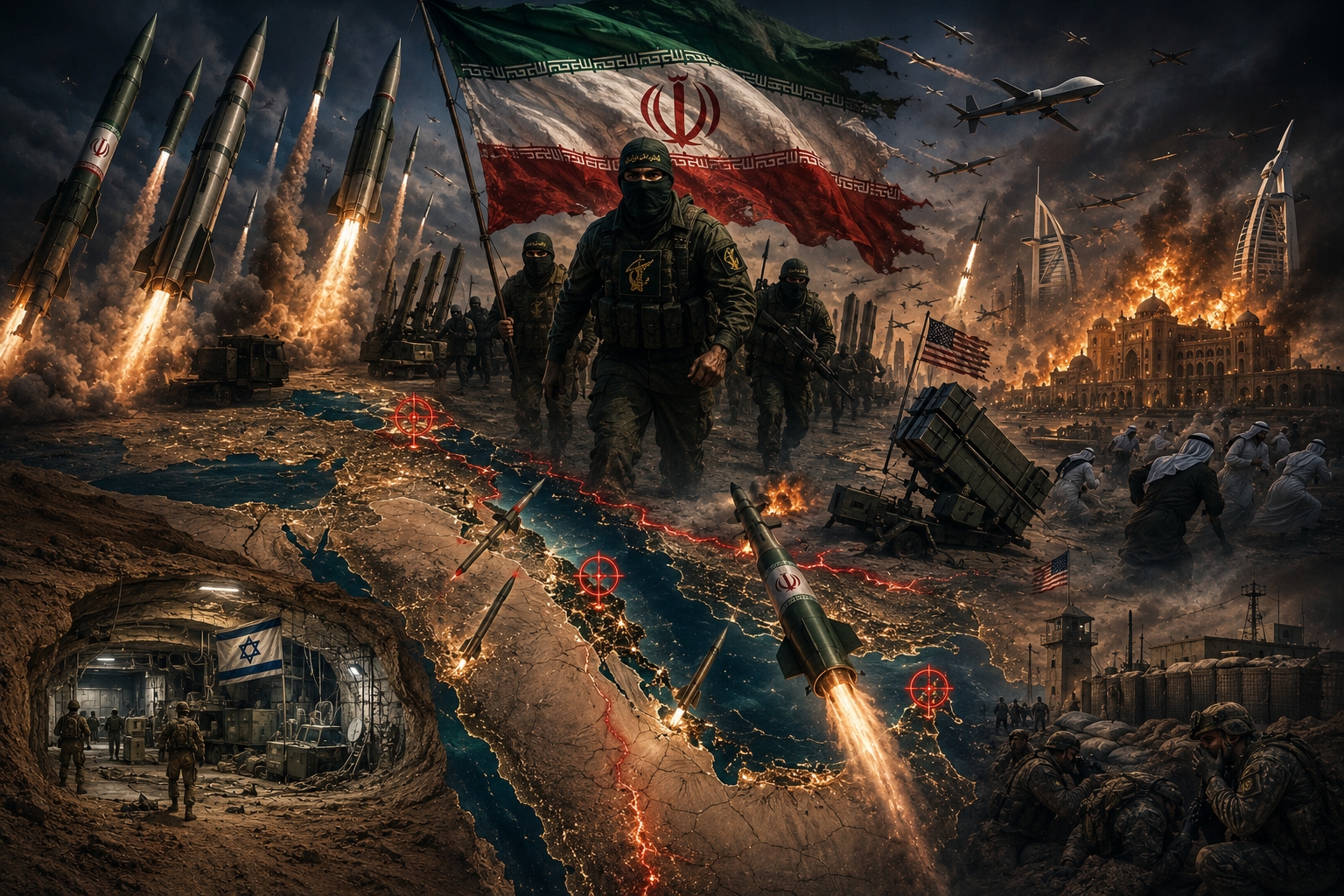
This structure becomes much clearer if one stops thinking in terms of “who supports Islamic Iran” and instead think in terms of three different relationship models with Islamic Iran using Hamas, Hizbullah and the Sunni clergy class (not to be confused with the Sunni Ulama’) as the three distinct relationship types.
Hizbullah and Islamic Iran are an integrated armed partnership with deep structural alignment. Hamas shares pragmatic alignment and is a tactical ally with conditional dependence. The Sunni clergy class are observers with selective issue-based overlap interjecting non-state “religious” discourse.
Hizbullah is an integrated Islamic Iran partner (closest relationship)
Hizbullah is the closest ally Islamic Iran has to an integrated external partner, often described as part of Islamic Iran’s strategic network. It was created with Islamic Revolutionary Guard Corps support and is trained, funded, and armed through Islamic Iran. It shares long-term military coordination with IRGC-linked structures. The strategic dependence is characterized by heavy Islamic Iran funding and weapons supply. Its military doctrine is influenced by Islamic Iran. Its operational coordination was demonstrated through joint planning in Lebanon, Iraq, against the Zionist inspired insurrection in Syria and mostly with shared command-style coordination in the Islamic Axis of Resistance operations. Its ideological alignment is partial but strong, sharing anti-Israel / anti-US framing but still primarily a Lebanese political-military organization, not fully Islamic Iran-controlled. An important nuance relates to Hizbullah being often called a “proxy”, but analytically it is more like Islamic Iran’s forward military partner with semi-independent political agency.
Hamas is a pragmatic resistance ally (conditional alignment)
Hamas is “Sunni” Islamist, not ideologically aligned with Islamic Iran’s governance system, but collaborates for strategic reasons. They have shared enemies, not shared ideology. Cooperation driven by opposition to Israhell, need for weapons, funding, and training. It is not driven by theological agreement. The relationship can be described as a fluctuating relationship. Relations have been strong (pre-2011) but strained by the Zionist inspired Syrian insurrection period but have since been restored (post-2017 normalization phase). Hamas maintains its own leadership and has other regional backers (Qatar, historically Egypt, etc.). It is not structurally controlled by Islamic Iran. Hamas is best described as a “transactional ally within the Islamic Axis of Resistance framework.” It is part of the network, but not allied to Islamic Iran like Hizbullah.
Sunni clergy-class are commentators (non-participants)
This is the most misunderstood category. The Sunni clergy-class are not militant and not state actors (in most cases). They are not structurally tied to Islamic Iran or the Islamic Axis of resistance. They are external voices that engage at the level of religious discourse, commentary on the system- not components of it- and moral/sectarian framing of conflicts (Palestine, Syria, etc.). Within are three different Sunni scholarly positions:
A) “Resistance solidarity” scholars who may support Palestine resistance and acknowledge Islamic Iran’s role in anti-Israel resistance but do not endorse Islamic Iran’s governance model and do not accept their authority structures. An example are unity conference participants and Palestine-focused scholars.
B) Neutral / cautious scholars who avoid Islamic Iran, focus on “Muslim unity” language and avoid geopolitical alignment. An example of this type are many mainstream jurists (Deobandi, Salafi academics).
C) Critical scholars who are least common but real. They oppose and criticize Islamic Iran’s regional influence as sectarian expansion or intervention policies (Syria, Iraq).
|
Dimension |
Hizbullah |
Hamas |
Sunni Scholars |
|---|---|---|---|
|
Relationship type |
Structural military partner |
Tactical ally |
Commentators |
|
Dependence on Iran |
High |
Medium/conditional |
None |
|
Ideological alignment with Iran |
High |
Low |
Very low / none |
|
Military coordination |
Direct |
Indirect / episodic |
None |
|
Political autonomy |
Limited |
High |
Complete |
|
Role in Axis of Resistance |
Core pillar |
Member |
Non-member |
The real geopolitical structure that people often miss is that the Islamic Axis of Resistance is not a uniform bloc. It is better understood through layers:
Layer 1 — The core Islamic Iran-aligned military network includes deep integration between Hizbullah and IRGC-linked mujahidin.
Layer 2 — Pragmatic partners that includes Hamas, Palestinian Islamic Jihad and some Iraqi and Yemeni mujahidin.
Layer 3 — Sunni clergy-class observers who are not operational participants who try to influence discourse, not strategy.
The confusion happens because Hizbullah operates as a state-aligned extension of Islamic Iran while Hamas looks like a shared-interest partner and the Sunni clergy-class sound like they are “in the same camp,” but they are actually commentators outside the structure. So when people say “Sunni scholars support Islamic Iran or the Islamic Axis of resistance,” it usually means the Sunni Ulama’ support the Palestine cause or resistance narratives not the Islamic Iran state or its ideological system.
Below is a structured map of financial and military dependency inside the Islamic Axis of Resistance. This is not a single command hierarchy. It is a hub-and-spoke network with Islamic Iran as the central hub sacrificing scarce resources to support others with varying dependency levels. Below is a high level summary of how the core “hub-and-spoke” model actually works:
Islamic Iran (IRGC/Quds Force)
Islamic Iran’s IRGC/Quds Force is the central training hub. Hizbullah is the most integrated external military partner. Palestinian groups (Hamas, PIJ) have a partial but major dependency on Islamic Iran and an external funding mix. Yemen’s AnsarAllah have a growing military autonomy with Islamic Iran’s support. Iraqi Mujahidin are semi-autonomous and are politically embedded within the Iraqi state structures.
Islamic Iran as the central hub provides direct funding (cash and logistics support), oil revenue support (often indirect via sanctions-evasion mechanisms) and budgetary assistance to the Islamic Axis of Resistance aligned groups.
The military role is centered on the IRGC and the Quds Force—its external operations arm. Its core function is weapons supply, training, strategic coordination, drone and missile technology transfer and battlefield advisory (especially Palestine, Iraq, Lebanon, Syria). Islamic Iran is not just a “funding source” but a systems integrator.
Hizbullah (Lebanon)
Hizbullah is the highest integrated partner. It is estimated that the majority of its operational budget was historically supported by Islamic Iran. It also funds itself via Lebanese political participation, diaspora networks and limited commercial holdings. Its military is heavily dependent on Islamic Iran’s provision of precision missiles, drones, training infrastructure and deep IRGC-Quds Force integration historically predating the zionist insurrectionist Syria war theater. Its relationship is a strategic military partnership.
Hamas (Gaza)
Hamas has a conditional and mixed funding network. Hamas does not rely solely on Islamic Iran. Tehran provides military and financial support (weapons technology, funding in phases). Qatar provides political and humanitarian support. It also relies on informal taxation inside Gaza economy and external fundraising networks. Its military relies on Islamic Iran who provides rocket technology assistance and training. Hamas retains an independent command structure and a separate decision-making chain. Its relationship is transactional military cooperation with intermittent Islamic Iran funding cycles.
Ansar Allah (Yemen)
AnsarAllah has a deepening dependency on Islamic Iran for financial support but is less than Hizbullah. It too relies on significant local taxation and war economy revenue. Its dependency on Islamic Iran for ballistic missile tech transfer, UAV (drone) systems, targeting and guidance systems and increasing domestic production capability is high. Its relationship is a growing hybrid model with partial Islamic Iran technology dependency and increasing self-production.
Popular Mobilization Forces (Iraq)
Popular Mobilization Forces factions are mixed. They rely on the Iraqi state budget (official PMF integration), Islamic Iran support to specific factions and local economic control in some regions. Its military dependency on IRGC support varies by faction with some groups closely aligned (Kataib Hizbullah) and others being more Iraq-nationalist oriented. Its relationship is a fragmented network with selective Islamic Iran-aligned nodes.
Integration hierarchy (most important map)
Tier 1 — High integration: Hizbullah has the strongest Islamic Iran integration. It funds Hizbullah directly and consistently. Militarily, Islamic Iran provides Hizbullah with advanced missile and drone systems.
Tier 2 — High military dependency, lower financial autonomy: AnsarAllah has strong Islamic Iran weapons dependency with growing independence in operations. Islamic Iran provides AnsarAllah with missile and drone technology.
Tier 3 — Mixed dependency (dual sponsorship): Hamas relies on Islamic Iran less for finances and more for military technology. Qatar and the internal Gaza economy aid political and financial survival. Islamic Iran funds Hamas intermittently, with Qatar forming the next funding stream to Hamas. Islamic Iran provides Hamas with training and weapons technology. Hizbullah and Hamas share tactical knowledge.
Tier 4 — Fragmented semi-state actors: Iraqi Mujahidin have partial state funding and partial Islamic Iran financial support. Internal Iraqi politics dominate. Islamic Iran funds selected Iraqi factions. Iraqi state provides the Popular Mobilization Forces with official salaries and logistics. The Iraqi Mujahidin and the IRGC share training and advisory support.
A key insight that most analyses miss is that it is not a centralized command structure. The Islamic Axis of Resistance is best understood as a shared strategic ecosystem built around Islamic Iran’s IRGC capabilities, not a unified ideological-military alliance. It is a layered dependency ecosystem.
Think of it as Islamic Iran being the technology and strategic doctrine hub. Hizbullah is a full-spectrum partner. Hamas is a selective cooperation node. AnsarAllah is an emerging independent partner. The Iraqi Mujahidin are politically embedded hybrid actors. Dependency is uneven. Control is partial, not absolute. Alignment is driven more by shared adversaries than shared ideology.
Post-2023 structural shift map
Below is a post-2023 structural shift map of Islamic Iran’s Axis of Resistance, focusing specifically on what changed in real operational coordination vs public rhetoric, and where relative autonomy from Tehran has shifted. Across most serious analyses, the system shifted from:
Pre-2023, “Hub-and-spoke model” where Islamic Iran (IRGC/Quds Force) centrally coordinated strategy, with high dependence on Islamic Iran’s logistics (especially Syria corridor) and more predictable escalation control; to
Post-2023, “Decentralized resistance network” with less direct command-and-control from Tehran, more autonomous decision-making by partners such that coordination became looser, episodic, and risk-averse. The network did not collapse but it flattened and fragmented operationally. This is widely described as a shift toward a “confederated resistance network” rather than a command hierarchy.
What weakened in practice (despite strong rhetoric) was a coordinated military escalation that did not materialize. The expected (pre-2023 assumption) that Hamas, Hizbullah, Iraqi Mujahidin and AnsarAllah would synchronize a multi-front escalation did not materialize. The actual, post-2023 reality was that operations were staggered, locally optimized and strategically limited. Hizbullah avoided full-scale war escalation at multiple points. The Iraqi Mujahidin largely constrained themselves after early strikes. AnsarAllah acted independently in the Red Sea without full coordination loops. As a result, the Islamic Axis of Resistance-wide synchronized war never happened in practice.
Islamic Iran (IRGC/Quds Force)
The IRGC command influence became less direct. Multiple assessments indicate that Islamic Iran increasingly uses indirect guidance and ideological sharing, less “real-time operational control” and more “shared deterrence framework”. The key shift is from command to influence and from orders to coordination signals.
The financial and logistical strain increased after 2023 with tighter sanctions enforcement, the disrupted Syria transit routes (especially post-2024 regional shifts) and higher cost of sustaining multiple fronts simultaneously. The outcome was more self-funding behavior and more local revenue generation by partners.
Hizbullah-Islamic Iran
The Hizbullah– Islamic Iran relationship shifted to controlled autonomy.
Before 2023 there was deep IRGC integration in Syria operations with heavy Islamic Iran logistics dependency.
After 2023–2026, Hizbullah remained the closest partner of Islamic Iran but it is more independent regarding tactical decisions, it faces more domestic Lebanese political constraints and the disruption of the Syria corridor has resulted in reduced willingness to escalate into full war with Israhell.
The key change is represented by Hizbullah’s shift from “forward extension of IRGC strategy” to “strategic ally with domestic constraints”.
Hamas–Islamic Iran
The Hamas–Islamic Iran relationship shifted to pragmatic rebalancing.
Pre-2023 there was periodic Islamic Iran funding and training cycles strained at times by the zionist-inspired Syria war rupture period.
Post-2023, there was increased Islamic Iran political alignment rhetorically but operational dependence remains partial. Qatar provides a significant financial lifeline while Hamas retains independent command structure.
The key change is represented by Hamas becoming multi-aligned with not only Islamic Iran but Qatar and internal governance survival needs. This is described as transactional dependency, not structural dependency.
Iraqi Popular Mobilization Forces-Islamic Iran
Iraqi Popular Mobilization Forces represents one of the biggest ostensible “de-Iranization” trends and one of the clearest shifts.
Pre-2023, it had stronger IRGC-aligned factions with high operational dependence.
Post-2023, there was increased integration into Iraqi state structures with budget dependence increasingly tied to the Iraqi government. Factions diverged and splits emerged with hardline Islamic Iran-aligned mujahidin still close to IRGC and Iraqi-nationalist militias prioritizing state integration.
The key shift is represented by Militia-into-state institutional absorption which reduced Islamic Iran’s direct control.
AnsarAllah-Islamic Iran
AnsarAllah represents the opposite trend, viz. increased capability independence.
Pre-2023, it had significant reliance on Islamic Iran’s missile/drone technology transfer.
Post-2023, there was continued Islamic Iran technical support which expanded domestic missile production, independent Red Sea operational strategy and less need for IRGC operational presence.
The key shift is represented by dependent recipient to semi-autonomous producer with Islamic Iran design lineage.
Coordination strategy apparently transformed because of:
So they optimized for survival, increased local legitimacy and controlled escalation. Islamic Iran’s own strategic recalibration shifted toward deterrence via dispersion not deterrence via centralized coordination. The net result of this “de-Iranization trend” does not mean groups within the Islamic Axis of Resistance left Islamic Iran’s orbit. It means that they transformed from dependency to autonomy.
|
Actor |
Direction of change |
|---|---|
|
Hizbullah |
Slight independence in tactical decisions |
|
Hamas |
More multi-sourced survival strategy |
|
Iraqi Mujahidin |
Strongest de-Iranization (Iraqi state integration) |
|
AnsarAllah |
Increased operational self-reliance |
|
Islamic Iran |
Reduced direct control, increased ideological framing role |
The most important insight is that despite rhetoric of unity, the post-2023 reality is that the Islamic Axis of Resistance became less of a coordinated axis and more of a shared ideology and overlapping threat perception network. In simple terms it became less of one structure and more of multiple structures acting similarly in different venues.

As the Islamic revolution enters its 40th year, we examine its achievements and challenges
Is it a coincidence that a day after Iran joined SCO, riots erupted over the unfortunate death of a young woman in hospital (not the police ...

Iranians will go the polls again in a week’s time to vote in the second round of presidential election. The two front-runners, neither of ...