
 Archives
Multimedia
Donate
About
Sign In



 Zafar Bangash


American politicians of all stripes, standing atop every garbage dump, regularly repeat one mantra: “Iran cannot have a nuclear weapon”. The latest example of this was witnessed at the APEC conference in Shenzhen, China (November 18-19). US President Donald Trump once again reiterated that Iran cannot have a nuclear weapon.
Such hypocrisy is mindboggling. The US has the largest stockpile of nuclear weapons in the world (more than 5,000 nuclear warheads). It is upgrading its nuclear arsenal. Further, the US is the only country in the world to have used nuclear weapons, not once but twice on Japan in August 1945. It also used depleted uranium shells in its attack on Iraq in January 1991 causing massive casualties and led to the birth of horribly deformed babies.
Its illegitimate ward, zionist Israel is the only country in West Asia with nuclear weapons. It has refused to sign the nuclear non-proliferation treaty (NPT) and refuses to allow international inspections of its nuclear facilities.
Yet, together with the US, the zionists consistently scream about Iran’s non-existent nuclear weapons. The indicted war criminal Benjamin Netanyahu has alleged since 1992 that Iran is “only three months away” from making a bomb! Memes have appeared on social media mocking this claim saying that Iran is celebrating 34 years of being ‘three months away from making a bomb’!
Iran does not have nor does it want a nuclear weapon. This is the official policy of the Islamic Republic. It has strictly adhered to its commitments under the NPT, notwithstanding the scandalous allegations made ad nauseam against its peaceful nuclear program.
True, there is growing debate in Iran over the usefulness of being a signatory to the NPT when its nuclear facilities have been repeatedly bombed by the US and zionist Israel. The question being asked is: What purpose does membership of the NPT serve if the treaty offers no meaningful protection for its peaceful nuclear facilities?
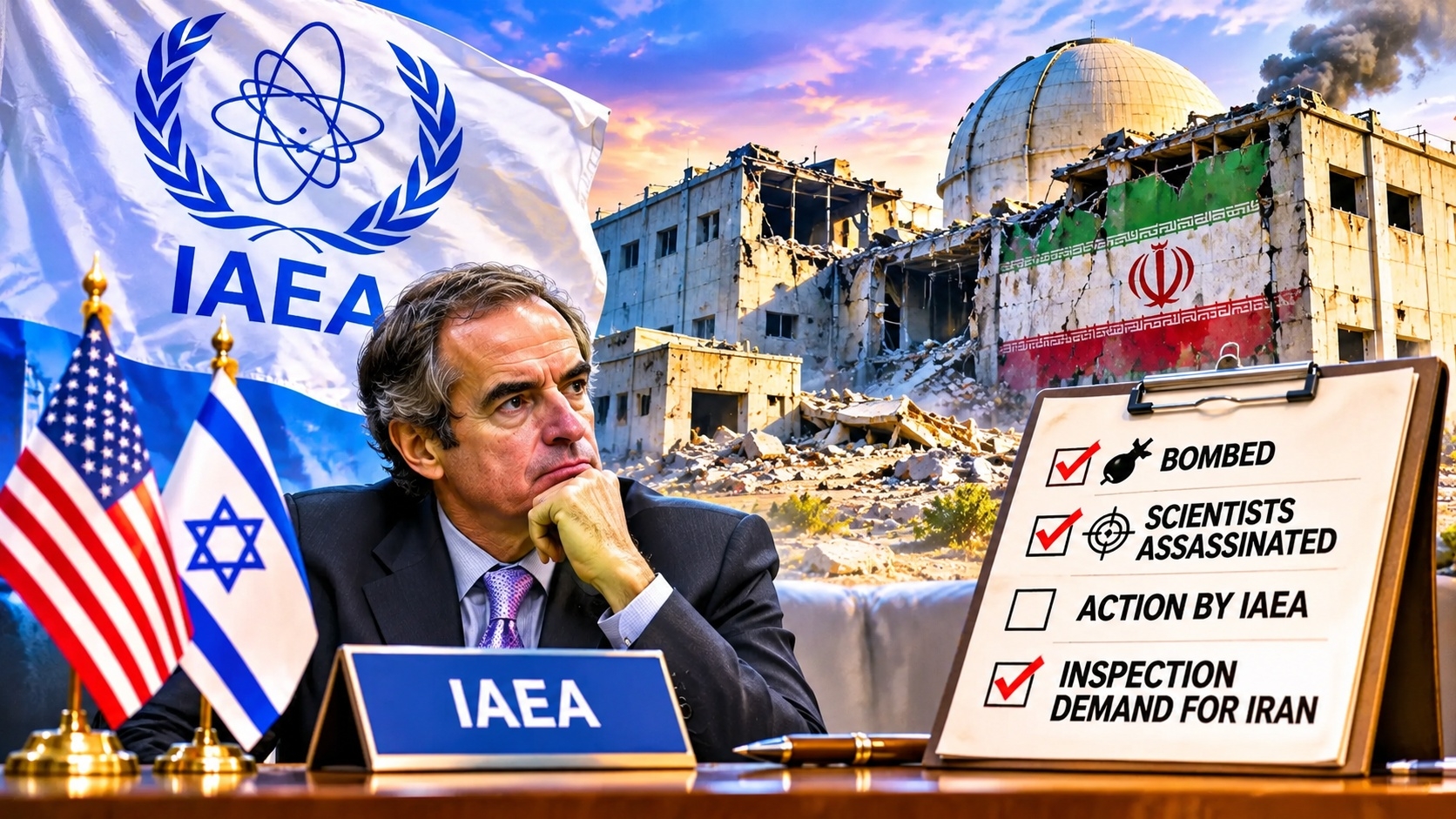
Equally disconcerting is the near defeaning silence of the International Atomic Energy Agency (IAEA) and its director general Rafael Grossi. Apart from expressing token concern about attacking a country’s nuclear facilities, the agency has taken no practical steps to hold accountable those regimes responsible for such heinous crimes.
Grossi meanwhile continues to demand that Iran open its bombed out facilities for agency inspections. When these facilities were bombed in June 2025 and again following the February 28, 2026 unprovoked attack on Iran, the IAEA inspectors fled Tehran. Iran has rejected Grossi’s call to open the bombed out facilities for inspection.
There is great unease in Iran over the IAEA inspectors’ role. Not only did the IAEA in its 2025 report made unsubstantiated allegations against Iran, but Grossi’s conduct has raised serious questions.
Prior to visiting Iran, Grossi always goes to Tel Aviv to confer with the Israeli war criminals. Why does he need to do that when Israel is not even a signatory to the NPT? Such conduct raises serious questions about his impartiality and reinforces the belief that he receives instructions from the zionists.
Let us briefly review some of the pertinent articles of the NPT. Article IV states that member states have the right to develop nuclear energy for peaceful purposes with the proviso that they comply with their treaty obligations. Article III establishes the safeguards framework through which the IAEA verifies that nuclear material is not diverted towards making weapons.
Another important article of th NPT—Article VI—is hardly ever talked about. It requires nuclear weapons states to reduce and ultimately eliminate their nuclear stockpiles. Far from complying with this requirement, the major nuclear weapons states—the US, Russia and China—have increased their stockpile of weapons. The US is in fact modernising and upgrading its nuclear systems at a cost of $516 billion to $730 billion.
The US-zionist war criminals have not only attacked Iran’s nuclear facilities at Natanz, Fordow and Isfahan posing serious risk of radiation but continue to threaten to attack Iran’s stockpile of enriched uranium. The zionists have also assassinated a number of Iranian nuclear scientists. Among them are Masoud Ali Mohammadi and Majid Shahriari (assassinated in 2010). Fereydoun Abbasi who survived an assassination attempt in 2010, but was subsequently martyred, along with a number of other nuclear scientists on the first day of the 12-day war in June 2025.
Dariush Rezainejad was assassinated in 2011, followed by Mostafa Ahmadi Roshan in January 2012. In November 2020, prominent nuclear scientist Mohsen Fakhrizadeh was assassinated on the outskirts of Tehran. Both the Israeli Mossad and American CIA were involved in these attacks.
What was the IAEA’s response to these criminal acts? It refused to even condemn much less take action against the perpetrators of such attacks. In fact, a politically motivated resolution by the IAEA Board of Governors shortly before the June 2025 war paved the way for the aggression at a time when Iran and the US were engaged in indirect nuclear negotiations.
Given this background and Iran’s bitter experience with the IAEA conduct, there is a growing feeling in Tehran that it may be time to reconsider its continued membership of the NPT. This concern has been expressed by both members of the Majlis (parliament) as well as by the Assembly of Experts.
The context is important. Iran’s martyred leader, Imam Seyyed Ali Khamenei had issued a fatwa against nuclear weapons. His reasoning was that these are weapons of mass destruction that, if used, would cause the death of non-combatants.
The ongoing threats against Iran’s nuclear facilities against the backdrop of repeated US-Israeli attacks has led to a much broader debate in Tehran. It involves the country’s sovereignty and strategic deterrence. The credibility of international law and, ultimately, a state’s inherent right to defend itself against external aggression have also come to the fore.
As long as Iran faces an existential threat from the US and zionist Israel that are totally out of control and running amok, Tehran is left with little choice but to rethink its nuclear strategy. Article X of the NPT explicitly recognises a member state’s sovereign right to withdraw.
With international organizations like the UN and the IAEA, far from providing protection to the victims of aggression, act merely as instruments of aggressors, they lose their credibility and utility.
It may be time for Iran to withdraw from the NPT and take effective steps to defend itself against the war criminals.


Despite vile propaganda against Islamic Iran relating to its peaceful nuclear program, the IAEA has been forced to retract its own allegatio...
Under pressure from the US and on instructions from the zionist entity, the IAEA passed an anti-Iran resolution at its meeting of the Board ...
As the Iran nuclear deal reaches implementation stage, the US Congress has introduced new disruptive measures, such as the Visa Waiver Progr...
The IAEA has been forced to retract its allegation, made in March, that Iran was not being transparent with its nuclear activities. The IAEA...
