 Archives
Multimedia
Donate
About
Sign In
Archives
Multimedia
Donate
About
Sign In



 Omar Ahmed


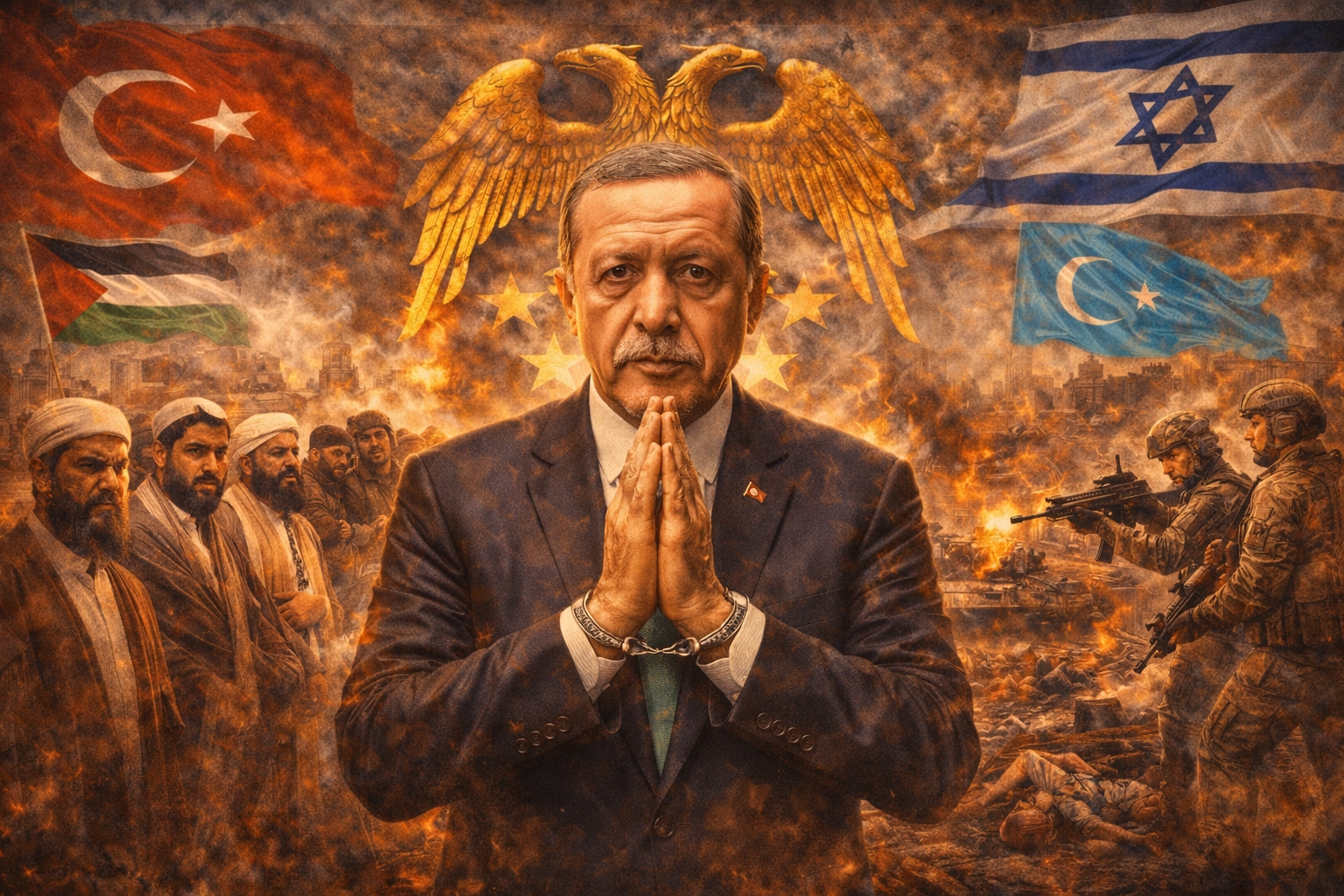
There is little doubt that the past 15 years have marked Turkiye’s rise as a formidable regional actor with increasing global ambitions. Despite periods of economic strain, the transcontinental state has extended its political and military footprint across Libya, Syria, Somalia, and beyond. It has deftly straddled its NATO membership while forging ties that often undermine western interests, including strategic partnerships with countries like Pakistan.
Much of this outreach is presented through the prism of Islamic sovereignty and the revival of Muslim agency in global affairs, harkening back to the Ottoman era. The legacy of the Ottoman Empire and even the earlier Sultanate of Rum serve as the ideological scaffolding of this projection.
Yet embedded within this revivalist narrative is a potent strain of Turkish nationalism. From its domestic policy toward the Kurds to its foreign policy calculus, the ruling AKP functions as a nationalist formation, invoking Islam primarily as a legitimizing glue to fuse modern Turkiye with its imperial past.
The Pan-Turkic project
Ethnically, Turks in Turkiye share ancestral roots with Azeris, Kazakhs, Uzbeks, Kyrgyzs, and Turkmens – together forming the wider Turkic world. The Organization of Turkic States (OTS), encompassing internationally recognized Turkic-majority countries, spans over 4.8 million square kilometers when observer states are included.
This excludes Turkic populations in long-standing diasporas, including Syrian and Iraqi Turkmens, and communities in the Russian Federation such as the Chuvash, Bashkirs, and Tuvans.
Even Mongolia falls under this umbrella, as medieval Turks and Mongols existed within a common Turco-Mongol cultural sphere. In 2019, Turkish ambassador to Mongolia Ahmed Yazal reflected: “We have historical, cultural and social relations that date back to 2000 years ago. We can do many things to ensure that this friendship will take us further.”
This speaks to the importance of even long-time but not direct relative Mongolia in the eyes of the Turkish diplomatic corps.
Kazakhstan has served as a litmus test for Ankara’s diplomatic dexterity. Following Russia’s invasion of Ukraine, Moscow pressured Astana to provide political cover and logistical support. Kazakhstan, defying expectations, refused, citing its obligations under the CSTO as limited to collective defense. It also declined to recognize the breakaway Donetsk and Luhansk republics in Ukraine.
This stance, while rooted in Kazakhstan’s own sovereignty concerns, was facilitated by Ankara’s careful balancing act. By maintaining cordial ties with both Moscow and Astana, Ankara avoided alienating either while enhancing its appeal as a diplomatic counterweight to both western and Russian hegemony. The episode also lent the OTS newfound credibility just a year after its 2021 institutional upgrade.
Once a largely cultural council, the OTS is now positioned as a geopolitical instrument with Turkiye at the helm. It offers member states an escape hatch from dependence on Russia, China, or the west. Nowhere is this more evident than in its growing alignment with China’s trade ambitions.
The Trans-Caspian International Transport Route (TITR) has emerged as the most efficient east-west trade corridor, cutting 2,500 km off the Northern Corridor and reducing shipping times from two months to just 10–15 days. While logistical challenges remain, particularly in infrastructure quality, the corridor represents a leap toward trade autonomy – and a stage for Turkic bloc ascendancy.
Weapons, media, and public opinion
Turkiye’s burgeoning defense industry, typified by the Kizilelma unmanned fighter jet, has helped drive arms exports to partners like Azerbaijan, Pakistan, and the UAE. The country’s drones and munitions have become sought-after assets, reinforcing Turkiye’s image as a serious military player.
Parallel to this, Ankara has invested heavily in cultural diplomacy. The global popularity of its historical TV dramas, styled after shows like Game of Thrones but infused with Ottoman heroism, has won millions of viewers in Pakistan, Bangladesh, Malaysia, and Indonesia. These productions serve not merely as entertainment, but as instruments of ideological alignment.
The AKP’s deliberate use of Islamic motifs in its international messaging is designed to resonate with Muslim-majority states seeking alternatives to western or Gulf-aligned partners. In this regard, Palestine has functioned as a diplomatic adhesive, positioning Turkiye as a vocal champion of the ummah’s suppressed causes.
In forums addressing Kashmir, the Rohingya, and Palestine, Ankara’s moral posturing offers a stark contrast to the silence or complicity of many Arab regimes. Although Turkiye has no sway within the EU, its ability to lobby on behalf of Muslim causes is bolstered by strong trade ties and its geographic importance.
Still, this pan-Islamic posture does not blind regional powers like Iran or Yemen’s Ansarallah to Ankara’s pragmatic calculations. For all its moral theatrics, Turkiye remains driven by national interest.
A multi-vector actor
Absent a seismic political shift, Turkiye’s trajectory appears set. The AKP has entrenched ties with Turkic states, built a high-functioning defense sector, and crafted soft-power tools unmatched by any other Muslim-majority country.
Even as it distances itself from the EU project, Ankara has kept close ties with Germany. Chancellor Friedrich Merz’s recent visit to Turkiye signals Berlin’s recognition of Ankara’s strategic indispensability, despite friction during and after the 2015 refugee crisis.
For the AKP, leveraging regional crises like those in Syria, Palestine, and Libya has delivered both hard and soft power dividends. How future generations in these states interpret Turkiye’s role remains uncertain, particularly in Syria where Turkish incursions remain deeply contested.
Today, Turkiye’s ties with Pakistan, Indonesia, and the UAE appear robust. Its relations with Iran and the Gulf Cooperation Council (GCC) are more nuanced. While Qatar maintains cordial ties with Ankara, Saudi Arabia views Turkiye’s backing of the Muslim Brotherhood and its neo-Ottoman overtones with suspicion.
Turkish military operations in northern Iraq, ostensibly targeting Kurdish factions, have generated unease in Baghdad, which is aligned with Tehran. Compounding concerns is Ankara’s tacit coordination with Tel Aviv in Azerbaijan – a trilateral nexus that alarms both Iran and Arab resistance actors.
Despite public sparring between Turkiye and the occupation state, geopolitical necessity ensures continued cooperation. This uneasy alliance could well damage Turkiye’s image among resistance circles, revealing the limits of its pan-Islamic branding.

Turkish President Recep Tayyip Erdogan claims to be a defender of Palestinian rights but he sees no contradiction in cozying up to the zioni...
Before his visit, Turkish President Recep Tayip Erdogan lashed out at Iran for its alleged meddling in Yemen. Once in Tehran and having witn...
Turkish President Recep Tayip Erdogan has disappointed many sincere Muslims. He emerged in Turkey under difficult circumstances and Muslims,...
Recept Tayip Erdogan is no democrat; he is a dictator. That is the only way to describe him.