 Archives
Multimedia
Donate
About
Sign In
Archives
Multimedia
Donate
About
Sign In


 Crescent International


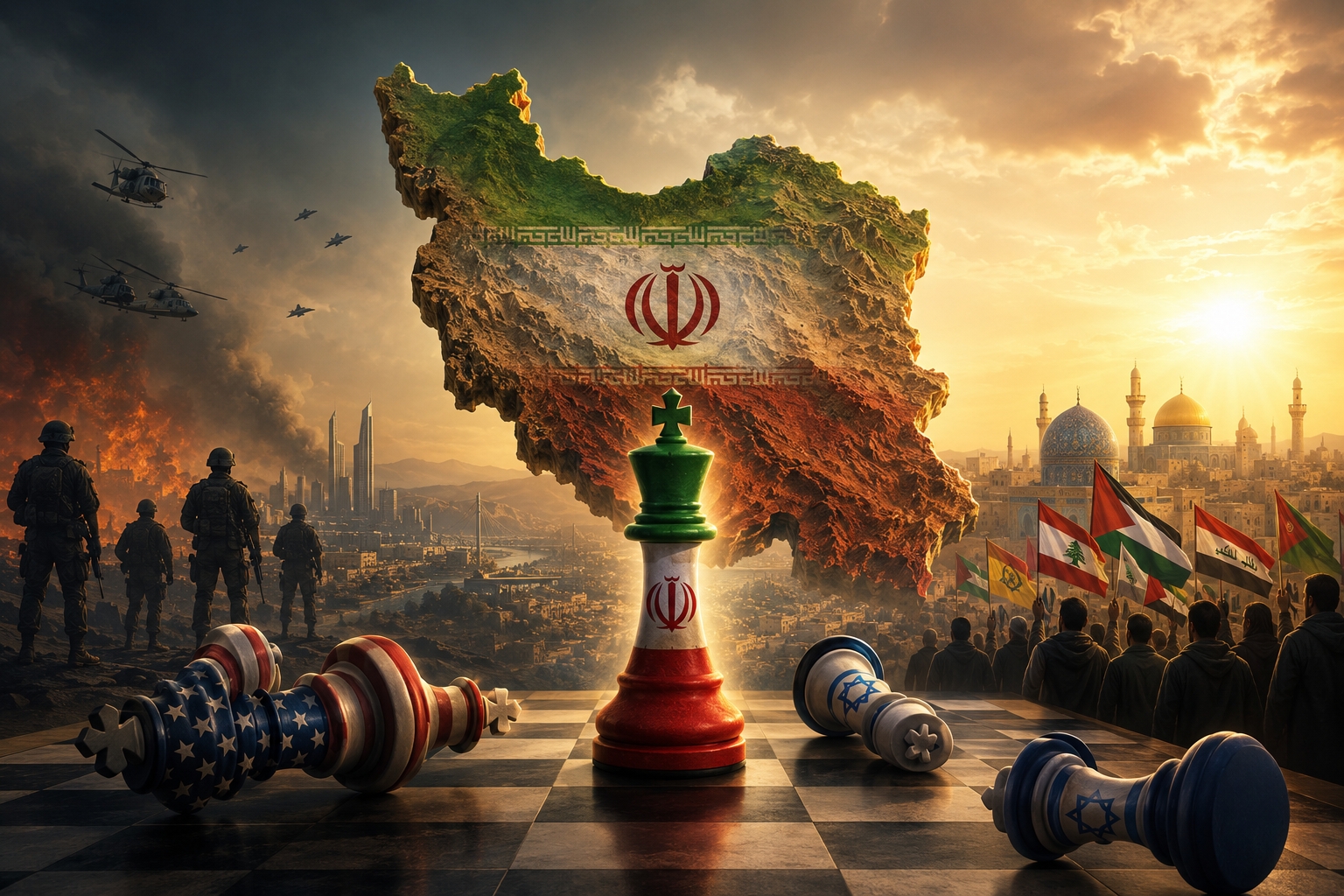
The significance of the MOU signed between Islamic Iran and the US is that it extends far beyond the specific clauses contained in it.
Even if the arrangement ultimately evolves into a worst-case scenario for Iran—where Washington fails to implement most or all of its commitments—the regional and international political landscape has already changed in ways that favor Iran.
The most important outcome is that Islamic Iran has accumulated a level of regional and domestic political capital that cannot easily be reversed.
Over several years, and particularly following successive aggressions, Tehran has demonstrated both resilience and competence to fight back.
Whether its adversaries like it or not, Iran has become an indispensable political actor in West Asia.
This fact is now acknowledged even by its enemies.
As a result, launching any meaningful economic, political, or security project in the region without taking Iran’s interests into account has become very difficult.
This reality is not dependent on American goodwill or compliance with agreements.
It is rooted in geography, strategic depth, political influence, and the relationships Iran has cultivated across the region.
Even if Washington backtracks, the political gains Tehran has already accumulated will continue to generate benefits.
Equally important is the strategic lesson Iran has drawn from the Ramadan War.
Tehran now knows that it can withstand even the most severe crises, including a direct and large-scale military attack involving both the US, Israel and their regional puppet regimes.
The perception within Iran’s strategic establishment is no longer one of survivability, but of regional offense.
Another major transformation concerns political taboos that once constrained Iranian decision-making.
For decades, there existed an assumption that certain regional actors that provide logistical, intelligence, or military support to anti-Iranian operations remain immune to direct retaliation.
This scenario no longer holds.
From now on, the western-backed regional dictators know that Iran will strike them directly.
Iran now appears far less willing to distinguish between those who execute hostile actions and those facilitating them.
In strategic terms, the message is clear: states that provide territory, infrastructure, intelligence cooperation, or military access for operations against Iran can no longer assume immunity from the consequences of their decisions.
Whether this policy is exercised frequently is secondary to the fact that the political taboo itself has largely disappeared.
At the same time, a shift has also occurred within Iranian society.
A segment of the population that once believed engagement with western regimes would lead to fair treatment and mutual respect has lost hope in this illusion.
Iranians now see the rhetoric surrounding democracy, human rights, and international law for what they always were, empty slogans to advance western geopolitical interests.
This does not mean all Iranians share identical views, but it does suggest that a substantial portion of society has reassessed long-held assumptions about western intentions.
Consequently, domestic support for a more independent and self-reliant foreign and domestic policy has grown to unprecedented levels.
This broader shift also affects the regional balance.
The sectarian narrative that was once used to isolate Iran has lost much of its effectiveness.
Across large parts of the region, populations increasingly evaluate political actors through the lense of sovereignty, independence, and resistance to foreign domination rather than purely sectarian affiliations.
In this environment, Iran has accumulated considerable soft power.
The result is a new strategic reality in which time increasingly works in Iran’s favor.
Tehran no longer faces the same urgency to secure immediate concessions.
It can be patient, knowing that demographic, political and regional trends are gradually strengthening its position.
Moreover, many people across West Asia now view Iran as the only major indigenous political project that operates independently of external patronage.
This does not imply that Iran is free of administrative, economic, or managerial shortcomings.
Rather, it reflects a belief that Iran remains sovereign in its decision-making and resistant to outside control.
Arabian regimes are also aware of this changing reality.
Western-backed despotic regimes understand that public sentiment has evolved and that overt confrontation with Iran carries greater risks than before.
Tehran’s expanding political influence and soft-power reach create internal pressures for western-backed dictators they can no longer ignore.
Ultimately, regardless of whether Washington fulfills its commitments, the strategic paradigm has shifted.
Iran’s greatest asset may no longer be its military capabilities or even its diplomatic leverage, but the simple fact that it possesses what many of its rivals lack: time.
And in geopolitics, time is often the most valuable form of power.