 Archives
Multimedia
Donate
About
Sign In
Archives
Multimedia
Donate
About
Sign In



 Crescent International


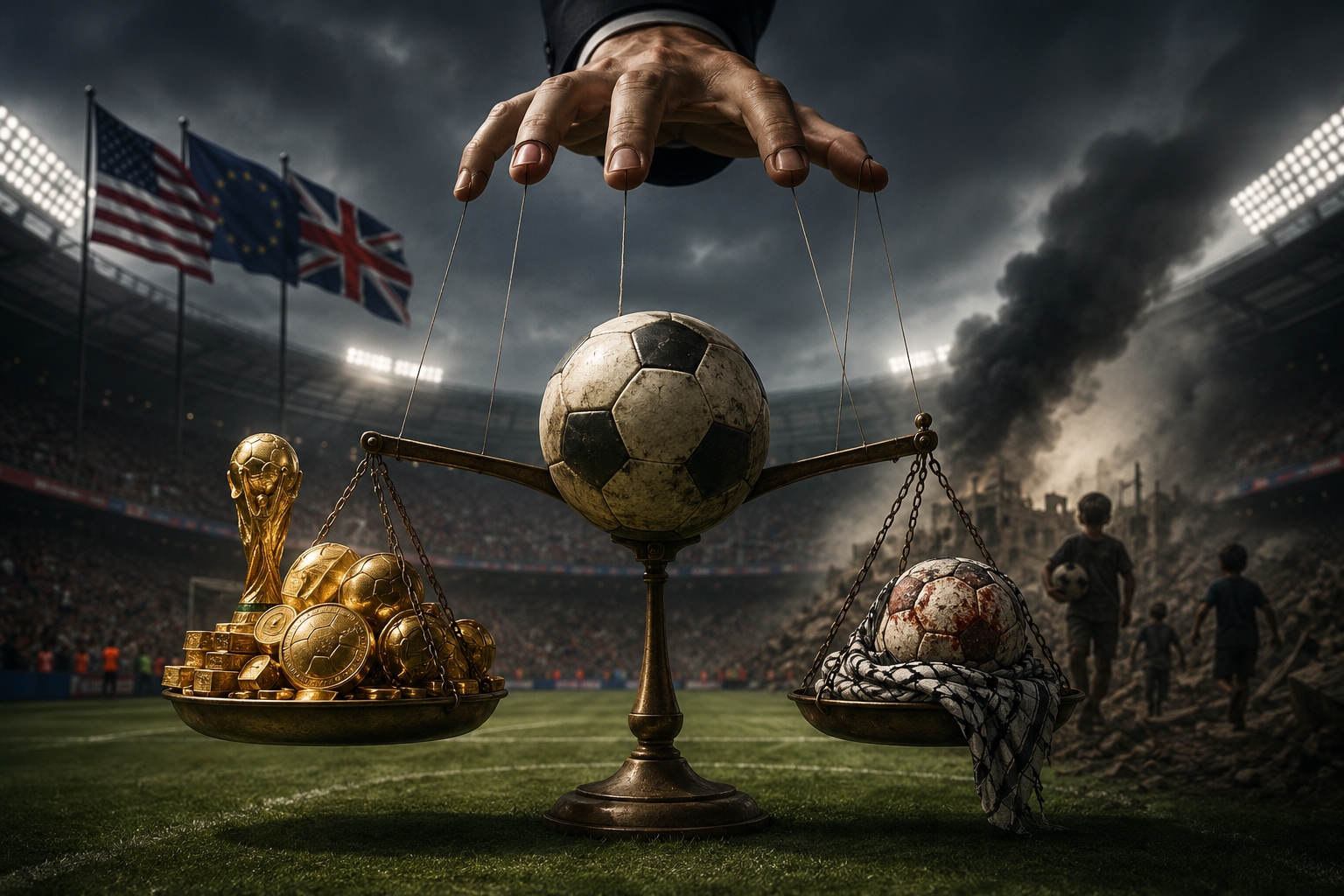
When it comes to advancing political, social, and economic interests, western regimes and the sports organizations under their influence have no problem engaging in double standards, logical contradictions, and the politicization of sport.
The FIFA Club World Cup is a clear reminder of this reality.
During the football World Cup 2026, no team faced as much open political pressure as the national football team of the Islamic Republic of Iran.
This phenomenon was noted by multiple observers of the tournament.
However, it is important to remind readers of the western sports establishment’s long record of outright hypocrisy when it comes to its proclaimed commitment to “depoliticizing” sport.
It is “depoliticized” when doing so serves western interests and readily politicized when those same interests demand it.
The very notion that sport can or should be “depoliticized” is itself disingenuous.
Modern international sport is inherently political.
Athletes compete under national flags, victories are celebrated as national achievements, and sporting success is routinely presented as evidence of a country’s prestige, vitality, and influence.
Governments invest billions of dollars in elite sports programs, host international tournaments to project their image abroad, and use sporting success as an instrument of diplomacy and soft power.
This is hardly a controversial observation.
Throughout the Cold War, both the US and the Soviet Union viewed international sport as an extension of geopolitical competition.
Western regimes have, therefore, long understood sport not merely as entertainment, but as a powerful instrument of soft power and social influence.
Sporting institutions, athletes, and major international competitions are regularly used to shape public opinion, reinforce political narratives, and project national values at home and abroad.
Against this backdrop, repeated appeals to “keep politics out of sport” are hollow and highly selective, not to mention completely hypocritical.
Politics is welcomed when it advances western strategic interests and condemned when it challenges them.
In 2024, when prominent footballer and BBC sports presenter Gary Lineker publicly condemned Israel, there were immediate calls for disciplinary action against him.
He left the BBC shortly afterward.
Sportsmen who advance western political interests are, of course, praised and promoted by the western sports establishment, an establishment that does not shy away from licking the boots of western regimes.
Oleksandr Zinchenko, the Ukrainian professional footballer who publicly wished a painful death upon Vladimir Putin, was awarded the Media Diversity Champion of the Year prize.
Imagine the reaction if Zinchenko or any other prominent sports personality had called for Israeli officials—civil and military—to be sent to the gallows for committing the world’s first televised genocide.