
 Archives
Multimedia
Donate
About
Sign In
Archives
Multimedia
Donate
About
Sign In



 Zafar Bangash


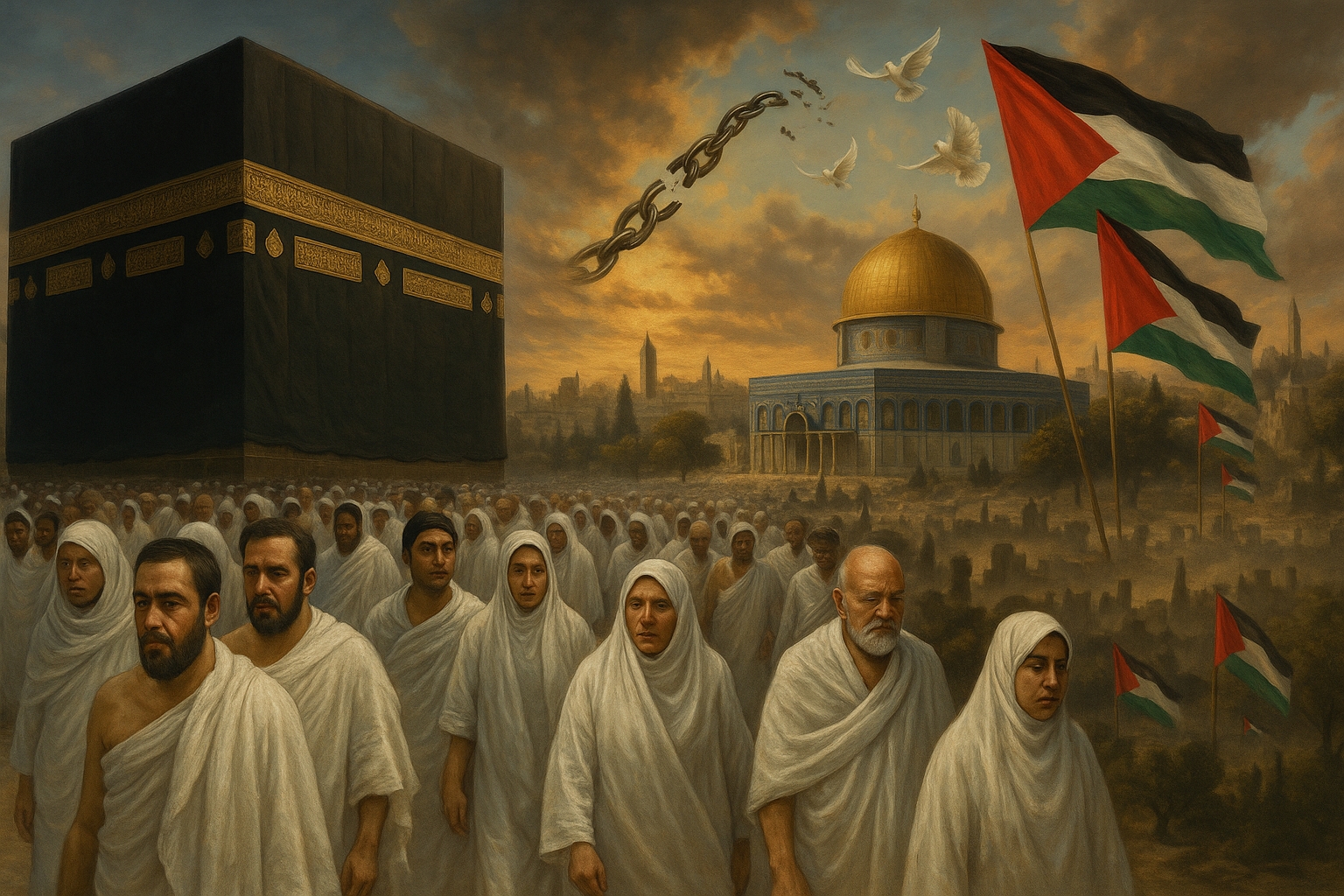
The celebration of Mawlid (Miladun Nabi—the Prophet’s birthday) has become a well-established tradition among Muslims. On such occasions, Muslims recite nasheeds and highlight various dimensions of the Prophet’s blessed personality. These, however, are often confined to his personal habits and manners. Such information is useful but it does not cover the larger dimensions of his mission in life.
We need to bear in mind that every Prophet was tasked with two major responsibilities: first, to emphasize Tawhid (the Oneness of Allah) to the people; and second, to establish social justice in society. Only a handful of Prophets were successful in implementing Allah’s laws on earth.
The communities they were sent to rejected the divine message. They were punished for such disobedience. The ruins of their destroyed dwellings can still be seen in parts of the Arabian Peninsula and Jordan.
Among all the prophets, only Muhammad (ﷺ) succeeded in fully implementing Allah’s laws on earth. At the time of his birth, Makkah did not have an organized structure. Only customary tribal law, based on idol-worship, was practised.
This led to some extremely cruel practices becoming the societal norms. The strong exploited the weak; oppression of the slaves was common as was the practice of burying alive infant girls. Muhammad (ﷺ) found such practices deeply troubling and he sought a way to end them.
Towards this end, he detached himself from society and would retreat to the Cave of Hira in the month of Ramadan for contemplation and reflection. It was during one of these retreats that Allah sent the Angel Jibra’il with the first revelation. That dramatic encounter not only transformed his life but the destiny of the entire humanity.
Let us reflect on some aspects of his blessed personality highlighted in the noble Qur’an. He is referred to as “the best of exemplars” and a model to emulate (Surah al-Ahzab, ayat 21). In Surah al-Nisa, ayat 80, Allah says: “whosoever has obeyed the Messenger (ﷺ), has obeyed Allah.”
Obedience of the noble Messenger (ﷺ) requires, a priori, an understanding of his proper role and mission in life. Allah says in the Qur’an, “He (Allah) is the One who has sent his messenger with true guidance and the deen of truth so that it becomes dominant over all other systems in society, however much the mushrikeen may be averse to it” (Surah al-Tawbah, ayat 33; Al-Fath, ayat 28; and As-Saff, ayat 09).
In another ayat (#29) from Surah Al-Fath, Allah reminds us: “Muhammad is the messenger of Allah and those who are with him are harsh toward the kuffar (the deniers of Allah’s power and authority) [yet] full of mercy towards one another”.
These ayats reflect the power dimensions of the Seerah. Power and making Islam dominant in society require struggle against the forces of kufr and shirk.
What did the Prophet (ﷺ) do to make Islam dominant in society? For 13 years in Makkah,
the prophet’s struggle was ideological, not physical. When Islam was proclaimed openly, it evoked ridicule from the Makkan elite. Later, their opposition escalated to oppression, torture, exile, and siege of the small group of Muslims around the Prophet (ﷺ).
We must remember that the mushriks’ opposition was not based on how the Muslims prayed. There was no formal salat until the 12th year when the mi‘raj occurred. And throughout the 13-year period, no Jumu‘ah salat was offered in Makkah. This has important implications for Islamic governance but we will not go into the details here.
One other point is worth noting. The Prophet (ﷺ) did not ask the Makkan chiefs that he be given an opportunity to address their assembly called Dar al-Nadwa. Instead, the Prophet (ﷺ) established a separate platform—Dar al Arqam—where the Muslims met in secret to learn about Islam. Even for the propagation of Islam, the mushriks’ platform was not utilized.
Since the Prophet (ﷺ) categorically rejected kufr and shirk and adhered strictly to Islamic principles, the mushriks plotted to kill him. What kind of people would want to kill the Messenger of Allah?
Allah identifies such people in the noble Qur’an. “And thus have We made for every prophet an enemy from among the criminals. But sufficient is your Lord as a guide and a helper” (Al- Furqah, ayat 31).
Today, Muslim rulers not only wish to live in subservience to the kuffar and the mushrikeen but also offer their land to them to establish military bases. From there, they launch attacks against committed Muslims, especially against women and children and kill them. The Qur’anic verdict against such rulers is clear: they are criminals.
Faced with extreme persecution, the Prophet (ﷺ) and his small group of followers had to flee to Madinah. It was not a voluntary exit from Makkah.
In Madinah, the threat of direct physical violence dissipated somewhat but the danger did not end. The Prophet (ﷺ) had to consolidate power in Madinah. This was done through the promulgation of the Covenant of Madinah and the treaties he signed with the tribes along the Red Sea coast.
The Covenant of Madinah brought in all the constituent parts under one platform, including the three Jewish tribes but regrettably, they repeatedly violated their covenant agreement, including a plot to kill the Prophet (ﷺ). For such treachery, they were expelled from Madinah.
In Makkah, the Muslims were not permitted to fight their enemies. In Madinah, this prohibition was lifted. It led to the battle of Badr in the second year of the Hijrah and a resounding victory for the small group of Muslims facing a mushrik army three times larger and heavily armed. Badr was the triumph of Imaan (faith-commitment) over weapons.
When we reflect on these developments in Madinah, we find they related to worldly affairs and issues of governance. These were not matters related to personal habits. Allah’s promised help manifested itself in Badr.
Since the message of the Qur’an and the Prophetic Sunnah and Seerah are applicable at all times, let us apply these lessons to our contemporary situation. Faced with immense suffering, especially in Palestine, Muslims ask, why Allah’s help does not manifest itself to support the suffering Muslims?
Two points must be borne in mind. First, Allah requires committed Muslims to make their utmost effort and leave the result to Allah. Second, we must understand that Allah works according to His own timeframe.
Allah’s help has manifested itself in our time. The sacrifices of committed Muslims have brought about a remarkable change. Standing up for truth, justice, and honour and dignity demand sacrifices. Only the truly committed Muslims are willing to make such sacrifices as witnessed in Islamic Iran.
The biggest killing machine in the world—the US military—has been rendered impotent. From demanding an “unconditional surrender” of Iran, Donald Trump is now begging for a deal. Few take his bombastic claims about victory on his social media platform seriously.
There are those who call themselves Muslims but tremble before the criminal powers. They have provided military bases and paid trillions of dollars as protection money only to find the criminals cannot defend even their own bases let alone provide protection to these regimes.
Since the Arabian rulers act against the commands of Allah and the Sunnah and Seerah of the Prophet (ﷺ), they have been categorized as mujrimeen (criminals) in the noble Qur’an. They have destroyed their akhirah and they will not succeed in this life either.
“Power and true honour belong to Allah, and His messenger and the committed Muslims but the munafiqoon will never know this” (Surah al-Munafiqoon, ayat 8).


Since the Seerah is central to the ethos of Muslim life, it must be properly understood beyond the aspects of rituals. There is need to look...
The Prophet (pbuh) was chosen by Allah for a divinely-ordained mission. He received guidance from on high but on worldly matters he consulte...
Missionaries, orientalists and other hostile creatures have spent their lifetime trying to distort the Sirah of the Prophet (ﷺ) and failed...

Examining the Prophetic mission in Makkah, it becomes clear that it was geared toward an ideological challenge to the entrenched power struc...