 Archives
Multimedia
Donate
About
Sign In
Archives
Multimedia
Donate
About
Sign In



 Muslim Mahmood


If it was possible to damage or dent the reputation of the Prophet ﷺ, or to distort his record, the Orientalists would have achieved it a long time ago. But the only thing that has come close to damaging the Prophet ﷺ and his Sirah and Sunnah is the Muslim failure on the stage of history.
We are in the month of Rabi‘ al-Awwal 1448 AH, a season that commemorates the birth of the final Messenger of Allah, Muhammad ﷺ. It is essential to honor this occasion by presenting to both the Muslim Ummah and humanity at large the profound truths regarding the final Prophet of Allah—his deep love for the Ummah, his esteemed honor, and his role as a mercy for all humanity.
But an occasion of remembrance is only meaningful if it is paired with an honest reckoning of how we, his followers, have stewarded what he left us.
For fourteen centuries, an entire industry has been dedicated to the task of diminishing the character and role of Prophet Muhammad ﷺ. Missionaries, colonial administrators, Orientalist academics, and now algorithm-driven propagandists have combed every available source, invented several that did not exist, and produced polemics in every major language on earth—all in pursuit of the same goal. And yet the Sirah (life example) stands.
The character described in the Qur’an as “a great moral exemplar” (33:21?) is still recognized as such by honest observers across civilizations, including many who never accepted his prophethood. Even hostile biographers, when they write carefully, end up describing a man of extraordinary integrity, courage, and mercy, because the documentary record simply does not yield anything else.
What the Orientalists could not do, we have too often done to ourselves. Not by attacking the Prophet ﷺ directly—no committed Muslim sets out to do that—but by so thoroughly failing to embody what he taught that the gap between the Sunnah and the Ummah became, for the watching world, more visible than the Sunnah itself: a colonized Muslim world.
Our political history is littered with dynasties that ruled by the sword and dressed it in religious garb. A contemporary landscape where Muslim regimes collaborate with the very forces occupying Muslim lands, where a fifth of humanity that calls itself the Ummah of Muhammad ﷺ cannot agree on how to respond to the siege of a single city, let alone act with one voice on Palestine, Kashmir, or any other open wound.
This is the record an honest critique points to—not because it disproves the Prophet’s ﷺ message, but because it is what happens when a people stop practising it.
Yet the life and teachings of Prophet Muhammad ﷺ remain a timeless source of guidance precisely because they were never meant to be admired from a distance—they were meant to be lived. His exemplary character, marked by compassion, integrity, and dedication, resonates with principles that transcend cultural and geographical boundaries.
His unwavering commitment to justice, equality, and human dignity is not a historical curiosity; it is a standing indictment of every Muslim polity that has settled for less. In a world characterized by division and strife, his teachings offer a clarion call for unity and understanding—not as sentiment, but as method: empathy and kindness as the operating principles of a community, not merely its private virtues.
This is where the Sunni-Shi‘a divide belongs in our reckoning—and it belongs there specifically because of how it is used, not merely because it exists. Theological and jurisprudential difference is not, in itself, catastrophic. The early Ummah absorbed far wider disagreement in its formative centuries without dissolving into permanent civil war.
What has done the damage is the transformation of contested early history into a live weapon, deployed generation after generation, refined by every party with an interest in a divided Muslim world—including, and especially, the colonial and zionist interests whose strategic benefit from Muslim disunity requires no explanation.
Every time a khutbah is built around cursing the Companions ( رَضِيَ ٱللَّٰهُ عَنْهُمْ ), or around glorifying the killers of Ahlul Bayt, the Ummah re-inflicts the wound with its own hand, on schedule, while its actual adversaries watch with glee and occasionally fund the loudest voice on each side.
Appreciating our history honestly is different from weaponizing it. It means studying the fitna, Saqifa, and Karbala with all their grief and complexity intact—without letting 1300-year-old grievances become the organizing principle of twenty-first-century Muslim politics while Muslim lands are occupied, Muslim children are starved, and Muslim wealth is looted in real time.
A community that can argue with genuine scholarly seriousness about the events of the seventh century, and then stand shoulder to shoulder against the occupation of Gaza in the twenty-first, has understood the difference between history and the idolatry of grievance. A community that cannot do this has made its history into an idol—and in doing so, has obscured the very mercy it claims to honor.
That mercy is not an abstraction. The Prophet’s ﷺ emphasis on raḥmah is particularly pertinent to addressing the social inequalities of our own time, and to the well-being of the marginalized among us—Muslim and non-Muslim alike. His actions and teachings encourage his followers to advocate for social justice and to stand with those who are less fortunate, whether they are besieged in Gaza, displaced in Kashmir, or forgotten within our own communities.
In this sense, the study of the Sirah is not merely devotional; it is also a study in ethical leadership, conflict resolution, and the discipline of speaking to others—friend or adversary—with respect.
That model has application well beyond the mosque, in how the committed Muslims lead in business, in education, in journalism, and in the difficult work of building unity where division has become profitable for everyone except the Ummah itself.
Protecting the Prophet’s ﷺ reputation, then, is not a defensive project. It does not require refuting every pastor’s video or every Orientalist footnote, useful as that work sometimes is. It is a constructive project.
It means an Ummah whose conduct makes the Sirah self-evidently true to anyone who looks, the way it was self-evident to the first generation who watched Muhammad ﷺ live before they ever heard him preach. It means recovering the actual content of his Farewell Sermon—the sanctity of blood and property, the equality of committed Muslims regardless of lineage, the explicit warning against exactly the kind of fratricidal division we now excuse in his name.
A solution to the Sunni-Shi‘a divide will not come from the doctrinal victory of one side over the other; fourteen centuries of serious scholarship on both sides make that outcome as unlikely as it is undesirable.
It will come, if it comes, from a generation of Muslims—scholars and laypeople alike—who relearn to hold contested history with humility instead of weaponized certainty, who recognize a shared enemy in the forces actively profiting from Muslim division, and who judge fellow Muslims first by their submission to Allah and their conduct toward the oppressed, rather than by which century’s political dispute they have inherited as tribal loyalty.
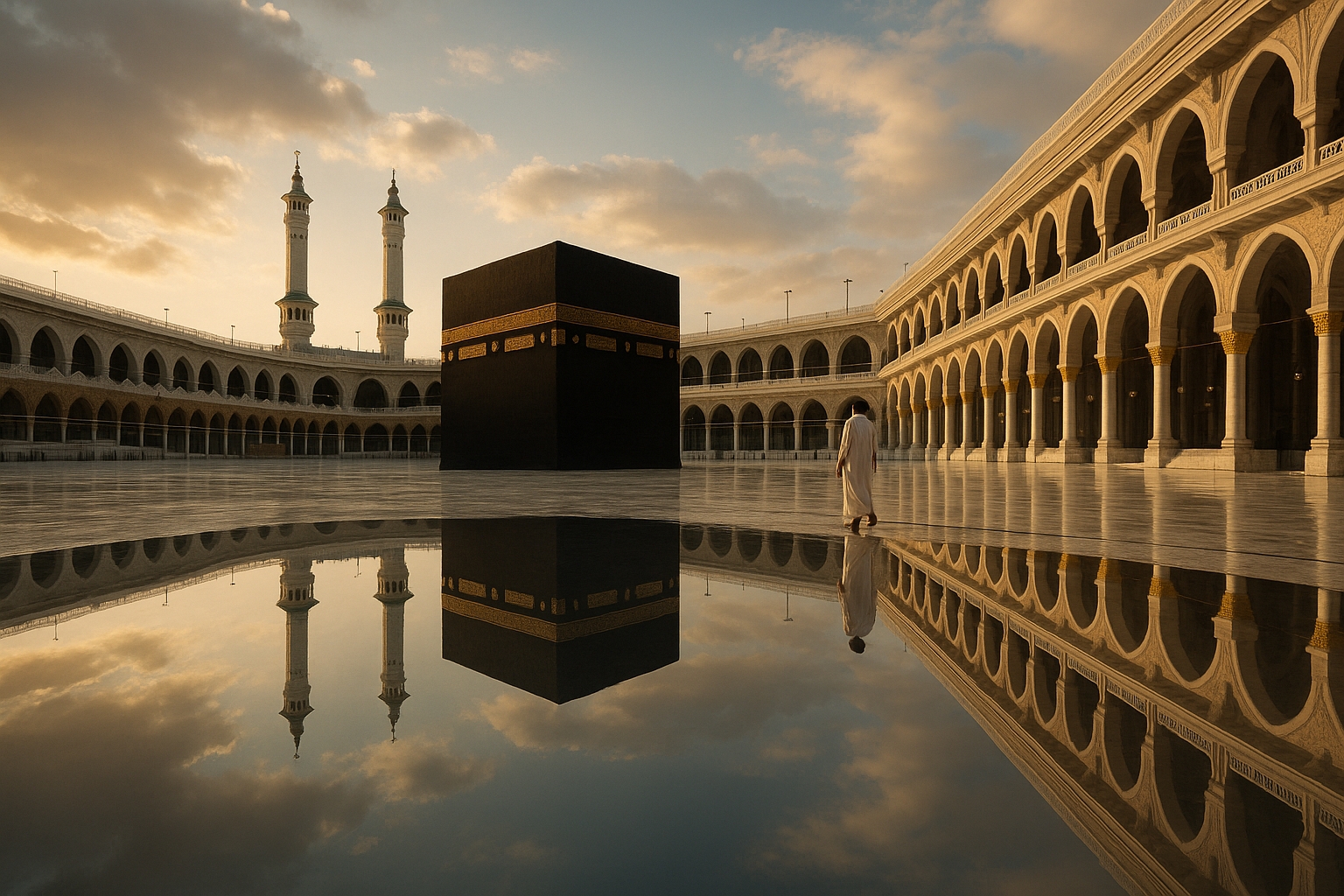
This is not a call to erase difference. It is a call to place that difference in its proper size—smaller than the Ummah, smaller than the Sirah, and infinitely smaller than the Qiblah every committed Muslim, Sunni or Shi‘a, turns toward five times a day.
As we observe this Rabi‘ al-Awwal, that is the reflection incumbent upon us: not admiration of the Prophet ﷺ recited once a year, but a conduct that honors him every day, all year round. The Orientalists never had a chance of damaging the reputation of Prophet Muhammad ﷺ. We do.
The choice, as it has always been, is ours.


Since the Seerah is central to the ethos of Muslim life, it must be properly understood beyond the aspects of rituals. There is need to look...
The Prophet (pbuh) was chosen by Allah for a divinely-ordained mission. He received guidance from on high but on worldly matters he consulte...
That most Muslims profess deep love for the Prophet (ﷺ) is not in doubt. What is lacking is a clear understanding of the broader dimension...

Examining the Prophetic mission in Makkah, it becomes clear that it was geared toward an ideological challenge to the entrenched power struc...