
 Archives
Multimedia
Donate
About
Sign In
Archives
Multimedia
Donate
About
Sign In



 Abu Dharr


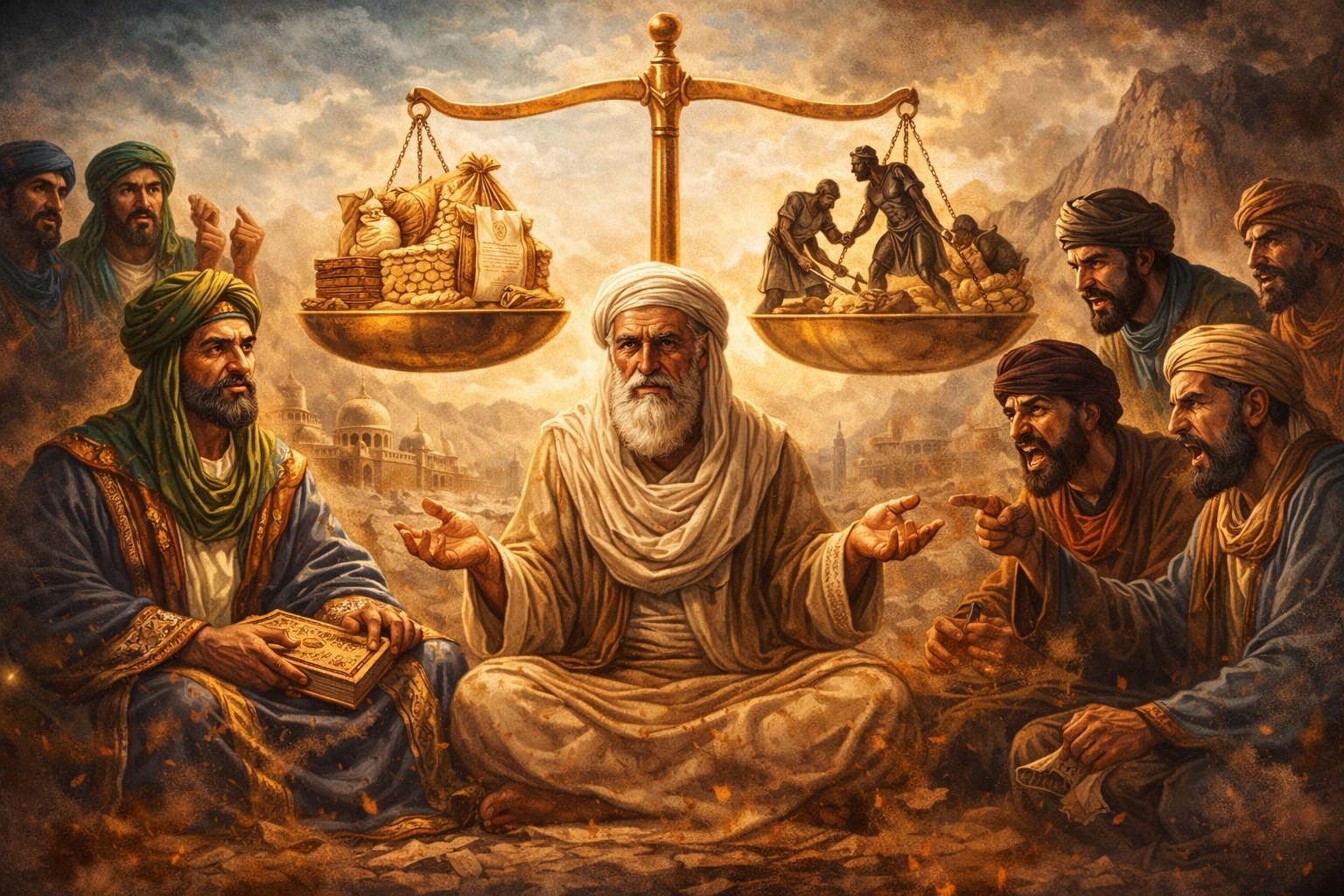
It should be understood that in principle Imam ‘Ali was opposed to the leadership of muslims lodged into and persisting away from Bani Hashim. That being said, he also strongly respected the principle of shura. It never occurred to him that the leadership of muslims is strictly a hereditary affair.
The leadership of muslims is an obligation and onus that is assumed through a type of sufficient and satisfactory consent coming from the people through those who speak for the people. When those spokespersons for the people declined to approve of Imam ‘Ali as the leader of the ummah within the potentially threatening dangers and fears in the bounds of a new untested and untried Islamic population of hundreds of thousands, Imam ‘Ali of his own accord agreed to have Abu Bakr and ‘Umar lead the muslim ummah.
He endorsed both Abu Bakr and ‘Umar and unreservedly counseled and advised them when they were in charge as khulafa’. After ‘Umar was assassinated, Imam ‘Ali sought to engage and sway public opinion albeit in a very self-effacing manner after which he sought to present himself as any one of them to lead all of them.
Finally when ‘Abd al-Rahman ibn ‘Awf did his due diligence and it came to tipping the balance between Imam ‘Ali and ‘Uthman ibn ‘Affan, he chose ‘Uthman over Imam ‘Ali. It was Imam ‘Ali who ratified ‘Uthman as the third khalifah.
Some historians say that Imam ‘Ali paused before imparting his bay‘at. Whether that is the case or not, ultimately Imam ‘Ali did endorse ‘Uthman as khalifah. If Imam ‘Ali was in opposition to a muhajireen and ansar shura which resulted in the successorship of ‘Uthman and before that ‘Umar and Abu Bakr, he would have stayed home and withheld his bay‘at to the three of them as an expression of peaceful civil dissent.
HE DID NOT. Imam ‘Ali counseled and guided ‘Uthman to penalize ‘Ubaid Allah ibn ‘Umar who took revenge by killing al-Hurmuzan who assassinated his father ‘Umar ibn al-Khattab.
Imam ‘Ali giving bay‘at to the three preceding khulafa’ does not mean that he agreed with all their policies and procedures. At times he was a dependable opponent; at other times he was a loyal rival.
Abu Bakr and ‘Umar did nothing to have Imam ‘Ali denounce or condemn them. There is nothing in the books, as far as this writer knows, that indicates that Imam ‘Ali was aggressive or antagonistic towards Abu Bakr and ‘Umar. Imam ‘Ali apprised and directed them. Like the rest of the Muhajireen and Ansar, he observed and kept an eye on the task of Khilafa statecraft.
Imam ‘Ali’s disapproval of ‘Uthman becoming the leader was limited to the short shura period that led up to the appointment of ‘Uthman. Once ‘Uthman was decided on as khalifah, Imam ‘Ali showed due consideration for the commonly agreed upon choice.
He remained engaged in civic and administrative affairs of the khilafah. As ‘Uthman’s years in office began to expand and started showing signs of deviation, Imam ‘Ali’s position towards ‘Uthman turned tougher. He disagreed with ‘Uthman when the latter amnestied ‘Ubaid Allah ibn ‘Umar. As the years went by and with resistance to ‘Uthman popping up far and near, Imam ‘Ali’s opposition to ‘Uthman began to pick up momentum.
Still, such opposition towards ‘Uthman and his inner circle was civil and civilized. Imam ‘Ali’s opposition did not go beyond good advice, guidance and words to the wise.
The public mood, public sentiment and public opinion, however, was quickly and quantitatively turning against ‘Uthman so much so that Imam ‘Ali publicly took issue with ‘Uthman one day. This happened when ‘Uthman announced without any reservations that he will personally withdraw money from the treasury in accordance with what he individually thought was required and it did not matter what people might think of it.
At that point, Imam ‘Ali told him that he (‘Uthman) will in due course be barred from doing so. Despite these developments, Imam ‘Ali never turned hostile towards ‘Uthman. At times Imam ‘Ali would try to diffuse the rising tension between ‘Uthman and his challengers and adversaries, trying to guide ‘Uthman while trying to prevent violence against him.
After a while Imam ‘Ali realized that there was little hope in decoupling ‘Uthman from his instrumental and influential blood relatives so he headed home and stopped his intercession efforts.
With all that, Imam ‘Ali remained on pleasant terms with ‘Uthman even when the latter was under siege by the disenchanted crowds. Imam ‘Ali delivered water to ‘Uthman and had his two sons Imam Hasan and Imam Huseyn to help protect ‘Uthman from the throngs.
It should be made clear that the competition between ‘Uthman and Imam ‘Ali became obvious and manifest in the muslim public consciousness towards the end of ‘Uthman’s reign. What appears to have been building up throughout this shift in public opinion away from ‘Uthman and towards Imam ‘Ali was the behinds the scenes efforts by ‘Uthman’s extended family to convince ‘Uthman that Imam ‘Ali “is out to get him.”
Had ‘Uthman followed in the footsteps of his predecessor ‘Umar and kept his family relatives away from seats of power and positions of dominance, the whole fitnah [agitation, mutiny, insurrection] would have been avoided and we would not be recalling these details of history.
It was ‘Uthman’s relatives who spoiled the relationship between him and Imam ‘Ali so much that ‘Uthman parted company and parted ways with Imam ‘Ali. Al-Baladhuri in his book Ansab al-Ashraf says that al-‘Abbas tried to reconcile the two.
He said to ‘Uthman: I remind you of and invoke Allah concerning the situation between you and your paternal cousin, maternal cousin, your in-law and your shared companionship with the Messenger of Allah as word has reached me that you intend to take him on along with his confidants.
‘Uthman replied: my first reply to you is that I accept your mediation and if only ‘Ali would intend [to go along and get along] there would be no one in my circle except that they would become his juniors. But he (‘Ali) insists on and persists with his viewpoint.
Then al-‘Abbas went to Imam ‘Ali and repeated the same conciliatory words. The latter responded by saying: If ‘Uthman was to order me to leave home, I would.
This arbitration attempt failed because ‘Uthman continued his population-riling policies. And Imam ‘Ali continued to oppose him. Meanwhile, ‘Uthman’s blood relatives persisted in impairing the relationship between them.
On another occasion ‘Uthman approached al-‘Abbas along with his son Abdullah ibn ‘Abbas and complained to him about Imam ‘Ali and implored him to mend the cordial relationship with Imam ‘Ali. and after a brief discussion ‘Uthman agreed to solve the issue as per al-‘Abbas’s advice based on humbleness and humility.
Then ‘Abdullah ibn ‘Abbas said: when we left ‘Uthman, Marwan ibn al-Hakam (whose great grandfather was ‘Uthman’s great grandfather, Umayyah ibn ‘Abd Shams) came to ‘Uthman and changed his mind. ‘Abdullah ibn al-‘Abbas quoted his father al-‘Abbas who said: My son! This man (‘Uthman) is irresolute and indecisive. [al-Baladhuri]
The vacillating personality of ‘Uthman in his sunset years was exploited by his relatives-in-office which eventually opened up the flood gates of the riots and revolts that culminated in the assassination of ‘Uthman.
One of the statements attributed to ‘Umar ibn al-Khattab (whether true or not is a matter of scholarly debate) when asked about ‘Uthman leading the muslim ummah, ‘Umar replied: If he (‘Uthman) was to lead the muslims he would have the descendants of Abi Mu‘it domineer and trample over people[’s rights]; and if he were to do that they (the people) will kill him. [al-Baladhuri].
And who are patient in trying times out of a longing for their Sustainer’s countenance, and who integrate [the general public into] their reverent togetherness with Allah, and spend on others [both] secretly and openly, out of what We provided for them as sustenance, and [who] repel what is wrong with what is better – it is these who shall find their fulfillment in the hereafter [Surat al-Ra‘d, ayat 22].


The persons around the Prophet (pbuh) were the founding fathers of Islamic self-determination. While not all of the same ranking, they were ...
When the Prophet (pbuh) left this earthly abode, the vast majority of Muslims were newcomers to Islam, hence not fully immersed in the value...
The third Khalifah, Uthman’s deviation from the policy established by the Prophet and his two successors (Abu Bakr and ‘Umar) by apporti...
If the early Muslims had an opportunity to put in place a proper institutional framework, the tragedy that erupted during Uthman’s khilafa...