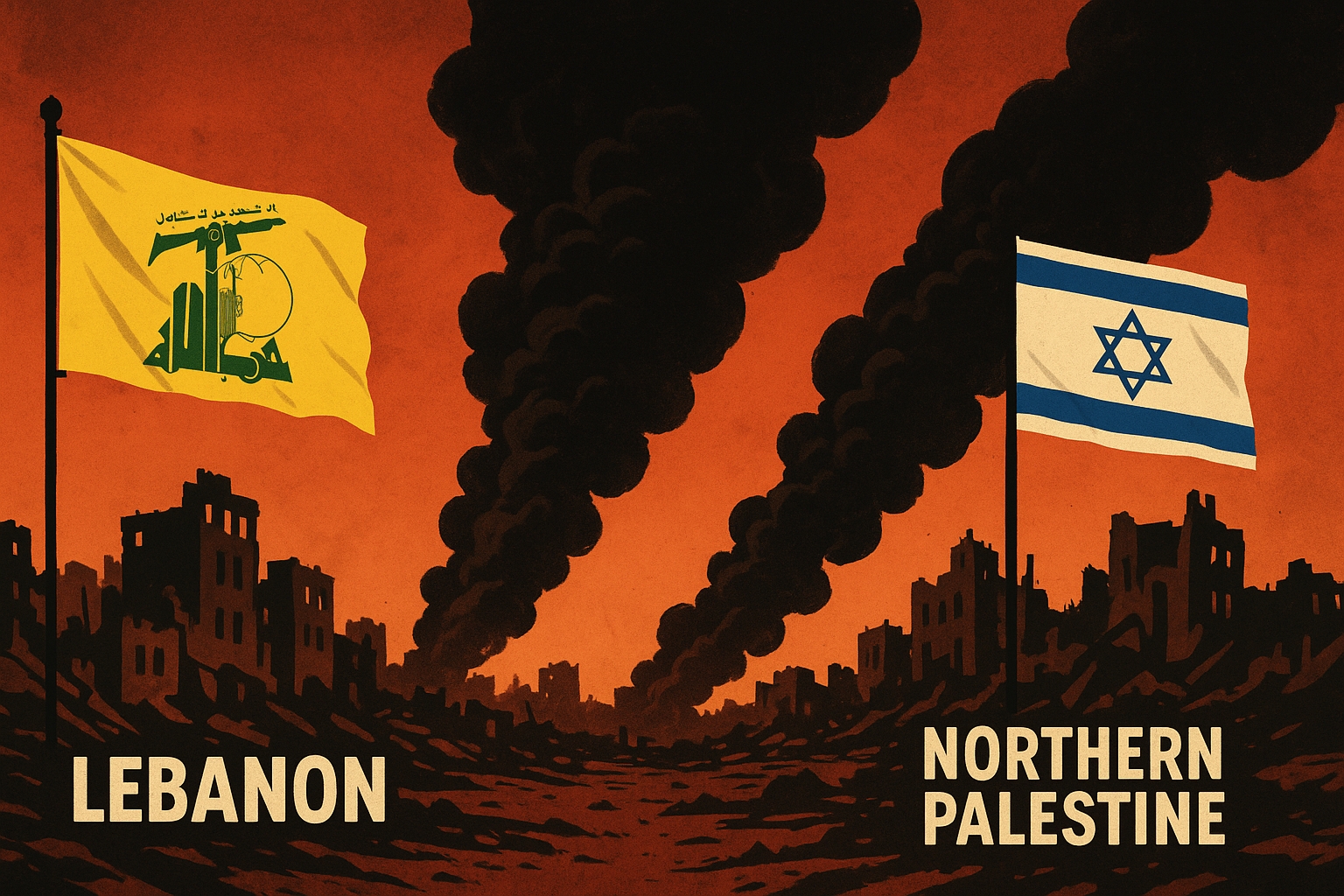
 Archives
Multimedia
Donate
About
Sign In
Archives
Multimedia
Donate
About
Sign In



 Crescent International


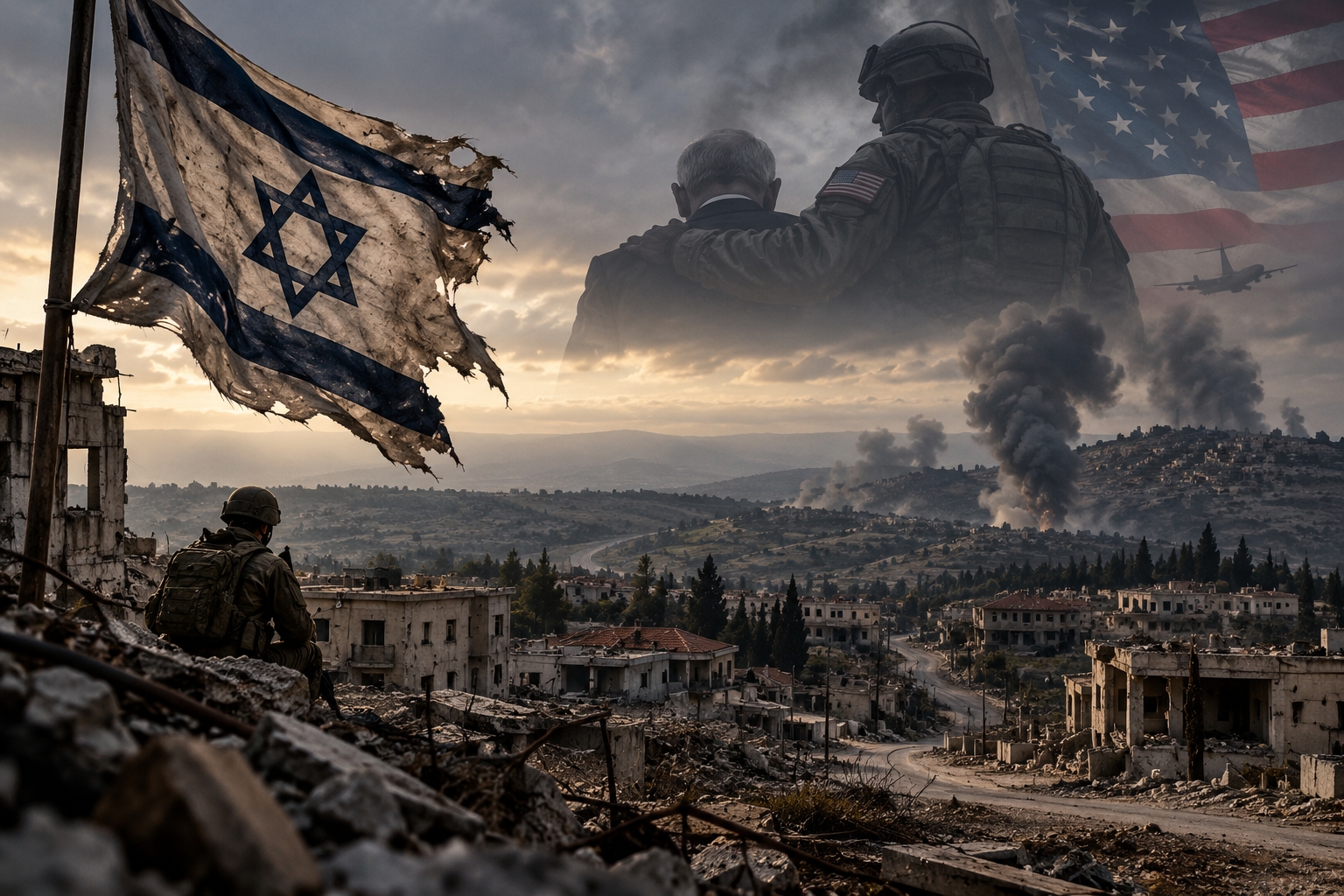
Israel’s political and military establishment has long cultivated the myth of overwhelming military superiority, technological sophistication and the ability to impose its will on its adversaries.
Yet the ongoing disruption of life in northern Palestine exposes a profound contradiction in this narrative.
Despite vast western political, military and diplomatic support, Israel has struggled to guarantee the security necessary for a significant number of its northern population to resume normal life.
The consequences extend beyond the immediate military confrontation: they raise questions about Israel’s strategic effectiveness, the credibility of its claims of victory and its total dependence on Washington and the EU.
Israeli media reports have offered glimpses of a reality that receives much less attention than battlefield announcements and official claims of military success.
Communities along the Lebanese border have begun reopening schools, restaurants and tourist facilities, while some residents have returned to their homes.
Yet these developments should not be confused with the restoration of pre-October 2023 situation.
Reports from Metula, Kiryat Shmona and other northern squatter colonies describe persistent population shortages, disrupted education, struggling businesses and continuing anxiety over renewed hostilities.
In frontline communities, damaged buildings, fortifications and military infrastructure remain very visible.
A restaurant or a shop reopening is not equivalent to the restoration of a functioning region.
The central issue is not whether northern Israel has become completely uninhabitable.
It has not.
Rather, it is that Israel has struggled to establish conditions in which residents can live without the persistent threat of renewed displacement.
This represents a serious strategic problem.
A state’s military strength cannot be measured exclusively by the number of aircraft it possesses, the sophistication of its intelligence services or the destructive capacity of its weapons.
Its ability to protect the population under its control is fundamental.
When a state can inflict damage on its adversaries but cannot reliably restore civilian life in its own exposed border communities, the discrepancy between military superiority and strategic security becomes difficult to ignore.
The continued strength of Hizbullah in southern Lebanon, despite massive Israeli military attacks, further complicates Israel’s position.
This was acknowledged by zionist mouthpieces themselves.
In a March 12, 2026, article in Ha’aretz pointed to the gap between perceptions of Hizbullah’s degradation and the organization’s continuing capabilities.
Israel’s predicament, therefore, challenges the assumption that overwhelming firepower necessarily produces durable security.
Territorial incursions and destruction across the border cannot, by themselves, guarantee that northern Israeli squatter communities will recover.
This reality sits uneasily alongside the dominant political narrative of Israeli invulnerability.
Israel’s leadership has repeatedly emphasized military achievements and strategic victories.
Yet the condition of northern colonies raises a more uncomfortable question: what does victory mean if the population remains uncertain about whether it can safely return to their homes?
The political significance of this imbalance is considerable.
Israel’s mythical strength is not merely a domestic concern; it underpins deterrence, regional influence and the confidence of its western sponsors.
Evidence that Israel cannot reliably secure its northern frontier weakens the credibility of that myth, regardless of the extent of military optics.
Another strategic consequence of the regional war that began in October 2023 is Israel’s deepening dependence on US military and political support.
American assistance has long been central to Israel’s security, but the scale of direct American military involvement, including deployments of US personnel to support regional operations, raises questions about Israeli strategic autonomy.
A state that presents itself as a regional military hegemon increasingly relies on Washington to sustain its position.
The more Israel depends on American resources and direct involvement to manage regional confrontations, the harder it becomes to reconcile its image of independent supremacy with its security predicament.
Ultimately, northern Palestine offers a bitter dose of reality: Israel remains trapped in a strategic regional quagmire.
With the regional war ongoing, the future of the zionist entity remains far from certain.