
 Archives
Multimedia
Donate
About
Sign In
Archives
Multimedia
Donate
About
Sign In



 Crescent International


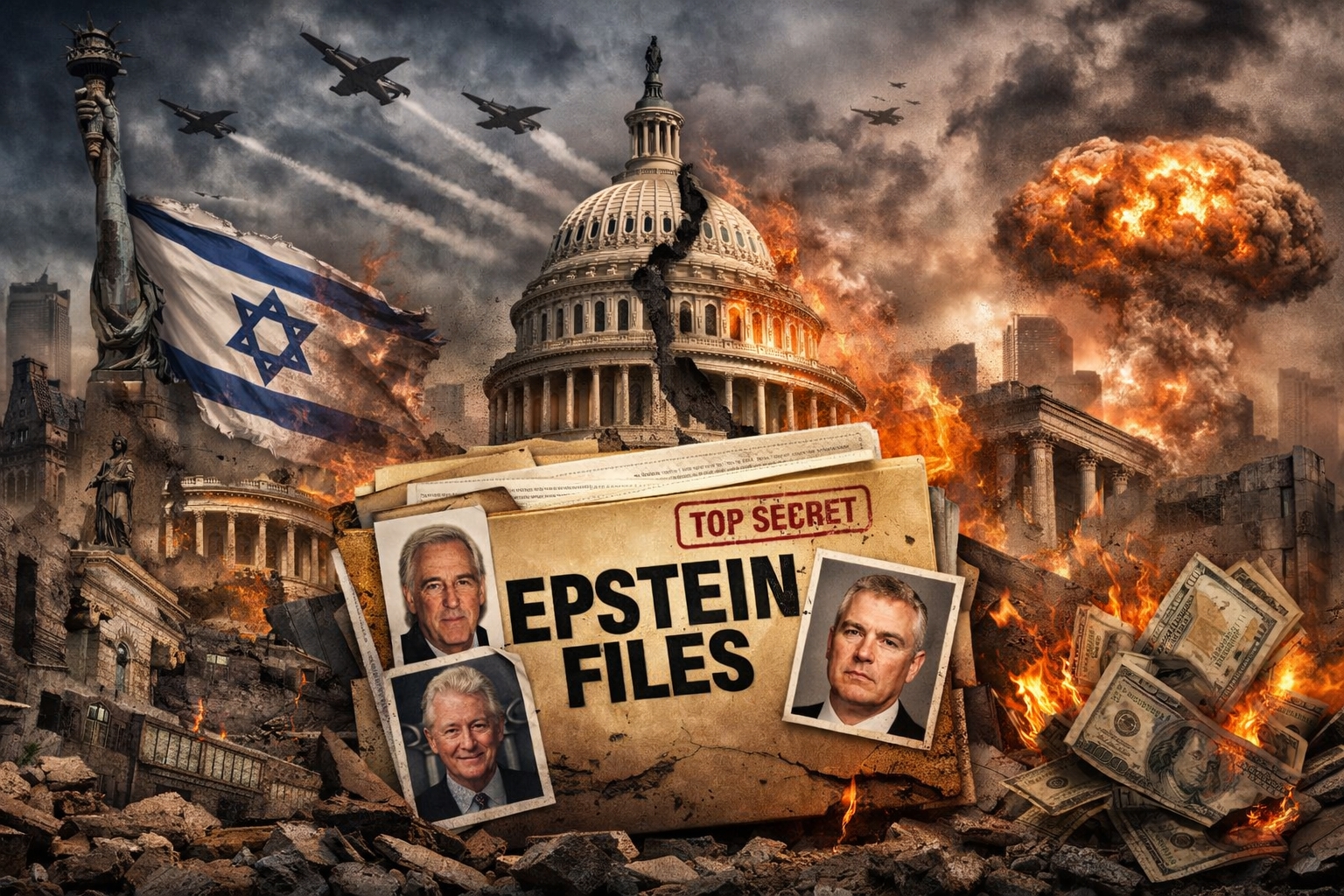
The release of Epstein files is not merely a scandal tied to one convicted sexual predator.
It is a structural shock to the western political order.
The released documents are a political nuclear bomb.
It extends across the entire spectrum of western elite power — left, right, and center.
This is what makes the Epstein crisis so different from other scandals.
In most political crises, one faction falls while another capitalizes.
Here, however, no ideological camp is insulated.
Associations, meetings, financial links, and social proximity cut across partisan lines.
Politically, proof beyond reasonable doubt is not the threshold that matters.
The perception emerging from the files — regardless of eventual prosecutions — is that the western ruling class functions less as competing ideological bloc and more as an interconnected corrupt social ecosystem detached from ordinary citizens.
That perception strikes at the core of the so-called democratic legitimacy western regimes like to camouflage themselves with.
Epstein’s network was notable because it bridged the power domain of the western elites — moving between political power brokers, elite universities, high finance, media figures, and global institutions.
The implication is corrosive: that influence operates through private networks rather than public accountability.
When academia is seen as socially intertwined with compromised financiers, intellectual authority weakens and so does the public trust.
When media institutions appear reluctant or selective in their scrutiny, claims of journalistic independence erode.
When intelligence agencies and justice departments are perceived as opaque or protective, the rule-of-law narrative fractures.
The result is cumulative, not episodic.
This is not simply reputational harm. It is structural delegitimization.
In a unipolar era, such damage could be absorbed.
Western power could rely on economic dominance and geopolitical leverage to maintain coherence.
But the world is no longer unipolar.
It is increasingly multipolar, with emerging centers of power ready to weaponize deep western contradictions, brutality, hypocrisy and illegitimacy.
The credibility gap now becomes a strategic liability.
Western regimes have long justified sanctions, interventions, and diplomatic pressure on the grounds of defending democracy and human rights.
If the same governing ecosystems are seen as morally compromised and detached from the common people, that moral capital evaporates faster than many assume.
Rival powers will no longer need to invent propaganda; they can simply point to western realities.
These are easily seen and understood by masses in western countries and the wider world.
The simplicity of the Epstein scandal is what makes it deadly for the western elites.
Layered onto this crisis is the Israel dimension.
The files have intensified a perception—now entering mainstream discourse—that Israel exerts disproportionate and destabilizing influence within western political mechanisms.
Whether one agrees with this interpretation or not, its spread into wider public debate represents a geopolitical and mental shift.
What was once confined to “fringe” commentary is now accepted in broader political arenas.
For decades, Israel benefited from camouflaged bipartisan western political backing.
The Epstein scandal reinforces the narrative that elite networks connected to Israel operate through gruesome mechanisms which undermine the western political machinery in its entirety.
Considering Israel’s ongoing regional quagmire, the shift is not just costly for Israel; it’s game over politically for the apartheid regime.
This does not mean western support for Israel will collapse overnight.
But it means that such support becomes politically heavier to carry domestically.
Public tolerance narrows.
The psychological link between elite compromise and foreign policy alignment deepens suspicion.
The Epstein files have done something rare: they have inflicted reputational damage across the entire western imperial apparatus simultaneously.
Not just a party, not just a president, not just a ministry but the entire interconnected elite structure—politics, media, academia, intelligence, finance—now sits under a cloud of systemic doubt.
Empires rarely fall from external factors alone.
They weaken when their internal narrative collapses.
The Epstein files have done exactly that.
If the prevailing belief becomes that western elites operate within protected moral gray zones while preaching universal standards abroad, the credibility shock will outlast the scandal cycle.
The files themselves may fade from headlines; the trust deficit will not.
The true impact of the Epstein releases lies here: not in courtroom outcomes, but in the transformation of public consciousness.
Once citizens across the ideological spectrum begin to see the western ruling class as a single insulated ecosystem rather than competing representatives of popular will, the architecture of legitimacy shifts.
And in a multipolar world, legitimacy is power.
The tsunami is not the crime.
It is the collapse of belief in the system that many falsely saw as a force for good.

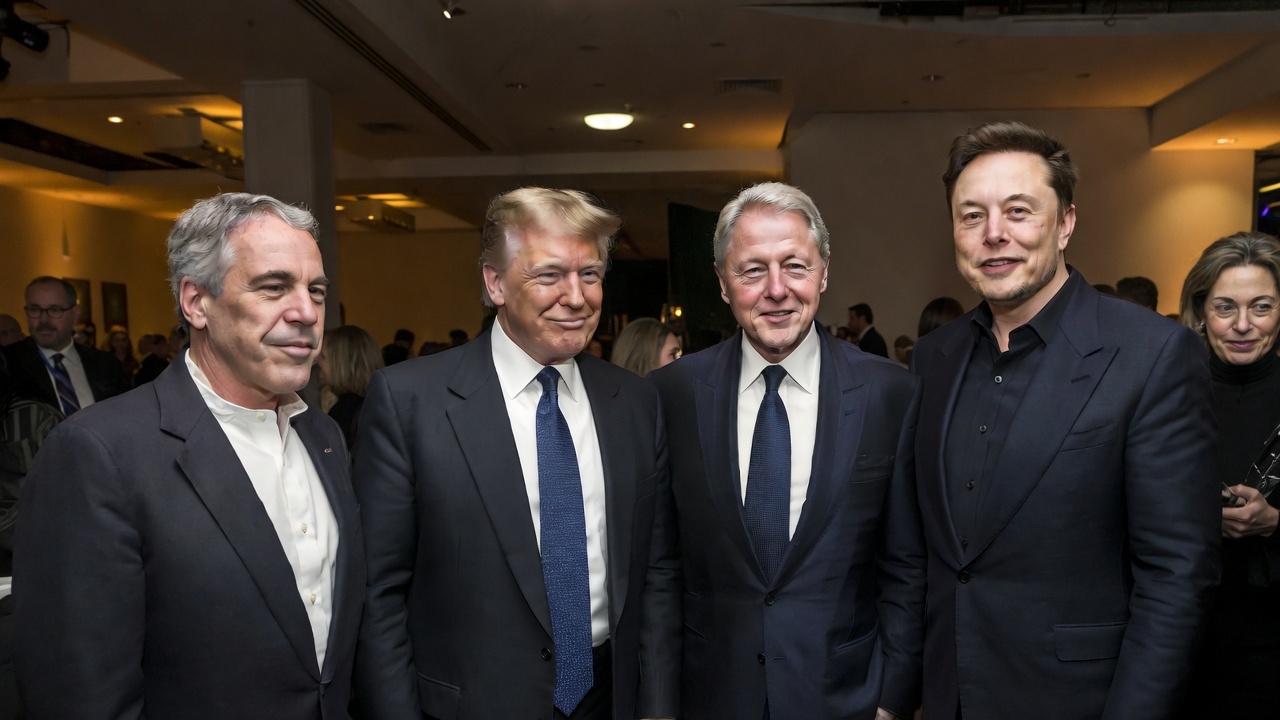
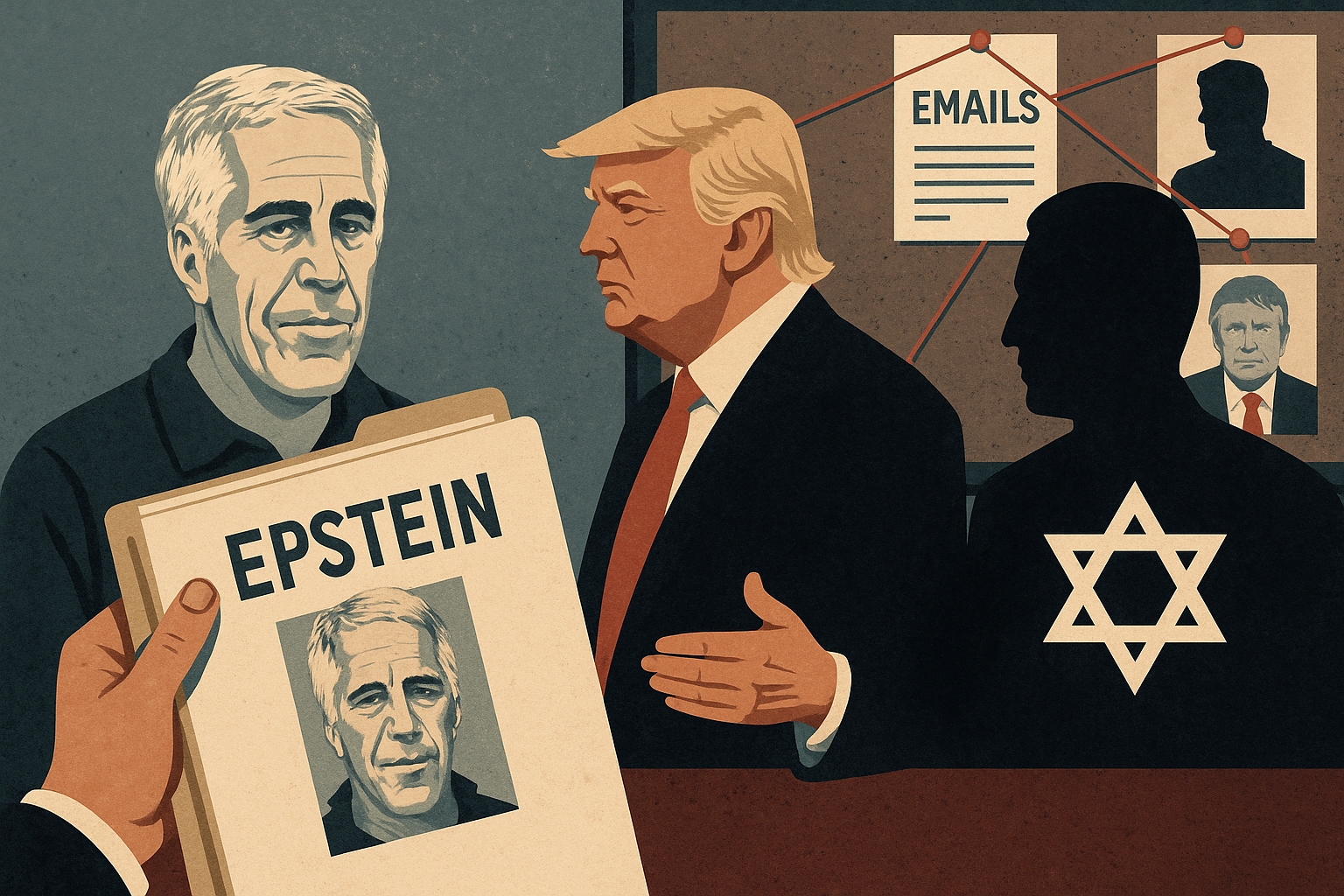
Amid growing demand for the release of Epstein’s emails to expose Donald Trump’s links with the convicted sex offender, what is being ov...
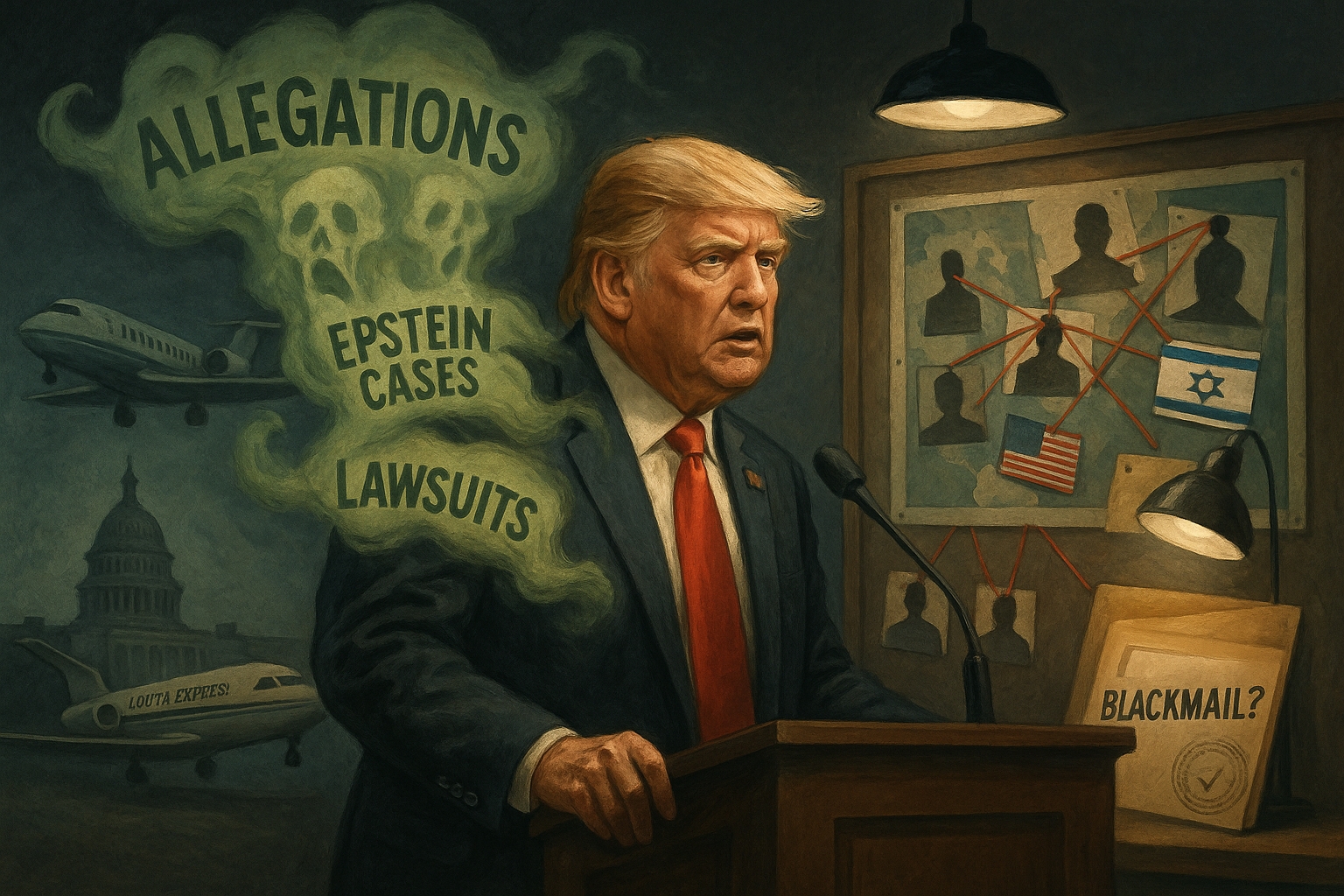
The Jeffrey Epstein scandals surround Donald Trump like a bad odour. The more Trump attempts to distance himself from them, the greater the ...