 Archives
Multimedia
Donate
About
Sign In
Archives
Multimedia
Donate
About
Sign In



 Zafar Bangash


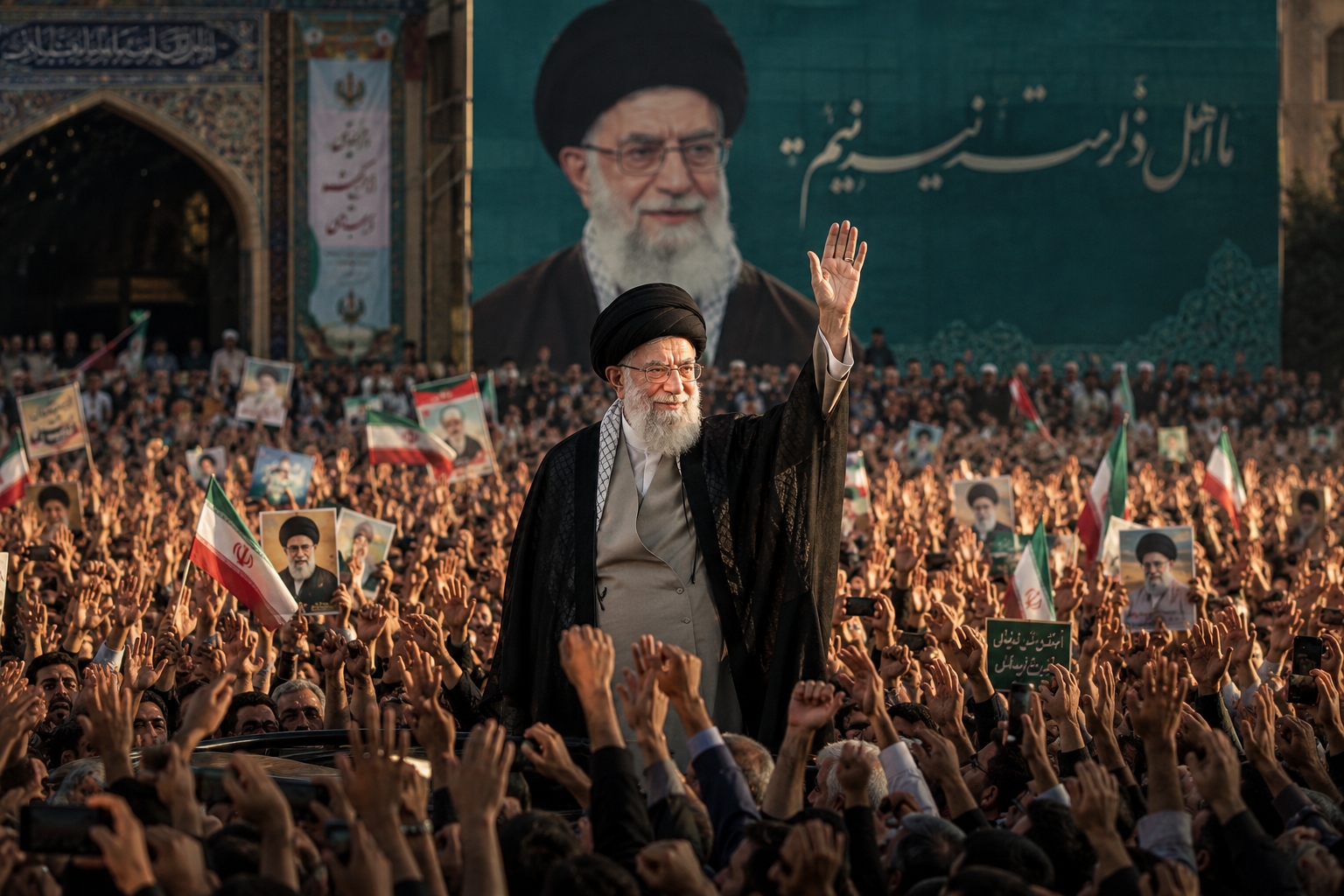
In the 47-year history of the Islamic Republic of Iran, Imam Seyyed Ali Khamenei was at the helm of affairs for 37 years. Thus, he was involved in shaping the destiny of Iran for most of its revolutionary existence.
He succeeded Imam Khomeini when the Assembly of Experts elected him as Wali-e Faqih (the Jurist-Consult or the Supreme Leader) on June 4, 1989 after Imam Khomeini passed away (June 3, 1989).
Imam Khamenei was instrumental in setting the direction of the Islamic Republic’s policies that shaped its development. That Islamic Iran was able to withstand the onslaught of the two biggest war machines and terrorist regimes in the world is a tribute to his wisdom and sagacity.
When he was elected Wali-e Faqih, Islamic Iran was under sanctions, trade embargoes, military threats, sabotage, assassinations and repeated attempts to isolate it regionally and globally. These pressures intensified over time as American and western policies failed.
Far from succumbing to such pressure, the Rahbar urged officials and the people to turn them into incentives to build domestic capacity. He urged elimination of dependence on foreign suppliers by postulating the concept of the Resistance Economy (eghtesad-e moghavemati).
Import substitution and domestic indigenization prioritized self-reliance. The expansion of non-oil exports, and the development of knowledge-based industries were encouraged. Education of both men and women was actively promoted. Iran’s scientists and engineers responded with enthusiasm resulting in immense increase in indigenous power.
Pressures, sanctions and threats often result in most people succumbing to bullying powers. Others resist and build indigenous capacity. To resist such pressure, however, requires commitment and sacrifices.
Great leaders are able to motivate their people to make such sacrifices. This is contingent upon the leaders themselves making sacrifices. This is what the Rahbar and his entire family did.
After his martyrdom, it was revealed that the Rahbar’s entire worldly possessions consisted of a single old pickup truck. He did not own a house, nor have a bank balance or other properties.
None of his four sons owns a house either. They all live in simple rented houses.
His daughter, Seyyeda Bushra Hosseini who was martyred alongwith her father and other family members, was an ordinary school teacher. She did not use the name ‘Khamenei’ so nobody in the school knew that she was the Rahbar’s daughter. Her real identity became known only after her martyrdom.
Most people in Iran were aware of the Rahbar’s simple lifestyle. He lived no different than ordinary people. Poverty shaped his life from childhood to martyrdom at age 86. It was this simplicity and humility that endeared him to the people who came out in their millions to bid him farewell during the funeral ceremonies (July 3-9).
Thanks to his leadership and guidance, the Islamic Republic is no longer dependent on western imports. Its knowledge-based economy built strength in fields where national security, political will, scientific ambition, and sanctions resistance converged.
Iran turned sanctions and isolation into a drive for self-reliance. It built a powerful indigenous defense industry, expanding its missile and drone capabilities, and advanced its nuclear and space programs. Despite the sanctions and freezing of its assets, Tehran invested heavily in scientific fields such as nanotechnology, biotechnology, and knowledge-based industries.
Important lessons were learned from the Iraqi-imposed war of 1980 to 1988. No country would sell weapons to Iran to defend itself. Tehran was left with no choice but to build these weapons indigenously.
Aware that obtaining foreign-manufactured figher planes was impossible, the Rahbar advised the scientists and engineers that the Islamic Republic should produce missiles and drones. These had to be protected from enemy attacks.
Thus, Iran built underground facilities for manufacturing and storing these systems. During the two wars launched against it (June 2025 and the 40-day war launched on February 2026), these underground facilities proved highly effective.
Far from being overwhelmed by the evil duo’s missile and plane strikes, the Islamic Republic delivered painful blows to the aggressors’ military installations. Almost all US military bases in neighbouring Arab countries were hit and badly damaged. They may be beyond repair. Similarly, the zionist entity’s military installations have also been severely degraded.
Islamic Iran also developed the “Axis of Resistance” to confront US imperialism, zionist colonialism and their regional Arabian agents. Tehran became the central hub of the resistance. Its strategic depth and help empowered movements across Lebanon, Palestine, Iraq, and Yemen.
Far from being crushed by sanctions, Iran has become an undisputed regional power. Its military, scientific, and technological achievements have become central to its sovereignty and deterrence.
His martyrdom closed a 37-year chapter but also showed the resilience he built into Iran’s institutions to continue the struggle even in his absence. Its independence, scientific progress, and strategic deterrence are at the center of Iran’s rise.
Over the six-day period (July 3-9), an estimated 43 million people in five cities participated in the funeral ceremonies for Imam Seyyed Ali Khamenei and his family members. These represented by the far the largest gatherings ever recorded in history.
He may not be physically present among his people but his thought, spirit of self-sacrifice and courage will continue to guide them for many generations. He showed them the path to dignity and independence. This will serve the 90 million people of Iran well.


What prompted the Saudi king to send a letter to the Rahbar, Imam Seyyed Ali Khamenei? Since the Islamic revolution, the Saudi regime has sh...